



Analysis · StrikeOrbit | 2026
When India destroyed its own satellite with a ground-launched interceptor on 27 March 2019, the announcement came not from a defense ministry briefing but from Prime Minister Narendra Modi in a nationally televised address. The choice of messenger was deliberate.
Mission Shakti — the codename for India’s first anti-satellite weapons test — was presented not as a technical achievement but as a declaration of strategic intent.
India was announcing to China, Pakistan, and the broader international community that it had joined a small club of states capable of denying adversaries the use of space, and that it intended this capability to be understood as a deterrent rather than an act of aggression.
Seven years later, Mission Shakti is no longer the story. It was the starting point.
The story is what India has built since — a Defense Space Agency with expanding operational responsibilities, a classified military space doctrine approaching finalization, a growing network of dedicated military surveillance satellites providing persistent coverage of India’s contested borders with China and Pakistan, and a Quad multilateral space architecture that multiplies India’s individual capability beyond what any purely indigenous programme could produce.
As discussed in Anti-Satellite Weapons: Capabilities, Systems, and Strategic Implications, the ASAT competition in the Indo-Pacific has produced a three-way dynamic between the United States, China, and Russia that India’s Mission Shakti capability has now partially entered. But India’s position in that dynamic is neither aligned with any single major power nor reducible to a simple binary competition.
Understanding India’s ASAT capability and its implications for the Indo-Pacific balance requires understanding both what India has built and why — the specific security context created by China’s far more extensive space weapons programme, the doctrinal choices that distinguish India’s approach from the major powers, and the emerging multilateral space security architecture that India is building with its Quad partners.
Mission Shakti Established India as a Space Power But Left Critical Gaps
India’s 2019 ASAT test was technically sophisticated and strategically significant, but it was conducted under deliberate constraints that reflected India’s dual commitment to demonstrating deterrence and respecting international norms on orbital debris.
The international legal framework governing anti-satellite weapons and the limitations of existing space law are examined in The Outer Space Treaty and Its Limits in the Age of Orbital Warfare.
The Microsat-R satellite used as the target was in low Earth orbit at approximately 283 kilometres altitude — a deliberate choice that ensured atmospheric drag would decay the debris field within weeks rather than the decades that would result from a test at higher altitudes.
The contrast with China’s 2007 Fengyun-1C test at 865 kilometres, which generated debris persisting years later, was intentional and publicly noted by Indian officials. India was demonstrating ASAT capability while simultaneously demonstrating restraint in its exercise.
The interceptor used in Mission Shakti was derived from India’s indigenous Ballistic Missile Defense programme — specifically from the PDV Mark-II kinetic kill vehicle developed by DRDO that had been designed for high-altitude interception of incoming ballistic missiles.
The decision to use BMD-derived technology rather than developing a dedicated ASAT interceptor from scratch reflected both pragmatic resource management and the dual-use reality that characterises India’s approach to counterspace development. The same technology base that defends against Pakistani ballistic missiles also provides a capability to deny adversary satellite access.
What Mission Shakti did not provide was a comprehensive ASAT capability. The test demonstrated kinetic interception at low Earth orbit altitudes — the regime most relevant for tactical Earth observation and signals intelligence satellites. It did not demonstrate capability against satellites in medium Earth orbit or geostationary orbit, where navigation satellites like China’s BeiDou and high-value communications and early warning satellites operate.
China’s counterspace programme has been widely assessed to include systems intended to operate across multiple orbital regimes, with some analyses suggesting the potential to threaten higher-altitude satellites beyond low Earth orbit. While several capabilities remain classified or unverified publicly, the overall direction of Chinese counterspace development indicates a broader operational scope than India’s currently demonstrated capability.
The CSIS Space Threat Assessment 2025, published in April 2025, assessed that India has demonstrated one direct-ascent ASAT capability while China likely has at least three distinct direct-ascent ASAT interceptor systems plus co-orbital capabilities and directed energy systems for multiple orbital regimes.
The gap between India’s single demonstrated kinetic ASAT capability and China’s multi-regime counterspace arsenal defines the strategic challenge that Indian space security planners must address.
Mission Shakti established India’s credentials as a space power and provided a foundational deterrence signal. It did not close the capability asymmetry with China in the space domain.
India’s Space Security Architecture Has Expanded Significantly Since 2019
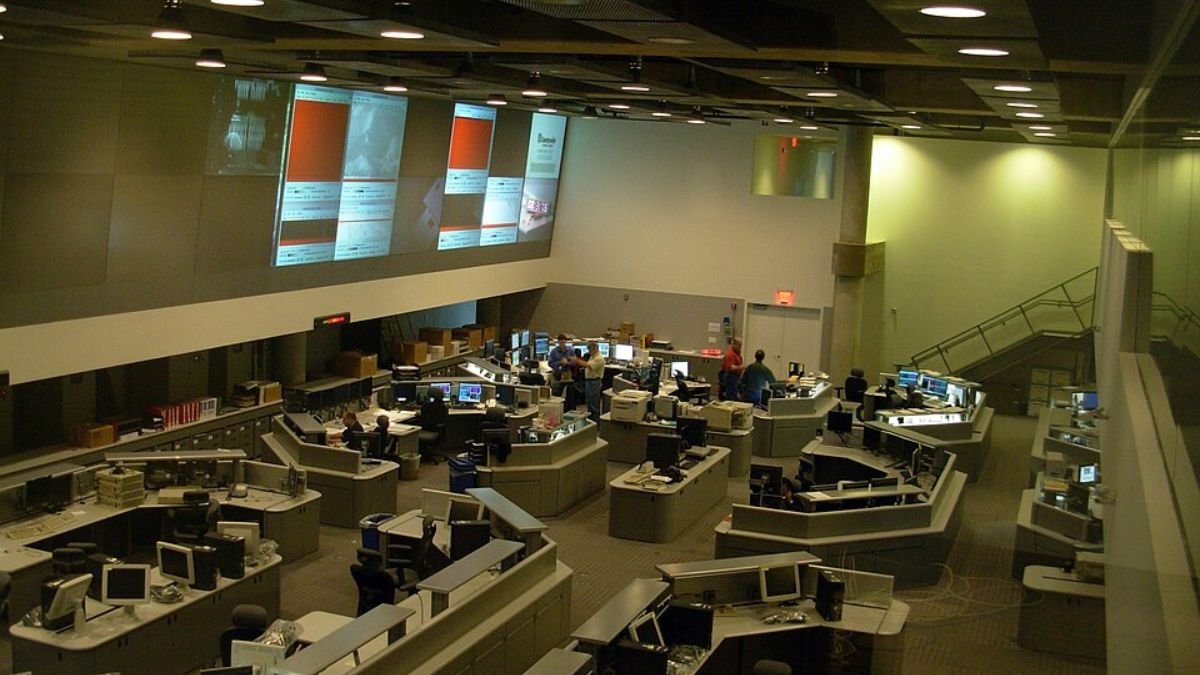
The institutional and capability development that followed Mission Shakti has been more consequential than the test itself.
India established the Defense Space Agency in 2019 specifically to consolidate the space-related activities of the Indian Army, Navy, and Air Force under unified military command — a structural reform that mirrored the logic of the US Space Force’s establishment in the same year.
The Defense Space Research Organization was established simultaneously as the DRDO entity responsible for developing advanced space warfare technologies, providing the DSA with a dedicated research and development pipeline.
The DSA has expanded its operational responsibilities progressively since its establishment.
India’s Indian Defense Space Symposium in April 2026 — the most recent high-level forum for India’s defense space community — saw Chief of Defense Staff General Anil Chauhan deliver a direct statement of strategic intent: India must build space architecture that is resilient, AI-enabled, quantum secure, cyber-hardened, rapidly replenishable, and unquestionably sovereign. Anything less, he said, would leave India in a reactive mode.
The language — sovereign, resilient, rapidly replenishable — echoes the distributed architecture logic that the United States has adopted in its Proliferated Warfighter Space Architecture and reflects an assessment that concentrated, exquisite satellite systems are unacceptably vulnerable in the current threat environment.
The Observer Research Foundation has produced some of the most detailed Indian analyses of space strategy, military space development, and the long-term evolution of India’s national space security posture.
India’s Space Situational Awareness Control Centre, established under ISRO in 2022, provides India with an indigenous orbital tracking capability independent of American data sharing.
As explored in Space Situational Awareness: Tracking and Securing the Orbital Domain, the ability to independently track objects in orbit — including adversary satellites conducting proximity operations near Indian assets — is a prerequisite for both defensive space operations and for the attribution of threatening orbital behavior.
India’s SSA Control Centre is less capable than the US Space Surveillance Network or China’s expanding ground-based sensor network, but it provides a sovereign awareness baseline that reduces India’s dependence on partner data at strategically critical moments.
The Cartosat surveillance satellite series has provided India with high-resolution imaging capability across its contested borders with China along the Line of Actual Control.
Following the 2020 Galwan Valley clash — in which Chinese and Indian troops engaged in hand-to-hand combat, resulting in casualties on both sides — India accelerated the deployment of Cartosat-3 and subsequent imaging satellites specifically to provide persistent coverage of Chinese military infrastructure construction in Ladakh and Aksai Chin.
The satellite imagery from India’s commercial and government systems provided intelligence that informed Indian deployments during the subsequent military standoff and demonstrated operationally the value of space-based ISR in a border conflict context that both sides maintained below the threshold of conventional warfare.
India’s non-kinetic counterspace capabilities are expanding alongside its kinetic and surveillance programmes.
DRDO’s work on directed energy weapons, including high-powered lasers, electronic warfare systems for satellite jamming, and cyber capabilities for satellite ground station targeting, has been publicly acknowledged without specific programme details being disclosed.
India’s investment in military space capabilities is intended not only to protect satellites but also to strengthen the effectiveness of conventional military operations that increasingly depend on space-enabled targeting and communications.
The BrahMos-II hypersonic cruise missile programme, targeting operational capability by the late 2020s, is designed to exploit the space-based navigation and targeting data that India’s growing satellite ISR constellation provides — connecting India’s space investment directly to its conventional precision strike deterrence posture and making the satellite architecture not merely a surveillance asset but the enabling infrastructure for future long-range strike.
The SWF’s 2026 Global Counterspace Capabilities Report, published in April 2026, assessed India as having demonstrated kinetic ASAT capability and as actively developing directed energy and electronic warfare counterspace capabilities, though at a maturity level behind China’s programme.
China’s Space Programme Defines the Threat India’s Space Security Must Address
India’s space security strategy cannot be understood without understanding the specific threat that China’s expanding military space programme represents.
China and India share a disputed 3,488-kilometre border, fought a war in 1962, engaged in the most serious military clash since 1967 in the Galwan Valley in 2020, and maintain active military standoffs across multiple sectors of the Line of Actual Control.
In this context, China’s satellite ISR constellation monitoring Indian military positions, its BeiDou navigation system providing precision guidance for PLA forces in the Himalayan theatre, and its ASAT capabilities holding Indian space assets at risk are not abstract strategic concerns.
They are operational realities shaping Indian military planning for the most likely conflict scenario India actually faces.
By the mid-2020s, China had established one of the world’s largest and fastest-growing satellite constellations, including an extensive network of intelligence, surveillance, and reconnaissance satellites that significantly exceeded India’s dedicated military space assets. China launched 68 spacecraft in 2024 alone, sustaining an expansion rate that India’s programme cannot currently match.
China conducted what may have been the world’s first satellite refuelling operation in geostationary orbit in the second half of 2025, demonstrating a technical maturity in orbital operations that India cannot currently replicate.
China’s counterspace capabilities assessed in the SWF 2026 report include multiple direct-ascent ASAT interceptors assessed to cover LEO through potential GEO regimes, co-orbital inspection satellites assessed to have rendezvous and proximity operations capability consistent with counterspace application, ground-based laser systems that have demonstrated dazzling of imaging satellites in LEO, and electronic warfare capabilities including GPS jamming and satellite communications jamming.
What makes China’s counterspace advantage deeper and more durable than a capability count alone suggests is the command architecture that integrates those capabilities.
The PLA Information Support Force — established through the 2024 restructuring of the Strategic Support Force — places space, cyber, and electronic warfare under a single unified command with a single operational planning cycle and a single set of doctrinal priorities.
In a conflict scenario, this means that a Chinese response to an Indian military action can simultaneously coordinate — under single command authority — GPS jamming disrupting Indian navigation, a cyber intrusion against an Indian satellite ground station, and a co-orbital proximity manoeuvre threatening an Indian ISR satellite. These are three counterspace actions from three different domains executed as one integrated operation.
India’s Defense Space Agency does not have an equivalent integration. Space, cyber, and electronic warfare functions in India’s military remain in separate institutional homes. The DSA commands space assets. Cyber operations fall under a separate command. Electronic warfare is a service-specific function. India is building toward integration, but has not achieved it. The institutional asymmetry — not just the satellite count asymmetry — defines the depth of the challenge.
The S. Rajaratnam School of International Studies provides the most focused open-source analysis of India-China space competition and its implications for bilateral strategic stability.
The Quad Is Building a Multilateral Space Security Architecture
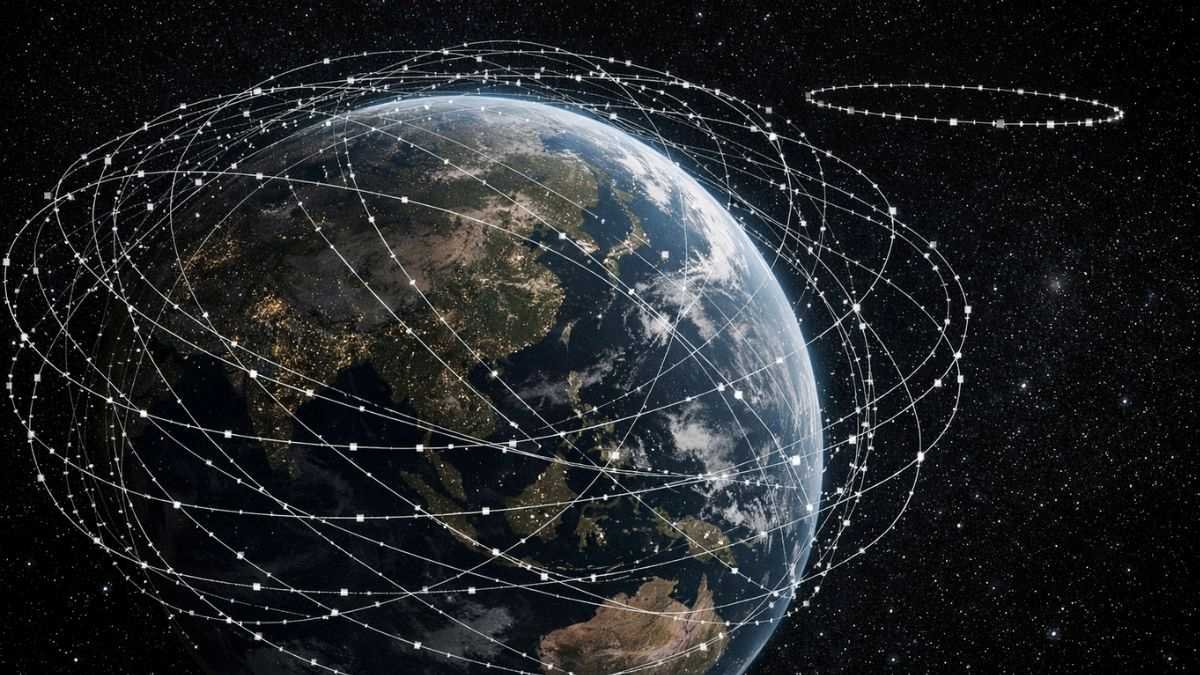
India’s response to China’s space challenge is not limited to indigenous capability development. The Quadrilateral Security Dialogue — the strategic partnership between India, the United States, Japan, and Australia — has become an increasingly important mechanism for building the multilateral space security architecture that no single Quad member can develop alone.
The Quad Space Working Group has coordinated satellite data sharing, space situational awareness cooperation, and space security dialogue among the four members since its establishment in 2021.
The practical output has included shared SSA data that supplements each member’s independent tracking capability, coordination on commercial satellite imagery procurement for shared intelligence purposes, and alignment of positions on space governance and norms at international forums including the UN Committee on the Peaceful Uses of Outer Space.
The most significant recent Quad space security development is the Indo-Pacific Maritime Surveillance Collaboration, signed on 26 May 2026 at the Quad Foreign Ministers’ Meeting in New Delhi.
The IPMSC commits Australia, India, Japan, and the United States to integrating their satellite, aerial, and surface maritime surveillance systems into a near-real-time Common Operating Picture covering maritime activity across the Indo-Pacific.
The framework specifically targets the South China Sea, the East China Sea, and the Indian Ocean Region — the maritime domains most directly contested by Chinese naval expansion. For India, the IPMSC provides access to a combined maritime surveillance architecture that multiplies its space-based awareness well beyond what ISRO and the DSA can provide independently.
Japan’s contribution to the Quad space security architecture is increasingly significant.
The broader doctrinal differences between American and Chinese approaches to military space operations are examined in US Space Force Doctrine vs China’s Space Strategy: Competing Visions of Orbital Power.
Japan published its Space Domain Defense Guidelines in 2025, officially committing to defensive space operations and establishing a doctrinal framework that Japan had previously avoided articulating.
The Quasi-Zenith Satellite System provides Japan with regional navigation capability that supplements GPS in the Asia-Pacific, and Japan’s partnership with the United States under the Combined Space Operations framework means that Japanese SSA data feeds into the allied common operational picture that gives all Quad members improved visibility of Chinese orbital activity.
Australia’s contribution includes hosting US Space Surveillance Network sensors, contributing to the Combined Space Operations framework, and developing the national SSA architecture that the 2026 Integrated Investment Programme has prioritised as a core defense capability.
Australia’s geographic position — providing sensor coverage of the Southern Hemisphere orbital environment that neither India, Japan, nor the US mainland can replicate — makes its SSA contribution strategically valuable to the broader Quad architecture beyond its proportionate capability weight.
India’s Strategic Autonomy Constrains Quad Integration and Complicates Escalation Management
India’s strategic autonomy posture limits how deeply the Quad architecture can be integrated — and that limitation has direct consequences for the collective escalation management capability the partnership can provide. This is not merely a diplomatic preference. It is a structural constraint that shapes what the Quad can achieve in a crisis.
India’s strategic autonomy reflects a wider pattern among emerging powers navigating today’s evolving international order, discussed in Strategic and Geopolitical Intelligence: Understanding the New Global Power Balance.
India participates in the Quad, shares intelligence with the United States on Chinese space activities, and benefits from US SSA data and commercial satellite access — while simultaneously maintaining its own independent nuclear deterrent, declining to join the Combined Space Operations framework as a full member, conducting space cooperation with Russia on civil space programmes, and maintaining the Non-Aligned Movement heritage that makes formal military alliance commitments politically and constitutionally sensitive.
India’s reluctance to formalise data-sharing arrangements that would require Indian intelligence data to flow into American classified systems constrains the depth of SSA cooperation available.
India’s insistence on sovereign indigenous capability development, while strategically rational, means that the Quad’s collective space architecture is less integrated than the Five Eyes or Combined Space Operations frameworks that define US-allied space cooperation at the highest level.
The implication is direct: when a crisis develops between India and China in the space domain, the Quad’s ability to coordinate a collective response, manage escalation signals, and provide India with allied intelligence in real time is constrained by the very autonomy posture that gives India its strategic flexibility in peacetime.
The Galwan Valley clash of 2020 and the subsequent Himalayan military standoff demonstrated both the value and the limits of this arrangement.
The United States provided India with intelligence derived from US space-based ISR that informed Indian assessments of Chinese military activity in the LAC region — demonstrating the operational value of space partnership.
But the intelligence sharing operated through informal channels rather than the integrated architecture that full Combined Space Operations membership would provide. That distinction matters in a crisis where the speed of information flow determines the speed of decision-making.
The Indo-Pacific ASAT Balance and Its Escalation Implications
The ASAT balance in the Indo-Pacific is not a bilateral India-China calculation. It is a four-way dynamic involving the United States and its treaty allies, China, India, and, at a lower intensity, North Korea and its expanding space programme. Each actor’s counterspace capabilities affect the calculations of every other, and the interactions between these actors create escalation pathways that bilateral deterrence logic does not fully capture.
The most consequential risk of escalation in the Indo-Pacific ASAT balance is the potential for a limited India-China border conflict to spill over into the space domain.
Both states military operations along the LAC depend on satellite communications, navigation, and ISR. In a sufficiently intense conventional conflict, both sides would face incentives to degrade adversary space capabilities — India to disrupt Chinese ISR monitoring of Indian force movements, China to degrade Indian navigation and communications that support Indian mountain warfare operations.
The absence of agreed norms governing space escalation in a limited conventional conflict means that the mechanisms for managing escalation in the India-China space competition are less developed than the strategic stakes warrant.
The debris implications of ASAT use in an India-China conflict constitute an additional constraint on escalation.
As analysed in Orbital Debris and the Strategic Limits of Space Warfare, kinetic ASAT attacks in operationally relevant orbital regimes would generate debris threatening both sides’ satellite assets and potentially triggering cascade conditions affecting all users of those orbital bands. The shared costs of debris cascade provide a mutual deterrence against kinetic counterspace operations — but only if decision-makers in a crisis have the information and time to factor those costs into their calculations.
The non-kinetic counterspace dimension presents a more complex escalation management challenge. As explored in Electronic Warfare in Space: Jamming, Spoofing, and Satellite Signal Warfare Explained, GPS jamming, satellite communications interference, and cyber operations against ground infrastructure are operationally significant but reversible and deniable in ways that kinetic attacks are not.
The preference for non-kinetic counterspace methods that characterises every major space power’s approach applies equally in the India-China context — which means the most likely forms of space contestation in an India-China conflict are also the hardest to attribute, manage, and de-escalate in real time. States may find themselves in an escalating non-kinetic counterspace exchange without clear visibility into where the thresholds are or how the other side interprets each action.

Conclusion
India’s Mission Shakti was a declaration.
What has followed is a construction project — building the Defense Space Agency, the DRDO space warfare research organization, the SSA Control Centre, the military imaging constellation, the precision strike programmes that depend on space-enabled targeting, and the Quad multilateral space architecture that multiplies India’s individual capability.
The construction is not complete.
The capability gap with China in the space domain remains significant across both satellite numbers and command integration, and will require sustained investment over the years to narrow.
What India has achieved since 2019 is more important than any single capability. It has established itself as a space power whose interests must be considered in the governance of the orbital domain, whose deterrence posture in space is credible at the LEO level where the most operationally immediate threats operate, and whose participation in the Quad space architecture gives it access to collective awareness and capability that no purely indigenous programme could replicate.
The Indo-Pacific ASAT balance will become more complex as China’s counterspace programme expands, as India’s defensive and offensive space capabilities mature, and as the Quad space architecture deepens in operational integration. The satellites providing communications, navigation, and intelligence for potential conflict along the LAC are already contested by the capabilities both sides are developing.
The question is not whether space will be contested in an Indo-Pacific conflict. The question is whether decision-makers can prevent that contestation from expanding into a broader escalation spiral that neither side originally intended.
Frequently Asked Questions
What was India’s Mission Shakti and what did it achieve strategically?
Mission Shakti was India’s first anti-satellite weapons test, conducted on 27 March 2019, in which a ground-launched interceptor derived from India’s Ballistic Missile Defense programme destroyed an Indian satellite — Microsat-R — in low Earth orbit at approximately 283 kilometers altitude. Strategically, it established India as the fourth state after the United States, Russia, and China to demonstrate kinetic ASAT capability. The test was conducted at low altitude to minimise debris persistence, reflecting India’s commitment to responsible behavior in space. It provided a deterrence signal to China and Pakistan while establishing India’s credentials for participation in international space governance discussions. However, it demonstrated capability only against LEO targets — leaving significant gaps relative to China’s multi-regime counterspace arsenal.
How does India’s ASAT capability compare to China’s?
The comparison is substantially asymmetric in China’s favour across both capability and command architecture. India has demonstrated one direct-ascent kinetic ASAT capability assessed to cover low Earth orbit altitudes. China has been assessed by the CSIS Space Threat Assessment 2025 and the SWF 2026 Global Counterspace Capabilities Report to have multiple direct-ascent ASAT interceptors covering LEO through potential GEO regimes, co-orbital proximity operation satellites, ground-based laser systems, and extensive electronic warfare capabilities. Beyond capability numbers, China’s PLA Information Support Force integrates space, cyber, and electronic warfare under single command authority — enabling coordinated multi-domain counterspace operations that India’s more fragmented institutional structure cannot currently match. India is actively developing directed energy and electronic warfare counterspace capabilities but the gap remains significant.
What is the Quad and how does it contribute to India’s space security?
The Quadrilateral Security Dialogue — the Quad — is a strategic partnership between Australia, India, Japan, and the United States focused on the Indo-Pacific security environment. For India’s space security, the Quad provides access to a collective SSA and surveillance architecture that multiplies India’s individual capability significantly. The Quad Space Working Group coordinates SSA data sharing and space security dialogue. The Indo-Pacific Maritime Surveillance Collaboration, signed in New Delhi on 26 May 2026, commits all four states to integrating their satellite, aerial, and surface surveillance systems into a near-real-time Common Operating Picture covering Indo-Pacific maritime activity. Japan’s Space Domain Defense Guidelines 2025, Australia’s SSA sensor contributions, and American intelligence sharing in the LAC context all give India strategic space benefits that its independent programme cannot provide.
Why does India maintain strategic autonomy in space security rather than fully aligning with the United States?
India’s strategic autonomy in space security reflects its broader foreign policy tradition and specific strategic calculations. India participates in the Quad and benefits from US intelligence sharing but declines full integration into the Combined Space Operations framework. This reflects constitutional and political constraints on formal military alliances, India’s historic Non-Aligned Movement heritage, the practical value of maintaining cooperative relationships across the great power divide, and the strategic logic that sovereign indigenous capability provides deterrence credibility that dependence on allied systems cannot. However, this autonomy posture constrains the depth of Quad space cooperation available and limits collective escalation management capability — a trade-off with direct consequences for how India and its partners could respond to a crisis in the space domain.
What are the escalation risks in the Indo-Pacific ASAT balance?
The most significant escalation risk is a limited India-China conventional border conflict escalating into the space domain as both sides face incentives to degrade adversary satellite communications, navigation, and ISR capabilities. The absence of agreed norms specifically governing space escalation in limited conventional conflicts leaves escalation management mechanisms less developed than the strategic stakes warrant. Non-kinetic counterspace methods, including GPS jamming, satellite communications interference, and cyber operations, are the most likely forms of space contestation in such a scenario — reversible and deniable enough to be operationally attractive but difficult to attribute and de-escalate in real time. States may find themselves in an escalating non-kinetic counterspace exchange without clear visibility into where the thresholds are or how the adversary interprets each action.
Sources and References
Secure World Foundation — Global Counterspace Capabilities: An Open Source Assessment (2026)
Centre for Strategic and International Studies (CSIS) — Space Threat Assessment 2025 (April 2025)
RAND Corporation — The Expansion of China’s Military Space and Counterspace Capabilities (2025)
Indian Space Association — Indian Defense Space Symposium 2026 Proceedings (April 2026)
Defense Research and Development Organisation — Mission Shakti: ASAT Technology Documentation (2019)
Congressional Research Service — India’s Military Modernisation and Implications for the United States (2024)
International Institute for Strategic Studies (IISS) — The Military Balance (2025)
Observer Research Foundation — India’s Space Security Strategy: Post-Mission Shakti Developments (2025)
S. Rajaratnam School of International Studies — India-China Outer Space Competition (March 2025)
Stimson Centre — Space Security in the Indo-Pacific (2024)
US Department of Defense — Annual Report to Congress: Military and Security Developments Involving the People’s Republic of China (2025)
United Nations Office for Outer Space Affairs — Outer Space Treaty (1967)
Related Analysis
For analysis of the anti-satellite weapons technology and strategic dynamics within which India’s Mission Shakti capability operates, read Anti-Satellite Weapons: Capabilities, Systems, and Strategic Implications.
For analysis of the space situational awareness architecture that India is building to independently track adversary orbital activity, read Space Situational Awareness: Tracking and Securing the Orbital Domain.
For analysis of the orbital debris constraints that shape ASAT use decisions in the Indo-Pacific, including the legacy of China’s 2007 test, read Orbital Debris and the Strategic Limits of Space Warfare.
For analysis of the electronic warfare dimension of the space competition that India faces from China’s extensive counterspace programme, read Electronic Warfare in Space: Jamming, Spoofing, and Satellite Signal Warfare Explained.
For analysis of the foundational orbital warfare context within which India’s space security challenge operates, read What Is Orbital Warfare? How Space Became a Contested Military Domain.
