



Analysis · StrikeOrbit | 2026
The international order that emerged from the Cold War’s end has not simply evolved. It has fractured.
The assumptions that underpinned three decades of post-1991 global politics — that economic interdependence would moderate great-power rivalry, that multilateral institutions would manage collective challenges — have each been tested and found insufficient in the face of the strategic reality of 2026.
What has replaced them is not a new stable order but a contested transition in which the rules, the institutions, and the distribution of power that will govern the coming decades are all simultaneously in dispute.
What follows is not a new order. It is a contested interval in which the rules themselves are being renegotiated.
Strategic and geopolitical intelligence — the analytical discipline of understanding how power is distributed across states, how those states pursue their interests, and what the interactions between them produce — is not an academic exercise.
It is the foundational requirement for any serious understanding of why military investments are being made, why alliances are forming and fraying, why specific flashpoints carry the risks they do, and why the technological competitions described throughout StrikeOrbit‘s analysis of military space systems, hypersonic weapons, and command architecture are being waged with the urgency they are.
The weapons and systems are the instruments. Geopolitical intelligence provides the context explaining why those instruments are being built, by whom, against whom, and to what strategic end.
The broader transformation of modern armed forces driven by precision strike, autonomy, and network integration is examined in Military Modernization in the 21st Century: Precision Strike, Autonomy, and Network-Centric Warfare.
This article establishes the analytical framework for StrikeOrbit’s Strategic and Geopolitical Intelligence category — examining the structure of the current great-power competition, the actors driving it, the domains in which it is contested, and the regional flashpoints where it is most likely to produce consequential outcomes. It provides the strategic foundation from which all subsequent geopolitical analysis in this cluster will build.
The Unipolar Moment Has Ended and What Follows Is Not Yet Determined
The United States emerged from the Cold War as the world’s sole superpower — the first genuinely unipolar moment in modern international history.
American military power was unmatched, American economic weight was dominant, American cultural influence was pervasive, and American-designed institutions — the IMF, World Bank, WTO, and the liberal international order they embedded — structured the rules under which most of global commerce, diplomacy, and security operated. This was not simply American dominance. It was American system-building, and the system served the interests of a broad enough coalition of states to sustain itself for three decades.
That unipolar moment has ended.
The National Defense University’s Strategic Assessment 2025, published in February 2026, concluded that the geostrategic framework of international relations at mid-decade remains heavily conditioned by great-power competition among three rivalrous globally dominant states — the United States, China, and Russia.
The framing of three great powers rather than one reflects a structural shift that has been building since the mid-2000s, accelerating through Russia’s 2014 annexation of Crimea, China’s sustained military modernisation, and the 2022 invasion of Ukraine that ended the post-Cold War European security order definitively.
What has not yet been determined is what replaces unipolarity.
The candidates are a bipolar order structured around US-China competition as the defining axis, with Russia as a significant but secondary actor; a genuinely multipolar order in which multiple regional powers — India, the European Union, Japan, and others — exercise meaningful autonomous influence; or a fragmented disorder in which no state or coalition can provide the systemic stability that American hegemony previously offered.
Canadian Prime Minister Mark Carney’s observation at Davos in January 2026 that the world is in the midst of a rupture, not a transition, captures the analytical reality precisely — this is not a managed handover from one order to the next but a disruptive break whose outcome remains genuinely uncertain.
The implications of this uncertainty for military planning, alliance architecture, and the technology competitions examined throughout StrikeOrbit’s analysis are direct. States do not invest in hypersonic weapons, anti-satellite capabilities, and JADC2-style command networks in a stable international environment. They invest in them when the distribution of power is contested and when the rules governing the use of force are in dispute.
Readers seeking a detailed assessment of which countries have translated these strategic investments into deployed capability can explore Countries With Operational Hypersonic Missiles: Global Status 2026, which examines the operational maturity of current hypersonic arsenals worldwide.
The military and space capabilities analysed in earlier cluster articles are simultaneously products of the geopolitical transition and contributors to it — each new capability deployment changes the strategic calculus of every other actor in the system.
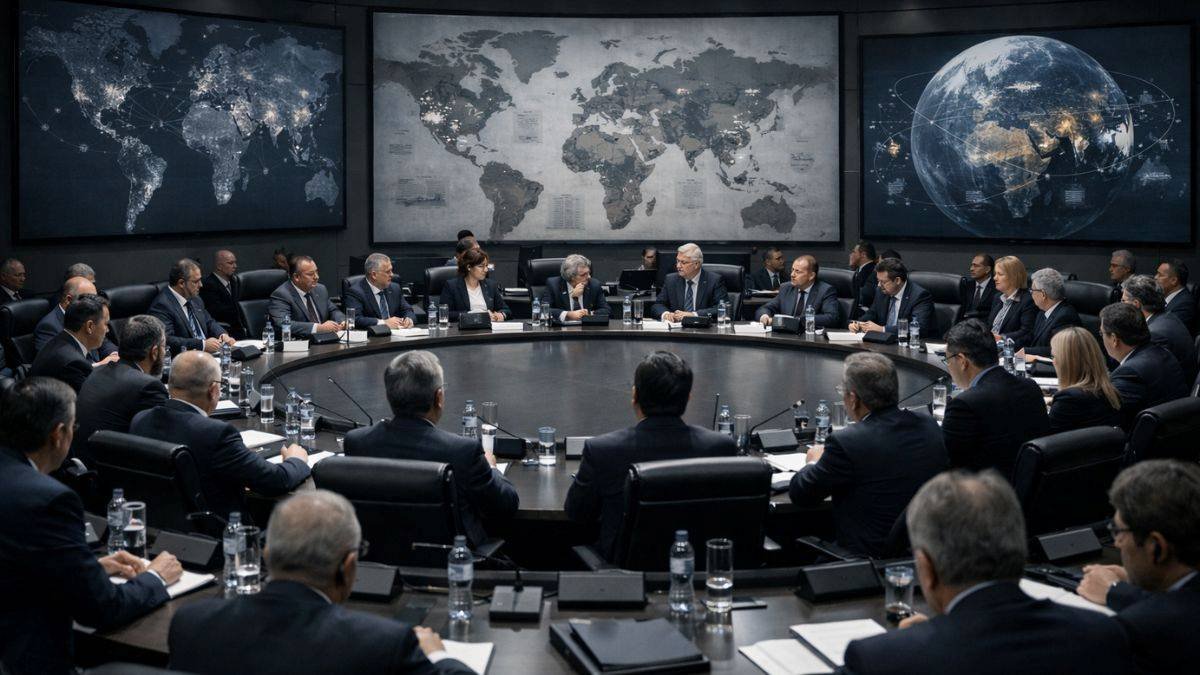
The US-China Competition Is the Defining Axis of the Current Order
The Soufan Centre’s January 2026 assessment concluded that weaknesses in Russia’s military and defence industrial base exposed during the Ukraine war have effectively entrenched the Sino-American dyad as the main arena of great power competition. This assessment reflects a broad analytical consensus: while Russia remains a significant and dangerous actor, the competition that will determine the shape of the international order for the next generation is the contest between the United States and the People’s Republic of China.
This competition operates across every domain simultaneously. Economically, it is characterised by the reconfiguration of supply chains, a race for technological dominance in artificial intelligence and semiconductors, and the weaponisation of trade through tariffs, export controls, and investment screening that both Washington and Beijing have deployed against each other.
The October 2025 trade war truce has been repeatedly tested, with both sides implementing new restrictions despite the nominal ceasefire.
China’s access to advanced semiconductors — restricted by American export controls since 2022 and tightened further in 2024 — represents the most consequential single chokepoint in the broader technological competition, affecting China’s AI development, advanced military systems, and long-term economic trajectory simultaneously.
Taiwan Semiconductor Manufacturing Company produces over 90 percent of the world’s most advanced chips at its facilities in Taiwan — a concentration of critical industrial capability in a single geographically contested location that has no precedent in modern economic history.
Militarily, the competition is most acute in the Indo-Pacific, where American forward presence, alliance architecture, and access to island chain geography intersect with Chinese anti-access and area-denial capabilities, expanding naval power, and declared intentions regarding Taiwan.
The People’s Liberation Army conducted its most extensive Taiwan blockade exercises to date in December 2025, designated Justice Mission 2025, encircling the island with naval and air assets in exercises explicitly designed to rehearse a coercive blockade and to demonstrate to the United States and Japan the costs of military intervention.
The Trump administration responded with an $11 billion arms package to Taiwan approved in December 2025, with a reported additional $14 billion package under consideration in 2026. Taiwan’s own legislature debated a $40 billion special defence budget in 2026 — a scale of investment that reflects Taipei’s assessment of the threat it faces.
The Institute for the Study of War and the American Enterprise Institute‘s China and Taiwan Update provides the most current open-source tracking of PLA military activities and cross-strait developments.
The Indo-Pacific Commander, Admiral Samuel Paparo, stated in May 2025 that while American military superiority over the PLA remains, the trajectory of the military balance is concerning and China’s chances of prevailing in a conflict were improving as PLA capabilities expand and the intensity of activities around Taiwan increases.
This assessment — that the present advantage is real but the future trajectory is unfavourable — drives the urgency of American investments in JADC2, space resilience, hypersonic weapons, and allied interoperability.
As discussed in JADC2 Explained: How the US Military’s Joint Command Network Works, the command architecture being built is specifically designed for the operational requirements of a high-intensity Indo-Pacific conflict. The geopolitical context explains why.
Technologically, the competition for dominance in artificial intelligence has emerged as the defining contest of the current decade.
China’s DeepSeek AI developments in early 2026 demonstrated that Chinese AI capability is advancing faster than American export controls can contain.
The Atlantic Council’s January 2026 assessment concluded that the year ahead would see an even fiercer competition over AI dominance, with China doubling down on its open-source AI strategy to influence global AI infrastructure. Whichever power achieves a decisive AI advantage will gain disproportionate influence over economic productivity, military capability, data governance, and digital standards simultaneously — making AI the meta-competition within which all other technological contests are nested.
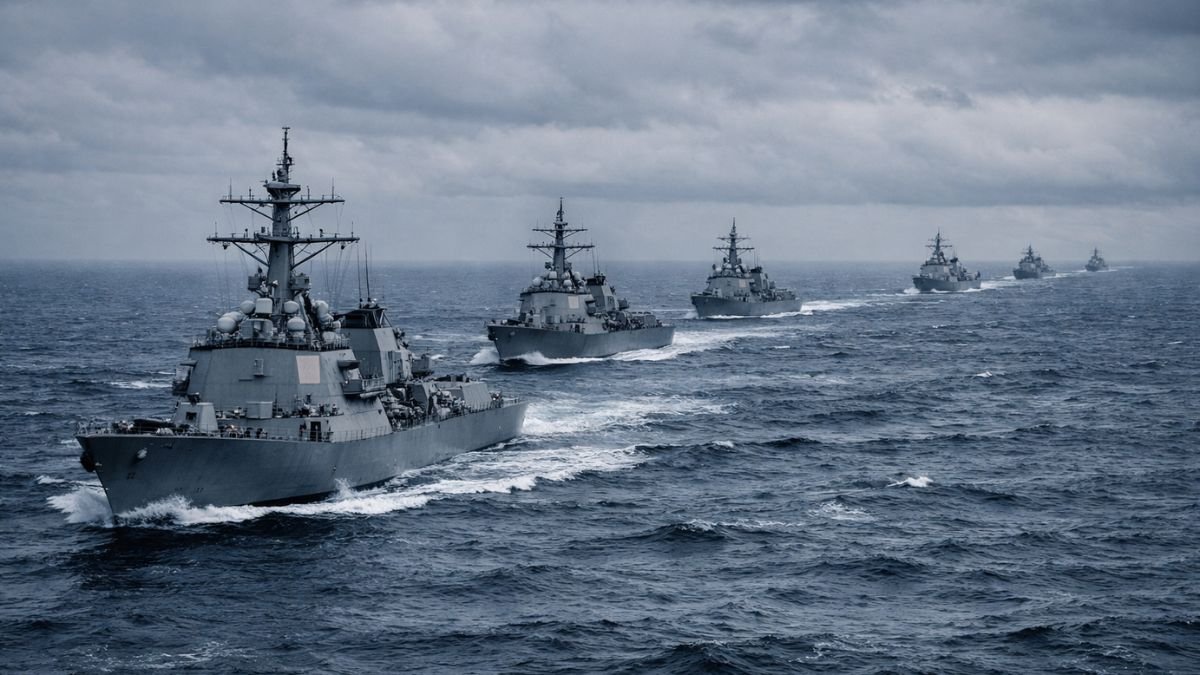
Russia Has Been Weakened by Ukraine but Remains a Consequential Actor
Russia’s full-scale invasion of Ukraine in February 2022 represented the most significant act of territorial aggression in Europe since the Second World War and the definitive end of the post-Cold War European security architecture.
The invasion has also revealed, at operational scale, the real capabilities and limitations of Russian military power in ways that have reshaped strategic assessments across every major military power.
The NDU Strategic Assessment 2025 concluded that Russia’s military suffered staggering losses in Ukraine from 2022 into early 2025 — losses in personnel, equipment, and military credibility that have confirmed the weaknesses in Russian conventional capability that Western analysts had suspected but not verified.
The Russian defence industrial base has demonstrated resilience in producing certain categories of equipment, particularly artillery ammunition, but has struggled to reconstitute more sophisticated systems at the pace that sustained high-intensity warfare demands. The operational failures of Russian command and control, logistics, and combined arms integration in Ukraine have provided the most detailed open-source assessment of Russian military limitations since the Cold War.
Yet Russia remains consequential in ways that the focus on battlefield performance can obscure.
Russia’s nuclear arsenal is the world’s largest and remains fully operational. Its counterspace capabilities — including the Nudol direct-ascent ASAT, the Peresvet directed energy system, and the extensive electronic warfare systems documented in Ukraine — are among the most advanced in the world.
Its cyber capabilities demonstrated in Ukraine’s early weeks and in sustained operations against European infrastructure represent a persistent threat to Western military and civilian systems. And its willingness to accept escalation costs that Western states have been reluctant to match — demonstrated most clearly in the repeated nuclear signalling throughout the Ukraine conflict — gives Russia a coercive leverage that its conventional weaknesses alone would not provide.
Russia’s relationship with China has deepened significantly since 2022. The partnership is not an alliance in the formal sense — NDU’s Strategic Assessment 2025 assessed that Sino-Russian strategic interests make it unlikely they will form a long-term alliance — but it has produced a level of economic and diplomatic support for Russia that has partially insulated Moscow from Western sanctions.
Chinese exports of dual-use goods, Russian energy sales to China at discounted prices, and Chinese diplomatic support at the United Nations have all contributed to Russia’s ability to sustain its war in Ukraine for longer than Western analysts initially projected. Whether this relationship deepens into genuine strategic coordination or remains limited to transactional mutual benefit is one of the most consequential unresolved questions in the current environment.
The Global South Is Asserting Strategic Autonomy as the Competition Intensifies
One of the most consequential geopolitical developments of the early 2020s is the growing refusal of Global South states to align themselves unambiguously with either the American-led or Chinese-led blocs in the great power competition.
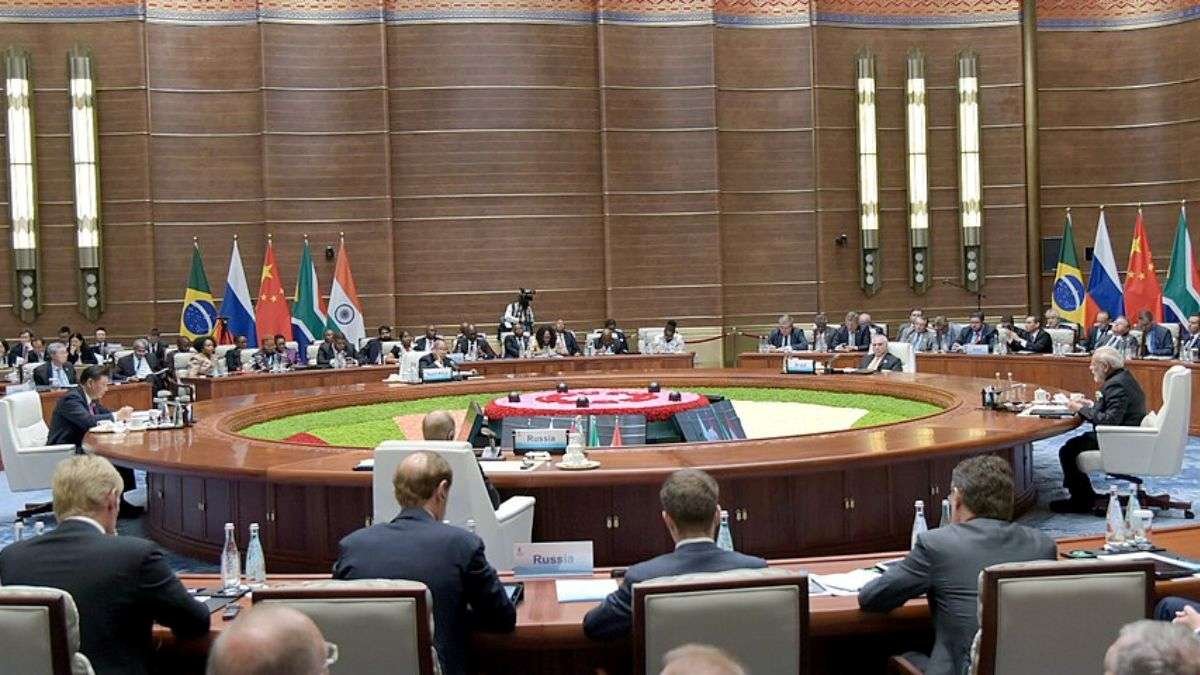
The expansion of BRICS — from five members to ten between 2024 and January 2025, with Indonesia becoming the tenth member and Vietnam joining as a partner state in June 2025 — represents the institutional expression of this strategic autonomy.
The July 2025 BRICS Summit in Rio de Janeiro brought the bloc’s expanded membership together under Brazilian presidency, with a declared focus on global governance reform, climate finance, and artificial intelligence governance. The summit issued a declaration condemning the US and Israeli airstrikes on Iran in June 2025 as a blatant violation of international law — a notably assertive geopolitical statement reflecting the bloc’s growing willingness to take collective positions on major international security issues.
As of mid-2026, BRICS members collectively represent approximately 44 percent of global GDP at purchasing power parity and 56 percent of the world’s population — a demographic and economic weight that cannot be dismissed as the expression of peripheral states.
The Stimson Centre’s post-summit assessment provides the most detailed analytical treatment of the 2025 Rio BRICS Summit outcomes and their implications for global governance reform.
The strategic autonomy agenda is driven by a shared frustration with a Western-dominated international order that Global South states perceive as serving the interests of established powers rather than emerging ones.
The demand for reformed IMF quota structures, greater representation in UN Security Council decision-making, and alternatives to dollar-denominated trade all reflect this frustration. But the BRICS grouping is not a coherent anti-Western bloc — its internal tensions between India’s strategic autonomy agenda, China’s ambitions for bloc leadership, and Brazil and South Africa’s maintenance of constructive Western relationships prevent it from operating as a unified geopolitical force.
The Carnegie Endowment’s analysis concluded that BRICS constitutes a strategic adaptation with limited transformative potential rather than a disruptive alternative to the existing order.
India’s position within this landscape is particularly significant. As the world’s most populous state, the fifth largest economy, a declared nuclear power, and a participant in both BRICS and the Quad security dialogue with the United States, Japan, and Australia, India maintains strategic relationships across the great power divide in ways that reflect both deliberate policy choice and genuine national interest complexity.
India’s External Affairs Minister S. Jaishankar has articulated this position as a desire for a fair and representative global order rather than one dominated by a few — a formulation that maintains equidistance from both Washington and Beijing while advancing Indian interests in both directions.
The Council on Foreign Relations maintains the most current analytical overview of BRICS membership, expansion dynamics, and implications for the Western-led international order.
The Middle East Has Become a Flashpoint for Great Power Competition
The Middle East has re-emerged as a major arena of great power competition in ways that intersect with the global balance of power across multiple dimensions simultaneously.
The American and Israeli military campaign against Iran’s nuclear programme in June 2025 represented the most significant direct military action in the region in over a decade and has reshaped the regional security environment in ways that are still unfolding as of mid-2026.
Iran’s position — as a nuclear threshold state whose programme has been attacked militarily, as a BRICS member, and as a state that has demonstrated its ability to threaten the Strait of Hormuz — gives it leverage in the great power competition that extends well beyond its conventional military capability.
Approximately 21 million barrels of oil transit the Strait of Hormuz daily, representing roughly 20 percent of global oil trade. China’s energy security depends significantly on Persian Gulf oil and gas transiting through this chokepoint, giving Beijing a direct stake in the Middle East security environment that complicates its relationship with both Tehran and Washington simultaneously.
Israel’s military operations in Gaza, which entered their second year in 2024 and continued through 2025 and into 2026, have generated sustained international condemnation and complicated American diplomatic relationships across the Global South.
The BRICS Rio declaration’s language on Gaza reflected a consensus among the bloc’s members that the issue has become a test of whether Western states apply international humanitarian law consistently or selectively. This perception has strengthened the strategic autonomy narrative among Global South states and complicated American efforts to build coalitions for other geopolitical objectives.
Saudi Arabia’s positioning remains one of the most consequential strategic variables in the region. Invited to join BRICS in 2023 but remaining hesitant about full membership as of mid-2026, given its security relationship with the United States, Saudi Arabia exemplifies the multiple hedging strategies that regional powers are employing as the competition intensifies.
Riyadh’s normalisation discussions with Israel, its energy relationship with China, its security relationship with the United States, and its leadership of OPEC+ production decisions all represent tools of strategic autonomy deployed simultaneously rather than committing to any single alignment.
Technology Competition Has Become Inseparable from Geopolitical Competition
The competition between great powers and the contest for technological dominance are no longer separable analytical domains. Control of artificial intelligence, semiconductor manufacturing, quantum computing, space infrastructure, and the data architectures that underpin all of these has become a central dimension of geopolitical competition — not a supporting factor but a primary arena in which the relative power positions of states are being determined.
The AI competition between the United States and China illustrates this most clearly.
American export controls on advanced semiconductors to China — aimed at restricting Chinese access to the computing power required for frontier AI model training — represent an attempt to use technological chokepoints as geopolitical tools.
China’s DeepSeek developments in early 2026 demonstrated that these controls have not prevented Chinese AI advancement, though they have shaped its direction. China’s open-source AI strategy — making Chinese models freely available globally — represents a deliberate counter-strategy designed to embed Chinese AI infrastructure in global digital systems in ways that circumvent American controls.
The semiconductor supply chain has become one of the most geopolitically sensitive industrial systems on Earth.
TSMC’s dominance of advanced chip manufacturing — producing over 90 percent of the world’s most advanced chips at facilities concentrated in Taiwan — has made Taiwan’s political status a direct economic security concern for every major economy simultaneously.
A Chinese military action against Taiwan that disrupted TSMC’s production would trigger a global economic shock of unprecedented severity, creating a deterrence dynamic that extends well beyond the military balance in the Taiwan Strait.
The concentration of critical digital infrastructure extends beyond semiconductors.
Approximately 95 percent of intercontinental internet traffic transits undersea cables — over 400 cables totalling more than 1.3 million kilometres that are almost entirely unprotected against attack or sabotage.
Russian sabotage of the Nord Stream pipelines in 2022 demonstrated that critical undersea infrastructure is a viable target in modern conflict. The vulnerability of undersea cable networks represents an operational chokepoint in the technological competition that most public discourse overlooks entirely.
Space technology’s intersection with geopolitical competition has been examined throughout StrikeOrbit’s Space and Orbital Warfare cluster.
The contrasting military space doctrines that underpin this competition are examined in US Space Force Doctrine vs China’s Space Strategy: Competing Visions of Orbital Power.
As analysed in What Is Orbital Warfare? How Space Became a Contested Military Domain, the orbital domain is now a primary arena of great power competition, with the satellite infrastructure that enables military communications, navigation, intelligence, and early warning serving simultaneously as the backbone of civilian economies and as the primary target of adversary counterspace programmes.
The geopolitical competition drives the counterspace investments. The counterspace investments deepen the geopolitical competition. These dynamics are mutually reinforcing rather than separable.

The Intelligence Framework: How to Analyse a Contested World
Understanding the current geopolitical environment requires an analytical framework that goes beyond tracking events to interpreting the structural forces that generate them. StrikeOrbit’s Strategic and Geopolitical Intelligence analysis operates on three levels simultaneously.
The first level is structural — understanding the distribution of power across states, the incentive structures that drive their behaviour, and the constraints that limit their options.
At the structural level, the defining fact of the current environment is the transition from unipolarity to multipolarity and the uncertainty about what the destination of that transition will be. States whose security and prosperity were built on the assumption of American-guaranteed stability are recalculating their positions. States that were disadvantaged by American system dominance are expanding their alternatives.
The structural incentives for hedging, balancing, and building autonomous capability are stronger than at any point since the Cold War.
The second level is relational — understanding how specific pairs and groups of states interact, how their interests align and conflict, and how their relationships are evolving.
The US-China relationship is the most consequential bilateral relationship in the world, but it is not the only one that matters.
The US-Russia relationship defines European security.
The China-India relationship defines the balance of power in Asia.
The relationships between regional powers — India and Pakistan, Saudi Arabia and Iran, Israel and its neighbours — generate local dynamics that intersect with great power competition in ways that create unpredictable escalation pathways.
The third level is operational — understanding how the structural and relational dynamics translate into specific decisions about military investment, alliance formation, technology development, and crisis behaviour.
This is where geopolitical analysis connects most directly to the military and space systems analysis that forms StrikeOrbit’s primary analytical base. As discussed in Hypersonic Weapons and the Emerging Global Strike Balance, the specific capabilities being built reflect specific adversary assessments, specific operational scenarios, and specific strategic choices that only make sense in the geopolitical context this article provides.

Conclusion
The geopolitical environment of 2026 is defined by transition, competition, and uncertainty in combination. The unipolar order has ended. Three great powers are competing across every domain with an intensity that has no post-Cold War precedent.
The Global South is asserting strategic autonomy in ways that complicate both American and Chinese ability to build the coalitions their respective visions of world order require. Regional flashpoints from Taiwan to the Middle East carry escalation risks that the deterioration of crisis management mechanisms makes increasingly difficult to contain.
What makes this moment distinctively dangerous is not that great powers compete — they always have — but that the rules governing that competition are themselves contested. When deterrence boundaries, escalation thresholds, and the norms of acceptable state behaviour are all simultaneously in dispute, the risk of miscalculation multiplies.
Every ambiguous action carries the potential for misinterpretation.
Every capability development changes the assessment of adversary intent.
Every institutional erosion removes another mechanism for managing the crises that competition inevitably generates.
The military and space capabilities that StrikeOrbit analyses exist within this framework. Understanding the framework is the beginning of understanding the capabilities. And understanding both together is the precondition for understanding what the next decade of great power competition will produce — and what it will cost.
The absence of that understanding is the condition that makes catastrophic miscalculation most likely.
Frequently Asked Questions
What is strategic and geopolitical intelligence and why does it matter?
Strategic and geopolitical intelligence is the analytical discipline of understanding how power is distributed across states, how states pursue their interests, how their interactions shape the international environment, and what the implications are for military planning, alliance architecture, and crisis management. It matters because weapons, military programmes, and security decisions do not exist in isolation — they are responses to perceived threats, expressions of strategic interests, and tools of competitive advantage in a specific geopolitical context. Without understanding the geopolitical framework, it is impossible to understand why specific military investments are being made, what they are designed to achieve, and whether they are likely to succeed.
What is great power competition and which states are involved?
Great power competition refers to the sustained rivalry between states with the military, economic, and diplomatic capabilities to shape the international order in their favour. At mid-decade 2026, three states meet this definition: the United States, China, and Russia. The US-China competition has become the defining axis of the current international order, with rivalry across military, economic, technological, and diplomatic domains. Russia remains a consequential actor despite military losses in Ukraine, primarily through its nuclear arsenal, counterspace capabilities, and willingness to accept escalation costs. India, the European Union, and other regional powers exercise significant influence within their regions but do not yet meet the full definition of global great powers.
Why is the Taiwan issue so central to US-China competition?
Taiwan is central to US-China competition for multiple converging reasons. Geopolitically, China regards Taiwan’s reunification as a core national interest and has not renounced the use of force to achieve it. The United States regards a forcible Chinese takeover as incompatible with regional stability and has maintained strategic ambiguity about whether it would intervene militarily. Economically, Taiwan Semiconductor Manufacturing Company produces over 90 percent of the world’s most advanced chips, making Taiwan’s political status a direct economic security concern for every major economy simultaneously. Militarily, Taiwan sits at the centre of the first island chain constraining Chinese naval power projection into the Pacific. These factors combine to make the Taiwan Strait the most likely flashpoint for direct US-China military conflict.
What is BRICS and does its expansion represent a genuine challenge to the Western-led order?
BRICS is a grouping of major emerging economies that expanded to ten full members between 2024 and 2025, with Vietnam joining as a partner state in June 2025. As of mid-2026, BRICS members collectively represent approximately 44 percent of global GDP at purchasing power parity and 56 percent of world population. BRICS represents a genuine expression of Global South frustration with Western-dominated international institutions and a real alternative forum for diplomatic coordination. However, its internal tensions — between China’s ambitions for bloc leadership and India’s emphasis on strategic autonomy, between pro-Western and anti-Western members — prevent it from functioning as a coherent anti-Western bloc. Its transformative potential is real but constrained by its own internal contradictions.
How does technology competition relate to geopolitical competition in 2026?
Technology competition and geopolitical competition have become inseparable in 2026. Control of artificial intelligence, semiconductor manufacturing, space infrastructure, and advanced military systems is simultaneously a source of economic advantage, military capability, and geopolitical influence. The US-China competition for AI dominance — contested through export controls on advanced chips, competing AI development programmes, and rival strategies for embedding AI infrastructure globally — is as consequential as any military competition between the two powers. The concentration of advanced chip manufacturing at TSMC in Taiwan, the vulnerability of undersea cable networks carrying 95 percent of intercontinental internet traffic, and the satellite infrastructure underpinning global military and commercial operations all represent operational chokepoints in the technological competition that determine relative power positions independently of conventional military strength.
Sources and References
National Defense University Press — Strategic Assessment 2025: Evolving Great Power Competition at Mid-Decade (February 2026)
The Soufan Centre — State of Play: Great Power Competition in 2026 (January 2026)
Carnegie Endowment for International Peace — BRICS Expansion and the Future of World Order (March 2025)
Council on Foreign Relations — What Is the BRICS Group and Why Is It Expanding? (June 2025)
Stimson Centre — 2025 BRICS Summit: Takeaways and Projections (August 2025)
Atlantic Council — Eight Ways AI Will Shape Geopolitics in 2026 (January 2026)
Institute for the Study of War and American Enterprise Institute — China and Taiwan Update (May 2026)
Council on Foreign Relations — China in the Indo-Pacific: January 2026 (April 2026)
World Economic Forum — Davos 2026 Global Risk Report (January 2026)
International Institute for Strategic Studies (IISS) — The Military Balance (2025)
RAND Corporation — Great Power Competition: Implications for Defense (2024)
Chatham House — The Geopolitics of Technology Competition (2025)
Related Analysis
For analysis of the orbital warfare dimension of great power space competition that this article establishes the strategic context for, read What Is Orbital Warfare? How Space Became a Contested Military Domain.
For analysis of the hypersonic weapons that are the military expression of the great power competition described in this article, read Hypersonic Weapons and the Emerging Global Strike Balance.
For analysis of the command and control architecture the United States is building specifically for the Indo-Pacific competition described in this article, read JADC2 Explained: How the US Military’s Joint Command Network Works.
For analysis of the anti-satellite weapons that great power competition is driving across the space domain, read Anti-Satellite Weapons: Capabilities, Systems, and Strategic Implications.
For analysis of the electronic warfare dimension of the technological competition between major powers, read Electronic Warfare in Space: Jamming, Spoofing, and Satellite Signal Warfare Explained.
