



Analysis · StrikeOrbit | 2026
Space has become the nervous system of modern military power. The satellites that enable precision navigation, real-time intelligence, command communications, and missile early warning are not peripheral support systems.
They are the infrastructure through which contemporary warfare functions. Remove them, and the most technologically advanced military force on Earth loses its ability to coordinate, target, and respond at the speed that modern conflict demands. This dependency, built over decades of investment and integration, has created a vulnerability that adversaries have not ignored.
Anti-satellite weapons — ASAT systems in military shorthand — are the direct exploitation of that vulnerability.
They are not a single technology or a single category of weapon. They are a spectrum of capabilities, ranging from ballistic missiles that destroy satellites through kinetic impact to sophisticated co-orbital spacecraft that shadow adversary assets in orbit, and from ground-based lasers that blind optical sensors to cyber tools that compromise the software controlling satellites from the ground.
What unites them is a common strategic logic: that denying an adversary access to space-based capabilities may be more effective and more achievable than defeating their forces directly.
A military that loses access to space does not fight at a disadvantage. It fights without coordination. The development of ASAT capabilities by multiple major powers reflects a shared understanding of this logic — and the weapons being built to contest the orbital domain will shape the character of future conflict as profoundly as any system operating on land, at sea, or in the air.
As explored in What Is Orbital Warfare? How Space Became a Contested Military Domain, the militarisation of space has passed the point of theory. Anti-satellite weapons are among its most consequential expressions.
Anti-Satellite Weapons Emerged From Cold War Nuclear and Orbital Competition
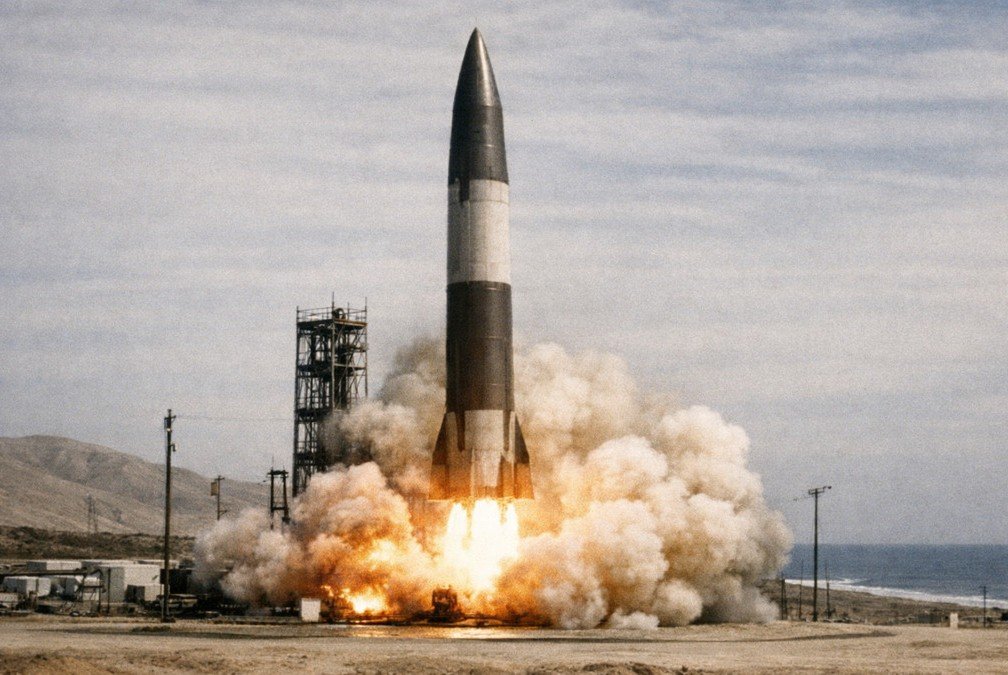
The history of anti-satellite weapons is longer than most public discussion acknowledges, and its Cold War origins reveal strategic dynamics that remain directly relevant today. Both the United States and the Soviet Union recognised within years of the space age’s beginning that satellites could be targets as well as tools, and both invested accordingly.
The Soviet Union developed the first operational co-orbital ASAT system, known in the West as the IS programme — Istrebitel Sputnikov, or satellite destroyer.
Tested between 1968 and 1982, the IS system involved placing an interceptor satellite in orbit and manoeuvring it close to a target before detonating a fragmentation warhead. It was limited by the orbital mechanics of its era, requiring multiple orbits to close with its target, but it represented the first serious operational counterspace capability and demonstrated that satellites could be killed in orbit.
The United States pursued parallel programmes. Program 437, using Thor ballistic missiles based on Johnston Island in the Pacific, was operational from 1964 to 1975 and capable of intercepting satellites using nuclear-armed warheads — an approach that reflected the era’s acceptance of nuclear use in space before the Outer Space Treaty constrained it.
In the 1980s, the United States developed a more sophisticated capability: the ASM-135 ASAT, an air-launched missile carried by F-15 fighters. A successful live test in September 1985 destroyed the Solwind P78-1 satellite, demonstrating that a kinetic intercept from an airborne platform was operationally feasible and opening a new chapter in counterspace development.
An informal moratorium on live ASAT testing took hold in the late Cold War period, driven partly by arms control diplomacy and partly by the growing recognition that debris posed risks to both sides. But the technology had been proven, the doctrine had been written, and the programmes were maintained.
The Gulf War of 1991 dissolved whatever restraint remained. The demonstration of satellite-dependent precision warfare showed every military observer in the world precisely what was at stake in the orbital domain. States that could not match American conventional power began investing in the means to deny it. Anti-satellite capabilities moved from Cold War contingency to active strategic priority, and that trajectory has not reversed in the decades since.
Different ASAT Mechanisms Reflect Different Strategic Trade-offs
Understanding the strategic implications of ASAT weapons requires understanding the distinct mechanisms through which they operate, because each carries different operational characteristics, different escalation profiles, and different long-term consequences. The choice of mechanism is itself a strategic signal.
Kinetic kill vehicles operating on direct-ascent trajectories represent the most visible category of ASAT capability. A ballistic missile or rocket is launched from a ground site, ship, or aircraft on a trajectory calculated to intercept the target satellite.
The kill vehicle closes with the satellite at relative velocities that can exceed ten kilometres per second, and the kinetic energy released on impact is sufficient to destroy any satellite ever built. No warhead is required. The collision itself is the weapon.
The strategic trade-off is immediate: kinetic intercept is decisive but generates debris that persists in orbit for years or decades, threatening every satellite operating at similar altitudes — including the attacker’s own.
The long-term consequences of debris generation and its impact on military operations are explored further in Orbital Debris and the Strategic Limits of Space Warfare.
The 2007 Chinese test against the Fengyun-1C weather satellite at 865 kilometres generated more than three thousand trackable fragments and an estimated one hundred thousand smaller pieces, the largest debris-generating event in spaceflight history. That field remains a navigational hazard today.
Co-orbital ASAT systems operate on a fundamentally different principle. Rather than intercepting a satellite from below on a ballistic trajectory, co-orbital systems are placed in orbit and manoeuvred into proximity with target satellites over hours, days, or weeks. Once in position, they can conduct surveillance, transmit jamming signals, physically grapple with the target using robotic arms, or detonate to destroy it.
The strategic advantage is ambiguity: a spacecraft conducting proximity operations is indistinguishable from an ordinary satellite until it acts, and the gradual nature of its approach provides no clear moment of attack that would trigger a defensive response or international escalation. This ambiguity is not incidental — it is the capability’s primary strategic value.
Electronic warfare against space systems encompasses jamming and spoofing. Jamming transmits interference signals on satellite communication frequencies, overwhelming legitimate signals and severing the connection between satellite and ground receiver. Ground-based jammers can be mobile, relatively inexpensive, and difficult to attribute with certainty.
Spoofing is more sophisticated: rather than blocking a signal, it transmits false data that receivers interpret as legitimate, causing GPS receivers to calculate incorrect positions, guiding precision munitions toward wrong targets, or providing military units with false situational data. Russia has deployed both capabilities extensively — in Syria, across the Baltic region, and throughout the Ukraine theatre, where GPS jamming and spoofing have been continuous features of the operational environment since 2022.
Directed energy weapons bridge the gap between disruption and destruction. Ground-based lasers directed at satellite optical sensors can dazzle or permanently damage them, blinding an imagery satellite without generating debris or triggering the visual signatures of a kinetic attack.
At higher power levels, lasers can damage solar panels, thermal control systems, or structural components. High-powered microwave systems can disrupt or destroy onboard electronics through directed energy at penetrating frequencies.
The strategic advantage of directed energy is its reversibility at lower power levels — a dazzled satellite recovers, a damaged one does not — allowing states to calibrate effects and maintain escalation control in ways that kinetic options do not permit.
Cyber operations against space systems are the least visible but potentially most pervasive dimension of the ASAT threat environment. Satellites depend on software, on ground control stations, and on the data links connecting them to operators. Each represents an attack surface.
The February 2022 attack on Viasat’s KA-SAT network — conducted through ground infrastructure, not the satellites themselves — disrupted tens of thousands of terminals across Europe and degraded Ukrainian military communications at the precise moment Russia’s invasion began.
It demonstrated that attacking the ground segment of a satellite system can be as effective as attacking the satellites, with none of the debris, attribution clarity, or escalatory visibility that a kinetic strike would carry. In space, ambiguity is not stability. It is acceleration without control.
The Secure World Foundation’s Global Counterspace Capabilities report tracks developments across all five categories annually.
Major Powers Are Integrating ASAT Capabilities Into Core Military Doctrine
The United States has the most extensive publicly acknowledged counterspace programme. The SM-3 Block IIA missile, primarily a naval ballistic missile defense interceptor, was used in 2008 to destroy the malfunctioning USA-193 satellite at approximately 250 kilometres altitude — officially framed as a safety measure but widely understood as a demonstration of residual kinetic ASAT capability.
The Geosynchronous Space Situational Awareness Programme, or GSSAP, operates a constellation of co-orbital surveillance satellites in near-geostationary orbit used to inspect and characterise other states’ high-value satellites.
Monitoring satellites, orbital maneuvers, and potential threats has become a cornerstone of military space operations, examined in Space Situational Awareness: Tracking and Securing the Orbital Domain.
The Space Force’s classified counterspace portfolio is assessed to include directed energy and electronic warfare capabilities, though specific operational deployments are not publicly confirmed. In 2025, the United States Space Force continued to expand its electromagnetic warfare portfolio and accelerated development of systems explicitly described in public budget documents as delivering reversible and non-reversible counterspace effects.
The Space Force’s foundational doctrine is set out in its Space Capstone Publication.
China’s counterspace programme is the most rapidly expanding of any power. The 2007 Fengyun-1C test established kinetic intercept capability, but subsequent development has extended far beyond that demonstration.
The DN-2 and DN-3 ASAT missiles are assessed as capable of reaching satellites in medium Earth orbit and geostationary orbit respectively — the altitudes where GPS and communications satellites operate. The Shijian satellite series has conducted proximity operations assessed by Western analysts as consistent with co-orbital weapons development.
China’s ground-based laser programme is assessed to have reached operational capability for dazzling and damaging optical sensors in low Earth orbit.
The PLA’s restructuring in 2024, which converted the Strategic Support Force into the Information Support Force, consolidated space, cyber, and electronic warfare under a new unified command structure, reflecting a doctrine in which counterspace operations are integrated components of joint warfare rather than a separate domain.
China’s Guowang commercial LEO constellation, now in active deployment, provides both communications resilience and additional dual-use on-orbit presence.
Russia brings the deepest institutional history to counterspace operations. The Nudol direct-ascent ASAT system has been tested multiple times.
The November 2021 live intercept of Cosmos 1408 at approximately 480 kilometres generated over fifteen hundred trackable fragments and forced ISS crew to shelter in their docked spacecraft — an event that drew international condemnation and contributed directly to the US-led moratorium on destructive ASAT testing announced in 2022.
Russia’s co-orbital programme has become increasingly assertive: in 2024 the United States publicly disclosed that Russia had deployed a satellite designated Cosmos 2576 into the same orbital plane as a US government reconnaissance satellite, characterising it explicitly as a counterspace weapon. This marked one of the most direct public confrontations over on-orbit threatening behaviour in the history of the space age.
For a comprehensive open-source assessment of global counterspace programmes, see the CSIS Space Threat Assessment 2024.
Russia’s electronic warfare capabilities remain among the most operationally proven of any state — deployed continuously in Syria and Ukraine across more than a decade of active conflict, with Ukrainian and NATO forces reporting persistent GPS jamming across wide areas of the operational theatre throughout 2024 and into 2025.
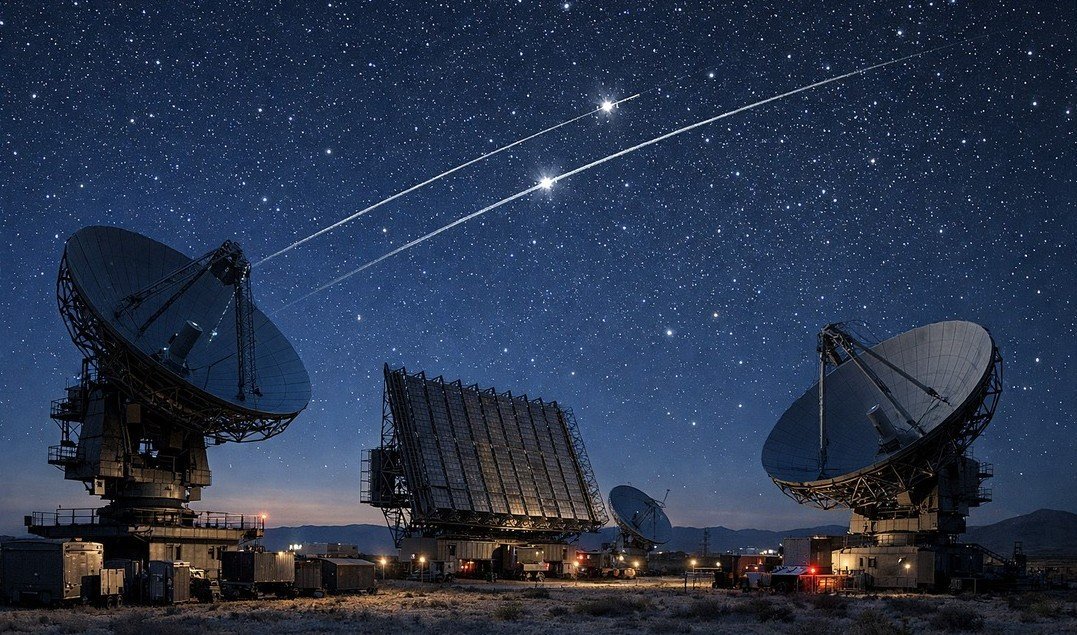
India’s Mission Shakti in March 2019 was the fourth live demonstration of kinetic ASAT capability by any state. The Microsat-R satellite was destroyed at approximately 280 kilometers altitude using a modified Prithvi Defense Vehicle interceptor, with the lower altitude deliberately chosen to limit debris persistence.
Since 2019, India has expanded the Defense Space Agency’s remit significantly, established a dedicated Defense Space Research Organisation, and deepened space security cooperation with the United States under the bilateral strategic partnership.
New Delhi has also engaged with the Quad framework to develop shared space domain awareness across the Indo-Pacific. India’s trajectory is one of deliberate capability expansion rather than simple demonstration — Mission Shakti was a signal, not an endpoint.
India’s anti-satellite programme, its strategic motivations, and its implications for the regional balance are examined in India’s Mission Shakti and the ASAT Balance in the Indo-Pacific.
Beyond these four, a broadening set of states is developing capabilities relevant to orbital competition. France formally established its Space Defense Command in 2019 and has articulated a doctrine that includes active defense of French satellites and the potential deployment of on-orbit defensive systems.
Japan’s Self-Defense Forces operate a Space Operations Squadron in close coordination with the United States and are investing in space domain awareness and directed energy research.
Israel, with its advanced space reconnaissance programme and deep integration of satellite intelligence into military operations, is developing defensive counterspace situational awareness.
South Korea launched its first military reconnaissance satellite in 2023 and is expanding its space security architecture.
Australia has integrated space into its defense planning and is participating in combined space domain awareness operations with the United States and allied partners.
Iran has demonstrated increasing space launch capability with its Qaem-100 solid-fuel rocket, placing satellites in orbit in 2023 and 2024 in programmes assessed to have ballistic missile technology implications.
North Korea’s satellite programme, which placed the Malligyong-1 reconnaissance satellite in orbit in November 2023, represents an additional proliferation of dual-use space and ballistic missile technology in an already volatile regional security environment.
The pattern across all of these actors is consistent: space is being integrated into national security architecture at an accelerating pace, and the line between space launch capability and ASAT potential is thin.
Modern Military Operations Collapse Without Reliable Satellite Support
The battlefield implications of effective ASAT use flow directly from the depth of modern military dependence on space. A military force that loses reliable satellite navigation cannot guide precision munitions to their targets, cannot coordinate dispersed units across a theatre of operations, and cannot maintain the logistical tempo that underpins sustained conflict.
As examined in Precision Strike Weapons and Modern Warfare, GPS-guided munitions are not a supplement to military capability — they are its foundation. Jamming or spoofing the navigation signals they rely on degrades the entire precision strike system, forcing a return to less accurate methods or a suspension of operations altogether.
The degradation of satellite intelligence, surveillance, and reconnaissance removes the persistent battlefield visibility that modern commanders treat as a baseline assumption. Losing imagery satellite coverage over a theatre of operations means decisions made on older data, with greater uncertainty, and with reduced ability to detect adversary movements before they reach engagement range.
The autonomous systems proliferating across modern battlefields, examined in Drone Warfare and Autonomous Systems in Modern Conflict, depend on the same satellite communications and positioning infrastructure that ASAT weapons target. A drone swarm without satellite connectivity loses both its navigation precision and its command link simultaneously.
The Ukraine conflict has provided the most extensive real-world operational data set on counterspace effects in active conventional conflict.
Russian GPS jamming across the theatre has been continuous and measurable, affecting both Ukrainian military systems and commercial aviation over wide areas of Eastern Europe. Ukrainian drone operations have been directly affected by jamming, with operators developing software countermeasures and alternative navigation methods as an operational response.
The Viasat attack degraded Ukrainian command communications at a critical moment of the war’s opening hours. SpaceX’s repeated software updates to counter Russian jamming of Starlink terminals demonstrated both the resilience of commercial distributed constellations and the intensity of the electronic warfare competition being waged in the space domain alongside the ground war.
By 2025, the integration of commercial space capabilities into Ukrainian military operations had become so complete that the conflict was functioning as a live laboratory for every aspect of space-enabled and space-contested warfare simultaneously.
ASAT Use Introduces Escalation Pathways That Extend Into Nuclear Risk

The most serious strategic concern raised by ASAT weapons is not the loss of individual satellites but the escalatory dynamics their use introduces into crisis management.
Space systems are deeply integrated into nuclear command and control architecture. Early warning satellites that detect ballistic missile launches within seconds of ignition are foundational to nuclear deterrence — they provide the warning time that makes a credible second-strike capability possible. If those satellites were degraded or destroyed in a crisis, the state that lost them would face compressed warning times and degraded confidence in its ability to characterise an incoming attack.
The role of space-based early warning systems in strategic stability is examined further in Missile Warning Satellites and Early Warning Systems Explained.
This creates an escalation pathway with no equivalent in conventional warfare. An ASAT attack on early warning satellites — conducted for conventional military purposes — could be interpreted as preparation for a nuclear first strike, triggering a nuclear response to what was intended as a conventional operation.
The logic runs symmetrically in both directions: a state planning a nuclear first strike would want to blind its adversary’s early warning architecture first, which means that blinding that architecture — for any reason — may be read as the opening move of nuclear attack.
Managing this ambiguity in a fast-moving crisis, with compressed decision timelines and degraded communications, represents one of the most dangerous structural features of the current strategic environment.
Attribution challenges compound this instability at every level. Non-kinetic counterspace operations — jamming, spoofing, directed energy, cyber — can be difficult to attribute with certainty in real time.
A degradation in satellite communications or navigation may be indistinguishable from a technical malfunction in the minutes available for decision. In a crisis where timelines are measured in minutes and where leaders are already operating under maximum stress, the inability to determine with confidence whether an attack has occurred, and who conducted it, creates conditions for miscalculation that could escalate beyond any actor’s intent or interest.
The debris generated by kinetic ASAT use introduces a third dimension of irreversibility. A sufficiently destructive campaign of kinetic counterspace operations at critical orbital altitudes could generate debris cascades that render those altitudes unusable for decades — an outcome that imposes catastrophic costs on attacker and target alike, and that cannot be undone.
Space superiority achieved through mass kinetic attack is not dominance. It is the destruction of the domain itself.
Debris tracking data is published by the NASA Orbital Debris Program Office and the European Space Agency’s Space Debris by the Numbers resource.
Future Space Warfare Will Be Defined by Resilience Rather Than Dominance
The trajectory of ASAT development points toward greater sophistication, greater proliferation, and greater strategic ambiguity.
The US-led moratorium on destructive direct-ascent ASAT testing, announced in April 2022 and subsequently endorsed by over thirty states, represents the most significant normative development in counterspace arms control since the Outer Space Treaty. But it addresses only the most visible and environmentally damaging category of counterspace weapon.
It does not constrain co-orbital systems, directed energy, electronic warfare, or cyber operations — which is precisely where the most consequential counterspace development is now occurring across all major programmes.
The legal framework governing military activities in orbit, together with its remaining gaps, is examined in The Outer Space Treaty and Its Limits in the Age of Orbital Warfare.
Military space strategy across all major powers is shifting from platform-centric dominance toward systemic resilience. Proliferated constellations — hundreds of smaller satellites rather than a small number of high-value platforms — distribute capability across architectures that are far harder to degrade comprehensively.
The US Space Force’s Proliferated Warfighter Space Architecture, now in active deployment with its first operational tranches in orbit as of 2025, is designed explicitly for a threat environment in which individual satellite loss is expected and the system must function despite it.
China’s Guowang constellation, Europe’s IRIS² programme, and a growing number of national and commercial LEO constellations all reflect the same architectural logic. A constellation of three hundred satellites cannot be neutralised by a single ASAT strike the way a single high-value communications satellite can.
On-orbit servicing is emerging as a dual-use capability that will complicate future counterspace dynamics significantly. Spacecraft capable of refuelling, repairing, or repositioning satellites in orbit have obvious civilian and commercial value. They also carry obvious weapons potential: a spacecraft that can manoeuvre close enough to service a satellite can manoeuvre close enough to disable it.
Several commercial on-orbit servicing missions have been conducted successfully through 2024 and 2025, establishing the technical baseline for proximity operations at geostationary orbit. The same capabilities that extend satellite life could, under a different intent, threaten it.
The commercial space sector’s role in military operations will only deepen. The Ukraine conflict demonstrated that commercial constellations can provide military-grade communications resilience at operational scale.
The growing military dependence on privately operated satellite constellations and the strategic implications of that shift are examined in Commercial Satellites as Military Infrastructure: Dependency, Control, and Strategic Risk.
It also demonstrated that commercial satellite infrastructure will be targeted in conflict, raising unresolved questions about the legal status of commercial space assets in armed conflict, the obligations of private companies operating in war zones, and the extent to which states can claim the right to defend commercial infrastructure that has become functionally military.
These questions have no settled answers in international law, and the pace of commercial space development is outrunning the pace of the legal frameworks designed to govern it.

Conclusion
Anti-satellite weapons are not a peripheral concern for strategists focused on terrestrial conflict. They are among the most consequential military developments of the current era precisely because their targets — the satellites that enable modern warfare — are simultaneously indispensable and indefensible in any comprehensive sense.
The spectrum of ASAT capabilities now deployed or in active development across multiple major powers reflects a shared strategic conclusion: that space superiority, or at minimum the ability to deny it to adversaries, is a precondition for success in high-intensity conventional conflict.
The proliferation of counterspace capabilities beyond the original Cold War powers, the deepening entanglement of commercial space infrastructure with military operations, the unresolved legal frameworks governing conflict in orbit, and the dangerous intersection of counterspace operations with nuclear command architecture have all accelerated in the past decade.
The decisions being made now — on weapons development, on resilience architecture, on norms and arms control — will determine the character of orbital conflict for a generation.
Space superiority is not about dominance. It is about denying blindness — and the race to do so, across an expanding field of actors and capabilities, is already underway.
Frequently Asked Questions
What are anti-satellite weapons and how do they differ from conventional weapons?
Anti-satellite weapons are systems designed to disrupt, degrade, or destroy satellites in orbit. Unlike conventional weapons that target terrestrial forces or infrastructure, ASAT systems operate against assets in space that enable the entire range of modern military functions — navigation, communication, intelligence, and early warning. They include kinetic interceptors that destroy satellites through direct collision, co-orbital systems that manoeuvre in orbit to engage targets, electronic warfare tools that jam or spoof satellite signals, directed energy weapons that damage sensors or electronics, and cyber capabilities that target ground control infrastructure. Their significance lies not in the satellites they destroy but in the military functions those satellites make possible.
Which countries currently have demonstrated anti-satellite capabilities?
The United States, Russia, China, and India have each demonstrated kinetic direct-ascent ASAT capabilities through live intercept tests. The United States, Russia, and China have additionally developed co-orbital systems, electronic warfare capabilities, and directed energy or cyber tools with counterspace applications. Russia’s 2021 Nudol test and 2024 Cosmos 2576 deployment, and China’s extensive co-orbital and directed energy programme, represent the most operationally advanced developments outside the United States. France, Japan, South Korea, Israel, Australia, and the United Kingdom are developing space domain awareness and counterspace capabilities. Iran and North Korea have demonstrated space launch capabilities with dual-use ballistic missile implications. The number of states with meaningful counterspace programmes is expanding steadily across every region.
Can satellites be defended against anti-satellite attacks?
Most satellites currently in orbit have limited active defensive capabilities. Some can execute evasive maneuvers using onboard propulsion, but fuel constraints limit the extent and number of such maneuvers, and no deployed system can intercept an incoming kinetic ASAT weapon before impact. Defense against ASAT threats is therefore achieved primarily through resilience rather than active protection — proliferating constellations to distribute capability across many satellites, building redundancy into communications and navigation architectures, hardening satellites against electromagnetic interference, and developing rapid reconstitution capabilities to replace lost assets. Active defensive systems capable of protecting individual satellites remain at the research and development stage across all major space powers.
Why are anti-satellite weapons considered more destabilising than conventional weapons?
ASAT weapons introduce destabilising dynamics with no direct equivalent in conventional warfare. Kinetic attacks generate orbital debris that threatens all space users indefinitely, imposing long-term environmental costs on attacker and target alike. The deep integration of satellites into nuclear command and control architecture means that counterspace attacks can be misinterpreted as precursors to nuclear first strikes, creating escalation pressures that compress decision timelines dangerously. Non-kinetic ASAT operations are often difficult to attribute with certainty in real time, increasing the risk of miscalculation in crisis situations. Together, these characteristics make the orbital domain uniquely difficult to manage at the threshold between competition and conflict.
Sources and References
U.S. Department of Defense — Defense Space Strategy (2020)
U.S. Space Force — Spacepower: Doctrine for Space Forces (2020)
U.S. Space Force — Space Capstone Publication (2020)
U.S. Space Force — FY2025 Budget Request: Space Domain Awareness and Counterspace Programmes (2024)
NASA Orbital Debris Program Office — Orbital Debris Quarterly News (2025)
European Space Agency — Space Debris by the Numbers (2025)
Center for Strategic and International Studies (CSIS) — Space Threat Assessment (2024)
Secure World Foundation — Global Counterspace Capabilities: An Open Source Assessment (2024)
Congressional Research Service — Anti-Satellite Weapons: Potential Arms Control Approaches (2023)
RAND Corporation — Counterspace Operations and the Future of Space Security
International Institute for Strategic Studies (IISS) — The Military Balance (2025)
United Nations Office for Outer Space Affairs — Outer Space Treaty (1967)
United Nations Open-Ended Working Group on Reducing Space Threats — Final Report (2023)
Related Analysis
For analysis of the broader strategic framework within which anti-satellite weapons operate, read What Is Orbital Warfare? How Space Became a Contested Military Domain.
For analysis of the precision strike systems that depend on the satellite infrastructure ASAT weapons target, read Precision Strike Weapons and Modern Warfare.
For analysis of autonomous and unmanned systems whose operational effectiveness depends on satellite communications and positioning, read Drone Warfare and Autonomous Systems in Modern Conflict.
For analysis of hypersonic weapons and their relationship to space-based tracking and warning architecture, read Hypersonic Weapons and the Emerging Global Strike Balance.
For analysis of how major powers are restructuring their forces around the technologies that orbital warfare enables and threatens, read Military Modernization in the 21st Century.
