



Analysis · StrikeOrbit | 2026
In September 2025, at a military parade marking the 80th anniversary of victory over Japan, China displayed its YJ-17 and YJ-19 hypersonic missiles in Tiananmen Square.
Foreign Policy characterised the display as an implicit signal that American aircraft carriers, each costing roughly $13 billion, could find themselves at risk in a future conflict — a framing worth noting as one publication’s interpretation of the parade’s intent, rather than a settled military assessment.
Weeks earlier, Russia’s Vladimir Putin announced the Oreshnik hypersonic ballistic missile had entered production and would deploy to Belarus, positioning Russian hypersonic reach closer to NATO’s border and compressing flight times to European targets to mere minutes.
Meanwhile, the American Dark Eagle programme — meant to give the US Army its own hypersonic strike capability by the end of 2025 — missed that deadline, an acknowledgment the Army made quietly in January 2026, even as a successful joint Army-Navy test in March 2026 showed real continued technical progress.
Three developments, three different trajectories, and together they capture where the global hypersonic competition actually stands entering 2026: not a race the United States is positioned to win outright, not a race it has definitively lost, but a genuinely uneven contest in which deployment timelines, strategic purpose, and operational testing all diverge sharply between the major powers pursuing this technology.
Hypersonic weapons are munitions capable of sustained flight above Mach 5 — five times the speed of sound — while maneuvering unpredictably enough to complicate interception in ways that traditional ballistic missiles, which follow a predictable arc, do not.
That combination of speed and manoeuvrability is what makes them strategically significant, and also what makes them so difficult to build, test, and field reliably.
This article examines the current state of that competition across the major programmes, the strategic logic driving it, and the missile defense response now racing to catch up — a response examined in full technical depth in Can Hypersonic Missiles Be Intercepted? Defense Systems, Technology, and the Limits of Current Capability and Tracking Hypersonic Missiles from Space: The Sensor Architecture Reshaping Missile Defense.
American Hypersonic Programmes Have Achieved Real Technical Milestones While Missing Deployment Deadlines
The United States has pursued hypersonic weapons as part of its Conventional Prompt Global Strike concept since the early 2000s. Still, investment remained comparatively restrained until Russian and Chinese programmes advanced enough to force a reassessment.
This reassessment connects directly to the broader institutional shift toward precision, autonomy, and networked capability examined in Military Modernization in the 21st Century: Precision Strike, Autonomy, and Network-Centric Warfare. That reassessment has now produced genuine technical progress, even as fielding timelines have repeatedly slipped.
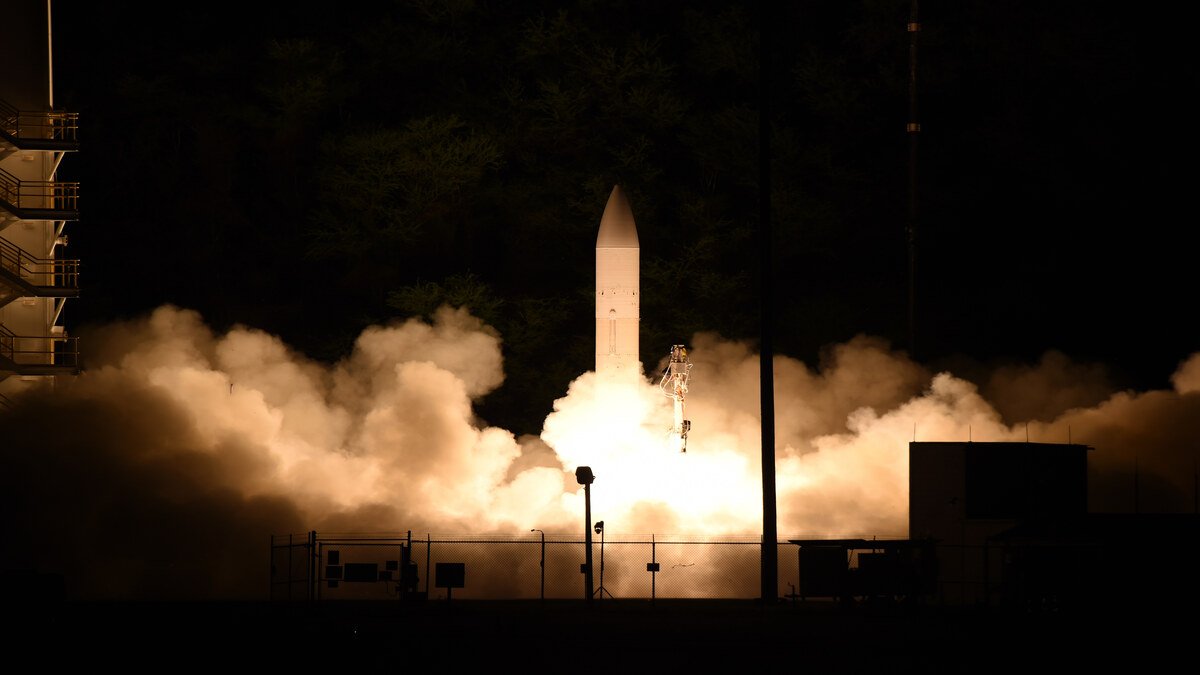
The Army’s Long-Range Hypersonic Weapon, known as Dark Eagle, and the Navy’s Conventional Prompt Strike system share a Common Hypersonic Glide Body, developed jointly to reduce cost and accelerate testing across both services.
That shared glide body completed successful end-to-end flight tests in June 2024, December 2024, and April 2025 — a real technical achievement following earlier test failures, including a failed 2022 attempt and two subsequent tests in 2023 that were scrubbed entirely due to failed preflight checks.
Despite that progress in testing, the Army acknowledged in January 2026 that it had missed its end-of-2025 target for declaring Dark Eagle operational, though a subsequent joint Army-Navy test in March 2026 demonstrated continued momentum.
The Navy’s parallel Conventional Prompt Strike programme continues integration onto Zumwalt-class destroyers through 2026, with submarine integration on Virginia-class boats beginning in fiscal year 2025, though officials have cautioned that a fully operational capability likely remains several years away.
The Air Force’s air-breathing Hypersonic Attack Cruise Missile, under development by Raytheon, requested $802.8 million in the FY2026 budget — a level of continued funding commitment despite a Government Accountability Office review finding the programme roughly six months behind schedule on a key design milestone, pushing flight testing back by approximately a year and reducing the number of planned test flights.
In a genuine reversal, the Air Force also revived the AGM-183A Air-Launched Rapid Response Weapon, known as ARRW, in 2025 — a boost-glide programme that had been widely reported as cancelled after repeated test failures — requesting $387.1 million in the FY2026 budget to begin procurement.
This decision to fund a previously abandoned programme reflects an emerging judgement within the Pentagon that no single hypersonic weapon type — glide vehicle or cruise missile — adequately covers the range of missions across different services and threat scenarios, and that abandoning either approach entirely would leave a capability gap the other cannot fill.
A Pentagon official told Fox News Digital that “Scaled Hypersonics” has been designated one of the department’s critical technology areas, with the Test Resource Management Center working to upgrade test facilities and establish new testing locations specifically to address what industry experts describe as the programme’s central bottleneck.
Mark Bigham, a defense industry executive with direct experience in hypersonic launch and testing technology, told Fox News that testing capacity — not engineering ambition — is “probably the bottleneck right now,” since only a handful of facilities worldwide can sustain the speeds required to properly evaluate these systems.
The strategic purpose behind American hypersonic investment remains, in an important sense, less clear-cut than Russia’s or China’s: the United States already possesses extensive conventional precision strike capability through cruise missiles, stealth bombers, and carrier aviation, examined in Precision Strike Weapons and Modern Warfare, and the scenarios in which hypersonic speed specifically justifies its substantial additional cost remain part of an ongoing internal debate over how much of the defense budget these programmes should command.
Russia Has Prioritised Operational Deployment and Combat Use Over Testing Transparency
Russia’s approach to hypersonic weapons has consistently emphasised fielding systems and using them operationally, even when that use reveals genuine performance limitations — a strategy that trades testing rigour for demonstrated political and military signalling value.
The Kinzhal — an air-launched ballistic missile Russia has repeatedly used in Ukraine since 2022 — has become the clearest real-world data point on hypersonic weapon performance in actual combat, and the results have been genuinely mixed.
Despite Putin’s 2018 claim that the Kinzhal was “invincible,” Ukraine reported by April 2025 that its forces had shot down 40 Kinzhals since the war began, using American-supplied Patriot batteries — a substantial correction to Russia’s original marketing of the system as unstoppable.
Ukraine has also reportedly intercepted Russian Zircon cruise missiles, Russia’s other operationally fielded hypersonic system. Despite these documented intercepts, Russia continues to describe all of its hypersonic systems — Kinzhal, Zircon, and the intercontinental-range Avangard glide vehicle — as having moved fully out of the development stage and into production for its armed forces.
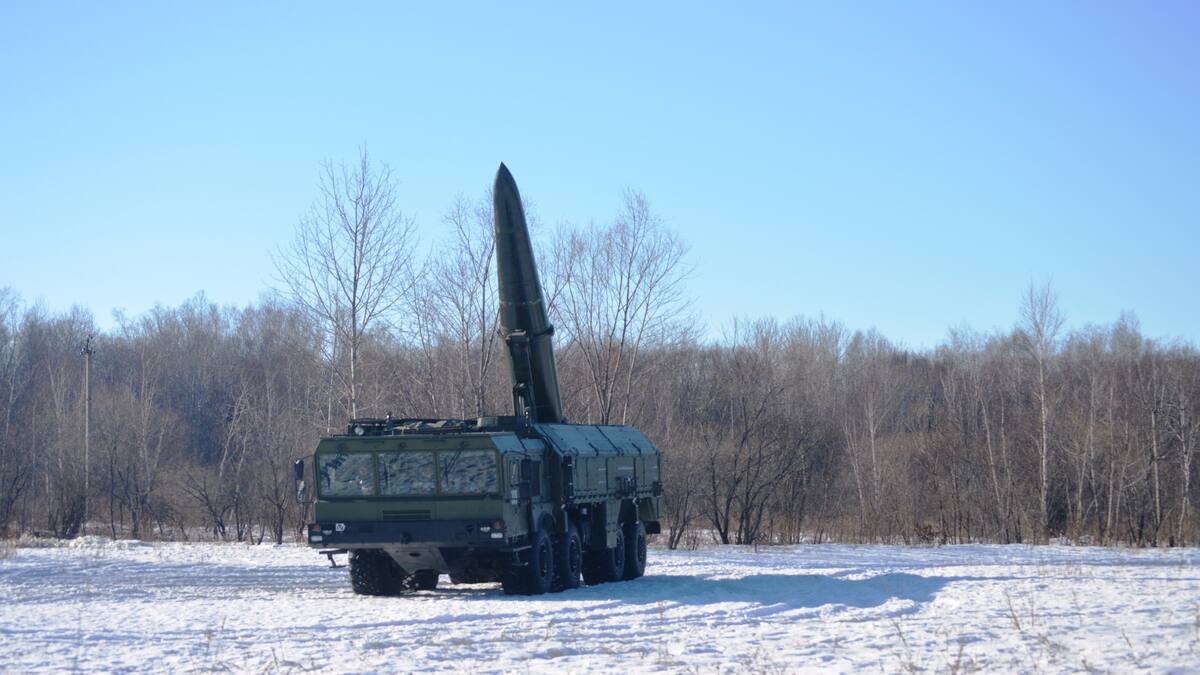
The most significant recent Russian development came in August 2025, when Putin announced that the Oreshnik — a new intermediate-range hypersonic ballistic missile — had entered production and would be deployed to Belarus.
That deployment decision carries clear strategic intent beyond the weapon’s technical characteristics: positioning launch platforms inside Belarus places Russian hypersonic reach directly against NATO’s eastern border and compresses warning time for European capitals to a matter of minutes rather than the longer flight times a missile launched from within Russia’s own territory would require.
Russia’s overall strategy reflects a consistent pattern — field-first deployment intended to generate deterrent and negotiating value, using operational hypersonic weapons as a form of geopolitical leverage in its relationship with NATO and Europe, even where combat performance has proven less absolute than initial claims suggested.
China Is Pursuing Strategic Diversity Specifically Designed to Defeat American Missile Defenses
China’s hypersonic programme has moved from research demonstration toward genuine operational diversity faster than either American or Russian efforts, built around an explicit strategic objective: degrading the effectiveness of the layered American missile defense architecture that currently anchors US and allied deterrence in the Indo-Pacific.
This broader strategic assessment has also been reflected in independent defence analysis, with Foreign Policy arguing that China’s expanding hypersonic capabilities, alongside Russia’s, are reshaping the global strategic balance and challenging longstanding American military advantages.
In late September 2025, China conducted a hypersonic intercontinental ballistic missile test featuring boost-glide technology combined with a depressed trajectory — a flight profile that stays lower and flatter than a traditional ballistic arc, which both reduces the time window in which early-warning sensors can detect the launch and complicates the geometry any interceptor would need to solve.
Analysts described the test as a genuine leap in flight profile sophistication, combining maneuverability with a deliberately less detectable approach vector.
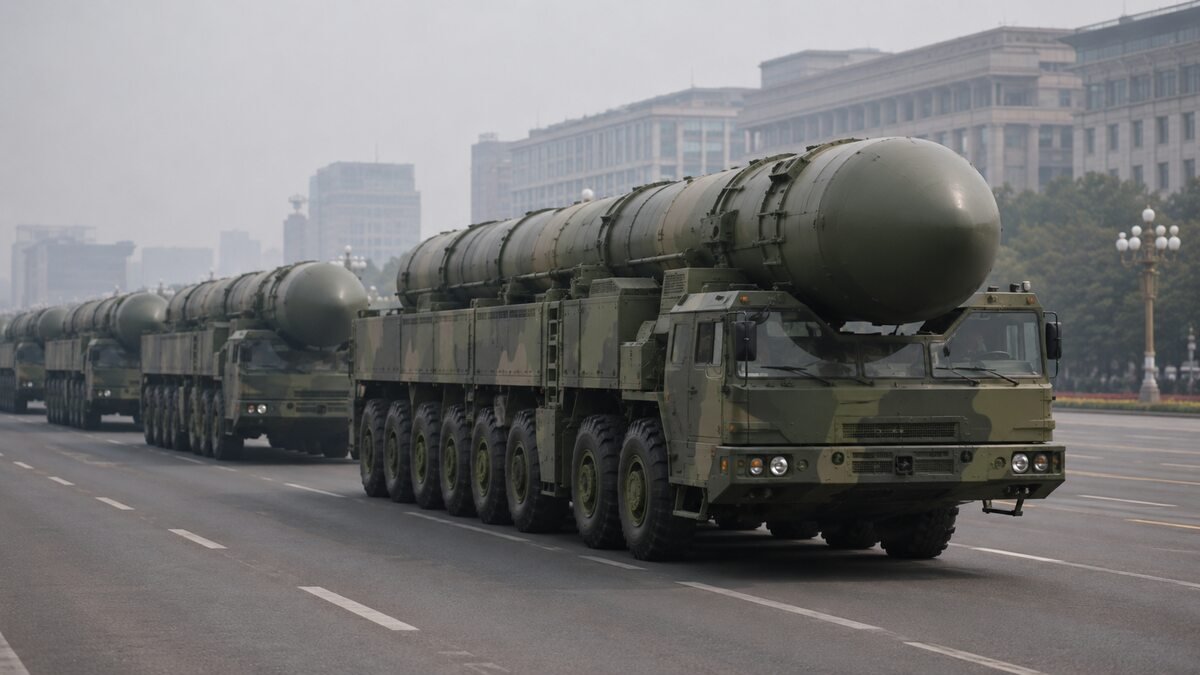
This built on China’s existing operational hypersonic arsenal, publicly displayed at the same September 2025 parade: the YJ-17, an anti-ship missile pairing a rocket booster with a hypersonic glide vehicle warhead; the YJ-19, a scramjet-powered hypersonic cruise missile capable of sustained maneuvering during flight; and the CJ-1000, a hypersonic cruise missile intended specifically to strike command and communication nodes across land, sea, and air domains.
China’s underlying strategic logic is explicit in how its own military planners discuss these systems: by combining range, extreme velocity, and unpredictable maneuvers, Chinese hypersonic weapons are designed to saturate or entirely bypass the midcourse interceptor architecture — systems like THAAD, Aegis, and Ground-Based Midcourse Defense — that currently anchors American and allied missile defense in the region.
Beijing calculates that lower flight altitudes and unpredictable trajectories degrade the effectiveness of interceptors optimized for traditional ballistic threats, shrinking the response window available to American and allied forces, specifically in a contested Indo-Pacific scenario centered on Taiwan or the South China Sea, examined further in The Indo-Pacific Military Balance: US, China, and the Regional Powers.
The Competition Has Genuinely Globalised Beyond the Original Three-Power Race
What began as a contest primarily between the United States, Russia, and China has expanded into a genuinely multilateral technological competition, with no agreed international rules and no verification mechanism of any kind governing how any state develops, tests, or deploys these systems.
India’s hypersonic programme has advanced substantially. In January 2026, the Defense Research and Development Organization completed a 12-minute ground test of a full-scale scramjet engine — a critical milestone under India’s Project Vishnu, which is targeting Mach 8 capability by 2030 for a longer-range hypersonic cruise missile.
India is now reportedly developing twelve distinct hypersonic-related systems spanning both offensive and defensive roles, a breadth of programme activity that reflects New Delhi’s strategic requirement to address potential threats from both Pakistan and China simultaneously.
Separately, the BrahMos-II — a joint venture with Russia targeting Mach 7 to 8 — remains in advanced development, with India positioned to become the fourth state after Russia, China, and the United States to field a confirmed operational hypersonic weapon, likely by 2027 to 2028, as examined in Countries With Operational Hypersonic Missiles in 2026.
Japan announced in August 2025 that it would deploy both an upgraded Type-12 surface-to-ship missile and its indigenously developed Hyper Velocity Gliding Projectile across bases in its northern, central, and southern regions through 2027, with the United States approving a $200 million support package for the programme in March 2025.
Japan’s investment reflects a fundamentally different strategic logic than either Russia’s or China’s — driven specifically by maritime geography and the need to strengthen counterstrike options against regional threats, developed with direct allied support rather than as an independent deterrent.
Europe has entered the competition as well: the United Kingdom and Germany are jointly testing what would become Europe’s first sovereign hypersonic cruise missile, and the European Union’s March 2026 defense white paper formally identified hypersonic weapons as a critical foundational technology for the continent’s future defense posture.
This proliferation follows a self-reinforcing logic that mirrors previous arms races.
India develops hypersonic capability partly because China does.
France explores its own options partly because Russia has fielded operational systems.
The competition sustains itself independent of whether every participant has a clearly articulated operational requirement for the capability — a pattern strategic historians have observed across nuclear proliferation and previous generations of strategic weapons technology alike.
Missile Defense Is Racing to Respond, But Faces Genuine Structural Constraints
The same speed and maneuverability that make hypersonic weapons strategically attractive also make them exceptionally difficult to intercept, and the missile defense response — while accelerating rapidly — faces structural constraints rather than simply a matter of insufficient funding.
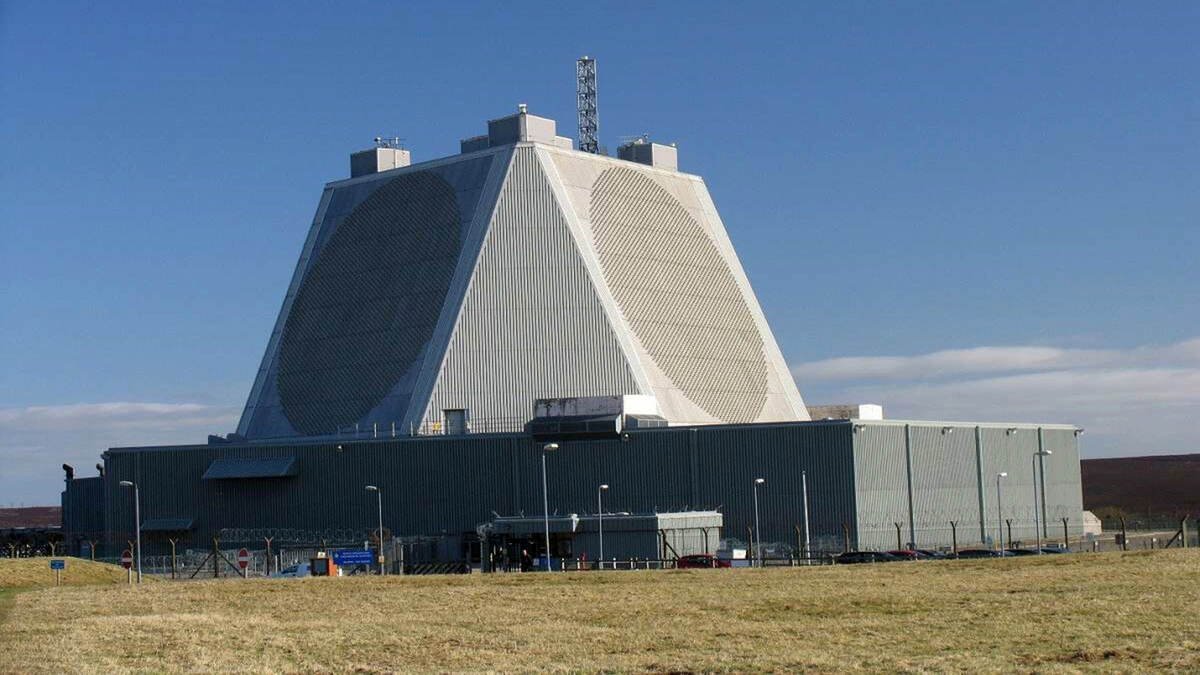
The Missile Defense Agency’s Hypersonic and Ballistic Tracking Space Sensor programme, intended to improve detection and tracking of hypersonic threats from space, received an executive order-driven acceleration under the January 2025 “Iron Dome for America” directive, with the agency requesting $57.2 million for the sensor programme and $200.6 million for the broader hypersonic defense programme element in FY2026.
In April 2025, the Missile Defense Agency awarded Northrop Grumman roughly $475 million in additional funding specifically to accelerate the Glide Phase Interceptor, a system designed to destroy hypersonic weapons during the vulnerable middle portion of their flight — though even with that acceleration, initial operational capability is not expected before the early 2030s.
The United States and Japan separately signed a cooperative agreement in May 2024 to co-develop this same interceptor system, reflecting the genuinely allied nature of the defensive effort.
At the broader architectural level, the Pentagon has continued developing its multi-tiered “Golden Dome” concept, intended to combine space-based, midcourse, high-altitude, and terminal defensive layers into a single system capable of addressing both ballistic and hypersonic threats simultaneously.
But the technical obstacles remain genuinely difficult regardless of funding level: adequate sensor coverage to track a maneuvering target throughout its flight, heat-shielding and guidance control sufficient to survive the extreme conditions of a hypersonic intercept attempt, and seamless integration into existing command-and-control architecture all represent unsolved engineering challenges rather than simply underfunded ones.
The honest assessment, as multiple defense officials and independent analysts have noted, is that existing missile defense systems were fundamentally not designed for the hypersonic threat as it exists today — a gap current programmes are working to close, but have not yet closed.
The full technical detail of this challenge — and the systems being developed to address it — is examined in Can Hypersonic Missiles Be Intercepted? Defense Systems, Technology, and the Limits of Current Capability and in the space-based sensing architecture covered in Tracking Hypersonic Missiles from Space: The Sensor Architecture Reshaping Missile Defense.
Hypersonic Weapons Create a Distinctive and Dangerous Escalation Risk
Beyond their direct military utility, hypersonic weapons introduce a specific strategic danger that most previous generations of weapons technology did not: the compression of decision time combined with genuine ambiguity about what a given weapon is actually carrying.
If a state believes an adversary’s hypersonic weapons could destroy its command-and-control systems or nuclear forces before it could organize any response, that state faces genuine pressure toward preemptive action — a classic “use it or lose it” dynamic that strategic stability theory has long identified as one of the most dangerous conditions in nuclear deterrence.
That pressure is sharply amplified by the difficulty of distinguishing a conventionally armed hypersonic weapon from a nuclear-armed one in the seconds or minutes available to detect and assess an incoming launch.
A defending state’s early warning systems may detect the launch itself clearly, while remaining genuinely uncertain about the payload — yet still be forced to decide how to respond within a compressed window that hypersonic speed itself creates.
This ambiguity is not an incidental side effect of hypersonic technology. It is, as many strategic analysts have concluded, one of its most structurally destabilising features, regardless of which state fields the weapon or what its officially stated purpose is.
Conclusion
The global hypersonic competition entering 2026 defies any simple narrative of American decline or Chinese and Russian inevitable advantage.
The United States has achieved genuine technical milestones — a validated Common Hypersonic Glide Body, successful end-to-end test flights, renewed investment in a previously abandoned programme — while consistently missing the deployment deadlines its own officials have set.
Russia has prioritised operational fielding and combat signalling over rigorous testing, producing a real but imperfect deterrent whose actual battlefield performance has proven more vulnerable to interception than its own government initially claimed.
China has pursued the most strategically coherent programme of the three, explicitly designed around defeating the specific missile defense architecture the United States has built, and has diversified its operational arsenal faster than either competitor.
Around all three, a genuinely global field of additional participants — India, Japan, the UK, Germany, and others — is entering a competition with no agreed rules and no verification framework of any kind.
What connects all of this is a pattern examined throughout StrikeOrbit‘s broader analysis of modern military technology: capability, doctrine, and governance are advancing at different speeds, and the space between them is where the genuine strategic risk resides.
Hypersonic weapons compress warning time, blur the line between conventional and nuclear signalling, and are proliferating across a widening field of state actors faster than any international framework has emerged to govern their use.
That gap — not any single nation’s temporary lead or lag in a specific programme — is the central strategic reality of the hypersonic era.
Frequently Asked Questions
What makes a weapon hypersonic, and why does that matter strategically?
A hypersonic weapon is a munition capable of sustained flight above Mach 5 — five times the speed of sound — while manoeuvring unpredictably during flight, unlike a traditional ballistic missile that follows a predictable arc. This combination of extreme speed and maneuverability is what makes hypersonic weapons strategically significant: they compress the time a defender has to detect, assess, and respond to an incoming threat, while their unpredictable flight path makes them substantially harder for existing missile defense systems to intercept than a conventional ballistic missile travelling the same distance.
Are hypersonic weapons always nuclear?
No, and this is one of the most common misconceptions about the technology. The large majority of hypersonic weapons currently fielded or under development, including Russia’s Kinzhal and China’s YJ-17 and YJ-19, are conventionally armed and designed for precision strikes against specific military targets rather than mass destruction. A smaller number of systems, including Russia’s intercontinental-range Avangard glide vehicle, are specifically designed to carry nuclear warheads. This distinction matters enormously for crisis stability: because hypersonic weapons can be either conventional or nuclear, and because their speed leaves little time to determine which type is inbound, a defending state may need to decide how to respond without knowing whether it is facing a conventional strike or a nuclear one.
Which countries currently have operational hypersonic weapons?
Russia and China currently field the most operationally mature hypersonic arsenals, with Russia’s Kinzhal having been used repeatedly in combat since 2022 and China having displayed multiple distinct operational systems, including the YJ-17 and YJ-19. The United States has completed successful testing of its Common Hypersonic Glide Body across both Army and Navy variants but had not achieved full operational status as of early 2026, having missed its own end-of-2025 target. India is on track to achieve operational status by approximately 2027 to 2028, positioning it as the fourth state to reach confirmed operational capability, examined in full in Countries With Operational Hypersonic Missiles in 2026.
Why has the United States fallen behind Russia and China in fielding hypersonic weapons?
The United States began hypersonic research decades ago but did not prioritise fielding operational weapons, since its existing conventional strike capability through stealth aircraft and cruise missiles appeared sufficient and investment flowed toward counterterrorism priorities instead. That calculus shifted as Russian and Chinese programmes matured, but American programmes have faced genuine technical setbacks — including early failed tests of the Common Hypersonic Glide Body and repeated schedule slips on the Air Force’s cruise missile and boost-glide programmes — even as testing has produced real technical validation in 2024, 2025, and into 2026. Industry executives have identified limited hypersonic testing infrastructure, not engineering ambition, as the primary bottleneck slowing American development.
Can hypersonic missiles be reliably intercepted by current missile defense systems?
Not yet, reliably, though real progress is being made. Existing missile defense architectures, including THAAD, Aegis, and Ground-Based Midcourse Defense, were designed primarily around predictable ballistic missile trajectories, and hypersonic weapons’ combination of speed, low flight altitude, and unpredictable maneuvering specifically complicates the sensor coverage and interception geometry these systems rely on. Programmes including the Glide Phase Interceptor and the Hypersonic and Ballistic Tracking Space Sensor are being accelerated specifically to close this gap, examined in full in Can Hypersonic Missiles Be Intercepted? Defense Systems, Technology, and the Limits of Current Capability, but genuine operational capability against the full range of current hypersonic threats remains years away.
Sources and References
Congressional Research Service — Hypersonic Weapons: Background and Issues for Congress, R45811 (August 2025)
USNI News — Report to Congress on Hypersonic Weapons (August 2025)
Foreign Policy — China and Russia Are Winning the Hypersonic Missile Race (September 2025)
Fox News — US Falls Behind in Hypersonic Race as China, Russia Gain Edge (April 2026)
Government Accountability Office — Hypersonic Weapons: Assessments Needed to Address Fragmented Efforts, GAO-24-106792
Air & Space Forces Magazine — Pentagon Coverage of U.S. Air Force Modernization and Advanced Weapons
Related Analysis
For the technical detail on current and emerging hypersonic interception systems, read Can Hypersonic Missiles Be Intercepted? Defense Systems, Technology, and the Limits of Current Capability.
For the space-based sensor architecture built specifically to track hypersonic threats, read Tracking Hypersonic Missiles from Space: The Sensor Architecture Reshaping Missile Defense.
For a country-by-country assessment of confirmed operational hypersonic capability, read Countries With Operational Hypersonic Missiles in 2026.
For the Indo-Pacific military balance within which China’s hypersonic strategy specifically operates, read The Indo-Pacific Military Balance: US, China, and the Regional Powers.
For the broader precision strike context connecting hypersonic weapons to the wider guided-munitions landscape, read Precision Strike Weapons and Modern Warfare.
For the systems-integration architecture connecting sensing, precision, and command networks referenced throughout this analysis, read Military Modernization in the 21st Century: Precision Strike, Autonomy, and Network-Centric Warfare.
