



Analysis · StrikeOrbit | 2026
Military power in the 21st century is no longer primarily a question of stockpile size. It is a question of integration — how effectively a state connects its sensors, weapons, and decision-makers into a system that can act faster and more accurately than an adversary. The platforms themselves are frequently not new. The architecture connecting them is.
Four technologies are driving this shift. Persistent intelligence, surveillance, and reconnaissance networks find and track targets across contested spaces that a single sensor could never cover alone. Precision-guided munitions extend lethal reach while reducing the volume of fire required to achieve an effect.
Unmanned and, in a narrower set of cases, autonomous systems expand operational capacity without proportionally increasing human exposure or cost. Networked command structures synchronise all of this across land, sea, air, space, and cyber domains simultaneously, compressing the time between detecting a target and destroying it.
Understanding what these produce together, and why different states are solving the same integration problem through very different institutional paths, is where serious analysis is required.
As examined in Strategic and Geopolitical Intelligence: Understanding the New Global Power Balance, the broader competition between major powers increasingly plays out through exactly this technological and doctrinal race. This article examines that architecture — the sensing, precision, autonomy, and command integration reshaping military capability in 2026, and the industrial and legal strain that integration is now placing on every force attempting it.
The Kill Chain Is the Real Unit of Military Advantage, Not the Weapon
A weapon’s nominal range or precision is meaningless without the sensing architecture required to find, track, and continuously update a target across that distance.
A missile capable of travelling 4,000 kilometres does not automatically create a 4,000-kilometre kill chain. Operational reach depends on whether a force can detect the target, classify it, maintain custody of its position as it moves, transmit target-quality data to a weapon that can reach it, and confirm the result — a sequence planners describe as find, fix, track, target, engage, assess.
This sequence, not any single platform, is what modern military competition is actually about. The US Army’s TITAN ground station is designed to solve the middle of this chain — an expeditionary intelligence node intended to fuse sensor data across domains and feed it into long-range precision fires.
Army officials have described the ARTEMIS and ARES manned intelligence-collection aircraft, together, as having flown several hundred combat sorties supporting European and Indo-Pacific commands — a reminder that dedicated airborne sensing remains part of the architecture even in an era of satellite and drone proliferation.

The concept has evolved further into what planners increasingly call the kill web — a chain implies one fixed sequence from sensor to shooter; a web means any sensor across the joint force can potentially inform any shooter, with the network deciding which weapon is best positioned to engage.
Reporting on the US Space Force’s newly established System Delta 85 describes its role as contributing space domain awareness, missile warning, and battle management tools to exactly this targeting architecture, examined further in Space Situational Awareness: Tracking and Securing the Orbital Domain.
Every capability examined below should be understood as either strengthening one’s own kill web or attempting to break an adversary’s.
A longer-range missile does not solve this problem by itself. If the target cannot be found and tracked, the weapon’s range exists mainly on paper.
Precision Strike Doctrine Has Redefined the Concept of Military Range
For most of military history, range and accuracy were inversely related. Long-range fires required high volumes because inaccuracy at distance could only be compensated for by saturating an area.
Precision-guided munitions, joined to the sensing architecture above, reversed that relationship.
The US Army’s Precision Strike Missile, developed to replace the Army Tactical Missile System, extends ground-based precision fires beyond 500 kilometres.
In 2025, the Department of War — the Department of Defense’s official secondary title since a September 2025 executive order, though Defense remains the statutory legal name — directed the Army to prioritise a new PrSM variant fitted with a seeker capable of engaging moving targets on land and at sea, targeted for delivery by 2027 and described by defence officials as an effort to roughly double the weapon’s effective reach.
Ukraine has demonstrated what precision fires mean in practice. Precision munitions have struck logistics depots, bridging equipment, and command infrastructure well behind the contact line throughout the conflict. The effect is not simply the destruction of matériel — it is the disruption of tempo. An adversary that cannot move supplies or rotate command cannot sustain offensive pressure, regardless of the raw size of its force.
China’s counter-positioning follows the same logic in a different application.
The DF-21D anti-ship ballistic missile, with a range of roughly 1,500 kilometres, and the DF-26 — nicknamed the “Guam Express” by American analysts — with a confirmed range approaching 4,000 kilometres, anchor a layered anti-access architecture that also includes Type 055 destroyers and the high-speed YJ-21 anti-ship missile.
This is precision doctrine applied to sea denial, and its effectiveness depends on China’s own targeting architecture exactly as American precision fires depend on TITAN and the kill web — a point often lost in commentary that treats published missile ranges as the whole story.
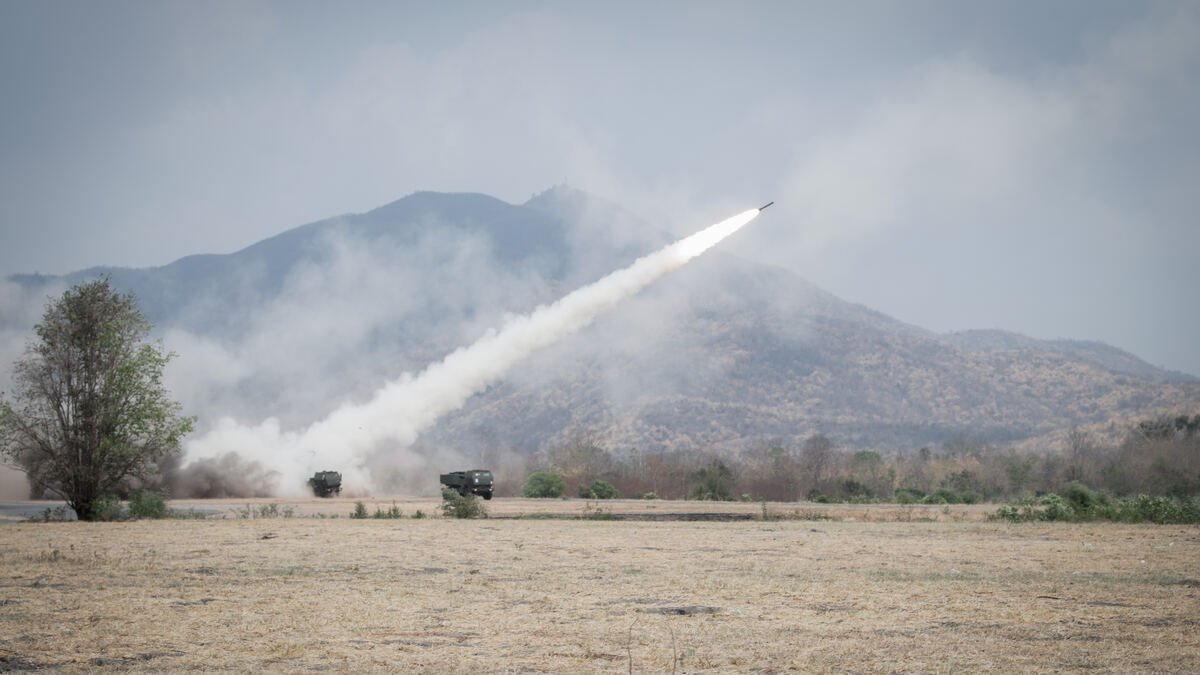
A deeper examination of precision doctrine is explored in Precision Strike Weapons and Modern Warfare.
Unmanned Systems Are Being Fielded at Industrial Scale — Autonomy Is a Narrower Claim
This distinction matters. Unmanned means no human is physically aboard — a remotely piloted FPV drone is unmanned but not autonomous, since a human makes every targeting decision. Automated means the system executes pre-programmed functions without constant human input, but within parameters a human set beforehand.
Autonomous, strictly, means the system selects and engages a target without a human authorising that specific engagement. Almost everything fielded today at industrial scale sits in the first two categories.
That distinction does not diminish the scale of what is happening.
The Department of War’s “Unleashing US Military Drone Dominance” directive asked industry to assess capacity to produce more than 300,000 small unmanned aerial systems, rolled out through sequential production phases the department calls “gauntlets.”
The first began in early 2026 with twelve vendors delivering 30,000 one-way attack drones at roughly $5,000 per unit, with later phases targeting unit costs closer to $2,300 — treating attritable unmanned systems less like conventional munitions and more like a consumable industrial product.
The Army has separately mandated that every division field drones by the end of fiscal year 2026, and officials have stated an intention to procure at least one million unmanned systems over the coming years.

Ukraine continues to provide the clearest operational evidence, largely at the remotely piloted end of the spectrum.
Commercially modified first-person-view drones, costing a fraction of a conventional guided munition, have destroyed armoured vehicles, artillery, and, in documented cases, high-value rotary-wing aircraft.
That cost-exchange ratio has strategic implications well beyond the immediate battlefield.
The genuine movement toward autonomy proper is visible at the research edge rather than in bulk procurement. China has fielded quadrupedal robotic platforms — described in state media as “robotic wolves” — integrating LiDAR, electro-optical sensors, and onboard AI computing to support autonomous navigation and target identification alongside dismounted infantry in degraded communications environments.
Chinese military writing has analysed Ukraine’s drone war and concluded that overreliance on satellite-linked piloting is a correctable weakness that AI-driven swarm autonomy is intended to resolve. That reflects a stated research and doctrinal priority — it is not evidence that fielded Chinese systems have already crossed into autonomous lethal engagement at comparable scale to what is described above.
The question is not whether unmanned systems will reshape operations. They already have. The question is whether doctrine and countermeasures can keep pace with deployment now measured in hundreds of thousands of units annually — and whether the genuine step to autonomous targeting, when it arrives at comparable scale, arrives with governance able to keep pace.
For the ethical and legal dimensions, see Autonomous Weapons and the Ethics of Lethal Autonomy.
For the broader proliferation trend, see Drone Warfare and Autonomous Systems in Modern Conflict.
Space Has Become Part of the Operational Architecture, Not Just Its Support Layer
Space is often discussed as infrastructure sitting behind the more visible technologies above — satellites happening to provide positioning, communications, or imagery. That understates how central orbital capability has become. Precision strike depends on satellite positioning and, increasingly, satellite-relayed targeting data.
JADC2’s premise depends on space-based data transport connecting sensors and shooters across theatres. Unmanned systems at range depend on satellite links that, as the next section shows, are now a primary target rather than a secure assumption.
The Space Development Agency’s Proliferated Warfighter Space Architecture is being built as the space-based transport layer connecting terrestrial sensors and shooters, examined fully in JADC2 Explained: The US Military’s Joint Command Network.
System Delta 85’s mandate — space domain awareness, missile warning and tracking, missile defence, and battle management — treats these as a single contribution to the kill web rather than separate, siloed missions, and its resilience under attack is examined in Anti-Satellite Weapons: Capabilities, Systems, and Strategic Implications.
JADC2 Is the Architecture That Makes Precision and Autonomy Strategically Coherent
Precision weapons and unmanned platforms generate value in proportion to how effectively information flows between them. That is the logic behind Joint All-Domain Command and Control, the Department of War programme linking sensors and shooters across every service branch into one decision network — the institutional embodiment of the kill web described above.
For FY2026, roughly $572.8 million in combined research and development funding has been directed at JADC2, following more than $1.4 billion in FY2025.
The Air Force has separately awarded a contract worth up to $950 million across 27 companies specifically to mature and proliferate the underlying technology, a structure designed to draw on a wide industrial base rather than a handful of prime contractors.
A Government Accountability Office review published in April 2025 found that six years into the effort, the military services were still largely pursuing JADC2-related projects in isolation without a comprehensive framework to guide investment or measure progress — a sober institutional counterpoint to the funding figures above.
Each service contributes a distinct piece — the Army’s Project Convergence and Next Generation Command and Control initiative, the Navy’s Project Overmatch, the Air Force’s Advanced Battle Management System — with the Space Development Agency’s transport layer connecting them.
The Army’s own experimentation under Project Convergence has, in some iterations, demonstrated meaningfully compressed sensor-to-shooter timelines, though the specific reduction varies considerably by target type and exercise rather than representing one fixed benchmark.
Elements of a JADC2-aligned command architecture have also been tested and, in more limited form, used operationally to help coordinate responses to regional drone and missile threats — an early indication of the concept moving from experimentation toward field use, though the precise degree to which that matched the full JADC2 concept rather than an interim system is a distinction worth treating carefully.
China is pursuing a comparable concept under a doctrine its strategists term Multi-Domain Precision Warfare, which US Army intelligence assessments describe as an effort to build an “intelligentized” command and reconnaissance structure supporting long-range precision strike.
Some American analysts have suggested this concept may place greater relative weight on AI-driven targeting than JADC2’s doctrine, which formally requires human authorisation for lethal engagement — but this specific comparison rests on inference from doctrinal writing rather than verified evidence of how PLA systems operate in practice, and should be read with that caveat.
A system that depends on connectivity can be degraded by attacking the connectivity itself.
Control of the Electromagnetic Spectrum Is a Precondition, Not a Capability
Electronic warfare is not a support function within a networked force. It is a precondition for every capability above to function as designed.
Russia’s electronic warfare operations in Ukraine have documented, measurable effects — degrading GPS-guided munitions and disrupting drone communications throughout the conflict.
Ukraine’s own shift toward fibre-optic-guided drones, specifically to defeat radio jamming, shows how quickly the electromagnetic contest forces tactical adaptation. Even sophisticated systems perform well below their nominal design capability in a genuinely contested electromagnetic environment.
Cognitive electronic warfare systems — capable of analysing spectrum conditions and adapting jamming or protection autonomously — represent the current frontier of investment across the United States, China, and Russia.
This follows directly from the architecture described throughout this article: a force that has invested heavily in networked precision and command has, by that same investment, created a dependency a sufficiently capable adversary can exploit.
For a full examination, see Electronic Warfare and the Future of the Electromagnetic Battlespace.
Modernisation Follows Different Models Depending on Geography, Industry, and Threat
The sections above have centred on the United States and China because their competition currently sets the technological pace others respond to. But that competition does not define the whole phenomenon. Four other cases illustrate genuinely different modernisation models.
India’s May 2025 Operation Sindoor combined precision strike, armed unmanned aircraft, and what an Indian Army officer publicly described as AI-driven multi-sensor data fusion in real time — a model built around achieving effect while managing escalation risk between nuclear-armed states, rather than around raw capability alone.
India’s rising defence budget for the current fiscal year, reported by different sources in a range from roughly $87 billion to $94 billion, is directing a growing share of new capital spending toward precision and unmanned systems specifically because personnel costs — pensions and pay together consuming close to half the total budget — constrain how much room remains for new platforms. Related dynamics are examined in India’s Mission Shakti and the ASAT Balance in the Indo-Pacific.
Europe illustrates a different model: rebuilding industrial capacity after two decades of comparatively static defence spending.
The European Union’s SAFE instrument has mobilised financing exceeding $150 billion for joint defence investment across member states, and Germany’s defence budget alone now exceeds $100 billion. The scale here matters less for any single new technology than for the speed of the reversal relative to the preceding period.
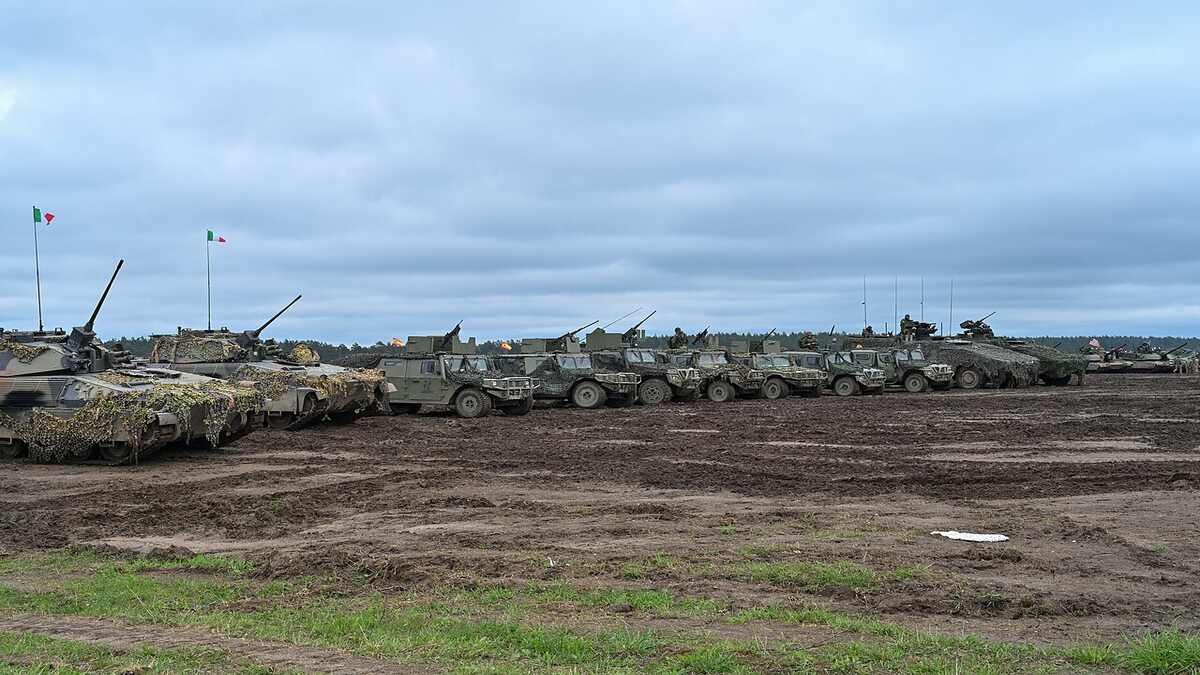
Israel represents a third model, in which rapid feedback between combat experience and domestic industry shapes both procurement and exports.
Israeli defence exports reached an estimated $14.8 billion in 2024, with systems including the Arrow missile defence family and Barak air defence increasingly marketed based on demonstrated operational use in recent conflicts rather than specifications alone — a claim that reflects industry and export positioning and is worth distinguishing from independently verified combat performance data.
Japan illustrates a fourth model, driven by maritime geography and regional threat perception: a defence budget increase concentrated specifically on standoff missile capability and unmanned systems development under its new SHIELD programme.
These four models differ sharply, but each reflects a growing emphasis on sensing, precision, and unmanned capability running alongside — not replacing — conventional force structure.
Institutional Change Carries Industrial and Political Risk That Is Often Underweighted
Adopting these technologies is not simply a matter of a larger procurement budget. It requires institutions to decide what they will stop funding, and that decision creates risk frequently underweighted relative to the appeal of the new capability being pursued.
The US Army Transformation Initiative, directed in 2025, merged Army Futures Command with Training and Doctrine Command, created six portfolio acquisition executives, and divested legacy platforms — including a large share of the AH-64D Apache helicopter fleet — redirecting funding toward precision fires, unmanned systems, counter-drone capability, and electronic warfare.
It was explicitly designed to be budget-neutral, funding modernisation through legacy retirement rather than expanded appropriations.
That choice has not gone unchallenged. In May 2026, Secretary of War Pete Hegseth told a House Appropriations subcommittee that aspects of the initiative — particularly Army aviation reductions — were being “relooked,” and Army officials subsequently confirmed a review was underway.
Members of Congress have separately raised concerns in writing about the industrial base implications of steep aviation procurement cuts, including risk to production lines that are expensive to restart once cooled.
An institution that had already committed publicly to a modernisation direction was forced to revisit that commitment within a year of implementation — a pattern likely to recur wherever modernisation requires visible, near-term sacrifice in exchange for capability not yet proven at scale in a peer conflict.
Sustainable Scale and Industrial Endurance Matter as Much as Integration
Modern military power depends not only on integrating sophisticated systems, but on producing, replacing, and repairing them under sustained wartime pressure — and Ukraine, more than any single demonstration, has made this impossible to ignore.
A force can possess excellent sensing and precision weapons and still face serious difficulty if munitions stocks run down faster than production can surge, or if damaged platforms cannot return to service quickly enough to matter.
The scale figures examined earlier — 300,000 American unmanned systems, unit costs engineered down toward $2,300 — are themselves evidence that planners now treat production capacity as a first-order strategic variable, not simply a technological one.
India’s own defence committee has flagged that a significant share of its modernisation spending still depends on foreign procurement, a dependency officials regard as a direct vulnerability if a supplier becomes unable to sustain wartime resupply.
The drone procurement figures throughout this article are themselves a form of mass, simply produced and employed differently than a tank battalion. Modern military advantage depends on integrating advanced capability while remaining industrially resilient at the scale a sustained conflict actually demands, not the scale a peacetime budget happens to fund.
The Legal Framework Has Not Kept Pace With the Technology It Is Meant to Govern
Under Article 36 of Additional Protocol I to the Geneva Conventions, states developing, acquiring, or adopting a new weapon or method of warfare are required to determine whether its use would, in some or all circumstances, be prohibited by the Protocol or any other applicable rule of international law — a broader obligation than simply confirming a weapon can distinguish combatants from civilians. That requirement has existed for decades.
What is missing is not enforcement in the abstract but any central mechanism ensuring consistent national review practice; implementation is decentralised by design, and transparency about how individual states actually conduct these reviews varies considerably.
No binding international treaty currently governs lethal autonomous weapons systems specifically. Discussions at the Convention on Certain Conventional Weapons have produced sustained analysis but no binding agreement.
Mass procurement of unmanned systems is expanding the technological and organisational base from which more autonomous functions could eventually be fielded — but that procurement scale, described earlier, is primarily evidence of unmanned-system deployment, not of fully autonomous lethal engagement at comparable volume.
When systems further along that spectrum do make targeting determinations resulting in civilian harm, existing accountability frameworks — built around individual human decision-makers and clear command authority — struggle to assign responsibility in a way that satisfies international humanitarian law.
For the full legal and ethical analysis, see Autonomous Weapons and the Ethics of Lethal Autonomy.
Conclusion — Strategic Advantage Depends on Integration, Resilience, and Sustainable Scale
Military modernisation in the 21st century is a systems-integration problem. It is also, unmistakably, still an industrial-endurance problem, and treating those as competing truths rather than complementary ones would mislead more than it clarifies.
The states holding durable advantage over the coming decade will not necessarily be those with the largest budgets or the single most advanced platform in any category. They will be the states that connect persistent sensing, precision fires, unmanned systems produced at genuine scale, and networked command into a whole that is fast, resilient under electromagnetic attack, and sustainable through the attrition any serious conflict imposes.
The American Army Transformation Initiative and drone dominance programme represent one institutional answer, funded through a now publicly contested sacrifice of legacy capability.
China’s Multi-Domain Precision Warfare concept, India’s escalation-calibrated model, Europe’s industrial rebuilding, and Israel’s export-and-combat-feedback loop each represent different answers to the same underlying problem, shaped by different budgets and threats.
None has been tested against a peer adversary at the full scale each is being built for, which means their comparative effectiveness remains genuinely open rather than settled.
The technology is advancing. Doctrine is adapting, sometimes faster than institutions can absorb, as the Army’s own internal reconsideration of its aviation cuts demonstrates. Industrial capacity to sustain that technology through real attrition is advancing more unevenly still, and the legal framework meant to govern its most autonomous applications remains further behind than any of these. That distance is where the real strategic risk of this era resides.
Frequently Asked Questions
What is military modernization in the 21st century?
It is the process by which armed forces adopt advanced sensing, precision, and unmanned technologies alongside revised doctrine and command structures. Unlike earlier modernisation centred on individual platforms, the current period is defined by systems integration — connecting sensors, weapons, and decision-makers into a single architecture — and by the industrial scale at which precision munitions and unmanned systems are now being procured.
What is the difference between unmanned and autonomous military systems?
Unmanned means no human is aboard, though an operator typically still makes real-time targeting decisions, as with most drones in current large-scale use. Automated systems execute pre-programmed functions within parameters a human set in advance. Autonomous, strictly, means the system selects and engages a target without a human authorising that specific engagement. Most systems procured today at industrial scale are unmanned or automated rather than fully autonomous, though research investment — particularly China’s swarm-focused robotics work — is pushing toward genuine autonomy at the tactical edge.
What is JADC2 and why does it matter?
Joint All-Domain Command and Control is the US programme connecting sensors, decision-makers, and weapons across every service and domain into one network. Its significance is reflected in sustained funding — over $1.4 billion in FY2025 and roughly $572.8 million in FY2026 research funding — and a $950 million Air Force contract spanning 27 companies. A 2025 Government Accountability Office review found the effort still lacks a comprehensive framework to guide investment, even as elements of a JADC2-aligned architecture have moved toward limited operational testing.
Why does the kill chain matter more than any individual weapon?
A weapon’s published range is only useful if a force can find a target, track it as it moves, and deliver targeting data in time to engage it. Programmes like the Army’s TITAN ground station and the Space Force’s System Delta 85 exist specifically to strengthen this sensing architecture, which underpins every precision, autonomy, and command capability examined in this analysis.
Why has legal governance failed to keep pace with military modernization?
International humanitarian law, including the weapons review obligation under Article 36 of the Geneva Conventions’ Additional Protocol I, assumes clear individual human decision-making. No binding treaty currently governs lethal autonomous weapons specifically, and the decentralised nature of national weapons reviews means there is no central mechanism ensuring consistent practice. This gap has become more consequential as unmanned systems move toward procurement volumes in the hundreds of thousands annually, even though that volume is not yet matched by comparable growth in fully autonomous lethal systems.
Sources and References
The White House — Restoring the United States Department of War (September 2025)
Congressional Research Service — 2025 Army Transformation Initiative Force Structure and Organizational Proposals: Background and Issues for Congress, R48606 (May 2026)
Government Accountability Office — Defense Command and Control: Further Progress Hinges on Establishing a Comprehensive Framework, GAO-25-106454 (April 2025)
Air & Space Forces Magazine — Space Force Upgrading Its Elements of Long-Range Kill Chains (February 2026)
AFCEA International — Army Bridging the ISR Deep Sensing Divide
MeriTalk — GAO Pushes DoD to Create Framework for CJADC2 Investments (April 2025)
The Diplomat — India’s Use of Artificial Intelligence During the Indo-Pak Four-Day Crisis (October 2025)
US Department of Defense — 2025 Annual Report to Congress: Military and Security Developments Involving the People’s Republic of China (December 2025)
Foundation for Defense of Democracies — China’s War Wolves: From Commercial Tech to Combat Power (May 2026)
PRS Legislative Research — Demand for Grants 2026-27 Analysis: Defence (India)
International Committee of the Red Cross — Article 36 Weapons Reviews: Legal and Practical Implications
Related Analysis
For a detailed exploration of precision-guided weapons, read Precision Strike Weapons and Modern Warfare.
For the broader strategic perspective on global power competition, read Strategic and Geopolitical Intelligence: Understanding the New Global Power Balance.
For the full JADC2 architecture, read JADC2 Explained: The US Military’s Joint Command Network.
For the ethical and legal dimensions of autonomous systems, read Autonomous Weapons and the Ethics of Lethal Autonomy.
For the broader unmanned systems trend, read Drone Warfare and Autonomous Systems in Modern Conflict.
For the electronic warfare contest, read Electronic Warfare and the Future of the Electromagnetic Battlespace.
For the space-based sensing layer, read Space Situational Awareness: Tracking and Securing the Orbital Domain.
For counterspace threats to that layer, read Anti-Satellite Weapons: Capabilities, Systems, and Strategic Implications.
For India’s role in the Indo-Pacific balance, read India’s Mission Shakti and the ASAT Balance in the Indo-Pacific.
