



Analysis · StrikeOrbit | 2026
Space domain awareness (SDA) and space situational awareness (SSA) are nested jobs and not rival ones. In current US Space Force doctrine, SSA is the foundation of finding, tracking, and cataloging objects in orbit, and SDA is the larger military task of turning that picture into understanding that lets commanders plan and act.
The popular shortcut says SSA tells you where something is while SDA tells you why it is there, and that captures part of the idea, but the doctrine’s own wording is that SSA is “a subset of SDA.”
The two labels matter because they tend to reveal who is asking. The US military moved to SDA in 2019 because it began treating space as a warfighting domain, while the European Union, India, and the American civil agency that warns satellite operators of collisions still use SSA for work that is about safety, while the United Kingdom uses SDA for a joint civil and military requirement, so the line is not clean.
This article traces where each term came from, how doctrine defines them today, which sensors now do the work, and where the 2026 contracts are heading. It labels each claim as confirmed, attributed to an official or company, or an analytical judgment, and it says so when a figure comes from a single source.
The status below is as of October 28, 2026. The article uses SDA and SSA after first use, and “GEO” means geosynchronous orbit, about 36,000 kilometers above the equator, where many military and commercial satellites sit. Dollar figures are in US dollars.
SSA Was Built to Keep a Catalog, and the Catalog Is Still the Foundation
For most of the space age, the practical job was to know what was up there. Radars and telescopes detected objects, the military assigned each one an orbit, and the result was a catalog that let operators predict close approaches and re-entries. The longer treatment of that job is in the analysis of Space Situational Awareness: Tracking and Securing the Orbital Domain.
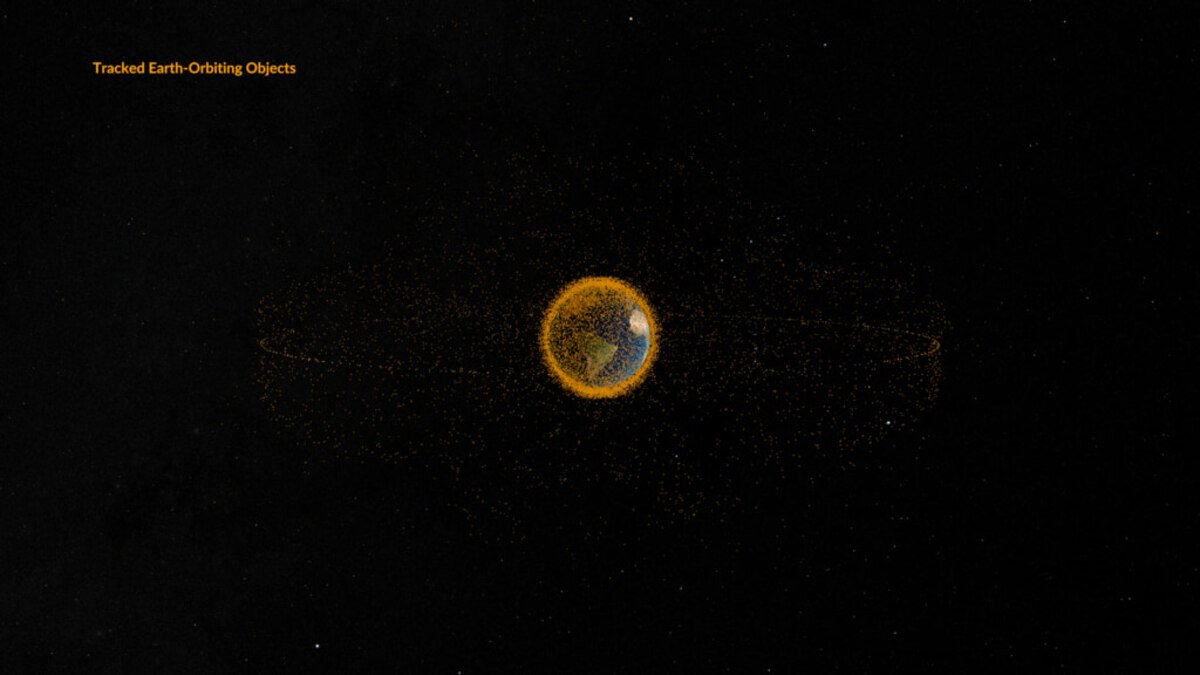
The people who ran that system described its limits plainly. Gen. Jay Raymond said in 2017 that “knowing where something is in space is important, and that’s probably all you need,” and that US SSA capabilities “have really grown up around the space catalogue,” according to Air & Space Forces Magazine. Raymond also said the country did not have the level of SSA it needed.
Even then, some commanders wanted more than a catalog. In the same 2017 reporting, Lt. Gen. David Buck said SSA, unlike space traffic management, “gives me attribution; it gives me intent,” and that as a warfighter he could not do what he wanted without domain awareness. That matters for the popular shorthand, because it shows officers were asking SSA to supply intent years before the term changed.
The 2019 Renaming Was a Change of Mindset Before It Was a Change of Capability
In November 2019, Space Connect reported that Maj. Gen. John Shaw, deputy commander of Air Force Space Command, issued a memo directing Air Force space organizations to use “space domain awareness” in place of SSA. The stated reason was that space was now viewed as a warfighting domain like land, sea, and air, so the focus should move away from a “benign environment” mindset.
The memo defined SDA as the “identification, characterization, and understanding of any factor, passive or active, associated with the space domain” that could affect space operations and, through them, the nation’s security, safety, economy, or environment, as Space Connect quoted it.
Nothing in that memo, as reported, introduced a new sensor. It changed the question that the existing sensors were expected to answer, from where the objects are to what they could do to friendly forces. That is the sense in which the renaming was a change of mindset before it was a change of capability, which is an analytical judgment based on the reporting and not a claim from the memo itself.
The “why” framing came later. Air & Space Forces Magazine reported in February 2022 that Gen. James Dickinson, then commander of US Space Command, said SDA requires understanding the “why,” meaning the intent behind an object’s presence and position, unlike SSA, which reports where objects are. That is an officer’s explanation and not a doctrinal definition, and the doctrine, as the next section shows, says something more careful.
Official Doctrine Now Treats SSA as a Subset of SDA, and the Definition Has Changed
On November 16, 2023, the Space Training and Readiness Command (STARCOM) released Space Doctrine Publication 3-100, Space Domain Awareness, described as the first operational-level doctrine publication it developed for the Space Force. In its foreword, Brig. Gen. Timothy Sejba wrote, “Effective SDA is foundational for space forces to conduct prompt and sustained operations.” The release does not mention SSA, so the distinction has to come from the text itself.
In a copy of the publication hosted by The Aerospace Corporation, which carries a draft marking, so the final wording, or any later change to the publication, may differ, the text says SSA “traditionally focused on finding, tracking, identifying, and maintaining custody” of space objects and “evolved into SDA.” It later calls SSA “a subset of SDA” and describes SDA as going “beyond space surveillance (object tracking, characterization, and establishing pattern of life).”
The same text says SDA is achieved through “the integration of intelligence, surveillance, reconnaissance, environmental monitoring, and friendly force tracking,” and moves toward “predictive SDA that considers missions, intentions, and system capabilities.”
The definition is different from the one in the 2019 memo. The doctrine quotes Joint Publication 3-14 in describing SDA as “the timely, relevant, and actionable understanding of the operational environment that allows military forces to plan, integrate, execute, and assess space operations.”
The older definition listed factors to be identified; the newer one is defined by what it lets commanders do. For readers, the lesson is that the difference is a relationship and not a contrast: tracking is one input, and SDA is the whole picture built from it and from intelligence, space weather, and the position of friendly forces.
The same text shows why the popular shorthand understates SSA. By the doctrine’s own description, the surveillance layer already includes object tracking, characterization, and establishing a “pattern of life,” so SSA is more than a position fix. What SDA adds, in the doctrine’s wording, is the link to intelligence, environmental data, and friendly operations, which is an analytical reading of the text and not a quotation.
The Practical Difference Is What the Customer Does With the Picture
A collision-warning service and a military operations center can look at the same object and need different things. The warning service needs the position, the uncertainty, and the closest approach, so that an operator can decide whether to move a satellite. The operations center needs to know what the object is, who controls it, what it can do, and whether a maneuver is routine or a threat.
Analysts have used maritime language for the same split. In an MP-IDSA explainer, situational awareness is the persistent monitoring of activity, the “blips,” while domain awareness combines that with intelligence to work out the actors’ intentions and whether the blips matter. The comparison is a useful analogy for readers, though the explainer is not specific to space.
A 2022 paper from King’s College London’s Freeman Air and Space Institute, written by Tim Adcock of Inzpire, argued that the goal should be neither term. It proposed space domain understanding as a core competence of military space power, so that commanders can make informed decisions at every level of warfare. That is one author’s proposal and not British doctrine, but it shows the vocabulary is still being argued over.
The Sensors Behind SDA Are Few, Exquisite and Mostly Classified
The best-known US space-based sensor is the Geosynchronous Space Situational Awareness Program (GSSAP), built by Northrop Grumman, which still carries SSA in its name. Its satellites drift near GEO and maneuver close to other satellites to inspect them.
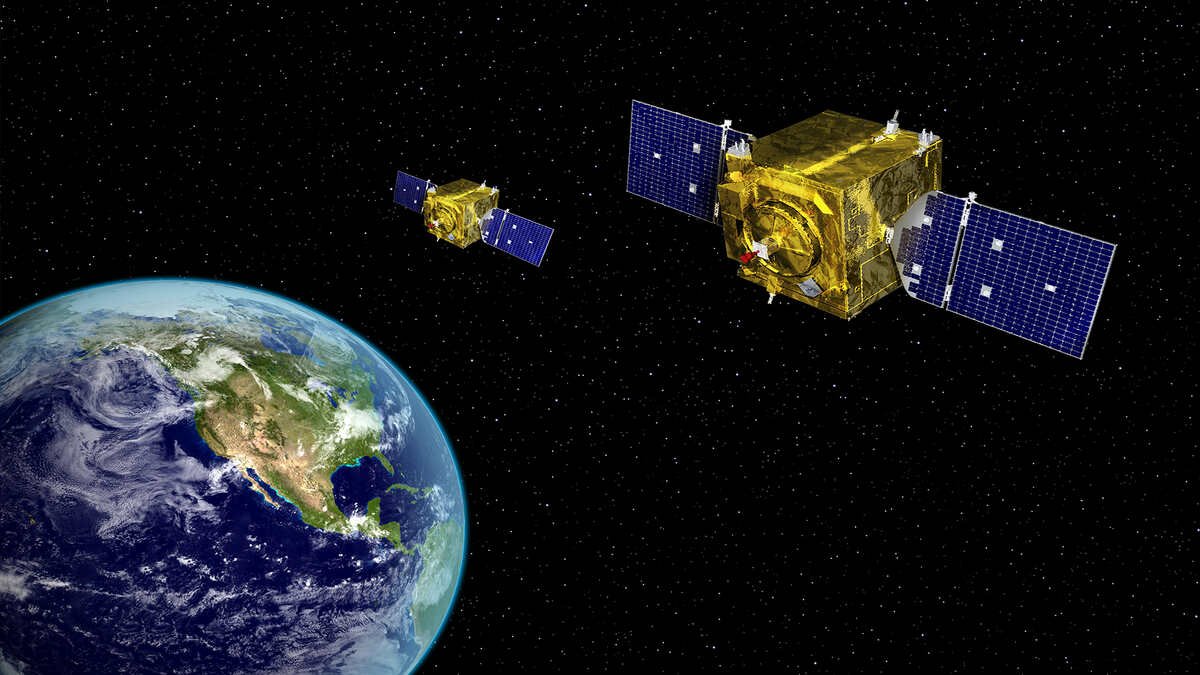
Air & Space Forces Magazine’s program data lists the first two launched in July 2014, a second pair in August 2016, two more in January 2022, and two further satellites launched on a Vulcan rocket on February 12, 2026.
The Space Systems Command release for that launch described a “GSSAP space system” providing “neighborhood watch” services in GEO and “enhanced positional knowledge of satellites within the increasingly crowded GEO.”
How many are operating is less clear. The same program page lists one satellite as retired in 2023, and Satellite Today reported in 2026 that five GSSAP satellites currently perform these proximity operations, so this article does not give a single operating count. The reporting does not say whether the February 2026 launch is included in those five.
The second system is Silent Barker, a classified space-based SSA system developed jointly by the Space Force and the National Reconnaissance Office. Its first three satellites launched in September 2023, and Air & Space Forces Magazine says it became operational in early 2025, with full capacity expected after a launch planned for fiscal 2026.
Where GSSAP looks closely at particular satellites, Silent Barker watches a wide area above GEO. The Space Force operates it with the NRO, and the data goes to classified users, which means outsiders can describe the design but not its performance.
On the ground, the Deep Space Advanced Radar Capability (DARC) is planned as three sites in the United States, Australia, and the United Kingdom.
A May 2026 Space Force release, as carried by GlobalSecurity, calls it a network of three sensors supporting SDA out to GEO, and says it is meant to enable tactical timelines and space-control kill chains. That wording is an unusually open statement that SDA feeds military action, which fits the doctrine’s emphasis on predicting what an adversary can do. The orbital side of that competition is covered in the analysis of What Is Orbital Warfare? How Space Became a Contested Military Domain.
The 2026 Contracts Replace a Few Exquisite Satellites With Many Commercial Ones
The biggest 2026 development is the shift in how the sensors are bought: in April, according to Satellite Today, the Space Force awarded more than $1.8 billion in firm fixed-price “Andromeda” contracts to 14 companies for space-based SDA capability, after 32 offers. The contracts support a constellation called RG-XX, the successor to GSSAP, and the companies include Anduril, Lockheed Martin, Northrop Grumman, True Anomaly, and L3Harris.
Breaking Defense reported that on May 4 the Space Force raised the vehicle’s ceiling to $6.2 billion, after a larger fiscal 2027 budget request tied to the “escalating threat environment projected for CY 2030+.” Maj. Gen. Stephen Purdy said in 2025 that operators would be “accomplishing the same GSSAP mission” with the same ground systems and data, using “faster, cheaper commercial build times.”
The Space Systems Command release describes RG-XX as a proliferated geosynchronous system to detect, track, and characterize objects of interest, bought through delivery orders on the Andromeda vehicle under the Middle Tier of Acquisition pathway.
Col. Bryon McClain said the program “enables us to achieve predictive battlespace awareness.” That is the doctrine’s language written into a contract, because the product is meant to be a prediction of what an adversary may do, not a catalog. The release as retrieved gives no date or dollar value, so the figures here come from Satellite Today and Breaking Defense.
Breaking Defense says the vehicle also covers SG-XX, planned to replace Silent Barker with a proliferated constellation of small, low-cost commercial satellites carrying wide-field cameras.
The fiscal 2027 request was $355 million for RG-XX and $370 million for SG-XX, with two SG-XX prototypes planned for launch in fiscal 2028 and RG-XX satellites launching in three increments from early fiscal 2029 to late fiscal 2030. The five-year totals in the same reporting period are $2.8 billion for RG-XX and $1.7 billion for SG-XX through fiscal 2031. No request for proposals for SG-XX had been issued at that point.
The prototype work is moving faster. SatNews reported on September 20 that Northrop Grumman won a Space Force prototype contract for GHOST-R, a GEO surveillance effort built on commercial smallsat buses and optical payloads.
Satellite Today reported the next day that True Anomaly, with its Jackal vehicle, and Northrop Grumman, with a prototype on its ESPASat-L bus, are to reach orbit by 2028, and that no contract values were disclosed. The two outlets expand the program’s acronym differently, so this article does not spell it out.
A third effort shows the same direction. SatNews reported that Impulse Space received a $28 million Space Force contract on September 22, including $19.75 million from a fiscal 2026 APFIT award, to put an MIT Lincoln Laboratory optical sensor on its Mira orbital vehicle and track spacecraft in geostationary orbit. No launch date was given.
The pattern across Andromeda, GHOST-R, and Impulse is a wager that many cheaper sensors can replace a few exquisite ones, which is a judgment about intent and not a result, since none of these satellites is in orbit yet.
Ground Sensors Show Both Quick Upgrades and Slow Allied Construction
DARC is also a case study in allied timelines. Air & Space Forces Magazine reported in February 2025 that construction at the first site, Exmouth in Western Australia, had finished about three months ahead of schedule after an October 2023 groundbreaking, with full operations there expected in 2027.
A UK site was proposed for Cawdor Barracks in Wales under a $200 million Northrop Grumman deal signed in 2024, with completion targeted for February 2030, and the third site had no location at that time.
The Space Force release carried by GlobalSecurity said DARC was approved for “Early Use” by US Space Command in September 2025, ahead of the original schedule, with operations run from the 20th Space Surveillance Squadron’s operations center at Eglin Air Force Base, Florida. A Space Systems Command page says the Space Force selected Lake Kickapoo, Texas, as the preferred location for the third and final site.
MiGFlug, a secondary outlet, reports that the site was named on September 9, that the fiscal 2027 request is $442 million, and that operational acceptance is now expected in 2030 instead of 2032, figures this article has not been able to confirm from a Space Force source.
Not every improvement needs a new constellation. Space Systems Command reported that the Ground-Based Optical Sensor System at the Maui Space Surveillance Complex in Hawaii completed operational acceptance on April 10, 2026, with its field of view and search speed doubled and its sensitivity more than tripled, so that it can detect small, hard-to-see objects in medium, geosynchronous, highly elliptical, and cislunar orbits.
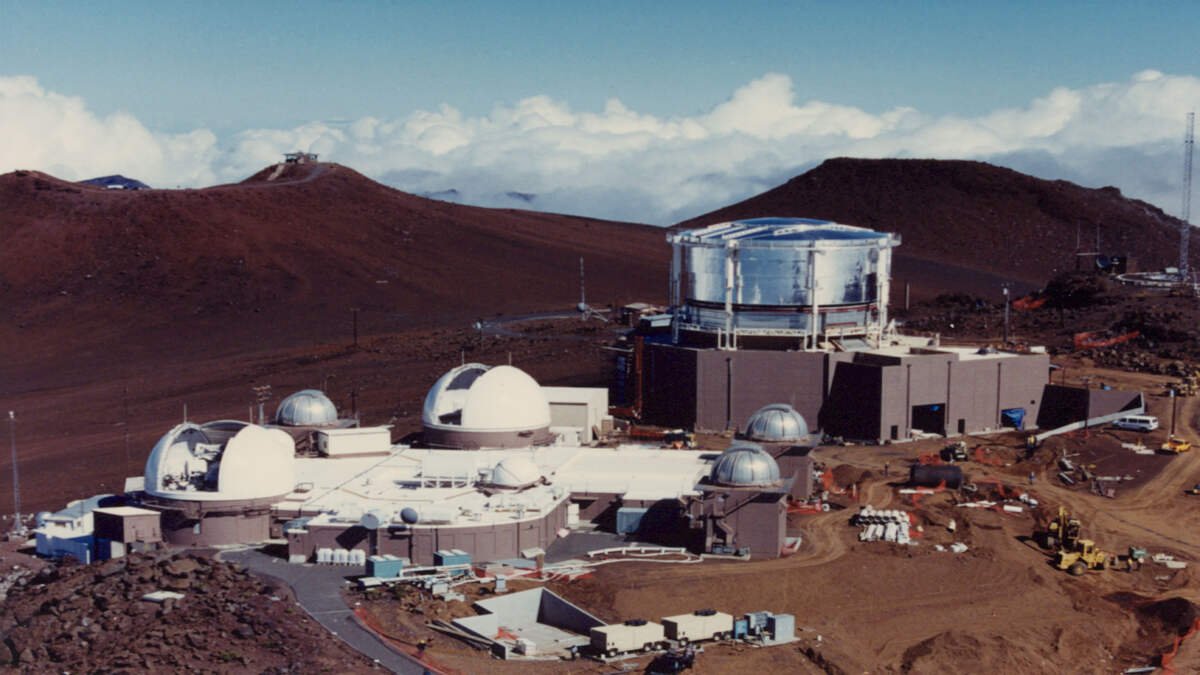
Col. Barry Croker, commander of Mission Delta 2, said objects “once too dark, too small, or too close to one another are now observable.” These are Space Force performance claims with no published detection thresholds, but they illustrate the difference this article is about: a better telescope widens what can be seen, and someone still has to decide what the new detections mean.
For readers, the useful point is that the sensor behind SDA is a multinational construction project with approvals still pending. The UK site was still described as a preferred location awaiting planning approval in the September 2026 reporting, so a network described as global is not complete. That is also why commercial and allied data are drawing attention, a theme in the analysis of Commercial Satellites as Military Infrastructure: Dependency, Control, and Strategic Risk.
Civil Agencies and Many Allies Keep the Older Label, but the Line Is Not Clean
The clearest sign that the two terms track different missions is who still says SSA. The European Commission’s page describes SSA as a component of the EU Space Programme, giving “comprehensive knowledge and understanding about space hazards,” with surveillance and tracking services for collision avoidance, re-entry analysis, and fragmentation analysis. It does not use SDA.
ISRO’s own page on its SSA control center, called NETRA, also uses SSA throughout and says the center was inaugurated on December 14, 2020, at the ISTRAC campus in Bangalore.
The split is not clean, and the United Kingdom shows why. The UK Ministry of Defense’s cross-government Space Domain Awareness requirements publication, in the version this article could read (version 2.0, 2024), says “SDA is inherently dual-use (civil and military)” and describes SDA as “security-focused, decision-quality information.”
The GOV.UK publication page logs a further update on June 16, 2026, but this article could not read the revised text and does not rely on it. The label therefore follows how an institution frames its mission and not a firm line between civil and military work.
India’s investment is growing. An October 2026 report in the Indian press says a foundation stone was laid on September 21 for a NETRA-linked radar facility at Chandrapur near Guwahati, aimed at strengthening SSA, tracking space assets, and protecting them from debris, with no cost or schedule stated. That single report has not been matched by a second source here.
The debris dimension of such programs is covered in the analysis of Orbital Debris and the Strategic Limits of Space Warfare, and India’s military space posture is covered in India’s Mission Shakti and the ASAT Balance in the Indo-Pacific.
The United States has the same split. SpacePolicyOnline reported in July 2025 that the Traffic Coordination System for Space (TraCSS), run by NOAA’s Office of Space Commerce to warn civil and commercial operators of potential collisions, faced cancellation under the White House’s fiscal 2026 request, which would cut the office from $65 million to $10 million.
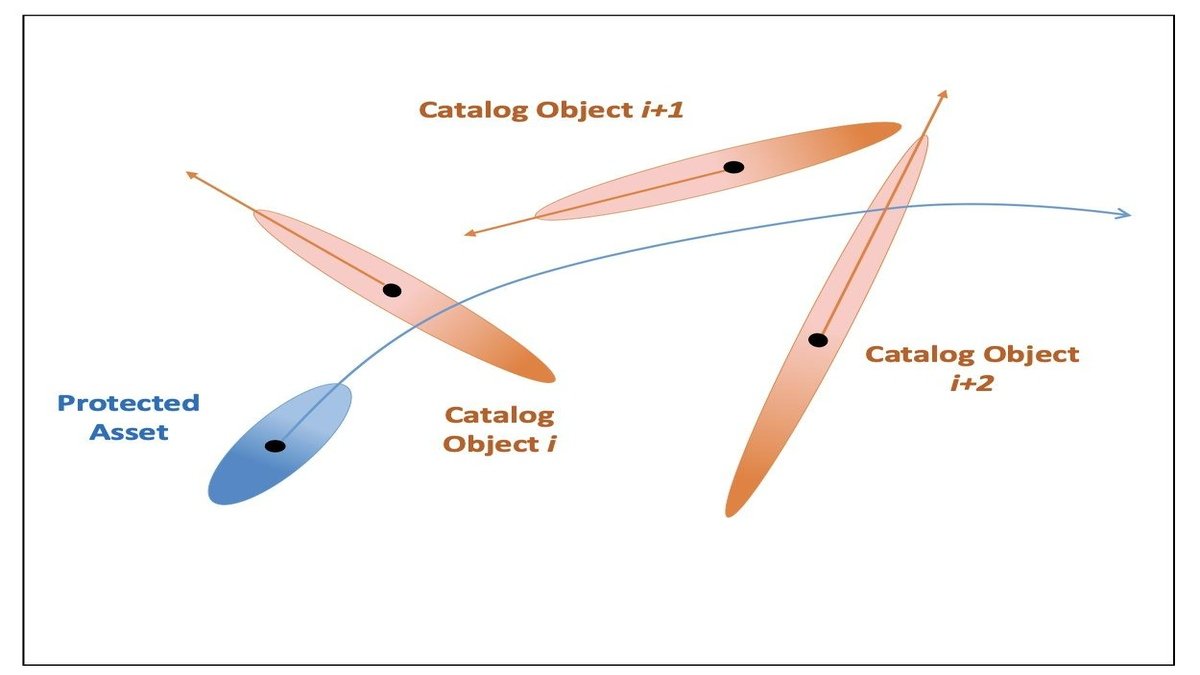
NOAA’s justification said private industry had “proven that they have the capability.” The final fiscal 2026 law, signed January 23, 2026, gave the office $55 million, though the report does not say how much of that goes to TraCSS.
Four Limits Remain Whatever the Label
The first limit is attribution. Telling a satellite’s owner is often possible, but judging intent from behavior is an inference, and doctrine’s reference to “predictive SDA” signals an aim, not a solved problem. That makes the quality of the analysts and the intelligence feeding the picture as important as the number of sensors.
The second limit is coverage. A satellite that sits above GEO can see only so much at a time, which is why the plans call for more satellites and for ground radars to hand off tracks. The 2026 contracts address that gap, but the satellites are years from launch, so the gap persists until deliveries in 2028 to 2030. Planning documents describe the new constellations as larger and more mobile than GSSAP, but none of the reporting gives a satellite count, so the scale of the improvement cannot yet be judged.
The third limit is data sharing. A military picture is classified, a civil collision-warning service has to be open to operators of many nationalities, and the same underlying observation may serve both. How much flows between them is largely undisclosed, which is an analytical observation based on the split between classified programs such as Silent Barker and civil services such as TraCSS and the EU’s.
The fourth limit is the rulebook. Observing another country’s satellite from a safe distance is a normal part of space operations, but an inspection that approaches closely can be read as a threat, and legal rules on what is permitted in orbit are thin, as the analysis of The Outer Space Treaty and Its Limits in the Age of Orbital Warfare. That makes SDA a stabilizer in some cases and an escalation risk in others, depending on how its findings are shared and acted on.
Six Indicators Will Show Whether the Distinction Becomes Practical
Two indicators concern money and contracts.
The first is whether the Andromeda vehicle produces task orders and a request for proposals for SG-XX, and whether Congress funds the $355 million RG-XX and $370 million SG-XX requests. The second is whether the Office of Space Commerce keeps its funding in fiscal 2027 and whether TraCSS expands, since that tests the civil side of the split.
Four indicators concern hardware and allies.
The third is whether the two SG-XX prototypes and the GHOST-R prototypes launch on the 2028 timeline. The fourth is whether the UK DARC site receives planning approval and the Texas site contract is awarded in 2027. The fifth and sixth are whether the Space Force says how many GSSAP satellites are operating and when the February 2026 launch entered service, and whether allies adopt SDA wording and doctrine or keep SSA for the same work.
Frequently Asked Questions
What is the difference between space situational awareness and space domain awareness?
In US Space Force doctrine, SSA is the foundation and SDA is the larger whole. SSA finds, tracks, identifies, and maintains custody of objects in orbit, while SDA adds intelligence, environmental monitoring, and knowledge of friendly forces so that commanders can plan and act. The doctrine publication SDP 3-100 describes SSA as “a subset of SDA,” so the terms are nested and not rival. The popular line that SSA tells you where and SDA tells you why is a simplification, and civil agencies and allies still use SSA for safety work.
Did the US stop using the term space situational awareness?
The US military moved toward SDA from 2019, after an Air Force Space Command memo directed its space organizations to adopt it, but the older label has not vanished. The GSSAP program still carries SSA in its name, and the civil Office of Space Commerce and its TraCSS collision-warning system are described in SSA terms. The European Commission and ISRO also use SSA. The practical rule is that SDA is the military term and SSA is common where the mission is safety, although the United Kingdom uses SDA for a joint civil and military requirement.
Who tracks space objects for civilian operators?
Several organizations do. In the United States, NOAA’s Office of Space Commerce runs TraCSS to warn civil and commercial operators of potential collisions, and the final fiscal 2026 law gave the office $55 million. The European Union runs surveillance and tracking services for collision avoidance, re-entry analysis, and fragmentation analysis, and India’s ISRO operates its NETRA control center in Bangalore. Commercial companies also sell tracking data, and the military catalog remains the reference for many operators.
What are GSSAP and RG-XX?
GSSAP is the US Space Force’s constellation of satellites near GEO that maneuver close to other satellites to monitor and inspect them, built by Northrop Grumman and first launched in 2014. RG-XX is its planned successor, a larger constellation of smaller, lower-cost commercial satellites bought through the Andromeda contracts, which were awarded to 14 companies in April 2026. Breaking Defense says RG-XX satellites are planned to launch in three increments from early fiscal 2029 to late fiscal 2030. The Space Force has said operators would perform the same mission with the same ground systems and data.
What is space domain understanding?
Space domain understanding is a term proposed in a 2022 King’s College London paper by Tim Adcock of Inzpire. It argues that the goal of military space power should be understanding and not only awareness, so that commanders can make informed decisions at every level of warfare, with intelligence and military judgment given more emphasis. It is one author’s proposal and not British or US doctrine. It matters because it shows the vocabulary is still developing, and that the label can change again.
Sources and References
Air & Space Forces Magazine — Geosynchronous Space Situational Awareness Program (program page, accessed October 2026).
Air & Space Forces Magazine, Amanda Miller — Ground-Based Radars, New Cislunar Data Agreement to Further Space Domain Awareness (February 23, 2022).
Air & Space Forces Magazine, Wilson Brissett — Situational Awareness for the Space Warfighting Age” (April 10, 2017).
Air & Space Forces Magazine — Silent Barker (program page, last modified June 2026).
Air & Space Forces Magazine — Space Force Finishes Construction at Australia Site for Its New Deep Space Radar (February 21, 2025).
Breaking Defense — Space Force boosts contract ceiling for Andromeda space monitoring sats to $6.2B (May 6, 2026).
Breaking Defense — Appropriators restore funding for Commerce’s TraCSS space watch effort (July 25, 2025).
European Commission, Directorate-General for Defense Industry and Space — Space Situational Awareness.
GlobalSecurity, US Space Force release —New deep space radar capability employed early (May 4, 2026).
GOV.UK change tracker (govukdiff) — Space Domain Awareness – Requirements update log (update logged June 16, 2026).
Indian Space Research Organisation — ISRO SSA Control Centre (NETRA).
Inzpire Limited — Military space doctrine should adopt space domain understanding as a critical core competence (July 13, 2022).
Manohar Parrikar Institute for Defense Studies and Analyses — What is the difference between domain awareness and situational awareness in defense/security? (August 27, 2020).
MiGFlug — DARC: The Space Force Picks Texas for Its Last Deep-Space Radar (September 14, 2026).
Satellite Today — Space Force Awards 14 Companies Space Domain Awareness Contracts Under Andromeda (April 9, 2026).
Satellite Today — True Anomaly and Northrop Grumman Aiming to Build GHOST-R Prototypes to Reduce RG-XX Costs (September 21, 2026).
SatNews — Northrop Grumman wins US Space Force prototype contract for GHOST-R space domain awareness mission (September 20, 2026).
SatNews — Impulse Space secures $28 million US Space Force contract for geostationary space domain awareness mission (September 23, 2026).
Space Connect — US drops term ‘space situational awareness ‘ (November 19, 2019).
SpacePolicyOnline — Aerospace Industry Urges Congress Not to Kill TraCSS (July 8, 2025).
SpacePolicyOnline — Final FY2026 NASA/NOAA Appropriations Bill Clears Senate, White House is Next” (January 2026).
Space Systems Command — Space Systems Command, mission partners prepare USSF-87 for national space security launch (February 2026).
Space Systems Command — Ensuring Space Superiority: USSF moves to deliver next-gen proliferated surveillance and reconnaissance capabilities for the warfighter (Andromeda and RG-XX release, April 2026).
Space Systems Command — Visibility in space magnified: U.S. Space Force domain awareness upgrade shatters standard for orbital detection, tracking (April 2026).
Space Systems Command — DARC newsroom page (Lake Kickapoo preferred site).
Space Training and Readiness Command — STARCOM Releases Space Domain Awareness Doctrine Publication (November 2023).
US Space Force — Space Doctrine Publication 3-100, Space Domain Awareness (November 2023).
Superkalam — ISRO to get a boost for its satellite and space asset tracking with its newest facility in Guwahati (October 2, 2026).
Related Analysis
The baseline mission this article builds on is finding, tracking, and cataloging objects in orbit: Space Situational Awareness: Tracking and Securing the Orbital Domain.
The threats that the awareness picture exists to detect, from jammers to weapons that destroy satellites: Anti-Satellite Weapons: Capabilities, Systems, and Strategic Implications.
Why commercial satellites and sensors now sit inside military space operations: Commercial Satellites as Military Infrastructure: Dependency, Control, and Strategic Risk.
How US space doctrine compares with China’s competing approach to orbital power: US Space Force Doctrine vs China’s Space Strategy: Competing Visions of Orbital Power.
A parallel case where space sensors turn raw observations into warnings and decisions: Tracking Hypersonic Missiles from Space: The Sensor Architecture Reshaping Missile Defense.
