

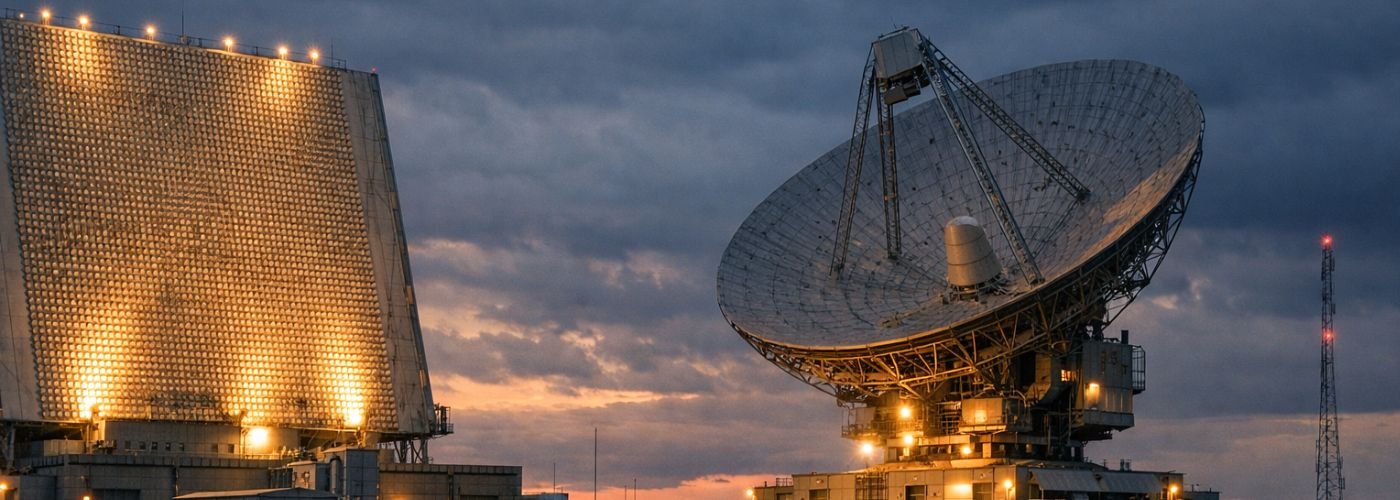

Analysis · StrikeOrbit | 2026
Russia’s military space program is simultaneously one of the most sophisticated and most constrained of any major spacefaring power.
It possesses a heritage of space warfare technology that predates anything the United States or China has fielded. The Soviet co-orbital ASAT program of the 1960s was operational decades before the American or Chinese equivalents, and it has continued to develop advanced counterspace capabilities in the post-Cold War period despite the economic constraints and institutional decay that followed the Soviet Union’s collapse.
The same program that pioneered co-orbital anti-satellite technology, built the world’s first operational nuclear early-warning satellite constellation, and conducted the most extensively combat-tested electronic warfare campaign against space systems in the history of conventional warfare, now faces a resource crisis created by the very conflict that provided that combat testing.
The war in Ukraine has consumed Russian defense industrial capacity and financial resources at a scale that has materially degraded the pace and ambition of Russian space program development.
Russia conducted only 17 launches in 2025 — five percent of the global total — compared to China’s 93 launches and the United States’ 193. That launch rate reflects a program operating under severe resource constraints, not one pursuing the ambitious space expansion its doctrine calls for.
Russia has approximately 300 satellites of all types in orbit as of early 2026, with approximately 250 in low Earth orbit providing primarily reconnaissance capability. This constellation is a fraction of China’s 1,060-plus satellite constellation and a smaller fraction still of the combined American government and commercial space infrastructure that Russian military doctrine specifically targets.
Yet the gap between Russian space ambition and Russian space capacity does not diminish the strategic significance of Russia’s counterspace capabilities. A state that cannot match its adversaries in constellation size can still hold those constellations at risk.
Russia’s co-orbital systems, directed energy weapons, electronic warfare capabilities, and nuclear ASAT program represent a counterspace arsenal specifically designed not to replicate American space dominance but to deny it.
As explored in Anti-Satellite Weapons: Capabilities, Systems, and Strategic Implications, the counterspace competition is not measured only in satellites deployed but in the ability to threaten the satellites that adversaries depend on. Russia’s military space program is built around that threat.
Russia’s Space Doctrine Treats the Orbital Domain as an Extension of Information Warfare
Russian military doctrine regarding space reflects a broader strategic framework that treats the information environment — of which the space domain is a critical component — as the primary arena of modern conflict.
Russian military theory, drawing on the concept of new generation warfare developed by theorists including General Valery Gerasimov, conceptualises modern conflict as occurring primarily in the information-cognitive domain, with kinetic military action serving as a tool within a broader campaign to degrade adversary decision-making, disrupt adversary communications, and undermine adversary will.
Space systems are central to this framework not primarily as military assets to be protected but as components of the adversary’s information architecture to be attacked.
American military effectiveness — particularly the precision strike, command and control, and intelligence collection capabilities that Russian planners most fear — depends on uninterrupted access to space-based communications, navigation, and intelligence.
Russian military doctrine explicitly identifies degrading that access as a priority objective in any conflict with a technologically sophisticated adversary, and Russian counterspace investment reflects that priority.
This emphasis on disrupting an adversary’s access to space-enabled decision-making reflects a broader Russian preference for achieving military advantage through asymmetry rather than matching an opponent’s capability for capability. Counterspace systems therefore complement Russia’s wider military doctrine instead of existing as an independent strategic objective.
The Russian Aerospace Forces, which have primary responsibility for military space operations, absorbed the former Russian Space Forces when the latter was merged into the broader Aerospace Forces structure in 2015.
This organizational integration reflects the doctrinal fusion of air and space operations into a single operational domain — a structural logic similar to the US Space Force’s establishment as a separate service but oriented toward offensive counterspace operations rather than the resilience and persistence that characterize American space doctrine.
A broader comparison of how the world’s major military powers organize and employ dedicated space forces is examined in US Space Force Doctrine vs China’s Space Strategy: Competing Visions of Orbital Power.
The Russian Aerospace Forces operate the military space surveillance system, the GLONASS navigation constellation, the EKS early warning satellite system, and the counterspace capabilities — kinetic, directed energy, and electronic warfare — that constitute Russia’s primary space warfare tools.
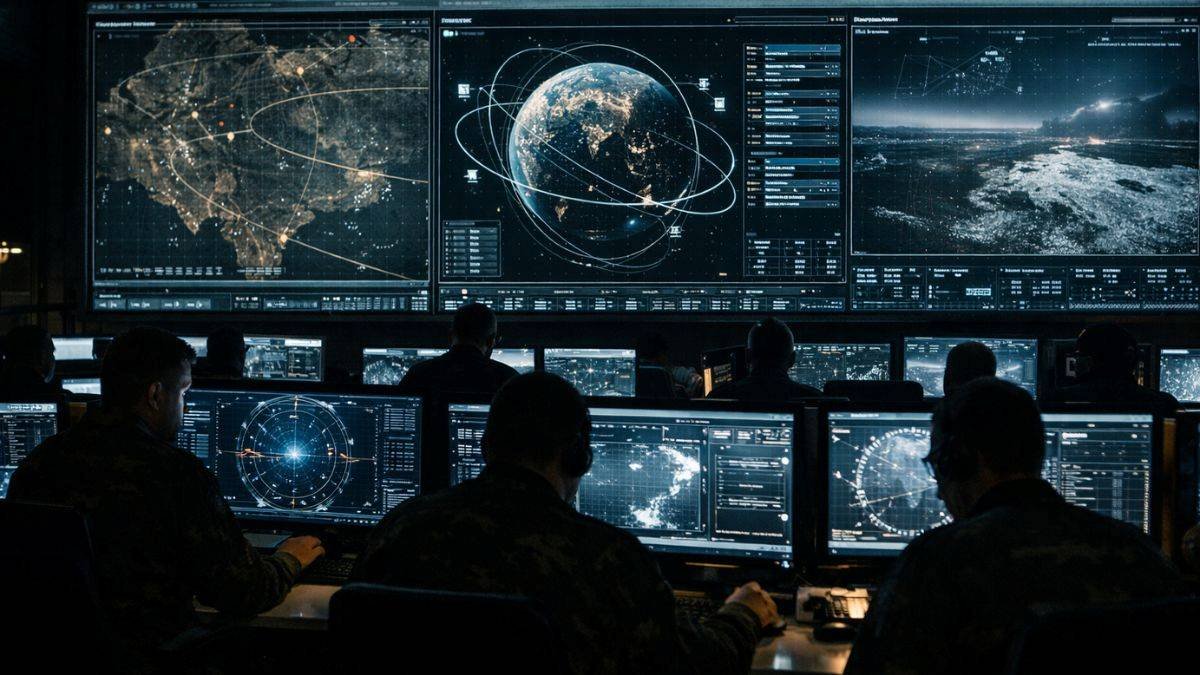
Russia’s Co-Orbital ASAT Program Has Achieved the Most Sophisticated Operational Capability
Russia’s most consequential current counterspace capability is its co-orbital anti-satellite program — the Nivelir series of inspector-killer satellites that conduct rendezvous and proximity operations against target satellites, gathering intelligence on their technical characteristics and demonstrating the ability to execute a kinetic attack at close range.
This program represents the continuation and maturation of the Soviet IS co-orbital ASAT system, adapted for the contemporary satellite environment and integrated with modern space situational awareness capabilities that allow precise maneuvering to within meters of target satellites.
The pattern of Russian co-orbital operations in recent years reveals a program that has moved from technology demonstration to operational deployment.
The Secure World Foundation’s 2026 Global Counterspace Capabilities Report provides one of the most comprehensive open-source assessments of Russia’s counterspace development, documenting the progression of Russian capabilities across direct-ascent, co-orbital, electronic warfare, directed energy, and cyber domains.
In August 2022, Cosmos 2558 was injected directly into the exact orbital plane of the classified United States imagery satellite USA 326, maneuvering to a distance of within 58 kilometers of the American asset in a demonstration that served both intelligence collection and threat signaling purposes.
In May 2024, Russia deployed Cosmos 2576 from the Plesetsk Cosmodrome and placed it in the same orbital plane as the US government Keyhole spy satellite USA 314, prompting the United States Space Command to publicly assess it as likely a counterspace weapon, presumably capable of attacking other satellites in low Earth orbit.
In September 2025, Cosmos 2588 adjusted its orbit to remain coplanar with the United States satellite USA 338, maintaining a threatening proximity of less than 100 kilometres every four days.
The CSIS Aerospace Security Project has examined the broader strategic challenge posed by Russia’s expanding space weapons arsenal, including the co-orbital and counterspace capabilities demonstrated through systems such as Cosmos 2576.
The most recent and operationally significant co-orbital development involves Cosmos 2589 and its associated sub-satellite Cosmos 2590, launched in June 2025 into a highly elliptical orbit. Initial telemetry showed the two objects conducting complex proximity operations, passing within one kilometre of each other to test rendezvous parameters.
Beginning November 19, 2025, Cosmos 2589 initiated a sustained sequence of maneuvers designed to circularize its orbit — progressively lowering its apogee and raising its perigee to reduce its orbital eccentricity from 0.364 to 0.231 by early 2026.
Cosmos 2589 completed that transition slightly behind its projected schedule, finishing its final circularization maneuvers between 22 and 30 April 2026 and settling into a stable position at 98.0 degrees East. What followed confirmed the concern analysts had flagged months earlier: the American satellite USA 325 moved into the immediate vicinity, closing to within roughly 13 kilometres of Cosmos 2589 by early May 2026 in what independent commercial tracking firms characterized as a deliberate American close-approach observation of the Russian satellite.
Cosmos 2589 did not remain parked. On 26 July 2026, tracking data confirmed the satellite departing its 98.0-degree East position and drifting east at a rate of roughly 0.4 degrees per day — precisely the patrolling behavior analysts had anticipated, and the clearest evidence yet that Russia intends to operate the satellite as a mobile geostationary inspector rather than a static one.
Although rendezvous and proximity operations are not inherently hostile and are also performed for satellite servicing, inspection, and debris-removal research, the repeated close approaches to foreign military satellites, combined with Russia’s broader counterspace program, explain why these maneuvers are assessed by Western defense organizations as strategically significant.
The operational logic of the Nivelir program is not simply to threaten individual satellites but to create a persistent close-approach presence near the highest-value American space assets.
A co-orbital satellite that has already maneuvered to within operational attack range of an adversary satellite represents a threat that can be activated at any time without further warning — the functional equivalent of a weapon already aimed at the target.
As discussed in Space Situational Awareness: Tracking and Securing the Orbital Domain, tracking and attributing these maneuvers in real time is one of the primary operational challenges facing American space domain awareness, and the Cosmos 2589 transition to geostationary orbit extends that challenge from low Earth orbit to the most strategically sensitive orbital regime.
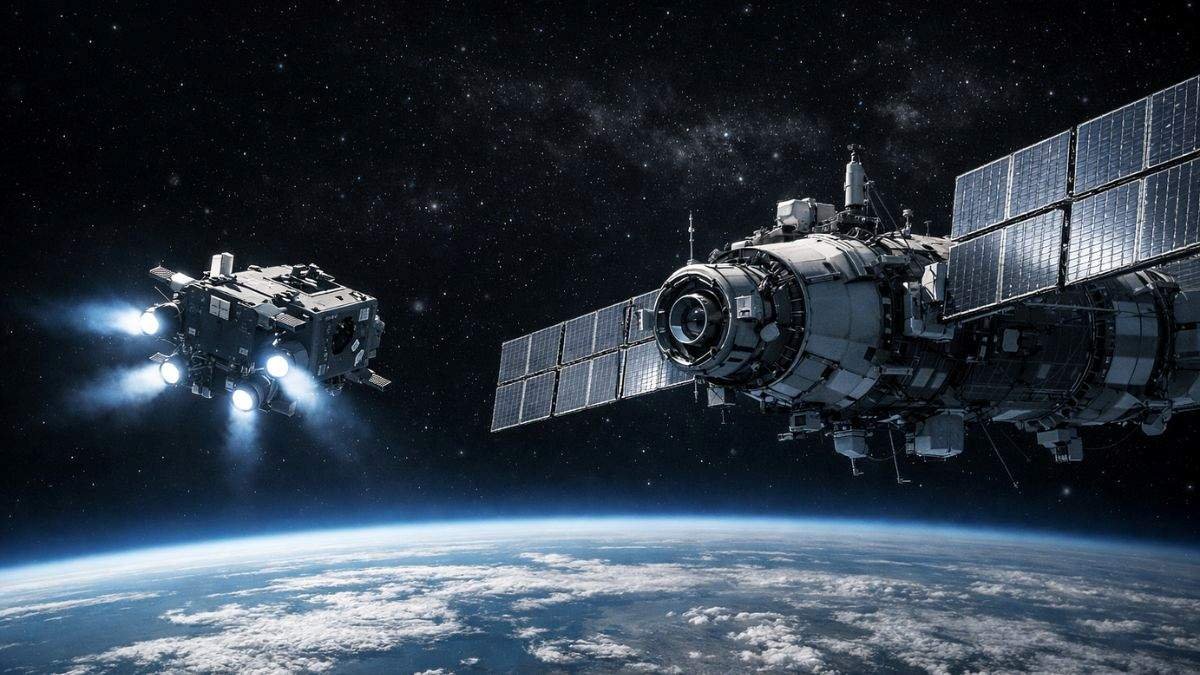
Russia’s Nuclear ASAT Program Represents the Most Escalatory Counterspace Development
The most strategically destabilizing element of Russia’s military space program is the nuclear anti-satellite weapon that American intelligence disclosed in February 2024.
The system — designed to use a nuclear detonation in space to generate an electromagnetic pulse and radiation effects capable of destroying or disabling hundreds of satellites across entire orbital regimes — would represent the most indiscriminate and catastrophic counterspace capability ever deployed if brought to operational status.
The satellite assessed as the primary test and development platform for the nuclear ASAT program is Cosmos 2553, launched from the Plesetsk Cosmodrome on February 5, 2022 — twenty days before Russia’s full-scale invasion of Ukraine. Placed in an orbit approximately 2,000 kilometers above Earth in a high-radiation zone that communications and Earth-observing satellites typically avoid, Russia described Cosmos 2553’s mission as testing the resilience of materials and electronic components to radiation and heavy charged particles.
American officials assessed this explanation as not credible — the radiation levels at Cosmos 2553’s orbit are elevated but not sufficient to justify the endurance testing Russia described, and the satellite’s orbital characteristics were more consistent with a weapons development test platform than a scientific research mission.
The subsequent history of Cosmos 2553 has introduced significant uncertainty about the nuclear ASAT program’s status. LeoLabs detected anomalies in the satellite’s behavior using Doppler radar beginning in November 2024.
By December 2024, it was assessed with high confidence that Cosmos 2553 was tumbling — spinning uncontrollably in a manner strongly suggesting the satellite was no longer operational.
The CSIS Space Threat Assessment 2025, published in April 2025, described the satellite as having tumbled since mid-November 2024 and assessed it as likely no longer operational.
Slingshot Aerospace, whose optical telescope network has tracked Cosmos 2553 since its launch, subsequently reported that the satellite appeared to have stabilized — though its operational status remains uncertain.
The malfunction of Cosmos 2553, if confirmed as permanent, would represent a setback for Russia’s nuclear ASAT program but not its elimination. The program’s existence has been demonstrated through the satellite’s launch and the intelligence assessments connecting it to nuclear ASAT development.
Russia’s denial that the program exists is not credible given the weight of American and allied intelligence assessments.
Whether Russia continues development through a successor platform or repairs the damage to Cosmos 2553 remains unknown from open sources. What is not in doubt is that Russia has invested in the capability and that the program represents the most direct challenge to the Outer Space Treaty’s prohibition on nuclear weapons in orbit that has emerged in the treaty’s nearly six-decade history.
The Arms Control Association has examined the implications of the nuclear ASAT threat for preserving the Outer Space Treaty’s prohibition against nuclear weapons in orbit.
Russia’s Kinetic ASAT and Directed Energy Capabilities
Russia’s direct-ascent anti-satellite program — the Nudol system designated PL-19, also known as A-235 — has been the most publicly tested of its kinetic counterspace capabilities. The Nudol system has undergone multiple test launches from the Plesetsk Cosmodrome, with tests confirmed in 2015, 2016, 2018, 2019, 2020, and November 2021.
The November 2021 test was the most operationally significant — Russia used the Nudol interceptor to destroy its own defunct Cosmos 1408 satellite at approximately 480 kilometers altitude, generating over 1,500 trackable debris fragments and prompting international condemnation, an emergency International Space Station maneuver to avoid debris, and ultimately the American-led moratorium on destructive ASAT testing that Russia subsequently endorsed.
As analysed in Orbital Debris and the Strategic Limits of Space Warfare, Russia’s deliberate selection of the 480-kilometre altitude for the Cosmos 1408 test reflected an understanding that lower altitude debris decays faster and generates less long-term environmental cost while still demonstrating direct-ascent kinetic ASAT capability.
The test was a calculated demonstration — proving operational Nudol capability while limiting the debris signature that would generate the strongest international condemnation. Russia’s subsequent endorsement of the ASAT testing moratorium it had just violated was equally calculated — providing political cover while the demonstrated capability remained intact.
The Peresvet directed energy system represents Russia’s most publicly acknowledged non-kinetic counterspace capability. Deployed operationally with Russian strategic nuclear forces in 2019, Peresvet is assessed as a high-powered laser system designed to dazzle or blind electro-optical sensors on reconnaissance satellites passing overhead.
The system has been sighted at multiple Russian nuclear ICBM bases, suggesting a primary role in protecting nuclear force deployments from satellite surveillance during mobilization — denying adversary intelligence about Russian nuclear force movements during a crisis.
The exact power levels and engagement envelopes of Peresvet remain classified, but its operational deployment makes Russia the only state to have publicly confirmed the deployment of a directed energy counterspace system specifically for nuclear force protection.
Russia’s Electronic Warfare in Space Has Been Combat-Tested in Ukraine
Russia’s space electronic warfare capabilities — the most operationally active dimension of its counterspace program — have received their most extensive real-world testing in the Ukraine conflict.
As explored in Electronic Warfare in Space: Jamming, Spoofing, and Satellite Signal Warfare Explained, Russia has deployed multiple ground-based electronic warfare systems in Ukraine specifically designed to degrade GPS navigation, jam satellite communications, and disrupt the space-enabled military capabilities that Ukrainian forces depend on.
The Krasukha-4 ground-based electronic warfare system has been deployed in Ukraine to suppress satellite-based radar systems and disrupt satellite communications.
The Tirada-2 satellite communications jammer has been assessed as capable of disrupting geostationary satellite communications across wide areas.
The Murmansk-BN long-range high-frequency jamming system, with an assessed range of up to 5,000 kilometres, has been documented affecting GPS signals across the Baltic region and Eastern Mediterranean in addition to Ukrainian operational areas.
The Palantin system, which integrates electronic warfare management across multiple platforms for coordinated spectrum operations, has been employed to coordinate jamming across the contested electronic warfare environment in Ukraine.
The Starlink electronic warfare competition — in which Russia has continuously attempted to jam Ukrainian Starlink terminals, and SpaceX has continuously updated its software countermeasures — has provided the most detailed public evidence of Russia’s electronic warfare capability against LEO satellite communications.
Russian jamming of Starlink has been persistent and adaptive, with Russian systems evolving their jamming frequencies and techniques in response to SpaceX countermeasures throughout the conflict.
The competition has demonstrated both the capability of Russian electronic warfare against distributed LEO constellations and the resilience limits of those same systems — Starlink has proven more resistant to Russian jamming than Russian planners anticipated, validating the distributed architecture’s inherent resilience advantage while revealing the ongoing limitations of Russian electronic warfare against software-defined systems that can update countermeasures in near-real-time.
Russia’s Viasat cyberattack at the outset of the invasion — the AcidRain malware that disabled tens of thousands of satellite modems across Europe on February 24, 2022 — demonstrated the cyber dimension of Russian space electronic warfare.
The attack achieved at the ground segment what jamming could not achieve at the satellite — disabling Ukraine’s primary military satellite communications at the most critical operational moment of the invasion.
The combination of the Viasat cyberattack and subsequent Starlink jamming illustrates Russia’s comprehensive approach to space electronic warfare — targeting both the satellites and their ground infrastructure with different tools at different stages of the conflict.
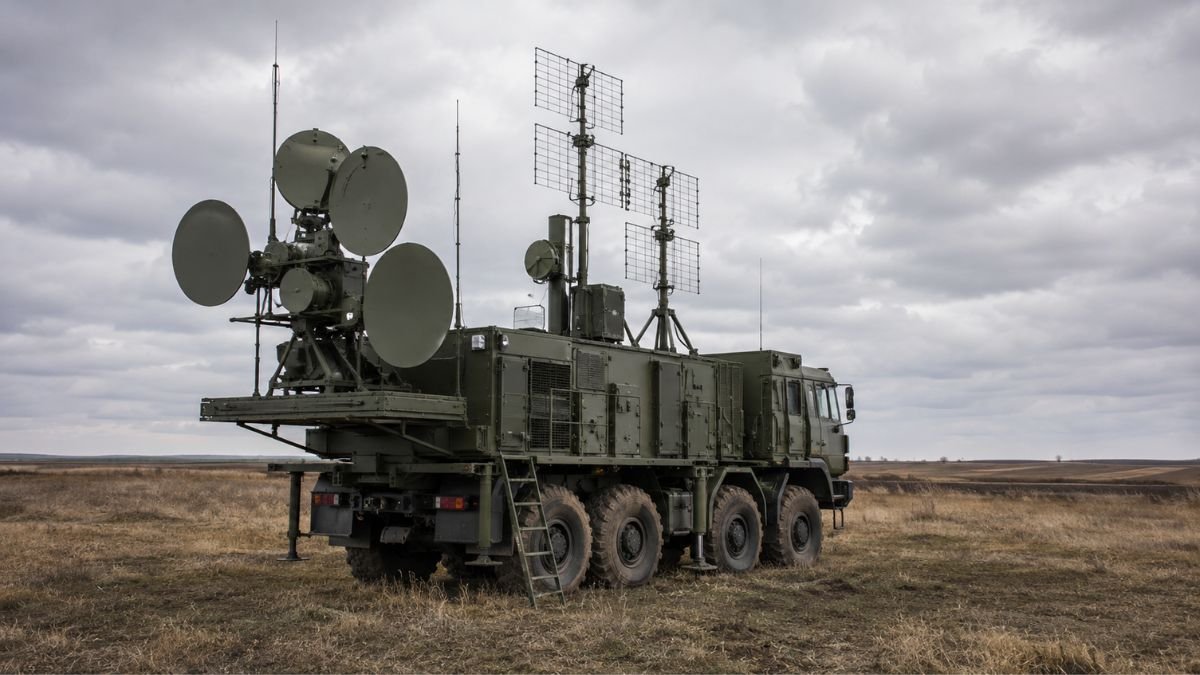
Russia’s Reconnaissance and Navigation Architecture Is Under Strain
Russia’s military space ISR capabilities have expanded since the 2022 invasion of Ukraine. Since the start of the full-scale invasion, Russia has launched 150 new satellites into low Earth orbit, bringing its total constellation to approximately 300 satellites as of early 2026, with approximately 250 providing primarily reconnaissance capabilities.
The rapid expansion reflects the operational lesson that space-based ISR proved far more decisive in Ukrainian defense than in Russian offence — Ukrainian access to commercial imagery, Starlink communications, and allied intelligence directly informed the successful defense while Russian ISR failed to provide the targeting and situational awareness that the invasion’s operational planning assumed.
Russia’s military imaging constellation includes the Persona electro-optical reconnaissance satellite series, the Razbeg detailed imagery satellites, the Pion-NKS maritime reconnaissance satellite series, the Lotos-S1 signals intelligence satellites, and the Repei electronic intelligence satellite series.
Each represents a component of an ISR architecture that Russia has been reconstituting and expanding since the early 2000s following the post-Soviet collapse, which gutted the military satellite programs that had given the USSR near-parity with American space-based intelligence capabilities during the Cold War.
Russia’s GLONASS navigation constellation provides the positioning and timing data for Russian precision weapons that BeiDou provides for China and GPS provides for the United States.
The GLONASS constellation has been maintained in operational status through the Ukraine war period, with the federal project for GLONASS development running through 2030, providing a structured investment framework for the constellation’s continuing modernization. The GLONASS federal project represents one of the few Russian space programs that has received consistent funding priority despite the resource constraints of the war.
Russia’s EKS early warning constellation — the Tundra satellites, also known as the Kupol program — provides the missile launch detection capability that underpins Russia’s nuclear deterrence posture. With five Tundra satellites in service by 2021, the EKS system provides continuous monitoring of missile launch areas relevant to detecting American ICBM launches from the continental United States.
The constellation represents Russia’s investment in the same space-based early warning architecture that underpins nuclear deterrence on both sides of the US-Russia nuclear relationship.
The Ukraine War Has Exposed the Limits of Russian Space Power
The most important strategic assessment of Russia’s military space program does not come from capability inventories but from operational performance in Ukraine — and that performance has revealed a significant gap between Russian space doctrine and Russian space reality.
Russian military doctrine assumed that electronic warfare would disrupt Ukrainian communications decisively in the opening phase of the invasion.
The Viasat attack achieved this for approximately 72 hours before Starlink provided a replacement capability that Russian jamming could not fully suppress.
Russian ISR was expected to provide the targeting data for precision strikes that would rapidly degrade Ukrainian military capability.
The actual performance of Russian ISR — constrained by a constellation smaller than what the invasion’s targeting requirements demanded and lacking the persistent coverage that commercial imagery provides — resulted in targeting cycles far slower than Russian operational planning required, contributing to the fires coordination failures that characterized the Russian ground campaign’s early months.
Russia’s response has been to expand its satellite constellation at an accelerated pace — the 150 new launches since February 2022 reflect a program in reactive reconstitution rather than strategic planning. But the expansion has not resolved the fundamental limitations.
Russia’s 17 launches in 2025 and five in the first quarter of 2026 compare unfavorably to the pace at which American and Chinese constellations are growing. The defense industrial resources consumed by the war in Ukraine have constrained the investment available for space program development.
The Foreign Policy Research Institute published a detailed assessment of Russia’s space program trajectory after 2024, documenting the structural constraints imposed by the war in Ukraine and Western sanctions on program ambition and delivery pace.
The Western sanctions applied after February 2022 have cut off Russian access to Western microelectronics components that were used in Russian satellite systems — forcing a shift to domestic or Chinese components that have slowed development timelines.
The long-term strategic risk for Moscow is that cooperation with China may preserve Russian relevance in space while simultaneously accelerating Russian dependence on a partner whose space capabilities are expanding far faster than its own.
Russia’s space program faces a structural challenge that its counterspace capabilities do not resolve. It can threaten adversary space assets through co-orbital systems, directed energy, electronic warfare, and nuclear capabilities. It cannot match adversary space assets in scale, capability, or resilience.
This distinction between the ability to deny an adversary’s access to space and the ability to sustain a large-scale military space architecture has become one of the defining characteristics separating Russia’s strategy from those pursued by both the United States and China.
The asymmetry between Russia’s ability to deny space access and its inability to achieve space dominance defines the character of Russian space strategy — a program built for counterspace denial rather than space supremacy, because space supremacy is not achievable with the resources available.
That strategy has been tested in Ukraine, refined by its results, and will define Russia’s approach to any future high-intensity conflict with a technologically superior adversary.
Conclusion
Russia’s military space program is best understood not as a failed attempt to match American space dominance but as a deliberate strategy of asymmetric counterspace — investing in capabilities that can threaten and degrade adversary space systems rather than in the satellite constellations that would be required to compete symmetrically with American or Chinese space power.
The Nivelir co-orbital program, the Nudol direct-ascent ASAT, the Peresvet directed energy system, the nuclear ASAT development, and the world’s most combat-tested electronic warfare capability together constitute an asymmetric toolkit designed for one strategic purpose: denying the United States the space-based military advantages that Russian military planners assess as the primary source of American conventional superiority.
The Ukraine war has simultaneously validated and constrained this strategy. Russia’s electronic warfare has been tested against real adversary systems and has demonstrated both its capabilities and its limitations. The Viasat attack demonstrated the decisive potential of cyber operations against space-ground infrastructure.
The Starlink competition demonstrated the resilience limits of distributed LEO constellations against sustained electronic warfare. The ISR failures of the invasion’s early phase demonstrated the operational consequences of inadequate space-based targeting capability.
Each lesson is being integrated into Russian military thinking for future conflicts — even as the resource constraints of the ongoing war limit the pace at which those lessons can be operationalized.
Russia remains a consequential space power not because of the size or sophistication of its satellite constellation but because of the specific counterspace capabilities it has developed and deployed against the adversary systems it most fears.
Russia’s military space strategy also forms part of the broader strategic competition reshaping the international system, examined in Great Power Competition and the New Global Order.
In a domain where the most dangerous state is not necessarily the one with the most satellites but the one most willing to use the least restrained methods against them, Russia’s military space program retains a strategic relevance that its resource constraints alone do not diminish.
Frequently Asked Questions
What is Russia’s military space program and how does it differ from civilian space activities?
Russia’s military space program operates under the Russian Aerospace Forces and encompasses military reconnaissance satellites, the GLONASS navigation constellation, the EKS early warning system, and a comprehensive counterspace arsenal including co-orbital ASAT systems, the Nudol direct-ascent interceptor, directed energy weapons, and electronic warfare capabilities. It differs from Russia’s civilian space program — operated under Roscosmos — primarily in its counterspace focus. Where American and Chinese military space programs emphasize building resilient constellations for military communications, navigation, and intelligence, Russia’s military program is oriented toward denying adversary access to those same capabilities through the full spectrum of counterspace methods. This asymmetric orientation reflects both doctrinal priorities and resource constraints.
What are Russia’s most significant counterspace capabilities?
Russia’s most operationally significant counterspace capabilities are its Nivelir co-orbital ASAT program — which has deployed satellites to threatening proximity to multiple US government satellites, including Cosmos 2576 near USA 314 in 2024 and Cosmos 2589, which completed its transition into geostationary orbit in April 2026 and began actively repositioning within the geostationary belt in July 2026, consistent with a patrolling rather than static inspection role — and its electronic warfare systems, including the Krasukha-4, Tirada-2, and Murmansk-BN jamming systems that have been combat-tested in Ukraine. The Nudol direct-ascent ASAT has been tested multiple times, including during the November 2021 destruction of Cosmos 1408. The Peresvet directed energy system is operationally deployed. Russia is also assessed to be developing a nuclear anti-satellite weapon, with Cosmos 2553 identified as the likely test and development platform. However, that satellite appeared to be malfunctioning as of December 2024.
What is Russia’s nuclear anti-satellite weapon and what happened to Cosmos 2553?
American intelligence disclosed in February 2024 that Russia has been developing a nuclear anti-satellite weapon designed to use a nuclear detonation in space to generate electromagnetic pulse and radiation effects capable of destroying satellite networks across wide orbital areas. Cosmos 2553, launched February 5, 2022, into a high-radiation orbit 2,000 kilometers above Earth, has been assessed as the primary test and development platform for this program. Russia describes the satellite’s mission as scientific radiation testing, which American officials assess as not credible. As of December 2024, LeoLabs assessed with high confidence that Cosmos 2553 was tumbling and likely no longer operational. Slingshot Aerospace subsequently reported possible stabilization. The satellite’s operational status remains uncertain, but the program’s existence is not.
How has the Ukraine war affected Russia’s military space program?
The war in Ukraine has had a significant negative impact on the Russian space program’s resources. Russia conducted only 17 launches in 2025 — five percent of the global total — compared to the US’s 193 and China’s 93, reflecting severe resource constraints from defense industrial production priorities and Western sanctions on microelectronics components. However, the war has provided extensive real-world testing of Russian electronic warfare against space systems, revealing both capabilities and limitations. The Viasat cyberattack demonstrated decisive ground segment cyber potential, while the Starlink competition revealed the resilience of distributed LEO constellations. Russia increasingly depends on Chinese components for satellite development — creating a long-term dependency risk that its own resource constraints cannot resolve.
Why does Russia pursue counterspace capabilities rather than matching American and Chinese satellite constellations?
Russia’s counterspace-oriented strategy reflects both doctrinal choice and resource reality. Matching the American satellite constellation or the Chinese constellation of over 1,060 satellites is not achievable with Russian space budgets, particularly under the financial pressure of the Ukraine war and Western sanctions. Russian military doctrine identifies degrading American space-based military advantages as a higher strategic priority than replicating them — if Russian electronic warfare, co-orbital systems, and kinetic ASATs can deny American forces access to the GPS navigation, satellite communications, and space-based ISR they depend on, Russia achieves operational parity through denial rather than matching. This is an asymmetric strategy designed for the resource constraints of a state that cannot compete symmetrically in space but can threaten the adversaries that depend on it.
Sources and References
Secure World Foundation — Global Counterspace Capabilities: An Open Source Assessment (2026)
Center for Strategic and International Studies (CSIS) — Space Threat Assessment 2025 (April 2025)
Center for Strategic and International Studies (CSIS) — Is There a Path to Counter Russia’s Space Weapons? (August 2024)
United States Space Command — Public Assessment of Cosmos 2576 as Counterspace Weapon (May 2024)
Foreign Policy Research Institute — Russia’s Space Program After 2024 (July 2024)
Swedish Defense Research Agency (FOI) — Russia in Space: From Satellites to Sanctions (2025)
Congressional Research Service — Russia’s Military Space Capabilities (2024)
LeoLabs — Cosmos 2553 Tumbling Assessment (December 2024)
The Space Review — Russia’s Counterspace Activities in LEO and GEO (2025)
International Institute for Strategic Studies (IISS) — The Military Balance (2025)
Bulletin of the Atomic Scientists — Nuclear Notebook: Russian Nuclear Forces (2025)
Arms Control Association — Russia’s Nuclear Anti-Satellite Weapon: Policy Implications (2025)
United Nations Office for Outer Space Affairs — Outer Space Treaty (1967)
ISR University — Issue 144: Cosmos 2589 and USA 325 Close-Approach Tracking (May 2026)
KeepTrack — KTOC Notice: Cosmos 2589 Departure from 98.0°E (July 2026)
Related Analysis
For analysis of the anti-satellite weapons that Russia has developed and tested as part of the counterspace program described in this article, read Anti-Satellite Weapons: Capabilities, Systems, and Strategic Implications.
For analysis of the space situational awareness systems tracking Russia’s co-orbital activities including Cosmos 2576 and Cosmos 2589, read Space Situational Awareness: Tracking and Securing the Orbital Domain.
For analysis of the electronic warfare capabilities that Russia has deployed most extensively in Ukraine as its most operationally active counterspace tool, read Electronic Warfare in Space: Jamming, Spoofing, and Satellite Signal Warfare Explained.
For analysis of the orbital debris consequences of Russia’s November 2021 Cosmos 1408 ASAT test and their strategic implications, read Orbital Debris and the Strategic Limits of Space Warfare.
For analysis of the Outer Space Treaty provisions that Russia’s nuclear ASAT program most directly challenges, read The Outer Space Treaty and Its Limits in the Age of Orbital Warfare.
