



Analysis · StrikeOrbit | 2026
Military satellites by country are difficult to count consistently. No public source gives a single agreed number of military satellites. One tracker counted 1,226 active military satellites from 30 countries in mid-October 2026, while another, working from the same underlying catalog, counted about 954 for three countries. A widely copied country table still in circulation rests on 2023 data and reports only 613.
The difference is not mainly about error. It comes from what each source decides to count: who owns the satellite, what it can do, whether it is working, and whether commercial satellites that militaries rely on belong in the total.
This article explains how the counts are built, what military satellites actually do, how the major space powers and several regional builders approach the problem, and why access to data can matter as much as ownership of the spacecraft.
The status below is as of November, 2026, drawing on reporting through late October. Figures are dated wherever a source gives a date, and each is labeled as confirmed, attributed to a named source, or an analytical judgment. Where the public evidence is too thin, the article says so and does not invent a number.
Public Military Satellite Counts Differ Because Researchers Count Different Things
Two trackers show the problem clearly. The azmth tracker counted 1,226 active military satellites from 30 countries on October 17, 2026, using the military class in Jonathan McDowell’s GCAT catalog. The KeepTrack count for October 2026 gives about 954 satellites owned by the US, Chinese, and Russian militaries, and it calls each figure a minimum.
Both draw on the same catalog but apply different rules. KeepTrack counts a satellite as military if at least one listed owner is a defense organization and leaves out dual-use commercial satellites. Azmth follows the catalog’s own classification, includes 10 satellites the catalog marks as shared civil and military, and adds a separate label for satellites a government says its armed forces own or run.
| Source | Date | Total | United States | China | Russia |
| azmth, GCAT-based | October 2026 | 1,226 | 676 | 322 | 121 |
| KeepTrack, ownership rule | October 2026 | about 954 | 605 | 210 | 139 |
| Union of Concerned Scientists, 2023 data | May 2023 | 613 in a widely copied table | 247 | 157 | 110 |
The table’s totals are not interchangeable. The 2023 figures come from a database whose updates have since paused, and the page that copies them does not define “military.” Even the two current trackers differ by roughly 270 satellites, which is why this article gives ranges and dates, not a ranking.
Satellite Counts, Capability and Availability Are Three Different Measures
A count of satellites answers only one question: how many spacecraft meet a stated definition. It does not say what those spacecraft can do, which depends on their sensors, orbit, power, and the ground systems that task them. It also does not say how many are working, reachable by commanders, and useful at a given time.
The three measures can diverge sharply. A satellite launched is not necessarily a satellite operating, as the Tundra case below shows. A country with fewer satellites may hold a more capable warning or communications system than a country with many satellites on easier missions.
This article therefore keeps the three layers apart: the population that meets a definition, the capability that population provides, and the availability of that capability when it is needed. The same question applies to every country below. Does it own the satellite, control it, receive its data, and turn that data into military advantage? Those are four different things.
Five Lenses Label a Satellite “Military,” and They Overlap
A satellite can be called military for five different reasons. The first is that a military or intelligence organization owns or operates it. The second is that a civil or government agency owns it but defense users depend on it, as with government Earth-observation systems.
The third is that it is a commercial satellite whose imagery or service military customers can buy. The fourth is that it has capabilities, such as high-resolution imaging or radar, that can support military operations regardless of who owns it. The fifth is that it is classified or undisclosed, so its existence or mission is not fully public.
These are lenses, not boxes. One satellite can fall under several, and the counts under each lens cannot be added together. The Defense Intelligence Agency’s October 2026 report on China shows the difference: it counts satellites that provide intelligence capability, including commercial and civil ones, which is a different measure from which satellites a military owns.
Countries Buy Military Satellites for Five Jobs, and the Job Decides the Design
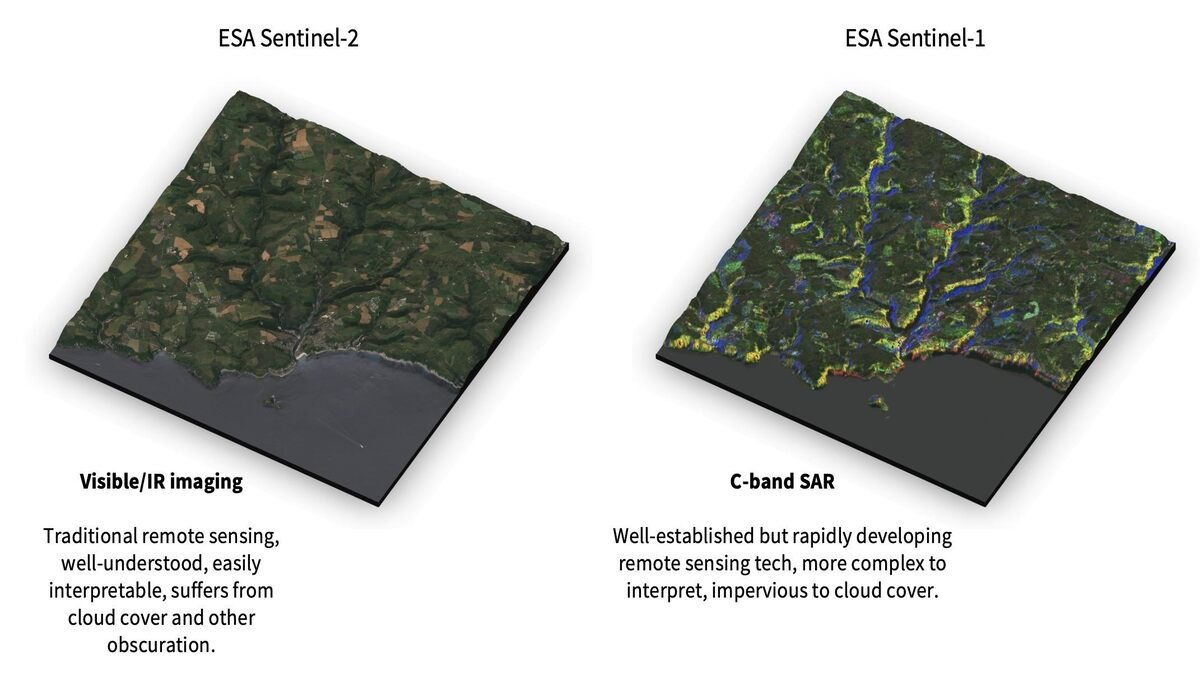
The first job is intelligence, surveillance, and reconnaissance. South Korea’s 425 Project reached five satellites with a launch on November 2, 2025: one electro-optical and infrared satellite and four radar satellites, and the defense ministry says the system gives the military independent, all-weather surveillance of North Korea. Radar matters here because it can image through clouds and at night, which optical satellites cannot.
The second job is communications beyond line of sight. India’s GSAT-7R, launched on November 2, 2025 and weighing about 4,400 kilograms, is a naval communications satellite covering the Indian Ocean Region, and it follows GSAT-7, the first dedicated Indian military communications satellite in 2013.
The third is navigation and timing, where GPS has about 31 to 32 satellites, GLONASS 24, Galileo about 30 to 31 and BeiDou 45, according to the Orbital Radar tracker, with NavIC a regional system of seven, according to the Orbital Radar tracker.
The fourth job is missile warning, covered in the analysis of missile warning satellites and early warning systems. The fifth is tracking objects and activity in orbit, known as space domain awareness. Many satellites do more than one of these jobs, so mission counts must not be added together as if each described a separate spacecraft. The wider communications picture is covered in the analysis of Satellite Constellations and Military Communications in Modern Warfare.
The United States Has the Largest Count in Both Major Trackers, and Much of Its Architecture Is Undisclosed
The United States leads both trackers, with 676 in the azmth count and 605 in the KeepTrack count. The azmth data also show why the figure is soft: 434 of its 676 US military satellites have no public orbit, meaning the US catalog does not publish their full orbital data. That is evidence that a large part of the architecture is not public, but it does not by itself show that the United States discloses less than every other power.
The National Reconnaissance Office said on April 14, 2026, that its proliferated architecture has launched more than 200 satellites over the past few years and made more than 400,000 imagery collections in 2025.
In its announcement, the agency’s principal deputy director described “unprecedented levels of persistence, timeliness, and resilience,” and the agency gave no planned total. Launches such as NROL-179 on June 19, 2026, often do not disclose how many satellites they carry.
The Space Development Agency is a separate effort. It launched 42 Transport Layer satellites in September and October 2025, then paused after software, thermal, and propulsion problems on the satellites already in orbit, according to Federal News Network.
Space Systems Command reported a further 21 launched in July 2026, and Satellite Today reported in late September that Northrop Grumman had delivered another 21 to Vandenberg for a launch expected in early October.
The planned first-generation Transport Layer is 126 satellites, within a 158-satellite Tranche 1, and Satellite Today described Tranche 1 as more than a year behind schedule. Counts of satellites in orbit therefore change with each launch, and second-generation launches are expected to begin in fiscal 2027.
Starshield is a third, separate thing. SpaceX describes it as a secure network for government customers built on Starlink technology, with Earth observation, communications, and hosted payloads as its main areas.
Reuters reported in 2024 that SpaceX received a $1.8 billion NRO contract in 2021, but the NRO does not confirm its industry partners, so the NRO’s 200-plus satellites cannot be read as a Starshield count. One source put Starshield launches at more than 118 by January 2025, and that single-source figure is not a confirmed fleet size.
China’s 510-Plus Intelligence Satellites Extend Beyond Military Ownership
The Defense Intelligence Agency’s 2026 report, “Challenges to Security in Space,” says China had more than 510 intelligence, surveillance, and reconnaissance satellites as of July 2026, three times its 2018 level, according to Breaking Defense. This article could not open the DIA report itself and relies on that coverage for the findings.
The count includes Chinese commercial satellites, and the DIA says many are “ostensibly affiliated with commercial and civil missions” whose data the PLA can use.
The same figure of more than 510 appeared in the Pentagon’s China report released in December 2025. Those reports give China’s total fleet as more than 1,189 spacecraft (Defense Department) and more than 1,301 (Space Force fact sheet, as of November 2025), two US government totals that differ by date or definition. The tracker counts are lower because they apply ownership rules: 322 in the azmth count and 210 in KeepTrack.
Public figures do not show how fast the fleet is growing now. The American Enterprise Institute’s Todd Harrison, quoted by Breaking Defense, said the growth curve has leveled off in recent years, and he counts 541 operational Chinese surveillance and weather satellites against 643 for the United States.
That is an analyst’s view of data that mix weather and surveillance satellites, and it is not a count of military satellites. The wider strategic contest is covered in the analysis of US Space Force Doctrine vs China’s Space Strategy: Competing Visions of Orbital Power.
Russia’s Aging Space Fleet Faces Constraints, Including Reported Weaknesses in Early Warning
Russia’s count is smaller and harder to read. Azmth shows 121 and KeepTrack 139. Militarnyi, a Ukrainian defense outlet, counted in April 2026 at least 17 optical, 5 radar, and 8 signals-intelligence satellites among about 300 Russian satellites of all types, and warned that public data on function and status are unreliable and that many satellites are past their design life.
Launch tempo has slowed. The Space Force’s threat fact sheet reports 17 Russian launches in 2024, against an average of more than 26 a year from 1995 to 2015. Russia launched nine military satellites on February 5, 2026, whose missions were not immediately clear, according to the analyst blog russianforces.org.
On December 28, 2025, independent orbital analysis by Pavel Podvig suggested that Russia may have only one functioning Tundra missile-warning satellite, down from three that appeared operational in March 2025.
The assessment rests on changes in orbital data and not on an official Russian statement; Podvig said it was too early to conclude the last satellite had stopped working, and he noted that a later post on January 1, 2026, said the others may not be dead yet. He has also argued that the space segment plays a smaller role in Russian early warning than in the American system, so one number for the satellites does not describe Russia’s whole warning architecture.
India, South Korea, Japan, France, Israel and the UK Build for Their Own Regions
These countries show that a large, dedicated fleet isn’t the only model. India’s military satellites are few: GSAT-7R serves the navy, and a 52-satellite surveillance program called SBS-3 was reported by military sources at Aero India 2025 to include 31 satellites from three private firms and 21 from ISRO, with the first batch due between 2027 and 2028.
NavIC is a regional navigation system and is not counted as a military constellation here.
South Korea built a five-satellite constellation aimed at one neighbor. Japan began its reconnaissance program in 1998 after North Korea’s Taepodong-1 test and had eight Information Gathering Satellites in orbit as of September 2024, a count this article could not update.
Japan’s Quasi-Zenith Satellite System is a government navigation program and not a military constellation.
France runs specialized systems, according to the French Space Command: three CERES signals-intelligence satellites launched in November 2021, three CSO optical satellites in two orbits, and two Syracuse IV communications satellites.
Israel’s defense ministry said in September 2025 that its Ofek-19 radar satellite had entered orbit, and its director general said the ministry would “invest billions in deploying a satellite constellation” in the coming decade.
The United Kingdom shows a service model. Its four Skynet 5 satellites provide current military satellite communications, and since March 2024, the service has been delivered by Team Aurora, a consortium of Babcock, Intelsat, GovSat and SES, according to GOV.UK. Skynet 6A is due to launch on a SpaceX rocket in 2027 as part of a program of more than five billion pounds over ten years.
Germany has said it plans to launch about 1,200 low-orbit satellites by 2030, but bidding was still underway as of July 2026, so that is a plan and not a contracted fleet.
The evidence for other countries is thin. North Korea claimed a reconnaissance satellite in orbit in November 2023, and this article found no verified current status. Russia launched three Iranian satellites in December 2025, but their military role is not established.
Most Countries Buy or Borrow Satellite Capability, and Access Can Be Restricted
Most countries do not build their own reconnaissance fleets. A Defense News survey found space intelligence was the hardest area for Europe to make self-sufficient, with most experts estimating five to 10 years to stop relying on US space intelligence.

Several European governments are buying radar satellites from the Finnish company ICEYE: Poland ordered three with an option for three more, worth about 200 million euros, and Portugal, the Netherlands, and Finland have contracts of their own.
Buying changes the question. Four things matter: who owns the satellite, who operates it, who controls access to its data, and whether the customer can keep receiving it in a crisis. Peacetime availability is not assured access during a conflict, and the analysis of commercial satellites as military infrastructure explains the strategic risk.
Ukraine shows two separate kinds of dependency. In March 2025, the United States paused intelligence sharing for nearly a week, ending during talks in Saudi Arabia on March 11, and Ukrainian forces turned to their own drones, radio interception, and costly commercial imagery, according to the Kyiv Independent.
A Ukrainian intelligence soldier said troops were “somewhat blind,” and Maxar’s imagery access returned about March 12.
The second case was a service limit, not a loss of intelligence. In mid-October 2026, Ukrainian officials said speeds on Starlink and Starshield services were capped, hampering drone operations. Ukraine’s defense ministry said on October 24 that speeds had recovered, according to ABC News.
Musk said Ukraine had violated Starlink’s terms by using it for offensive drone strikes, and that Starshield limits are set by the US government. The Trump administration denied ordering a slowdown. The cause remains disputed, and the speed figures come from Ukrainian operators and were not independently verified.
A Fleet Is Only the First Link in a Chain, and Coverage Depends on Orbit
Satellite power runs through a chain: collection, downlink, processing, intelligence, decision and action. Ground stations, command systems, secure links and trained people sit around every link. A country with excellent imaging satellites but limited capacity to process imagery quickly gains less than one with fewer satellites and a better-integrated network.
A CSIS brief on Russian partner support, published in July 2026, found that Russia’s bottleneck in using Chinese commercial imagery is processing and not collection. That is a finding about Russia, and it should not be assumed to apply to other countries. Each architecture has to be judged on its own.
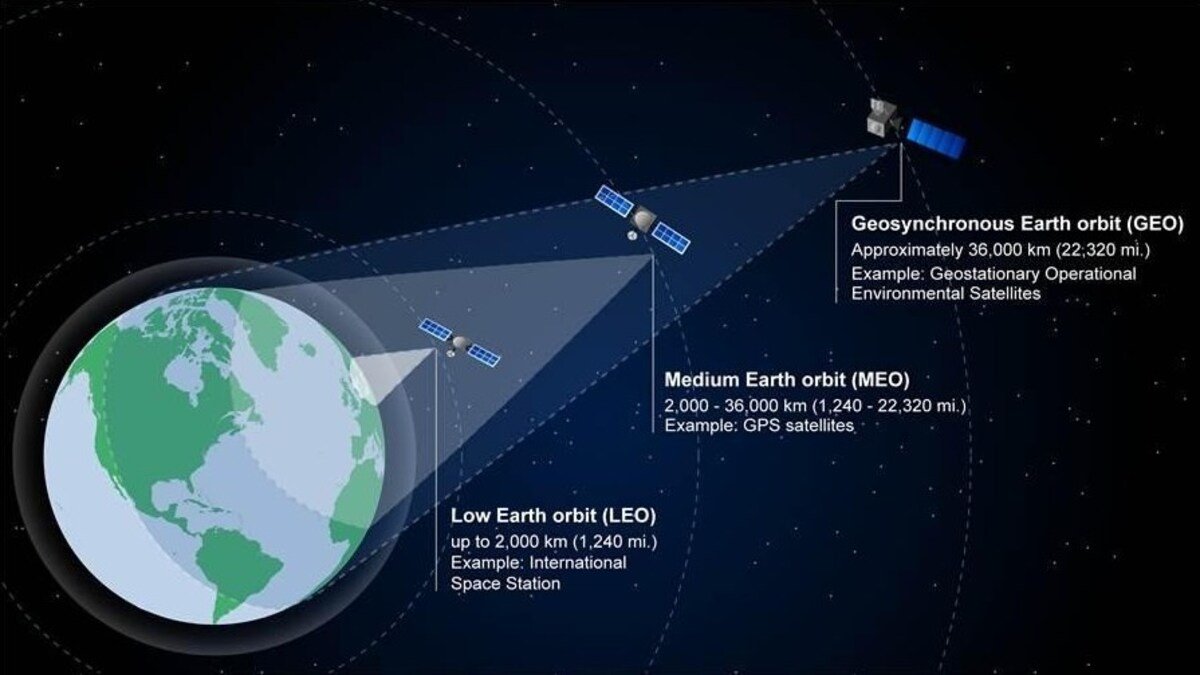
Orbit decides what a satellite can cover. A geostationary satellite holds one spot over the equator, so it covers a region, such as the Indian Ocean for GSAT-7R. Medium-orbit navigation satellites can cover the globe, low-orbit imaging satellites see a place only briefly and rely on large constellations for frequent revisits, and highly elliptical orbits give long looks at high latitudes.
Tracking what other objects in those orbits are doing is a separate task, explained in the analysis of space domain awareness versus space situational awareness.
Revisit is not continuous coverage. It depends on orbit inclination, the sensor’s field of view, constellation size and weather, and latency can matter as much as image quality. An ICEYE executive told Defense News: “Maybe an uglier image in half an hour is more valuable than a pretty image in an hour.”
Resilience is a separate question from count. Hundreds of smaller satellites spread across orbital planes can be easier to replace than a few expensive ones, but the Space Development Agency’s early software and propulsion problems show that proliferation brings its own risks.
Jamming, cyberattacks, and anti-satellite weapons add further threats, and the analysis of anti-satellite weapons covers that side. The broader shift to space as a contested domain is explained in the analysis of orbital warfare.
Seven Developments Will Show How Military Space Capabilities Are Changing
Seven events are worth watching, and each is a development to monitor and not a measure of capability on its own.
The first is whether the Space Development Agency completes delivery of its 126 first-generation transport satellites and moves them from on-orbit testing into initial warfighting capability, and whether second-generation launches start in fiscal 2027. The second is whether the National Reconnaissance Office discloses a new total after its figure of more than 200 satellites.
The third is whether the next Defense Intelligence Agency or Pentagon report keeps China’s intelligence-satellite figure at more than 510 or changes the definition. The fourth is whether Russia keeps more than one missile-warning satellite operating and how its new launches are classified. The fifth is whether Germany awards contracts for its large reconnaissance and communications constellations.
The sixth is whether India’s first surveillance batch and the United Kingdom’s Skynet 6A launch arrive on the 2027 timetable. The seventh is whether European buyers of Finnish radar satellites turn orders into satellites in orbit. Measured performance matters alongside these events: availability, revisit time, time from collection to usable intelligence, resilience, and control over commercial and allied data.
A country’s military space power cannot be measured by counting satellites alone. It depends on what the satellites can do, whether they are available when needed, who controls access to their data, and how well that information becomes military action.
Frequently Asked Questions
How many military satellites are there?
No source gives one agreed number. One tracker counted 1,226 active military satellites from 30 countries in October 2026, another counted about 954 for the United States, China and Russia, and a 2023 table reported 613. For scale, the Union of Concerned Scientists database counted 7,560 active satellites of all kinds in May 2023, and for the United States, 4,741 of 5,184 satellites were commercial.
Which country has the most military satellites?
The United States has the largest count in both major trackers, with 676 in one and 605 in the other, and China is second at 322 and 210. The Defense Intelligence Agency counts more than 510 Chinese intelligence satellites, but that figure includes commercial ones and is not a military count. A large share of US military satellites have no public orbital data, so every total is a minimum.
What is Starshield, and how is it different from Starlink?
Starlink is SpaceX’s commercial broadband constellation, which militaries also use. Starshield is SpaceX’s network for government customers, built on Starlink technology, with Earth observation, communications and hosted payloads as its main areas. The National Reconnaissance Office’s proliferated architecture is a separate reconnaissance effort, and the agency does not confirm its industry partners.
Do commercial satellites count as military satellites?
Not unless a source chooses to count them. Some counts leave out commercial satellites, and others include ones that governments say they own or control. Militaries still depend heavily on commercial satellites, as Ukraine’s use of Starlink and commercial imagery shows, and that access can be limited, as the October 2026 speed limits showed.
Why do the counts disagree?
They count different things. Some count satellites by owner, some use a catalog’s military classification, and some count capability, such as intelligence satellites, regardless of owner. Satellites also change status; many are classified, and a launched satellite is not necessarily operating.
Sources and References
ABC News — Ukraine says Starlink satellite access is fully back after weeklong disruption (October 24, 2026).
Breaking Defense — DIA: China has tripled its satellite fleet since 2018 as expansion continues (October 27, 2026).
Defense Intelligence Agency — Challenges to Security in Space (2026, third edition; findings cited through Breaking Defense).
Defense News — ICEYE sees role as Europe’s defense space-intelligence linchpin (November 17, 2025).
Federal News Network — SDA resumes satellite launches after months-long pause (July 2026).
French Space Command, “Space capabilities.” GOV.UK, “Skynet 6”. GlobalSecurity, Republic of Korea Ministry of National Defense release on the fifth 425 Project satellite (November 17, 2025).
Israel Ministry of Defense and Israel Aerospace Industries — Ofek 19 satellite press release (September 3, 2025).
KeepTrack — How Many Military Satellites Are in Orbit? (October 2026).
Kyiv Independent — The Counteroffensive: What Trump’s intel pause cost Ukraine (March 2025).
Militarnyi — Russia’s Space Reconnaissance Capabilities (April 6, 2026).
Militarnyi — Japan launches a new generation reconnaissance satellite into orbit (September 30, 2024).
National Reconnaissance Office — NRO’s proliferated architecture exceeding expectations, PDDNRO tells Space Symposium (April 14, 2026).
New Space Economy — SpaceX Starshield: A New Frontier in Government Satellite Services (March 1, 2025).
CSIS, Wesley Bailey and Daniel Byman — Russia’s Cap on Partner Aid: Institutional Rigidity and the Limits of External Support (July 31, 2026).
russianforces.org, Pavel Podvig — The space segment of the Russian early-warning system is not in good shape (December 28, 2025).
russianforces.org — Space segment of Russia’s early warning system (March 2025)
russianforces.org, Pavel Podvig — Multiple military satellites launched (February 2026).
Satellite Today — 21 Tranche 1 Transport Layer Satellites Delivered to Vandenberg, Northrop Grumman Says (September 29, 2026).
SpaceX — “Starshield.” Spaceflight Now, SpaceX launches first batch of satellites for the NRO’s reconnaissance satellite constellation (May 2024).
US Space Systems Command — U.S. Space Force successfully launches additional Tranche 1 satellites (July 2026).
Tribune India — How Navy will boost maritime surveillance with new GSAT-7R communication satellite (November 2025).
UNITED24 Media — Ukraine’s drones were hit by a 10-day Starlink speed limit (October 26, 2026).
Union of Concerned Scientists — Satellite Database (data to May 2023).
US Space Force — Space Threat Fact Sheet (December 2025).
Azmth — Military and Spy Satellites by Country (October 2026).
Related Analysis
Earlier StrikeOrbit analysis that explains the systems and risks discussed here.
How commanders turn sensor data into joint decisions: JADC2 Explained: How the US Military’s Joint Command Network Works.
How tracking and catalog work underpin the orbital picture: Space Situational Awareness: Tracking and Securing the Orbital Domain.
How satellites feed missile defense against fast weapons: Tracking Hypersonic Missiles from Space: The Sensor Architecture Reshaping Missile Defense.
How China links sensors, missiles and commanders: China’s Multi-Domain Precision Warfare: Inside the PLA’s Answer to JADC2.
How artificial intelligence changes the processing side of the chain: Military AI and the Future of Warfare: Applications, Risks, and US-China Competition.
