



Analysis · StrikeOrbit | 2026
Hypersonic weapons have moved from laboratory programmes and test flights into operational military arsenals faster than most strategic analysts predicted a decade ago. As of 2026, only a small number of countries with operational hypersonic missiles have moved beyond testing and into active military deployment.
The systems that defense establishments spent the 2010s describing as emerging threats are now deployed, in several cases combat-tested, and in active production across multiple nations.
The transition from experimental to operational has not been uniform — the gap between a state that has conducted a test flight and one that has a fielded, doctrine-integrated, operationally reliable system remains significant — but the direction of travel is unambiguous.
Hypersonic weapons are no longer a future capability. For the states that have invested most heavily, they are a present reality with present consequences.
The strategic significance of this transition extends well beyond the performance characteristics of individual weapons.
Hypersonic missiles — defined broadly as systems capable of sustained flight at Mach 5 or above, with the maneuvering capability that distinguishes them from conventional ballistic missiles — compress the decision timelines available to defenders, complicate the tracking and interception geometry that existing missile defense systems were designed around, and enable strike options against time-sensitive or heavily defended targets that were previously inaccessible to conventional precision strike.
As examined in Hypersonic Weapons and the Emerging Global Strike Balance, the strategic implications of hypersonic weapons proliferation reach into nuclear deterrence, conventional military balance, and the viability of existing missile defense architectures simultaneously.
Understanding which states have genuinely operational hypersonic capabilities — as distinct from those conducting tests, developing programmes, or making aspirational claims — requires precise analytical distinctions that public reporting often blurs. This article provides that assessment, country by country, based on verified open-source information current to 2026.
Russia Has the Most Operationally Mature Hypersonic Arsenal
Russia leads all other states in the operational maturity, breadth, and combat experience of its hypersonic weapons programmes. This position reflects both a sustained investment in hypersonic technology that predates the current era of great power competition and a deliberate decision to prioritise hypersonic weapons as an asymmetric offset against American conventional and missile defense advantages.
The broader strategic competition driving this investment is examined in depth in Great Power Competition and the New Global Order.
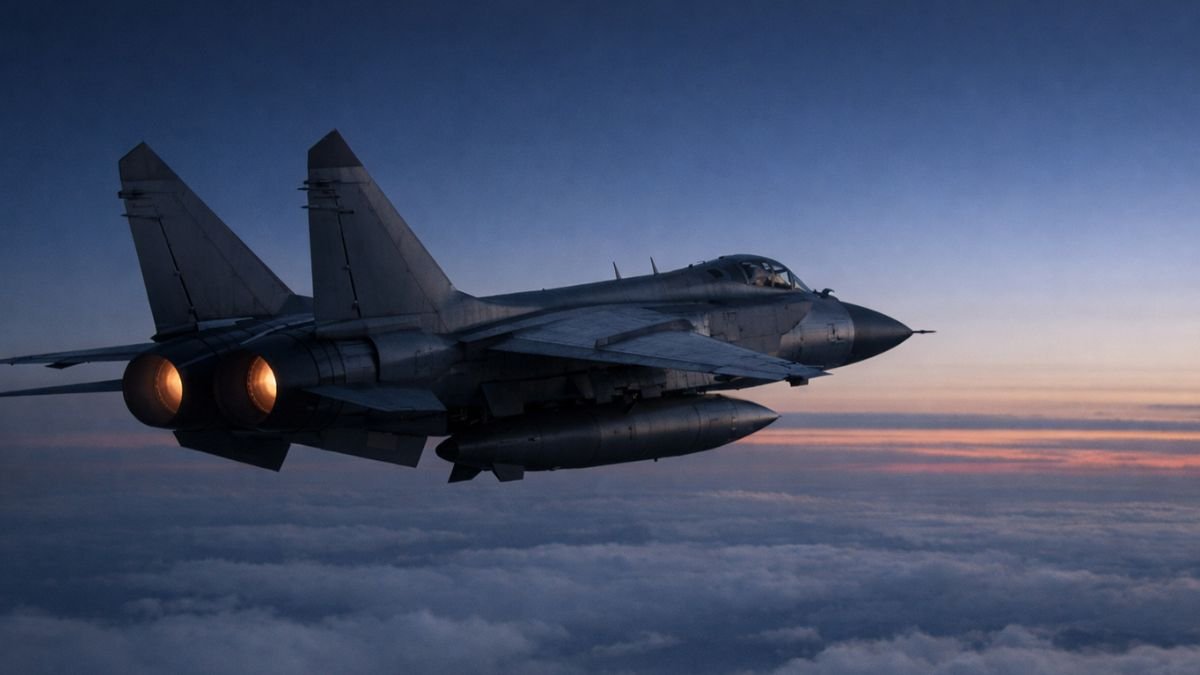
The Kinzhal — designated Kh-47M2 — is Russia’s most operationally significant hypersonic weapon and the only hypersonic system in the world to have been used in active combat at scale.
An air-launched ballistic missile derived from the Iskander-M ground-launched system and modified for carriage by MiG-31K and Tu-22M3 aircraft, the Kinzhal reaches speeds assessed at Mach 10 during its ballistic flight phase and carries both conventional and nuclear warheads.
Russia first used Kinzhal in combat in Ukraine in March 2022, striking an underground weapons storage facility in the Ivano-Frankivsk region in what Moscow described as the first combat use of a hypersonic weapon.
Subsequent Kinzhal strikes in Ukraine through 2023, 2024, and into 2025 have targeted hardened infrastructure, underground facilities, and air defense systems — applications specifically chosen to exploit the missile’s speed advantage against Ukrainian air defenses.
Ukrainian forces achieved the first confirmed interception of a Kinzhal in May 2023 using a Patriot PAC-3 battery, demonstrating that the missile is not invulnerable to advanced air defense systems but also confirming that interception requires the most capable systems available to NATO.
The Avangard hypersonic glide vehicle represents Russia’s strategic nuclear hypersonic capability. Launched atop an RS-28 Sarmat or UR-100N UTTH intercontinental ballistic missile, the Avangard glide vehicle separates from its booster. It glides at speeds reported to be Mach 20 while maneuvering to evade missile-defense interceptors.
Russia declared Avangard operationally deployed with the Strategic Missile Forces in December 2019, making it the first nuclear-armed hypersonic glide vehicle to achieve operational status anywhere in the world.
The Avangard is explicitly designed to defeat American missile defense infrastructure — its combination of speed, maneuvering capability, and plasma sheath that partially masks its radar signature makes it extremely difficult to intercept with current or near-term missile defense systems.
The Centre for Strategic and International Studies Missile Defense Project has published an extensive analysis on how hypersonic glide vehicles challenge existing missile defense architectures and early warning systems.
Tracking maneuvering hypersonic glide vehicles throughout their flight depends increasingly on the orbital surveillance capabilities examined in Space Situational Awareness: Tracking and Securing the Orbital Domain.
The Zircon — designated 3M22 — is Russia’s naval hypersonic cruise missile, capable of speeds assessed between Mach 8 and Mach 9 and designed for launch from surface ships and submarines against both naval and land targets.
Russia conducted its first combat use of Zircon against targets in Ukraine in February 2024, launching the missile from a surface vessel in the Barents Sea. The system entered serial production and operational service with the Russian Navy in 2023.
The Zircon’s combination of speed, sea-skimming flight profile, and relatively compact size represents a significant threat to naval surface groups and coastal infrastructure that existing naval air defense systems were not designed to engage.
Russia’s hypersonic arsenal also includes Kinzhal-derived systems being integrated onto additional aircraft platforms and a reported next-generation hypersonic glide vehicle programme for tactical applications.
The breadth and operational maturity of Russia’s hypersonic portfolio is unmatched by any other state, though the combat performance of Kinzhal in Ukraine has revealed limitations — including higher-than-expected intercept rates against advanced air defenses and reported reliability issues under sustained operational tempo.
China Has Deployed the Most Diverse Hypersonic Programme
China’s hypersonic weapons programme is the most rapidly advancing and arguably the most strategically significant of any power, given its potential application in a Taiwan conflict scenario or broader Indo-Pacific contingency. Unlike Russia’s hypersonic arsenal, which has a partial Cold War heritage, China’s programme represents a generation of investment specifically designed for the contemporary great power competition environment.
The DF-17 — Dongfeng-17 — is China’s primary operationally deployed hypersonic weapon. It is a medium-range ballistic missile equipped with the DF-ZF hypersonic glide vehicle, first publicly displayed at the 2019 National Day parade in Beijing and assessed to have achieved initial operational capability with PLA Rocket Force units shortly before or around that parade.
The DF-17 has a range assessed between 1,800 and 2,500 kilometres and carries the DF-ZF glide vehicle at speeds estimated between Mach 5 and Mach 10. It is designed primarily for precision strike against high-value targets, including aircraft carrier strike groups, air defense command centres, and military bases across the first and second island chains.
The PLA Rocket Force has fielded multiple brigades equipped with the DF-17, and the system is considered fully operational and integrated into Chinese war planning for Taiwan and regional contingencies.
The DF-ZF hypersonic glide vehicle programme has produced multiple variants beyond the DF-17 delivery system.
The DF-ZF has been tested on longer-range ballistic missile carriers, suggesting China is developing hypersonic glide vehicle capability across multiple range bands.
The August 2021 test, in which China reportedly launched a hypersonic glide vehicle that completed a partial orbital trajectory before manoeuvring toward its target, generated significant concern among American intelligence officials, with some assessments suggesting the test demonstrated a Fractional Orbital Bombardment System with hypersonic glide vehicle payload — a combination that would approach targets from unexpected directions and evade existing early warning and missile defense coverage.
The YJ-21 is a ship-launched hypersonic anti-ship missile first publicly revealed in 2022 and assessed to have entered operational service with the People’s Liberation Army Navy in 2023.
Launched from Type 055 cruisers and potentially other surface vessels, the YJ-21 reaches speeds assessed at Mach 6 or above and is designed specifically to defeat American carrier strike group air defenses through its combination of speed, maneuvering capability, and sea-skimming terminal approach.
The YJ-21 represents China’s answer to the anti-access and area-denial problem posed by American carrier operations in the Western Pacific.
China’s air-launched hypersonic programme includes the CH-AS-X-13 — a system assessed as an air-launched ballistic missile with hypersonic characteristics similar to Russia’s Kinzhal, intended for carriage by H-6K bombers and potentially the H-20 stealth bomber currently in development.
The breadth of China’s hypersonic development effort across ground-launched, ship-launched, and air-launched platforms reflects a systematic approach to integration across all PLA service branches rather than a single flagship programme.
The United States Has Achieved Initial Operational Capability After Programmatic Restructuring
The United States entered the current period of hypersonic competition as the nation with the most extensive hypersonic research history — American hypersonic test programmes date to the X-15 in the 1960s — but with the least mature operational hypersonic weapons programme among the major powers.
A combination of deliberate prioritisation of other capabilities, underinvestment in hypersonic weapons during the post-Cold War decades, and a series of test failures in the early 2010s left the United States behind Russia and China in the transition from research to fielded systems.
That gap has been substantially addressed through accelerated investment since 2018.
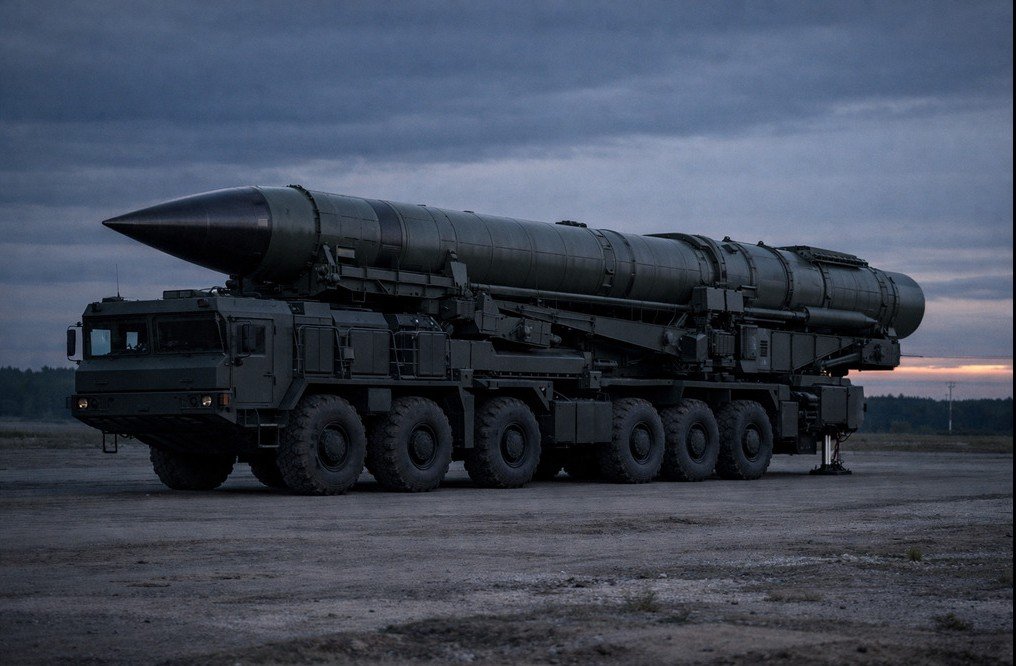
The Army’s Long Range Hypersonic Weapon, or LRHW — also designated Dark Eagle — achieved initial operational capability in 2023 with the first operational battery of the 1st Multi-Domain Task Force.
The LRHW uses the Common Hypersonic Glide Body and is launched from a ground-based truck-mounted launcher. Its range is classified but publicly assessed at over 2,700 kilometres. The first operational LRHW battery was declared ready for deployment in 2024, making it the first American hypersonic weapon to achieve genuine operational status.
Integrating long-range hypersonic strike into joint targeting and command networks is examined in JADC2 Explained: How the US Military’s Joint Command Network Works.
The Navy’s Conventional Prompt Strike programme shares the Common Hypersonic Glide Body with the Army’s LRHW and is being developed for launch from modified Virginia-class submarine vertical launch tubes and from Zumwalt-class destroyers.
The submarine-launched variant provides a survivable, globally deployable hypersonic strike capability that the ground-based LRHW cannot replicate. Initial operational capability for the naval variant is targeted for the late 2020s.
The Congressional Research Service provides detailed background on American hypersonic weapons programmes including funding, test history, and policy debates
The Air Force’s AGM-183A Air-Launched Rapid Response Weapon experienced a series of test failures that led to its cancellation as a programme of record in 2023.
However, the Air Force has continued hypersonic weapons development through the Hypersonic Attack Cruise Missile programme and scramjet-powered technology demonstrators. Air-launched hypersonic systems are expected to reach operational status by the end of the decade.
North Korea Has Demonstrated Credible Hypersonic Capability
North Korea’s hypersonic weapons programme represents one of the most significant and least anticipated developments in the global hypersonic landscape. A state that was discussing hypersonic aspirations as recently as 2021 has since conducted multiple test flights of systems assessed to have genuine hypersonic glide vehicle characteristics, collapsing the development timeline that most analysts had projected.
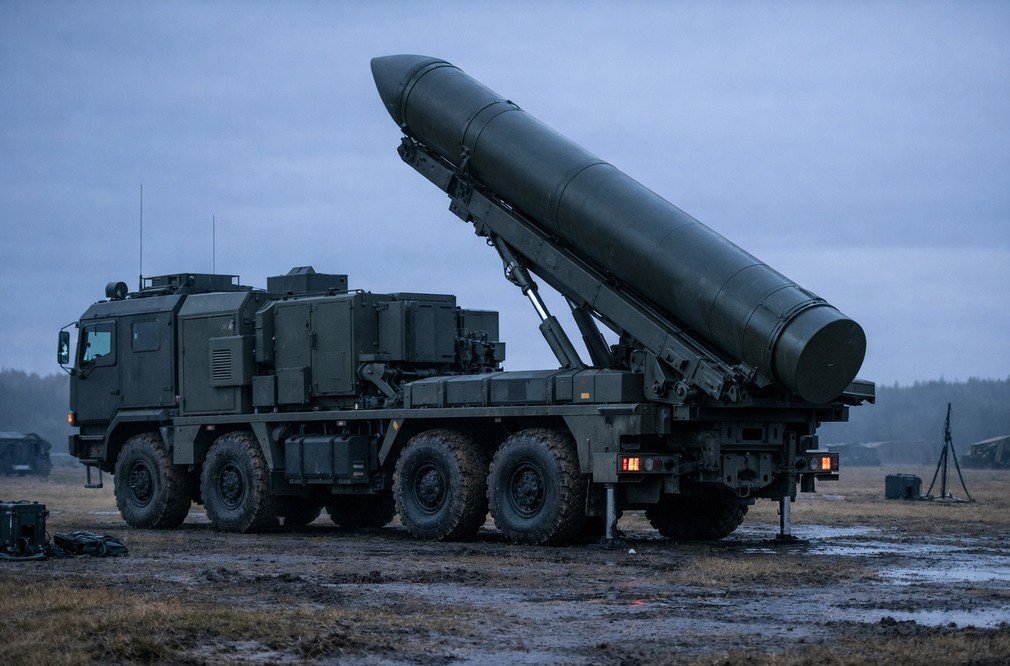
North Korea conducted its first publicly acknowledged hypersonic missile test in September 2021, with a system designated Hwasong-8 that carried a conical hypersonic glide vehicle on a medium-range ballistic trajectory. Subsequent tests in January 2022 demonstrated improved manoeuvring capability and extended range.
North Korea displayed what it described as hypersonic weapons systems at military parades in 2023 and 2024, including systems assessed to be at or near operational readiness.
South Korean and American intelligence assessments have been cautious about confirming full operational capability — the reliability, accuracy, and production maturity of North Korean hypersonic systems remain difficult to assess from open sources — but the trajectory of the programme indicates that North Korea either has or will shortly achieve a basic operational hypersonic strike capability targeted primarily at South Korea, Japan, and American bases in the Pacific.
The strategic significance of North Korean hypersonic development extends beyond the direct military threat. It demonstrates that hypersonic weapons are no longer exclusively the province of technologically sophisticated major powers — a state operating under severe economic sanctions has developed hypersonic glide vehicle technology within a compressed timeframe, suggesting that the barriers to entry are lower than previously assessed.
India Is Advancing Toward Operational Hypersonic Capability
India’s hypersonic weapons programme has advanced significantly over the past five years, driven by both the competitive pressure from China’s hypersonic arsenal and the desire for strategic autonomy in advanced military technology.
India conducted its first successful test of a Hypersonic Technology Demonstrator Vehicle in September 2020, validating a scramjet propulsion system and hypersonic aerodynamics. A second successful HSTDV test followed in 2022.
The BrahMos-II hypersonic cruise missile programme — a joint development with Russia under the BrahMos Aerospace joint venture — is developing a Mach 7 to 8 successor to the operational BrahMos-I supersonic missile.
The BrahMos-II is in advanced development as of 2025, with India targeting operational fielding by the late 2020s. The system would provide India with ship-launched, submarine-launched, aircraft-launched, and ground-launched hypersonic cruise missile capability across all three services simultaneously — a broad fielding approach consistent with India’s strategic requirement to address threats from both China and Pakistan.
India is on track to field an operational hypersonic weapon by approximately 2027 to 2028, making it the fourth state after Russia, China, and the United States to achieve confirmed operational hypersonic capability.
Other States With Active Hypersonic Development Programmes
Australia is developing the Southern Cross Integrated Flight Research Experiment, or SCIFiRE — a joint scramjet-powered hypersonic cruise missile programme with the United States targeting operational capability in the early 2030s. Australia’s participation reflects both its strategic alignment with the United States and its specific concern about hypersonic threats from China in the Indo-Pacific theatre.
France is developing the ASN4G hypersonic glide vehicle as the next-generation airborne nuclear strike system to succeed the ASMP-A supersonic missile currently carried by Rafale combat aircraft. The ASN4G is intended for operational service in the 2030s, maintaining the credibility of France’s airborne nuclear deterrent against improving adversary air defense systems.
France conducted successful V-MAX hypersonic demonstrator test flights in 2023 and 2024.
Japan announced in 2022 that it would develop hypersonic weapons as part of a broad military modernisation driven by concerns about Chinese and North Korean capabilities. Japan’s Hyper Velocity Gliding Projectile is designed for island defense scenarios in the Southwest Islands chain, targeting operational service by the late 2020s.
Japan’s investment in hypersonic weapons represents a significant departure from its previous self-imposed limitations on offensive military capabilities.
The Royal United Services Institute (RUSI) has published an extensive analysis examining how hypersonic weapons proliferation is reshaping both European and Indo-Pacific security planning beyond the major military powers.
Germany, the United Kingdom, South Korea, and Iran have all announced or are assessed to be conducting hypersonic research and development programmes at various stages.
South Korea’s hypersonic development is the most advanced among this group, driven directly by North Korea’s hypersonic capability.
Iran claimed a hypersonic missile test in 2023, though Western intelligence assessments have been sceptical about whether Iranian claims meet the technical definition of a genuine hypersonic glide vehicle.
What Operational Status Actually Means
The distinction between a state that has conducted a test flight and one that has an operationally deployed, doctrine-integrated, reliably functional hypersonic weapon is analytically critical and often blurred in public discussion.
Operational status requires serial production, trained operators, integration into military doctrine and operational plans, reliable performance across varied conditions, and a logistics infrastructure that can sustain the capability through a conflict.
By this standard, Russia and China are clearly operational with multiple systems deployed in quantity and — in Russia’s case — combat experience validating real-world performance. The United States has achieved initial operational capability with the LRHW but not yet full operational capability at scale.
North Korea is at or near basic operational capability. India is in late development, approaching operational fielding. All other states are in research, development, or early testing phases.
The assessment will change over the next two to five years. The United States is accelerating hypersonic weapons procurement significantly. India’s operational fielding timeline is credible based on programme progress. Japan’s island defense hypersonic system is on track.
The global hypersonic weapons landscape of 2030 will look substantially different from that of 2026 — more states with operational systems, more diverse platform combinations, and a strategic environment in which hypersonic weapons have transitioned from a distinguishing asymmetric capability to a broadly shared one.
The Arms Control Association has also published extensive research examining the strategic stability risks, proliferation dynamics, and arms control implications associated with hypersonic weapons development.

Conclusion
The global hypersonic weapons landscape in 2026 is defined by a clear operational hierarchy. Russia leads in operational breadth and combat experience. China leads in strategic diversity and Pacific-focused capability density. The United States has achieved initial operational status after programmatic restructuring and is accelerating toward full capability at scale.
North Korea has demonstrated credible hypersonic capability that threatens the regional security environment in Northeast Asia. India is on the threshold of operational status. Every other programme is in development.
The strategic implications are direct. The missile warning architecture examined in Missile Warning Satellites and Early Warning Systems Explained faces an increasingly demanding detection challenge as hypersonic glide vehicles proliferate.
Much of that emerging tracking and communications architecture increasingly depends on commercial satellite constellations, explored in Commercial Satellites as Military Infrastructure: Dependency, Control, and Strategic Risk.
The precision strike systems examined in Precision Strike Weapons and Modern Warfare face new competitive pressure from weapons that existing missile defenses were not designed to intercept. And the space-based tracking and communications infrastructure that underpins all of these capabilities faces an adversary arsenal that can now threaten it at hypersonic speeds.
The distributed satellite communication architectures that increasingly support these operations are examined in Satellite Constellations and Military Communications in Modern Warfare.
The transition from emerging to operational is complete. What comes next is not proliferation as a future concern. It is a proliferation as a present condition requiring immediate strategic adaptation.
Hypersonic weapons have not made missile defense obsolete and have not produced a decisive strategic advantage for any single state. What they have done is compress timelines, complicate defenses, and introduce a category of strike capability that every major military must now plan around — permanently.
Frequently Asked Questions
Which countries currently have operational hypersonic missiles in 2026?
Russia and China have the most operationally mature hypersonic weapons programmes with multiple deployed systems. Russia’s Kinzhal air-launched hypersonic missile has been used in combat in Ukraine since 2022, while the Avangard hypersonic glide vehicle has been operational with strategic nuclear forces since 2019 and the Zircon naval hypersonic missile entered service in 2023. China has deployed the DF-17 with hypersonic glide vehicle across multiple PLA Rocket Force brigades and fielded the YJ-21 naval hypersonic missile. The United States achieved initial operational capability with the Army’s Long Range Hypersonic Weapon in 2023. North Korea has demonstrated credible hypersonic capability through multiple tests and is assessed to be at or near initial operational status.
What makes a missile hypersonic and how does it differ from a ballistic missile?
A hypersonic missile is defined by sustained flight at Mach 5 or above combined with manoeuvring capability that distinguishes it from conventional ballistic missiles. Traditional ballistic missiles follow a predictable parabolic trajectory after their boost phase, making them trackable and theoretically interceptable by missile defense systems designed around that trajectory. Hypersonic glide vehicles separate from their rocket boosters at high altitude and glide at hypersonic speeds while manoeuvring unpredictably, making trajectory prediction and interception geometrically far more difficult. Hypersonic cruise missiles sustain powered flight throughout their trajectory using air-breathing scramjet engines. Both categories combine speed with manoeuvre in ways that challenge existing detection, tracking, and interception systems.
Has Russia actually used hypersonic missiles in combat?
Yes. Russia has used the Kinzhal air-launched hypersonic missile in combat in Ukraine on multiple occasions since March 2022. Initial strikes targeted hardened underground infrastructure in western Ukraine. Subsequent uses through 2023, 2024, and into 2025 have targeted air defense systems, command facilities, and hardened storage sites. Ukraine achieved the first confirmed interception of a Kinzhal in May 2023 using a Patriot PAC-3 battery, demonstrating that advanced air defense systems can engage the weapon under specific conditions. Russia also conducted its first combat use of the Zircon naval hypersonic missile against targets in Ukraine in February 2024. The combat record of Russian hypersonic systems has revealed both their operational utility against hardened targets and their vulnerability to the most capable air defense systems available.
How does North Korea’s hypersonic capability compare to major powers?
North Korea’s hypersonic weapons programme is significantly less mature than those of Russia, China, or the United States in terms of system reliability, production scale, accuracy, and doctrine integration. However, North Korea has demonstrated genuine hypersonic glide vehicle technology through multiple test flights since 2021, collapsing the development timeline that most analysts had projected for a state operating under severe sanctions. North Korean hypersonic systems are assessed to be approaching basic operational capability targeted primarily at South Korea, Japan, and American bases in the Western Pacific. The strategic significance extends beyond the direct military threat — it demonstrates that hypersonic weapons development is technically achievable at lower resource levels than previously assumed.
What are the implications of hypersonic weapons for missile defense?
Hypersonic weapons pose significant challenges to existing missile defense architectures designed primarily around ballistic missile trajectories. The combination of high speed, low altitude flight profiles, and unpredictable maneuvering reduces engagement time available to interceptor systems and complicates the geometric calculations that intercept solutions require. Existing ground-based midcourse defense systems have limited effectiveness against glide vehicles that remain in the atmosphere throughout their flight. The missile warning satellite architecture is adapting — the Next Gen OPIR programme and the Space Development Agency’s tracking layer are specifically designed to detect and track hypersonic vehicles — but the gap between current hypersonic offensive capability and effective hypersonic defense remains significant across all major military powers.
Sources and References
U.S. Department of Defense — Annual Report to Congress: Military and Security Developments Involving the People’s Republic of China (2025)
U.S. Department of Defense — Missile Defense Review (2022)
Congressional Research Service — Hypersonic Weapons: Background and Issues for Congress (2024)
Congressional Research Service — Army Long-Range Hypersonic Weapon Programme (2024)
Centre for Strategic and International Studies(CSIS) —Complex Air Defense: Countering the Hypersonic Missile Threat
Missile Defense Advocacy Alliance — Hypersonic Weapons Status Report (2025)
International Institute for Strategic Studies (IISS) — The Military Balance (2025)
Bulletin of the Atomic Scientists — Nuclear Notebook: Chinese Nuclear Forces (2025)
Stimson Centre — Hypersonic weapons could create a new arms race
Royal United Services Institute (RUSI) — Hypersonic Weapons Analysis
Arms Control Association — Understanding Hypersonic Weapons: Managing the Allure and the Risks
United Nations Office for Disarmament Affairs — Emerging Technologies and International Security (2024)
Related Analysis
For analysis of the strategic context of hypersonic weapons within the broader global strike balance, read Hypersonic Weapons and the Emerging Global Strike Balance.
For analysis of the missile warning satellites that must detect hypersonic launches and track glide vehicles through their flight, read Missile Warning Satellites and Early Warning Systems Explained.
For analysis of the precision strike systems alongside which hypersonic weapons are being integrated into military operations, read Precision Strike Weapons and Modern Warfare.
For analysis of the space-based tracking and communications infrastructure that hypersonic weapons development is designed to threaten and exploit, read What Is Orbital Warfare? How Space Became a Contested Military Domain.
For analysis of the electronic warfare environment in which hypersonic weapons guidance systems must operate, read Electronic Warfare in Space: Jamming, Spoofing, and Satellite Signal Warfare Explained.
