


Analysis · StrikeOrbit | 2026
Russia fields two missile forces, and only one of them is being used. The conventional force fired at least 1,858 missiles at Ukraine between January and August 27, 2026, by a Militarnyi count of Ukrainian Air Force reports, while the strategic nuclear force sits at roughly the same size as America’s and has never been fired in anger.
Almost every number that shapes the debate about Russian missiles, from stockpiles to production rates to how many are shot down, comes from Ukrainian officials or Ukrainian analysts, and none of it can be audited from outside.
This article separates five things that headlines blur together: what Russia has in storage, what it can build, what it fires, what gets intercepted and what its leaders claim. It then looks at what Russia has learned from the war, who is helping it, how its force compares with America’s, and which systems matter most for which job. Each claim is labeled as confirmed, attributed to an official or company, or an analytical judgment, and the article says so when a figure comes from a single source.
Status below is as of October 31, 2026, drawing on reporting through late October. Dollar figures are US dollars. Russian designations are used as published, and the Iskander-M is the missile Ukrainian sources call the 9M723.
Russia Fields Two Missile Forces, and the Strategic One Has Not Been Used
The strategic force is the one most readers picture when they hear “Russia’s missiles,” and it is close to America’s in size. The Congressional Research Service, updated May 27, 2026, cites Federation of American Scientists estimates of about 1,796 deployed Russian strategic warheads, 324 intercontinental ballistic missiles, 13 ballistic-missile submarines carrying 208 missiles, and 60 strategic bombers, against about 1,770 deployed American warheads.
The commander of US Strategic Command put the total Russian strategic warheads, deployed and stored, at about 2,600 in March testimony. The same report says he estimated that up to 2,000 more warheads are intended for non-strategic use, a category that no arms control agreement limits.
The treaty capping strategic forces has lapsed. New START expired in February 2026, and the Congressional Research Service reports that Russia says it will keep to the central limits of 1,550 deployed warheads and 700 deployed launchers as long as the United States does.
The State Department said Russia probably exceeded the deployed-warhead limit toward the end of 2025, though compliance could not be certified. The wider logic of nuclear deterrence, including its space dimension, is covered in the analysis of Nuclear Deterrence in the Space Age: How Orbital Warfare Is Changing the Calculus.
The conventional force is the one in daily use, and it is a different kind of instrument. It is built for volume; it targets a single theater, and its main weapons are cheaper and more numerous than the headline-grabbing ones. Treating the two forces as one arsenal leads to the common error of reading nuclear parity as proof of conventional strength, or the reverse.
The Conventional Force Rests on Five Workhorses and a Cheap Newcomer
The Militarnyi analysis in the Kyiv Independent, published September 3, 2026, counts at least 1,858 missiles fired at Ukraine in 2026 through August 27. Ballistic and quasi-ballistic missiles, meaning the Iskander-M, the RM-48U, and the North Korean KN-23, made up at least 794 of them, or 43 percent.
Cruise missiles made up 866, including 529 Kh-101 and 126 Kalibr, and Russia fired 80 Zircons, about two-thirds of them in the summer. Monthly totals peaked at 296 in February and 474 in July.
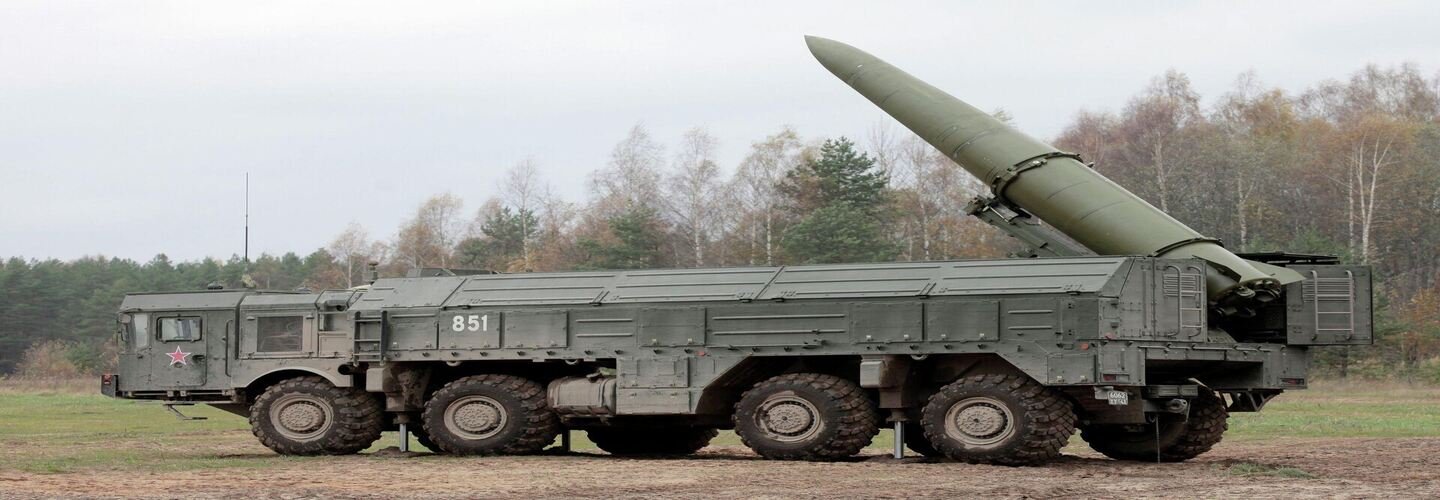
The Iskander-M is the ballistic workhorse. Ukraine’s military intelligence portal lists a range of 390 kilometers, 550 for a variant, a warhead of 450 kilograms, and an accuracy of 20 to 30 meters. These are Ukrainian government figures and not Russian specifications, and the short reach confines the Iskander-M to the front and its rear.
The RM-48U is a different thing, an S-400 air defense missile repurposed for ground attack, which Ukrainian intelligence says Russia makes at about 40 a month.
The Kh-101 is the long-range cruise missile that Russia launches from bombers against distant targets, and it is the most-fired cruise missile of 2026 at 529. Published guides, which depend on Russian claims, give it a range of roughly 2,500 to 2,800 kilometers. The Kalibr is the naval equivalent, fired from ships and submarines, and its main virtue is flexibility.
The Onyx, an older anti-ship missile used against land targets, filled gaps, with Militarnyi counting 25 fired in July and at least 16 more in August.
The newcomer is the S8000 Banderol, a small turbojet cruise missile. A Ukrainian military intelligence representative said on July 29 that it had finished testing and moved to mass production, and in August Ukrainian intelligence told Militarnyi that Russia could make up to 80 a month.
Militarnyi reports a range of 350 to 500 kilometers, a speed of 550 to 650 kilometers per hour, and a warhead of about 49.5 kilograms of explosive, without naming a source for those specifications. It reports a Chinese-made engine and foreign electronic parts in downed examples, and no cost figure has been published.
The Prestige Weapons Cost More and Are Used Less, and the Oreshnik Is a Signal
Cost separates the workhorses from the prestige weapons. Militarnyi, using procurement documents it says it obtained, reports contract prices of about $2.4 million to $3 million for an Iskander-M, about $2 million for a Kh-101, and about $2 million for a Kalibr. The same analysis puts the Kinzhal at about $4.5 million and the Zircon at $5.2 million to $5.6 million, so the weapons labeled hypersonic cost two to three times as much. These are contract prices, not verified production costs.
Russia has used up some of these types faster than it has built them. Ukraine’s military intelligence said in April that Russian stocks included about 230 Zircons, 200 Iskander-Ms and 100 Kinzhals. Its August figures, reported by Interfax-Ukraine, were over 120 Zircons, about 130 Iskander-Ms and about 50 Kinzhals.
According to Ukraine’s own numbers, the Zircon stock roughly halved in four months, and Militarnyi counts the Kh-101 stock falling from about 150 to no more than 100.
The Oreshnik is a different category, and Russia has used it in combat at least three times, on Dnipro in November 2024, in the Lviv region in January 2026 and on Bila Tserkva in May 2026, with a second May missile disputed. Putin claimed on November 4, 2025 that serial production had begun, without giving numbers, and Zelensky’s claim of up to six a year is unverified.
Ukraine’s military intelligence chief said Oreshnik units of the 101st Missile Brigade are deployed in Belarus, according to a single Ukrainian source. Its purpose is signaling, not volume, and a handful of missiles cannot change a war of hundreds.
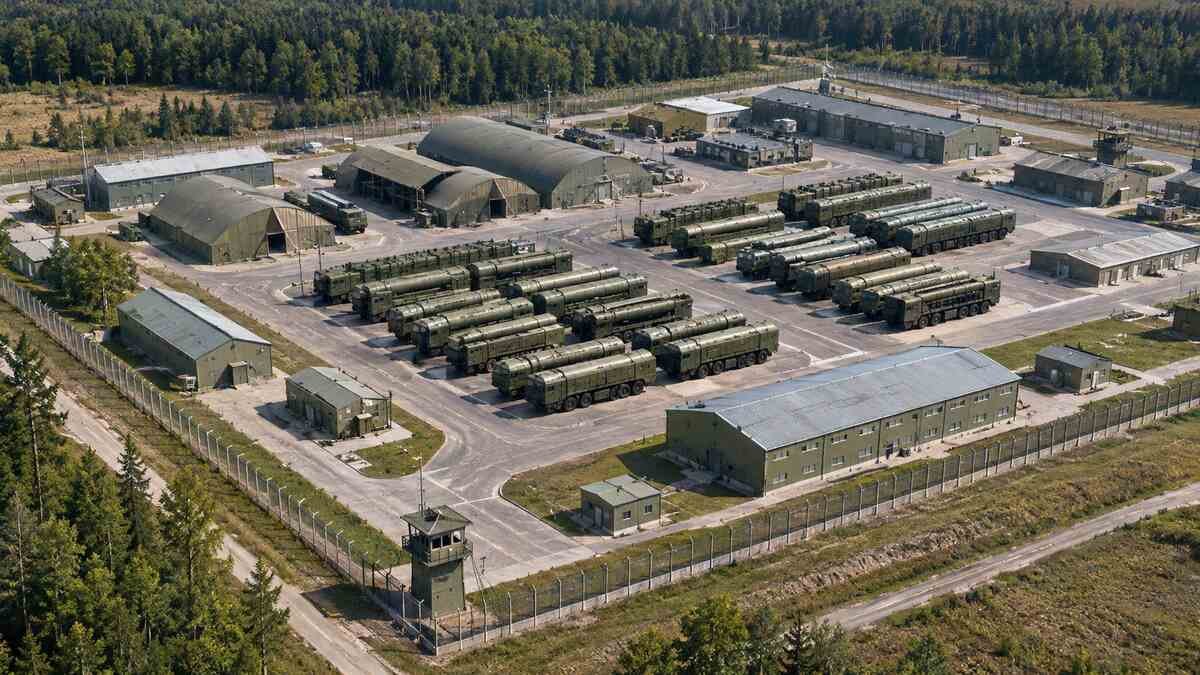
Stockpile and Production Numbers Come From Ukrainian Intelligence and Cannot Be Audited
The newest Ukrainian figures, released in October in answer to press questions, put Russian stocks at up to 700 ballistic missiles and several thousand cruise missiles.
Ukrainian intelligence says industry makes more than 200 missiles a month, about 110 of them ballistic. It reports Iskander-M output of up to 65 a month, Kalibr about 29, RM-48U about 40, and says Kinzhal production is suspended because of low accuracy, with the capacity moved to other ballistic missiles. Militarnyi had earlier reported Kh-101 output of 87 in July against a target of 72.
Set beside the earlier releases, the October picture shows a stock that has stopped falling in most types, though not rising. The table uses the same source, Ukrainian military intelligence, at three dates, and the dates differ in cutoff and method.
| Missile | April 2026 | August 2026 | October 2026 |
| Iskander-M | about 200 | about 130 | about 115 |
| Kinzhal | about 100 | about 50 | production suspended |
| Kalibr | about 460 | about 450 | over 450 |
| Onyx | about 690 | over 600 | over 600 |
| Zircon | about 230 | over 120 | over 120 |
| RM-48U | about 450 | about 400 | up to 400 |
Independent estimates are lower and openly uncertain. The Missile Matters newsletter puts combined Iskander-M and Kinzhal output at roughly 50 to 67 a month, calls the Ukrainian figure of 60 an upper bound, and warns that Ukrainian intelligence likely exaggerates production. Its caveats are the useful part: ordered quantities likely exceed what is built, launch counts are not production counts because missiles can be stockpiled, and Ukrainian figures often combine Iskander-M and KN-23 counts.
The defensible conclusion is that Russia can sustain a ballistic rate of tens a month, that the Iskander-M stock is shrinking slowly while output continues, and that no outsider can state the true figures.
Interception Rates Swing, so Averages Mislead
The most important evidence from Ukraine is how often these missiles are stopped, and the answer is that it depends heavily on the attack.
A Royal United Services Institute analysis published November 18, 2025, used a dataset through October 24, 2025, showing 227 of 939 Iskanders and Kinzhals intercepted, about 24 percent. In 18 attacks, about 4 percent, all or most were intercepted, and in 273 attacks, none were. The authors call the results bimodal, so an average hides the fact that attacks tend to succeed or fail almost completely.
The same analysis found only 14 of 78 missiles intercepted in October 2025, 17 percent. The authors discuss steeper trajectories and better decoys as hypotheses but say none is confirmed, and Ukraine had only six Patriot batteries. Because the dataset combines Iskanders and Kinzhals, it cannot give a rate for either missile alone.
Reporting from 2026 points to the same thing. The New York Times counted 521 ballistic missiles launched in 2026 through early July, more than double the same period of 2025, with 164 downed, about 31 percent. In one attack, none of the 23 ballistic missiles were intercepted.
Ukraine’s Ministry of Defense says it has intercepted about 88 percent of Kh-101, Kh-55, and Kh-555 cruise missiles since the start of 2026, but it gave no counts or method, so the figure cannot be compared with the ballistic rate.
Single-night reports cannot stand in for a dataset. On October 19 the Ukrainian Air Force reported, in preliminary data, four Iskander-K cruise missiles shot down and no ballistic interceptions. Such reports rarely give a full launch count, which is what an interception rate needs. The lessons for air defense are covered in the Patriot and THAAD analysis.
Russia Has Learned to Strike in Salvos, to Lean on Ballistic Missiles, and to Count on Scarcity
The most visible change is the shape of the attack. Benjamin Jensen and Yasir Atalan of CSIS wrote in September 2025 that a typical salvo in 2022 involved about 100 weapons roughly once a month, while by 2025 the average was nearly 370 munitions about every eight days, mixing drones, cruise missiles, and ballistic missiles.
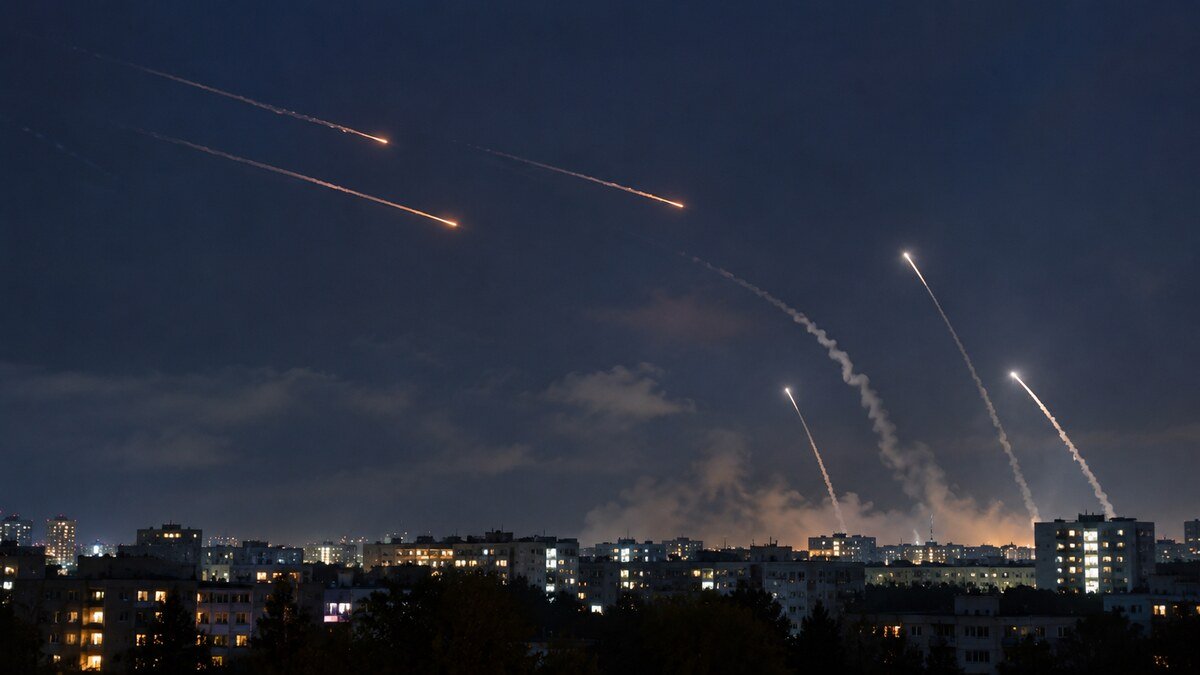
They describe the pattern as coercive, timed to negotiations, and report that Shahed-type drones’ hit rates rose from below 10 percent to nearly 20 percent. The cost of stopping those drones is covered in the analysis of counter-drone systems.
The second change is the weight placed on ballistic missiles, which are harder to stop and which exploit a global shortage of Patriot interceptors.
The New York Times reported in July 2026 that Ukrainian crews fire one interceptor per ballistic missile because of shortages, and that Russia uses decoys costing about $30,000 against a Patriot system that costs about $1 billion loaded. It also reported that the war in Iran and attacks on the Gulf had drained supplies. Russia does not need to defeat the defense, only to outlast its magazine.
The third change is that Russia keeps modifying its missiles during the war. Ukraine’s Ministry of Defense said on May 11, 2026, that the Kh-101 has been changed in four stages, including a second warhead with less fuel, cluster submunitions, upgraded navigation, and a jammer suite to defeat radar. These are Ukrainian technical findings with no independent verification, but they fit the pattern of constant adjustment seen in the interception data.
The fourth change is that production sites are now targets. On February 20 and 21, 2026, Ukraine’s General Staff said Flamingo cruise missiles hit the Votkinsk Machine Building Plant, which makes Iskander-M and strategic missiles, and on October 9, it said it hit three missile-related sites, including a component factory in the Tver region and an ICBM disassembly center in the Nizhny Novgorod region.
Russian regional officials reported a fire and “minimal” damage, and neither claim was independently verified. Missile output depends on components, machine tools, power, and protected sites, so the effect of such strikes is the effect to watch.
China, North Korea, and Iran Show Russia Is Less Alone Than Its Rhetoric Suggests
The supply chain still depends on foreign components. Ukraine’s presidential sanctions commissioner said an examination of an Iskander that struck Ukraine on July 10, 2026, found more than 140 foreign parts, of which 62 were American, as reported by Euromaidan Press.
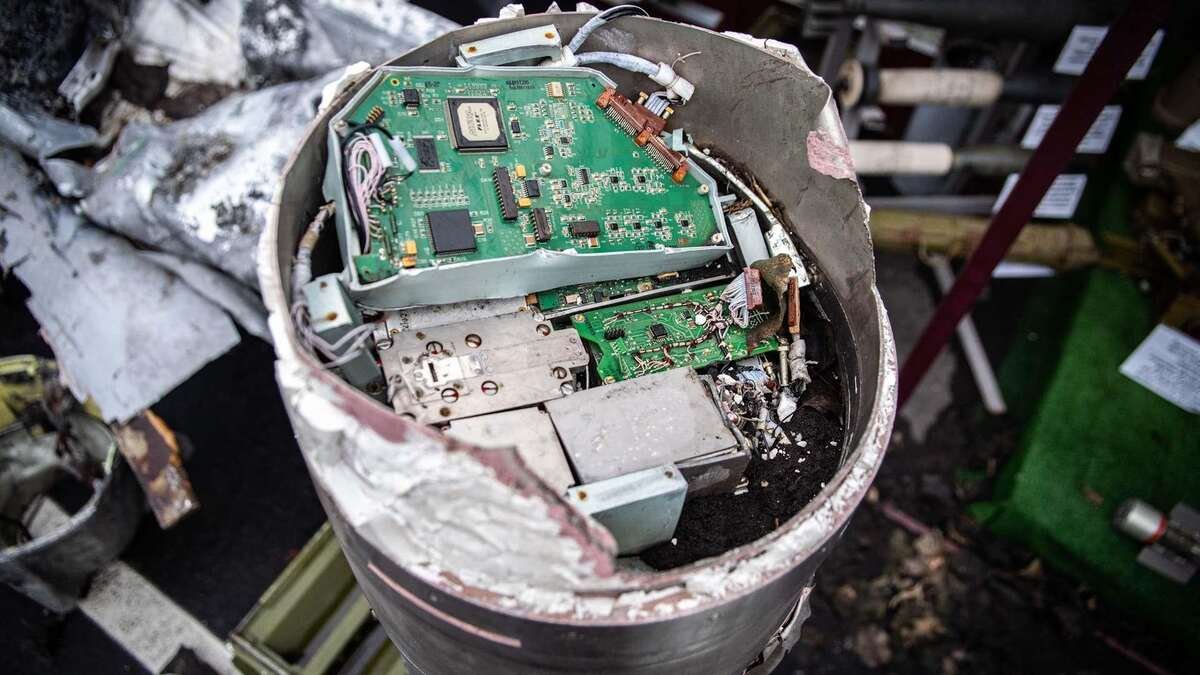
Ukraine’s military intelligence portal lists 177 components in the 9M723, with makers headquartered in Germany, Japan, China, Switzerland, Taiwan and the United States. These are Ukrainian government analyses, and a part’s presence does not show when or how it was bought.
China matters most for industry and for sensing. A CSIS brief by Wesley Bailey and Daniel Byman, published July 31, 2026, finds that China supplied 54.3 percent of Russia’s imports of high-priority goods such as semiconductors and machine tools in 2022 and 84.6 percent in 2025, or $4.21 billion of $4.98 billion.
It says Chinese companies have sold Russia satellite imagery since at least 2023, and that Russia’s own fleet of about three optical and three radar imaging satellites is too sparse for a multi-axis battlefield. Its central finding is that “the bottleneck is data processing, not data collection,” so imagery does not automatically become timely targeting.
North Korea is the clearest supplier of missiles. The 38 North analysis says Russia reportedly received about 250 KN-23 and KN-24 missiles by September 2025, and North Korea sent a launch unit to Russia from November 2023 to December 2025.
Ukrainian sources say accuracy improved from 1,000 to 3,000 meters to 50 to 100 meters after Russian help, which the author calls plausible for a navigation-jamming fix while rating some claims, such as telemetry analysis of every launch, as less credible. Whether Russia has applied North Korean production lessons to the Iskander is plausible but unconfirmed.
Iran is both a space partner and the subject of a serious allegation. Russian Soyuz rockets launched three Iranian satellites, Paya, Zafar 2 and Kowsar, on December 28, 2025, according to Reuters.
In April 2026, Reuters reported, from an undated Ukrainian intelligence assessment it reviewed, that Russian satellites surveyed dozens of sites in the Middle East in late March and that imagery was shared with Iran, a claim two anonymous Western and regional sources partly backed.
The space-tracking firm Kayhan noted that satellites passing overhead do not confirm imagery was collected, a White House spokeswoman said no outside support was affecting US operations; and Ukraine has its own interest in making the claim.
Belarus is a third partner of a different kind, hosting Russian units, and India’s BrahMos partnership with Russia is covered in the analysis of India’s missile force.
Russia Leads the United States in Volume and Combat Use, and Trails It in Sensors and Networks
America’s strategic arsenal is about the same size as Russia’s, so the comparison that matters is conventional and technological. Russia leads in several measurable ways: it fires hundreds of missiles a month, it has used a missile it calls hypersonic in combat since 2022, and it has a ground-launched intermediate-range missile in the Oreshnik.
America’s own hypersonic weapon is still moving from testing to operational capability, a gap examined in the analysis of the Dark Eagle, and the wider field is mapped in the analysis of countries with operational hypersonic missiles. Using a weapon first does not prove a better program.
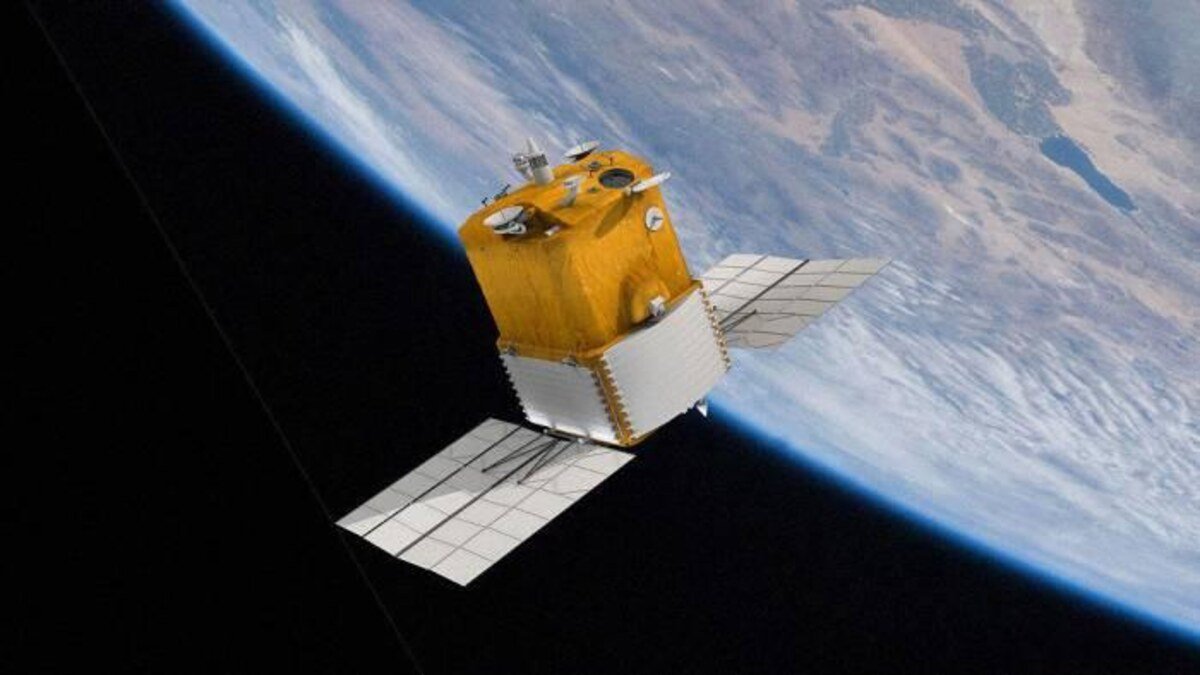
The advantages America holds are less about missiles than about what surrounds them. They include space-based sensors, networks that tie sensors to shooters, and precision weapons. Russia’s side of that gap is covered in the analysis of Russia’s military space program. This is an analytical judgment, not a measured comparison, and it is weakened by the fact that US interceptor stocks are strained while Russia’s strike stocks are shrinking only in some types.
The comparison therefore depends on the job, and the table sets out the five that matter. It is analytical judgment and not a measurement.
| Dimension | Russia | United States |
| Recent combat use | Extensive missile use against Ukraine | No comparable campaign against a peer air defense |
| Missile output | High, but figures are mostly Ukrainian estimates | Limited by industrial capacity and demand |
| Sensing and targeting | Relies on foreign imagery, with processing limits | Mature space sensors and sensor-to-shooter links |
| Hypersonic programs | Used in combat, performance contested | Still moving toward fielding |
| Strategic nuclear force | About 1,796 deployed warheads | About 1,770 deployed warheads |
Which Russian Missile Matters Most Depends on the Job and the Test
“Best” needs a test, and different tests give different answers. The Iskander-M matters most for sustained ballistic pressure because it is made in large numbers, costs about $2.4 million to $3 million per unit under contract, and is used constantly. Its limit is range, since Ukraine’s portal lists 390 kilometers. The available interception data cannot rank it against other missiles because the RUSI figure combines it with the Kinzhal.
The Kh-101 offers reach and volume at about $2 million, with 529 fired in 2026, but cruise missiles are easier to stop, and Syrskyi said in August 2024 that Ukraine had intercepted 67 percent of cruise missiles over the war.
The Kalibr offers launch flexibility from ships and submarines. The Kinzhal and Zircon offer speed, but Syrskyi’s figures showed 28 of 111 Kinzhals intercepted and two of six Zircons through August 2024, so the hypersonic label does not mean unstoppable, as the analysis of hypersonic interception explains.
| Missile | Role | Main limit |
| Iskander-M | Mobile short-range ballistic strike | Reach of about 390 km per Ukrainian intelligence |
| Kh-101 | Long-range air-launched cruise missile | Needs bombers and is easier to intercept |
| Kalibr | Naval land-attack cruise missile | Depends on ships and submarines |
| Kinzhal | Air-launched ballistic missile | Costly, production suspended, interceptable |
| Zircon | High-speed anti-ship and land-attack missile | Cost and performance hard to verify |
| Banderol | Cheap low-speed cruise missile | Little independent performance data |
| Oreshnik | Intermediate-range signaling weapon | Few combat uses, no verified output |
The Oreshnik and the Sarmat belong to a different test: deterrence. Putin said the Sarmat, tested on May 12, 2026, can “penetrate all existing and future anti-missile defense systems” and will enter combat service by the end of the year, according to Al Jazeera, whose report carried no independent assessment and noted a reported 2024 explosion.
Gerasimov claimed a 14,000-kilometer, 15-hour Burevestnik flight in late 2025, and CSIS called such claims signaling aimed at the United States. Claims of being the best in the world are marketing until a system is proven in service.
Four Limits Remain on What the Numbers Can Tell Us
The first limit is the quality of the evidence. Most data on Russian missiles come from Ukrainian officials with an interest in shaping the story, and the independent datasets are built from the same Ukrainian Air Force reports. The second is the difference between quantity and effect, since an intercepted missile and a missile that reached a target are not the same as damage or military value.
The third limit is the lag between claims and reality. Putin’s announcements on Sarmat, Oreshnik, Burevestnik, and Poseidon come years before testing and service, and an official claim of serial production is not evidence of output. The fourth is adaptation, because each side changes tactics in response to the other, so a rate measured in one period, such as 24 percent for Iskanders and Kinzhals to October 2025, may not persist.
Seven Indicators Will Show Whether Russia’s Missile Force Is Gaining or Losing Ground
Two indicators concern the winter. The first is whether Ukrainian data show further stock declines for the Iskander-M and Kh-101, given Militarnyi’s warning of a winter campaign against Ukraine’s energy system. The second is whether the ballistic interception rate in the second half of 2026 stays near the first half’s 31 percent, a figure that depends on Patriot supply.
Five indicators concern capability and industry. The third is whether the Sarmat enters combat service by the end of the year, as Putin said, and the fourth is whether the Oreshnik is used more often or the Belarus deployment is confirmed by a second source.
The fifth is whether Banderol output reaches the claimed 80 a month, and the sixth is whether Ukraine’s strikes on plants such as Votkinsk produce visible falls in output. The seventh is whether Russia gets better at turning Chinese imagery into targeting, which CSIS says it has not yet done.
Russia’s missile power is not defined by how many missiles it holds. It is defined by how well it can produce, replace, aim, and coordinate them before an opponent adapts.
Frequently Asked Questions
What missiles does Russia use most against Ukraine?
Russia uses ballistic missiles and the Kh-101 cruise missile most. A Militarnyi count of Ukrainian Air Force reports found at least 1,858 missiles fired in 2026 through August 27, including at least 794 ballistic or quasi-ballistic missiles, 529 Kh-101, 126 Kalibr, 80 Zircon and dozens of Onyx. The Iskander-M is the main ballistic missile, and the RM-48U, a repurposed S-400 missile, and the North Korean KN-23 add to it. All of these figures come from Ukrainian reporting.
How many missiles does Russia have and make?
Nobody outside Russia knows precisely. Ukraine’s military intelligence said in October that Russia holds up to 700 ballistic missiles and several thousand cruise missiles, and makes more than 200 missiles a month, about 110 of them ballistic. Independent analysts put ballistic output lower, at roughly 50 to 67 a month for the Iskander-M and Kinzhal combined, and warn that Ukrainian figures may be exaggerated. The conclusion is that Russia can keep firing for now, with the Iskander-M stock shrinking slowly.
Are Russian hypersonic missiles unstoppable?
No. Syrskyi said in August 2024 that Ukraine had intercepted 28 of 111 Kinzhals and two of six Zircons, and Ukrainian reports describe further shootdowns since. RUSI found that 24 percent of Iskanders and Kinzhals were intercepted through October 2025, with results varying widely between attacks. Hypersonic speed makes defense harder but not impossible, and the label does not tell you how a missile performs against Patriot.
Who helps Russia with missiles?
North Korea supplies missiles, with about 250 KN-23 and KN-24 reportedly received by September 2025. China supplies most of Russia’s high-priority industrial imports and, according to CSIS, commercial satellite imagery, though Russia struggles to turn imagery into targeting. Russia launched three Iranian satellites in December 2025, and Reuters reported a Ukrainian allegation that Russia shared imagery with Iran. Foreign-made parts, more than 140 of them found in one Iskander by Ukrainian examiners, also reach Russian production through third countries.
How does Russia’s missile force compare with the United States?
Russia and the United States are roughly equal in strategic warheads, with about 1,796 and 1,770 deployed, respectively, according to the Congressional Research Service. Russia leads in conventional missile volume and in combat use of missiles it calls hypersonic, while the United States has the advantage in sensors, networks, and precision. A fair comparison depends on the mission, and neither side has been tested against the other.
Sources and References
Al Jazeera — Putin hails Russia’s test launch of ‘most powerful missile in the world’ (May 13, 2026).
Armyinform — ‘Oreshnik’ is already in Belarus: GUR chief says Russia has deployed the missile system near Ukraine’s borders (September 11, 2026).
Associated Press — Ukraine strikes a key industrial site deep inside Russia (February 21, 2026).
Boston Globe, reprinting The New York Times — “Ukraine remade its air defense. Russia has changed its attacks” (July 6, 2026).
Censor.NET — Air Defense Forces shot down 247 targets, including Iskander-K missiles and drones (October 19, 2026).
CNN via KVIA — Putin hails developers of nuclear-powered Burevestnik missile, in latest signal to the West (November 4, 2025).
Congressional Research Service — Russia’s Nuclear Weapons, IF12672 (updated May 27, 2026).
CSIS, Benjamin Jensen and Yasir Atalan — Russia’s Massed Strikes: The Strategy of Coercion by Salvo (September 9, 2025).
CSIS, Wesley Bailey and Daniel Byman — Russia’s Cap on Partner Aid: Institutional Rigidity and the Limits of External Support (July 31, 2026).
Euromaidan Press — Russia’s fourth Oreshnik on Ukraine may have struck its own troops in occupied Donetsk Oblast while first hit Kyiv Oblast (May 25, 2026).
Euromaidan Press — 62 of the 140 foreign parts in this Russian missile were American. Ukraine wants that gap closed (July 30, 2026).
Intellinews — Ukraine discloses for the first time real missile interception rates against the various kinds of Russian missiles (August 24, 2024).
Interfax-Ukraine — Ukraine’s Defense Intelligence provides Ukrainska Pravda with data on Russia’s missile stockpiles and production rates (August 2026).
Kyiv Independent, reporting an analysis by Dmytro Shumlianskyi of Militarnyi — “How many more missiles does Russia have, and can it keep firing them?” (September 3, 2026).
Main Intelligence Directorate of Ukraine (GUR), War and Sanctions portal — Ballistic missile 9M723 ‘Iskander-M’.
Militarnyi — Russia Begins Mass Production of New Banderol Cruise Missile Following Strikes on Ukraine (July 29, 2026).
Militarnyi — Russia Capable of Producing Up to 80 Banderol Missiles per Month (August 12, 2026).
Militarnyi — From Kalibr to Kinzhal: How Much Do Russian Missiles Really Cost? Ministry of Defense of Ukraine.
Militarnyi — Russia modified Kh-101 missiles four times to strengthen its aerial terror campaign; Ukraine still intercepts 88% (May 11, 2026).
Missile Matters — How Many Ballistic Missiles Is Russia Producing? (2026).
Moscow Times — Russian army claims Oreshnik missile struck aircraft repair plant in Lviv region (reporting the January 2026 strike).
NPR, reporting Reuters — Russia sends 3 Iranian satellites into orbit, report says (December 28, 2025).
Razom Media — 100 ballistic missiles per month, and stockpiles are not declining: GUR revealed Russia’s missile production capacity (2026).
Reuters via Military Times, Tom Balmforth and John Irish — Russia supplies Iran with cyber support, spy imagery to hone attacks, Ukraine says (April 7, 2026).
Reuters via Internazionale — Ukraine’s military says it hit three missile facilities in Russia (October 9, 2026).
Royal United Services Institute, Sam Cranny-Evans and Sidharth Kaushal — Iskander: An Improved Russian Missile Tests Ukraine’s Air Defense (November 18, 2025).
UNN — DIU: Russia has accumulated up to 700 ballistic missiles and more than 6,000 drones (October 2026).
38 North — The KN-23 Goes to War: Has It Improved North Korea’s Missiles? (August 2026).
United24 Media — Russia burned through two-thirds of its annual Zircon missile output in just 19 days (July 19, 2026).
Related Analysis
Earlier StrikeOrbit analysis that explains the missile forces, defenses, and partners discussed here.
India’s own missile force and its BrahMos partnership with Russia: India’s Missile Force Explained: Agni, BrahMos and the Hypersonic Push.
How China’s military links sensors, missiles and commanders: China’s Multi-Domain Precision Warfare: Inside the PLA’s Answer to JADC2.
The space sensors that detect and follow hypersonic weapons: Tracking Hypersonic Missiles from Space: The Sensor Architecture Reshaping Missile Defense.
The cost problem of stopping drones that Russia mixes into its salvos: Counter-Drone Systems Explained: How Militaries Stop Drones and What It Costs.
Another missile force tested in a 2026 war: Iran’s Missile Force Explained: Arsenal, Range Limits and the Evidence From the 2026 War.
