

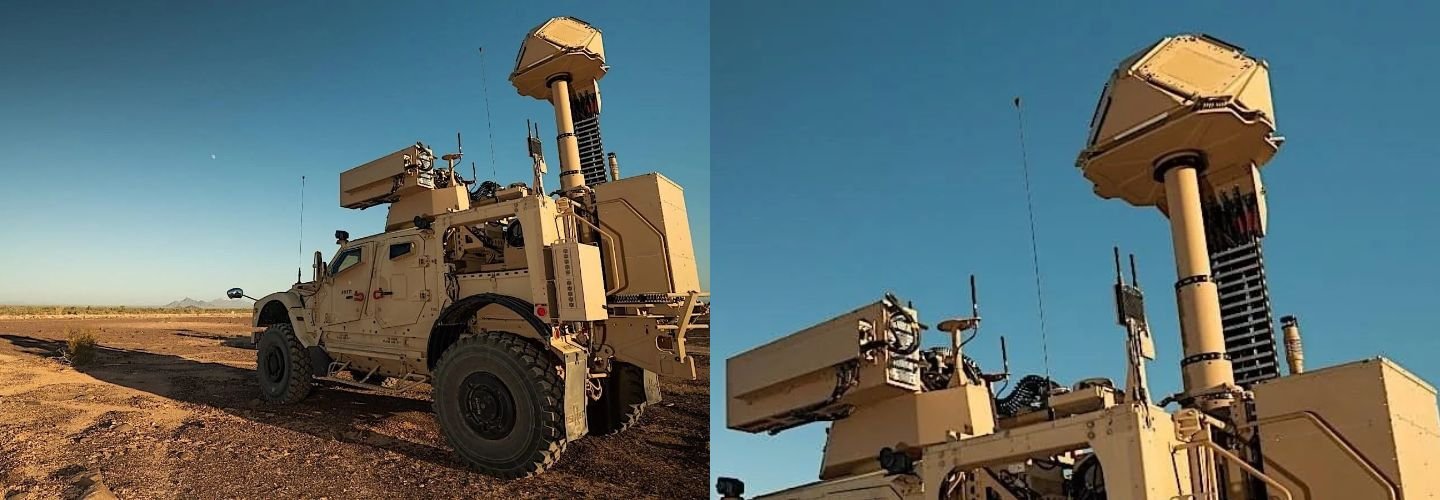

Analysis · StrikeOrbit | 2026
Counter-drone systems combine sensors, weapons, and rules to find, identify, and stop unmanned aircraft before they reach a target. In 2026, their central problems are arithmetic and authority more than technology. A drone that costs tens of thousands of dollars can force a defender to spend far more to stop it, and the person allowed to fire can be a slower constraint than the weapon itself.
Ukraine has built the most combat-tested answer so far, yet its own president said on September 28 that the rate at which jet-powered Shahed drones are stopped is “far below what is needed.”
This article follows the chain from detection to destruction, explains the cost problem with numbers, and says where those numbers are soft. It then looks at who is fielding what in Ukraine, the United States, Europe, the Gulf, and Israel. It separates what governments and militaries have confirmed, what officials claim without published data, and what remains an expectation, and it says so whenever a figure comes from a single source or a company.
Based on the latest reporting, here’s the current status. The terms counter-drone, counter-UAS, and C-UAS describe the same mission, and this article uses counter-drone throughout. Dollar figures are in US dollars unless a source gives pounds, euros, or kroner.
How Counter-Drone Systems Work: Five Tasks, and Why the Weapon Is Only the Last Link
A drone defense starts with detection, usually through radar, radio-frequency sensors, cameras, or acoustic arrays. Radar finds objects, but small, slow, low-flying drones blend in with birds and ground clutter, so most systems combine multiple sensors to reduce false alarms.
The second and third tasks are identification and tracking: deciding whether an object is hostile, friendly, or harmless, and keeping track precisely enough to fire on. Only then does the defeat begin, and a fifth task, command and authority, decides whether anyone is permitted to carry it out.
Defeat comes in three families. Soft-kill methods jam or spoof the link between a drone and its operator, or the satellite signals it navigates by.
Hard-kill methods destroy the drone with bullets, missiles, nets, interceptor drones, or directed energy. Between them sit cyber and takeover techniques, used mainly against commercial drones, and the right choice depends on what the target is, where it is, and what lies beneath it when it falls.
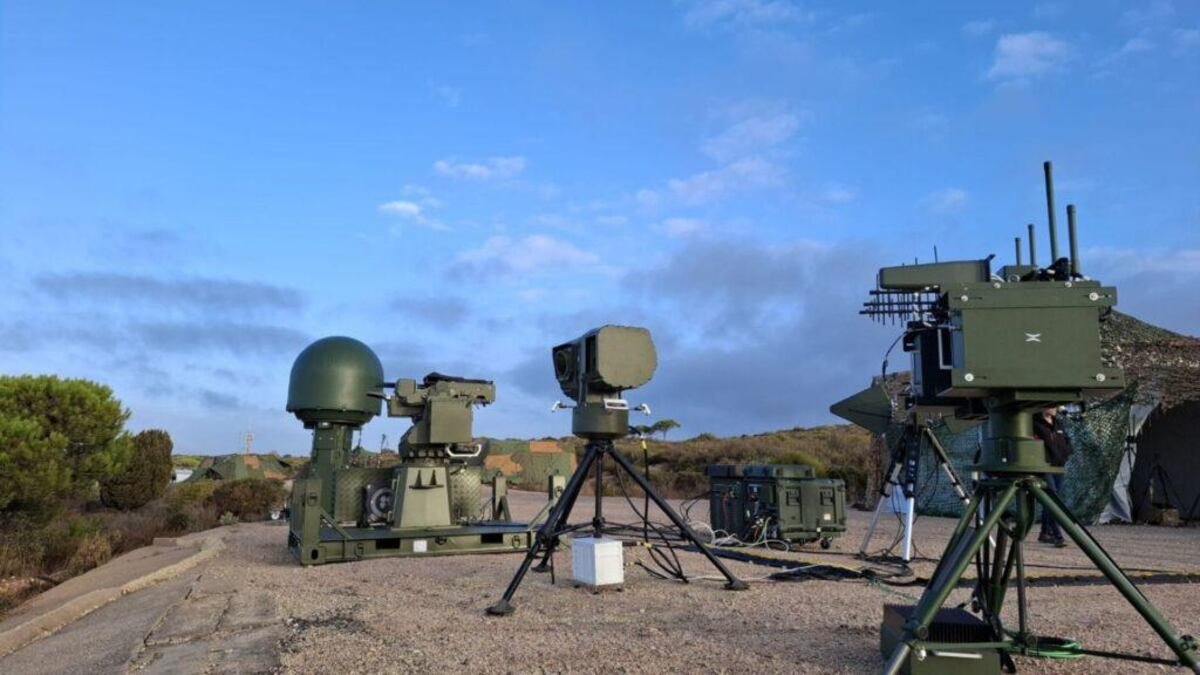
RTX’s October 13 announcement shows the chain on paper. The company said it was awarded $729 million for components of the Low, slow, small unmanned aircraft Integrated Defeat System (LIDS) for the US Army, Qatar, and Jordan, built around the KuRFS radar and the Coyote effector, and called the sales to Qatar and Jordan the first international sales of KuRFS and Coyote. The release gives no split by customer and no unit counts, so it confirms demand, not scale.
A buyer’s specification shows the same chain from the other side. The Department of Homeland Security announced in early August a five-year contract vehicle with a $1.5 billion ceiling and 12 awardees, and FedScoop reports that fielded systems must detect a drone at a minimum of 2 kilometers, track at least three at once, and mitigate threats at a minimum of 500 meters.
Those are procurement floors for homeland use and not combat performance, but they show how modest the baseline is beside the scale Ukraine faces, where the Air Force counted 285 strike drones in a single 12-hour window on September 30.
Cost Exchange Is the Core Problem, but the Published Numbers Are Softer Than They Look
The problem is easy to state. A one-way attack drone of the Shahed type is estimated at $20,000 to $50,000 per unit in the open-source estimates compiled in a June 2026 brief by the Missile Defense Advocacy Alliance (MDAA), and Quwa reports that US defense officials put it near $30,000.
A missile fired to stop one costs far more. Writing in European Security & Defense in March, analyst Thomas Withington cites about $1 million for an AIM-120 round and notes that an EU primer calls the use of jets and expensive missiles against drones “fiscally unsustainable.”
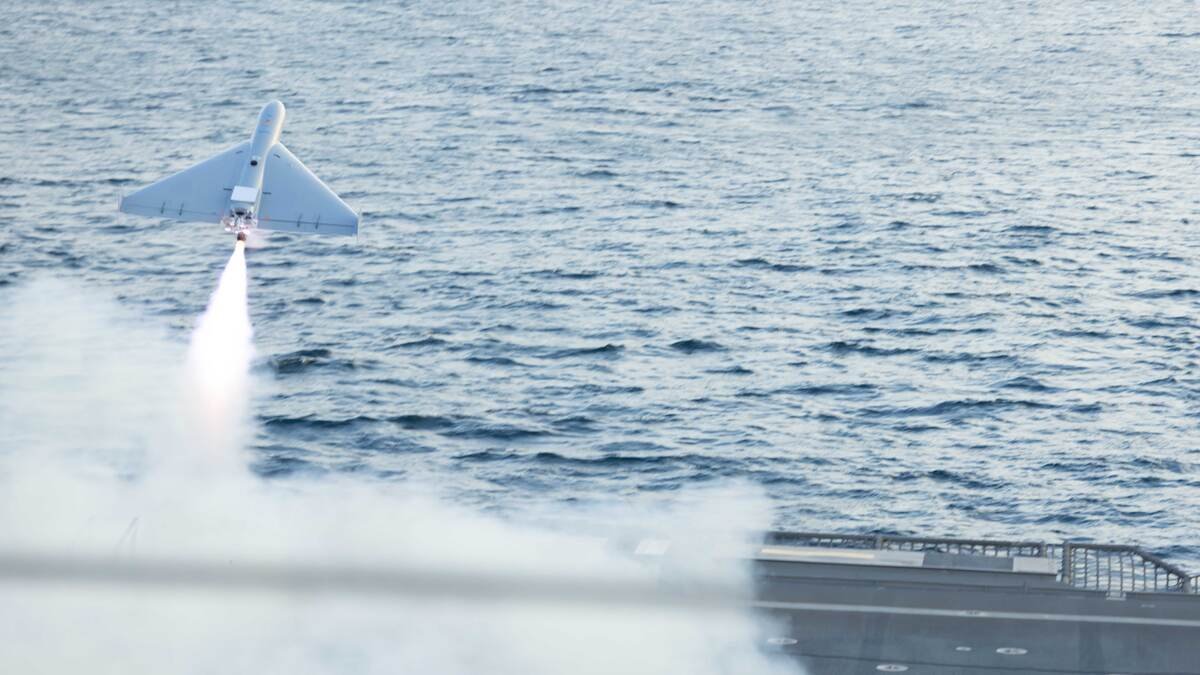
Estimates for the Patriot PAC-3 interceptor show how soft the numbers are. The MDAA brief gives about $4 million as an open-source estimate, while Quwa reports $13.5 million attributed to US defense officials, and neither is an official unit price.
Taking the extremes of the two ranges, the ratio runs from about 80 to 1 to about 450 to 1, and the 450-to-1 end is Quwa’s own calculation. A single number should not be read as the cost of a shot, but the range supports the order of magnitude.
Cheaper effectors narrow the gap. The MDAA brief lists interceptor drones at about $15,000 each, citing the Merops system, and the Gepard 35 mm gun at about $5,000 per burst, while the UK Ministry of Defense puts its DragonFire laser at about £10 per shot.
On October 19, the Pentagon and BAE Systems signed a framework for up to 25,000 APKWS guidance kits a year for up to seven years, with a path to 35,000 for international customers, and The Aviationist puts the guidance section at about $15,000, a figure it does not source, with the deal’s value and final contract terms undisclosed.
Quantity then matters as much as unit price, because a $15,000 interceptor that succeeds half the time costs about $30,000 per kill, which is not far below the drone it chases.
The deeper issue is magazine depth. A defender holding few expensive interceptors can be drained by a cheap salvo even if every shot works, which is the pattern the Patriot and THAAD interceptor shortage analysis describes for missile defense.
The answer is a layered mix in which the cheapest effector able to do the job fires first. Scale sharpens the point: the MDAA brief, citing Ukrainian sources, says Russia had fired well over 57,000 Shahed-class drones at Ukraine by late 2025, a launch count, not a measure of how many were lethal.
Ukraine Is the Proving Ground, and Its Own Figures Show the Limits
Ukraine’s defense against the Shahed shows what layering looks like in practice, inside the wider drone war in Ukraine.
Commander-in-Chief Oleksandr Syrskyi said, in a statement reported on March 9, 2026, that interceptor drones destroyed more than 70 percent of Shahed-type drones over Kyiv and its outskirts in February, flying about 6,300 sorties and destroying more than 1,500 Russian drones that month. These are the military’s own figures for one city in one month, and they have not been independently audited.
The figures for jet-powered drones are lower, and the fix is still arriving. President Volodymyr Zelensky said in his September 28 evening address that the day’s overall rate was 70 percent and the rate for jet-powered drones was 57 percent, “far below what is needed,” adding that new interceptors were being tested.
Nine days earlier, he had said a new interceptor drone developed by the SBU’s military counterintelligence had been “created and already successfully applied,” without naming its maker or giving numbers, and Kyiv Post reported that the Armed Forces were testing four interceptor models while about ten manufacturers tested prototypes.
Tech Times argues that interceptor drones struggle to catch the jet-powered variant, an analytical judgment and not a measured result.
The Air Force’s figures for September 30 look much better, but they are not a like-for-like comparison. Its report covered 6:30 a.m. to 6:30 p.m., counted 285 strike drones, including 174 jet-powered, and said air defense shot down or suppressed 254 of them, including 146 of the jet-powered ones, about 84 percent.
About 10 strike drones were still in the air at 6:30 p.m.; Liga.net called the figures preliminary, and the report does not define “suppressed.” The two days differ in window, in definition, and in how many drones were still airborne, so they do not show whether Ukraine’s defense improved, only that single-day rates swing.
Industry claims need more caution. Wild Hornets, the maker of the Sting interceptor, says its drones downed more than 15,500 Russian drones in the year to September, a figure reported by Censor.NET that comes from the company and has not been independently verified.
Guns, Jammers, and Interceptors Handle the Cheap Drone, and Each Has a Limit
Guns remain the cheapest hard kill for drones that fly low and slow. The MDAA brief puts the Gepard at about $5,000 per burst, but a gun needs a clear line of sight, short range, and a large supply of ammunition.
Electronic warfare is the cheapest soft kill and the most contested. Jamming breaks the radio link to a remotely piloted drone, which can make it crash or veer off. A drone flying a preprogrammed route can be hit only at the navigation level, and a drone trailing a cable cannot be jammed at all, as the limits section below explains.
Electronic defenses also use the same spectrum as friendly radios and other systems, which is one reason the US memo discussed below orders a spectrum review.
Interceptor drones fill the middle. They are fast enough to catch many propeller-driven attack drones, cheap enough to buy by the thousand, and flexible enough to launch from a truck or a trench. Quwa reports that US and Gulf officials are pursuing low-cost interceptors such as Merops, which it describes as developed under Project Eagle, an initiative led by former Google chief executive Eric Schmidt.
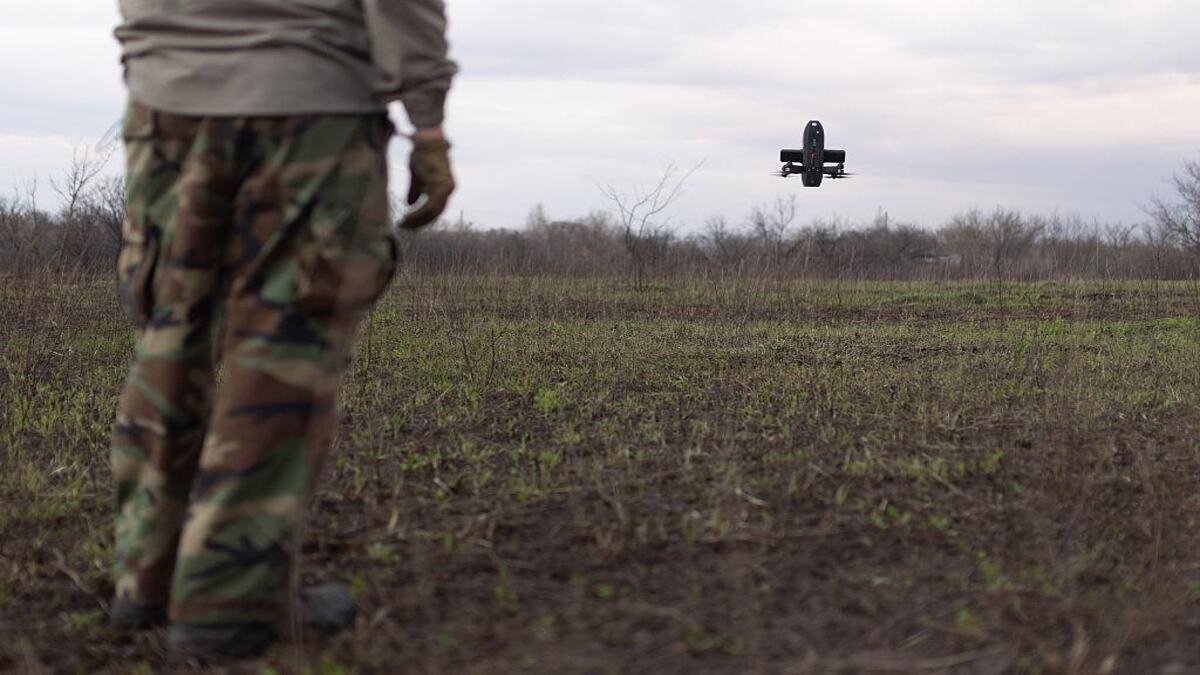
Their weakness mirrors their strength: they depend on a sensor picture, on guidance that works under jamming, which increasingly means the kind of autonomy examined in the autonomous weapons analysis, and on enough numbers to keep pace with a swarm.
Longer-range missiles are the next step. On October 23, L3Harris announced a contract of up to $60 million over three years from the Army’s DEVCOM Aviation & Missile Center to advance its Extended Range Counter-sUAS Missile (XRC) to flight testing, a ramjet-powered interceptor aimed at Group 2 and Group 3 drones. It is a science-and-technology effort and not a program of record, and the company has not stated the missile’s range or speed.
Lasers and Microwaves Promise Pennies Per Shot, but Fielding Is Slow and Partial
Directed energy answers the cost problem on paper. In November 2025, the UK Ministry of Defense said DragonFire would be fitted to a Type 45 destroyer by 2027, “five years faster than originally planned,” under a £316 million contract with MBDA UK, and put its cost at about £10 per shot against hundreds of thousands of pounds for a traditional missile.
Trials at the ministry’s Hebrides range included what it called a UK first: tracking and destroying drones above the horizon, with targets capable of up to 650 kilometers per hour. The release gives no power figure, while The Register reports 50 kilowatts and notes that the demonstrator contract dates to 2016 and a public demonstration planned for 2019 slipped.
A 2027 date is therefore a target and not evidence that the fleet has the system.
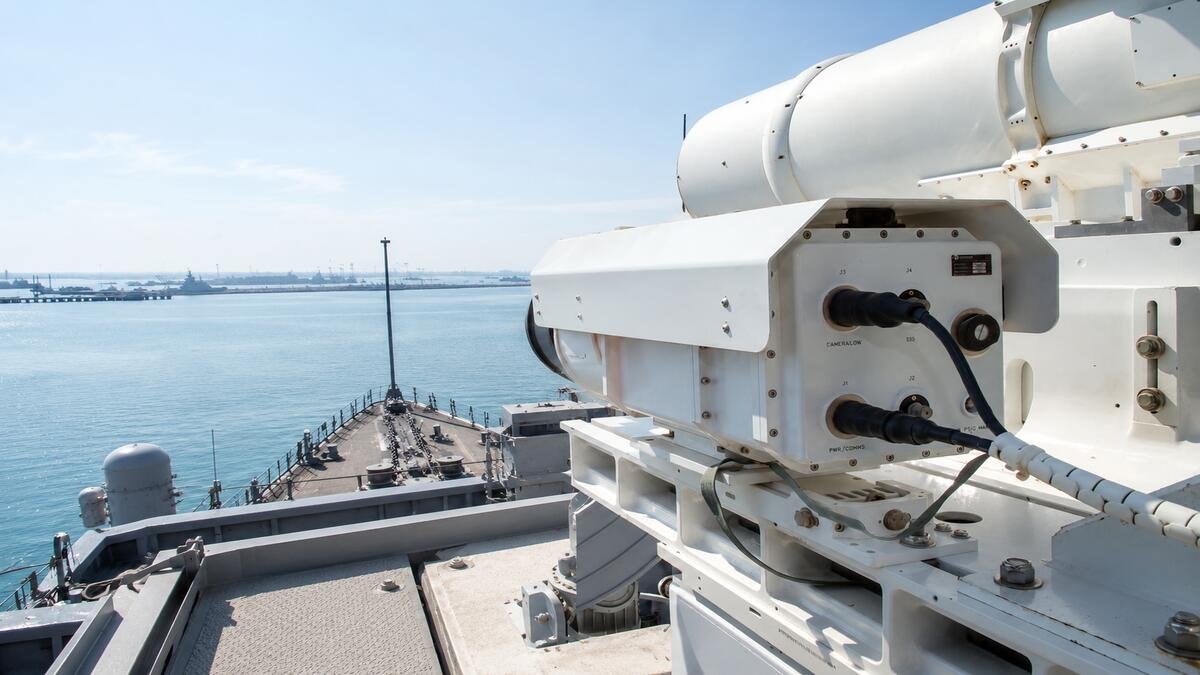
Israel’s Iron Beam is the laser that has been used against real attackers. The Defense Ministry said in May 2025 that lower-powered prototypes had shot down dozens of aerial threats, mostly Hezbollah drones, without saying how many engagements succeeded. The system was declared operational on September 17, 2025, according to the Times of Israel, which reported no power figure and no official cost.
One report cited a cost of less than $5 per interception, but that is not an official figure, and reporting on the system consistently notes that performance drops in bad weather.
The US Army is the slowest of the three. Its Enduring High Energy Laser program selected AeroVironment’s LOCUST X3 in a $464.8 million award in September covering more than 26 units, with the first delivery slated for the fourth quarter of fiscal 2027 and Brig. Gen. Guy Yelverton calling spring 2028 his “far-down point” for getting it to soldiers.
The report says the Army cites eight kills with a prototype at Army Modernization Day in October, and Col. Charles Kean described directed energy as part of an air defense mix and not “a single-bullet” solution. Power was not stated; an official said operational demand might prevent the Army from keeping the first unit for testing, and a contract award establishes a purchase, not operational availability.
What a laser costs per shot is therefore the wrong first question, and where it can fire is the better one. Lasers need clear air, electrical power, and time on target, which is why early deployments are ships with generators, fixed sites, and the southern US border, where Reuters reports the military says it has downed 11 cartel drones with lasers since deploying the technology there in August. Directed energy is a layer to be added over the next several years and not a replacement for guns, interceptors, and missiles.
At Home, the Bottleneck Is Authority and Not Technology
In the United States, the main constraint is who may legally use these tools. Defeating a drone can mean interfering with aircraft or radio spectrum, and federal law limited that authority to a few agencies for years. The Safer Skies Act, included in the defense authorization law signed in late December 2025, extended Justice and Homeland Security counter-drone authority through 2028, according to Route Fifty.
As described when the bill cleared the House, it directs those departments to issue regulations for state and local agencies and requires training and compliance rules to be set before those agencies may conduct counter-drone operations, so local authority depends on rules that come after the law.
The test came at the FIFA World Cup. The Federal Aviation Administration said on July 22 that more than 700 drones were seized across the 11 host cities, that nearly 250 temporary flight restrictions were issued, and that $500 million in counter-drone grants had been set aside, with $250 million awarded first. It also said the FBI’s National Counter-UAS Training Center trained state and local agencies. The statement does not name the systems used, so it shows that the authority worked, not which tools did the work.
Inside the military, the bottleneck is approvals. Defense Secretary Pete Hegseth signed a five-page memo on September 28, released on October 2, that tells approval authorities to treat delays in handling counter-drone requests as operational risks and names Joint Interagency Task Force 401 (JIATF-401) as the “synchronization point” for counter-drone employment.
DefenseScoop reports that it orders the Chief Information Officer to review spectrum approvals within 30 days and tells the Chief Digital and AI Officer to set up a single department-wide approval process for authority to operate, with the aim of cutting timelines from months to days or weeks. As reported, the memo sets no deadline for that approval process and does not say what the “operational risk” label requires of reviewers.
Buying is being sped up as well. JIATF-401 awarded a contract with a $500 million ceiling over three years to Perennial Autonomy on May 19, according to Joint Base San Antonio.
The Army’s Europe and Africa task force said in October that it aims to get anti-drone systems to troops within 180 days, working with the Army’s Global Tactical Edge Acquisition Directorate on a first accelerated capability event at Tan-Tan, Morocco, in spring 2027. Reports differ on the details, with Stars and Stripes citing more than a dozen suppliers and Task & Purpose citing up to 15 systems and February and March testing, so this article relies only on what they share.
The directorate’s own words show the authority problem inside the Army. Its director, Col. Christopher Hill, said regional commands have always had priorities, but “the two things they’ve never had are acquisition authority and research, development, test and evaluation dollars.”
Reuters reported on October 5 that a Northern Command exercise, Falcon Peak, held in Arizona in September, had soldiers watching firms demonstrate radars, interceptor drones and an automated machine gun. Brig. Gen. Brian Filler said the military detected 378 drone incursions at the southern border in the previous 30 days, mostly commercial drones carrying cameras, and officials called them far less sophisticated than drones in Ukraine or the Middle East.
Europe Has an Initiative and a Deadline, but the Drone Wall Does Not Yet Exist
In September 2025, European Commission President Ursula von der Leyen called for a drone wall along the eastern border. The European Commission’s Defense Readiness Roadmap 2030 sets the milestones: the European Drone Defense Initiative is to reach initial capacity by the end of 2026 and be fully functional by the end of 2027, while the Eastern Flank Watch, covering the EU’s border with Russia and Belarus, is to be functional by the end of 2028.
Withington noted in March that sensors, effectors, networking, and which nation would intercept a confirmed hostile drone remained open questions.
Ulrike Franke of the European Council on Foreign Relations argued in a July column, as DroneXL summarizes it, that the EU’s drone defenses were “largely missing in action” and that what exists is national. That is a single analyst’s assessment relayed by a secondary source, and the roadmap shows what is promised and not what is in place. The gap between the two is the story to watch through the end of 2026.
Poland’s national program is the most concrete. The Polish Armaments Agency contracted Kongsberg, with PGZ as partner, for 18 counter-drone batteries worth about NOK 16 billion to Kongsberg, combining 35 mm, 30 mm and 12.7 mm guns, 70 mm guided missiles and interceptor drones, according to the company.
DroneXL reports that the wider €3.5 billion Polish system is due to reach initial operational capability before the end of 2026 and full operation by the end of 2027, and the Kongsberg release gives no delivery schedule.
The cost of the gap is visible. In late May, a Russian-origin Geran-2 crashed into an apartment block in Galați, Romania, hospitalizing a 14-year-old boy and a 53-year-old woman, and Romania’s technical report identified the drone by Cyrillic markings on fragments, according to Kyiv Post.
President Nicușor Dan said Russia was “solely responsible,” and Kyiv Post described it as the first known drone hit on a residential building outside Ukraine since the 2022 invasion. The lesson is that detection and a clear rule on who intercepts matter before any new weapon does.
The Gulf and Israel Show Demand Running Ahead of Supply
In the Gulf, Ukraine’s experience became an export. Quwa reported on March 25 that Ukraine’s Rustem Umerov confirmed Ukrainian interception units in the United Arab Emirates, Qatar, Saudi Arabia, Kuwait and Jordan, and that Zelensky had said 201 Ukrainian experts were in the Gulf. These are Ukrainian statements, and the Gulf governments have not published the terms of the deployments.
Procurement points the same way. RTX’s October 13 award names Qatar and Jordan as the first international customers for its KuRFS radar and Coyote effector, and Quwa reported in March that US and Gulf officials were pursuing the Merops interceptor.
Quwa framed the purchases as a response to swarms of the Iranian-designed Shahed, a threat explored in the analysis of Iran’s missile force, straining Patriot defenses, a framing that fits the cost problem but that official sources have not documented. The same arithmetic shapes Saudi Arabia’s defense planning, examined in the Mecca defense pact analysis.
Israel offers a different model, a laser added beneath existing missile defenses. Straight Arrow News reported in May 2025 that the full-power Iron Beam was expected to be integrated with the Iron Dome and Arrow systems. The lesson is that directed energy adds a layer and does not replace one, and that a layered system is only as good as the weakest link in its sensor and command chain.
Four Limits Remain, and No System Removes Them
The first limit is saturation. Every system has a finite number of simultaneous tracks and a finite number of shots ready, and a swarm built to exceed either will get through, which is an analytic judgment, not a measured threshold.
The second limit is the fiber-optic drone. Jammers disrupt the radio link between a drone and its operator, but a drone trailing a spool of cable has a wired connection that jamming does not touch. CBC reported in January 2025 that Ukrainian units were using models with a range of up to 20 kilometers, that soldiers and experts said the only effective defense was shooting them down because they can be detected only by sound and sight, and that no efficient countermeasure existed yet.
The third limit is weather and power. The reports on Iron Beam note degraded performance in bad weather, and The Register notes that DragonFire can fire only while a ship has enough electrical power. A laser that cannot fire in the conditions an attack arrives in is a partial answer, which is why no defender is giving up missiles or guns.
The fourth limit is collateral risk and rules. Debris from a drone that is shot down lands on someone; jamming near an airport affects civilian aircraft, and a false alarm can close a city. These risks are why the approval and authority problems in the United States matter as much as the hardware.
Six Indicators Will Show Whether Defenses Are Catching Up
Two indicators concern the battlefield and the home front. The first is whether Ukraine’s reported rate for jet-powered drones rises after the new interceptors Zelensky described are fielded, with published figures that define what “stopped” means and cover a full day. The second is whether the 30-day spectrum review ordered by the Hegseth memo produces published changes, noting that the memo, as reported, gives no start date for that clock.
Four indicators concern fielding. The third is whether Europe’s Drone Defense Initiative reaches “initial capacity” by the end of 2026 and whether Poland’s system reaches initial operational capability on schedule.
The fourth is whether the Army’s Tan-Tan event takes place in spring 2027 and whether systems reach soldiers within the promised 180 days. The fifth is whether LOCUST X3 reaches soldiers by early 2028 and whether DragonFire, a Type 45 destroyer, is delivered in 2027. The sixth is whether the APKWS framework becomes a priced contract and whether L3Harris’s XRC reaches flight testing.
Frequently Asked Questions
What is a counter-drone system?
A counter-drone system is a combination of sensors, effectors, and command software that detects, identifies, tracks, and defeats unmanned aircraft. The sensors are typically radar, radio-frequency detectors, cameras, or acoustic arrays, and the effectors range from jammers and guns to interceptor drones, missiles, and lasers. The system also needs a person or rule that authorizes the engagement, which in the United States is a legal question as much as a technical one. The RTX LIDS package, built around the KuRFS radar and the Coyote effector, is a current example.
Why is stopping drones so expensive?
Stopping drones is expensive because the defender often uses a costly weapon against a cheap target. Open-source estimates put a Shahed-type drone at $20,000 to $50,000, while public estimates for a Patriot PAC-3 round range from about $4 million to $13.5 million, and neither range is an official price. Cheaper tools such as interceptor drones at about $15,000, guns and lasers narrow the gap, but they have shorter range, narrower conditions of use or limited fielding. The practical answer is a layered defense that uses the cheapest effective tool first.
Can lasers stop drones today?
Lasers can stop some drones today, but only in limited conditions and numbers. Israel’s Defense Ministry said lower-powered Iron Beam prototypes shot down dozens of drones in 2025, and the US military says it has downed 11 cartel drones with lasers at the southern border since August. The Army’s LOCUST X3 is not due to reach soldiers until about early 2028, and DragonFire is scheduled for a Royal Navy Type 45 destroyer by 2027. Weather, power and time on target remain limits.
Are jet-powered Shaheds harder to stop?
Jet-powered Shaheds appear harder to stop, according to Ukraine’s own figures. Zelensky said the interception rate for jet-powered drones was 57 percent on September 28, against 70 percent overall, and called it “far below what is needed.” The Air Force’s report for the 12 hours from 6:30 a.m. on September 30 showed about 84 percent, counting drones shot down or suppressed, so rates vary by day, window, and definition. Tech Times argues that interceptor drones struggle to catch them, which is an analytical judgment and not a measured result.
Who is allowed to shoot down a drone in the United States?
Authority to defeat a drone in the United States is limited by law and by policy. The Safer Skies Act, in the defense authorization law signed in late December 2025, extended Justice and Homeland Security counter-drone authority through 2028, according to Route Fifty, and as described when the bill passed the House it directs those departments to write rules for state and local agencies, with training and compliance requirements set first. The Pentagon’s September 28 memo separately aims to speed internal approvals for military installations. Private citizens and most local agencies still have no general authority to jam or shoot down drones, and doing so can violate aviation and communications law.
Sources and References
Army Southern European Task Force, Africa, guest post — US Army task force partners with acquisition directorate to accelerate counter-drone tech in Africa, Soldier Systems Daily (October 21, 2026).
Censor.NET — Sting interceptors down over 15,500 Russian drones in one year.
CBC News — Ukraine war becomes a testing ground for drones that can evade jamming systems (January 27, 2025).
Defense News (via Military Times) — US Army targets 2028 for first high-energy laser counter-drone weapons (October 13, 2026).
Defense War Room — L3Harris long-range drone interceptor advances to flight testing under $60M US Army contract (October 23, 2026).
DefenseScoop — Hegseth issues new directive to hasten U.S. military’s counter-drone pursuits (October 2, 2026).
DroneXL — EU drone wall still doesn’t exist 10 months after von der Leyen promised it, summarizing Ulrike Franke, World Politics Review (July 28, 2026).
European Commission — Defense Readiness Roadmap 2030, Directorate-General for Defense Industry and Space.
European Security & Defense, Thomas Withington — Europe’s Drone Wall (March 13, 2026).
Federal Aviation Administration — Successful counter-drone efforts helped keep millions of fans safe during FIFA World Cup 2026 (July 22, 2026).
FedScoop — DHS drone defense counter-UAS contracts (August 4, 2026).
Joint Base San Antonio — Joint Interagency Task Force 401 awards $500 million counter-UAS contract (May 2026).
Kongsberg — KONGSBERG wins NOK 16 billion contract to deliver Counter-UAS solutions in Poland.
Kyiv Post — Ukraine deploys new interceptor drone against jet-powered Shaheds (September 19, 2026).
Kyiv Post — Romania identifies drone behind strike on apartment block as Russian (2026).
Liga.net — Ukraine preliminarily countered more than 80% of jet-powered drones on September 30, Armed Forces data (September 30, 2026).
Military Times and Reuters — US Army tests counter-drone tech at Mexican border as cartel drone use rises (October 5, 2026).
Missile Defense Advocacy Alliance, Alex Reed — Iran’s Shahed-136 One-Way Attack Drone: Proliferated Challenge to Allied Defenses, Spotlight Brief 2026-MDRS-05 (June 15, 2026).
NV (New Voice of Ukraine) — Ukraine intercepts 57% of Russian jet-powered drones, Zelenskyy (September 28, 2026).
Quwa — US Pursues Low-Cost Interceptors and Lasers Against Shahed Swarms (March 8, 2026).
Quwa — Gulf states race to buy Ukraine’s $1,000 drone killers as Shahed swarms overwhelm Patriot defenses (March 25, 2026).
Route Fifty — Defense law includes expanded counter-drone authority (January 2026).
RTX — RTX’s Raytheon awarded $729 million in counter-drone contracts for the U.S., Qatar, and Jordan (October 13, 2026).
Stars and Stripes, Chad Garland — US Army sees Morocco as ideal proving ground for drone defenses (October 21, 2026).
Straight Arrow News — Israel confirms first use of laser weapons in combat (May 30, 2025).
Task & Purpose — Army wants to test and field new drone defenses in under six months (October 21, 2026).
Tech Times — Ukraine stops 90% of propeller Shaheds, only 57% of jet ones. Russia designed it that way (September 29, 2026).
The Aviationist — Pentagon, BAE Systems sign agreement to increase APKWS production (October 20, 2026).
The Register — DragonFire laser to be fitted to Royal Navy ships after acing drone-zapping trials (November 24, 2025).
Times of Israel — Laser-based Iron Beam interception system declared operational (September 17, 2025).
UK Ministry of Defense — Boost for Armed Forces as new laser weapon takes down high-speed drones (November 20, 2025).
UNN — Russians attacked Ukraine with 285 drones, air defense destroyed 254 targets (September 30, 2026).
UATV — Interceptor drones shot down over 70% of Shahed drones over Kyiv in February, Syrskyi (March 9, 2026).
Unmanned Airspace — C-UAS provisions in US NDAA 2026 throw pending bipartisan legislation into question (December 15, 2025).
Related Analysis
For analysis of how drone warfare has evolved and how unmanned systems are changing battlefield operations, read Drone Warfare and Autonomous Systems in Modern Conflict.
For analysis of the electromagnetic battlespace in which drones operate, including how jamming and other forms of electronic warfare can disrupt communications, navigation, and control, read Electronic Warfare and the Future of the Electromagnetic Battlespace.
For analysis of the cost and capacity challenges involved in defending against incoming threats, including the limits imposed by interceptor inventories, read Patriot and THAAD: Inside America’s Layered Missile Defense and the Interceptor Shortage.
For analysis of how military forces connect sensors, command systems, and operational units to coordinate responses across domains, read JADC2 Explained: How the US Military’s Joint Command Network Works.
For analysis of the wider challenge of detecting, tracking and intercepting advanced aerial threats, including the technical limits of current defensive systems, read Can Hypersonic Missiles Be Intercepted? Defense Systems, Technology, and the Limits of Current Capability.
