


Analysis · StrikeOrbit | 2026
India’s missile force is growing on three tracks at once. Long-range ballistic missiles are being fitted with multiple warheads, cruise missiles have now been used in combat, and a hypersonic program has moved from laboratory tests to public display.
The pace of testing in 2026 has been high, and the official language around it has become more confident. But the most careful independent estimates still describe a force that is small in deployed terms, and much of what India announces cannot be checked by outsiders.
That gap between what is declared, what has been tested, and what can be independently verified is the useful way to read this program. The clearest way to state the argument is this: India is moving from a compact missile force toward a more survivable and diversified strike architecture, but the strategic significance of that change depends less on how many systems have been tested than on which capabilities have actually entered operational service.
India’s Ministry of Defence has confirmed two flight tests of multiple-warhead technology on Agni missiles, but it has not published warhead numbers or said how many such missiles are in service.
The Stockholm International Peace Research Institute counted a small number of Indian warheads as deployed for the first time in its 2026 Yearbook, and attached an uncertainty caveat to the figure. A hypersonic anti-ship missile rolled down a parade route in January, yet the head of India’s defence research organization said in April that initial trials were still expected soon.
This article works through the force in the order a reader needs it: the doctrine that shapes it, the Agni family, the multiple-warhead tests, the combat use of cruise missiles in May 2025, the hypersonic and missile defence programs, and the regional balance with Pakistan and China. It separates official statements from independent assessment throughout, and it says plainly where the evidence runs out.
As examined in Countries With Operational Hypersonic Missiles: Global Status 2026, India’s hypersonic effort sits within a wider global race, and this piece looks at the whole Indian missile force rather than that one weapon type.
India’s Missile Force Doctrine Sets a Narrow Purpose for Its Nuclear Missiles
India adopted its official nuclear doctrine in 2003. It rests on two commitments that have shaped every missile program since: a no-first-use pledge, under which India would use nuclear weapons only in retaliation for a nuclear attack on Indian territory or Indian forces anywhere, and a policy of credible minimum deterrence, which aims to hold enough capability to make any nuclear attack on India unacceptably costly. The published doctrine has not been rewritten.
The nuclear-armed missiles fall under the Strategic Forces Command, which oversees India’s nuclear assets. The Ministry of Defence has routinely described Agni launches as being conducted under the aegis of that command, a phrase that appears in its releases for tests in 2024 and 2025. That wording matters because it signals a user trial by the operating force rather than only a development flight by the research organization.
Doctrine explains why the force looks the way it does. A no-first-use posture depends on a retaliatory capability that survives an attack, and survivability is the reason for nearly every design choice examined below: solid fuel, canisters, road and rail mobility, submarine basing, and multiple warheads that complicate an opponent’s missile defences.
The 2026 SIPRI findings, discussed later, suggest that practice may be starting to move ahead of what the doctrine text says. That is an outside estimate, not an Indian statement.
The Agni Family Is Moving From Fixed Sites Toward Mobility
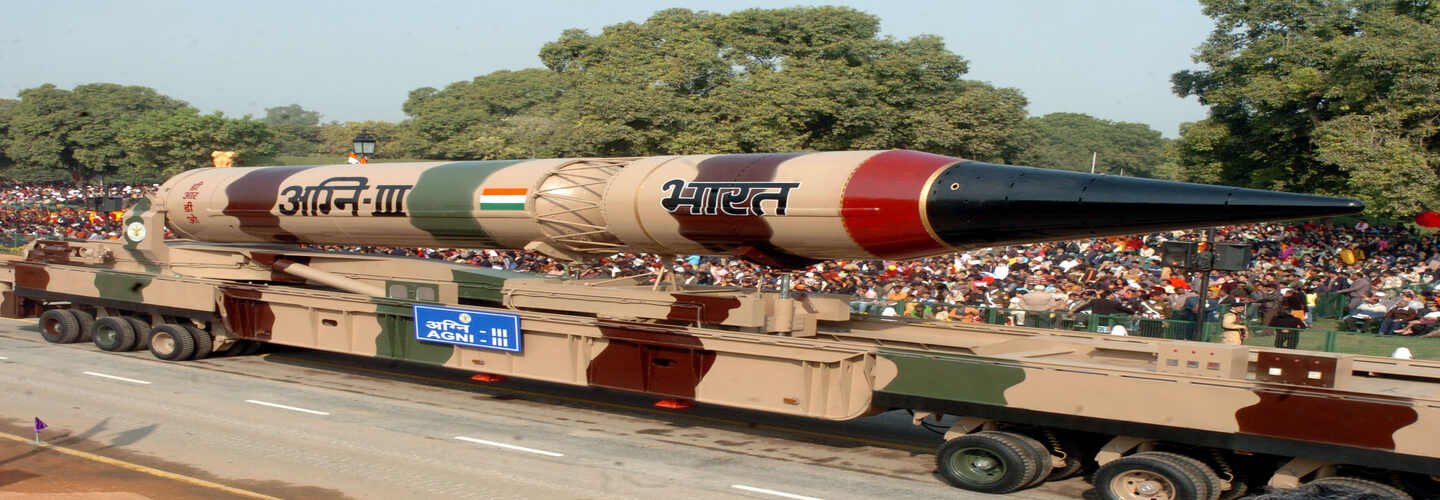
The Agni series is the backbone of India’s land-based strategic force.
The Agni-5 was first tested on April 19, 2012, and is commonly described as a three-stage solid-fuel missile with a range of 5,000 to 5,500 kilometers. India’s own official language is more cautious than the common description.
A Ministry of Defence release on the August 20, 2025 test called it an Intermediate-Range Ballistic Missile, even though outside observers usually place it at the edge of intercontinental range. The difference is a small reminder that categories in this field are partly political choices.
The Agni-Prime is the more consequential recent development for survivability. It is a canister-launched, two-stage solid-propellant missile, and analysis published by the International Institute for Strategic Studies notes that solid propellant removes the need for on-site fueling, so the missile can be stored ready in a launch canister for rapid use.
The same analysis records that a road-mobile version was already in service, that it is expected to replace the older, short-ranged Agni-I, and that a rail-mobile configuration will likely replace the medium-ranged Agni-II.
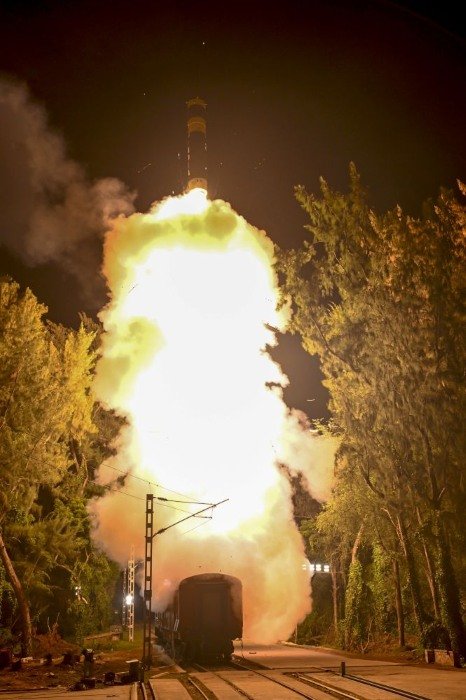
That rail configuration was tested on September 24, 2025, from a specially built rail launcher at the Integrated Test Range on Abdul Kalam Island off Odisha. The Ministry of Defence described the test as taking place in a full operational scenario.
Rail mobility gives India another means of dispersing and relocating missiles across a large transportation network, which is the same logic other nuclear powers have explored for decades.
The IISS analysts observe that India’s rail network is approaching full electrification, and that a short stretch of simulated overhead cable was fitted to the test track, a small detail that shows how much practical engineering sits behind a launch that looks simple in photographs.
Two Multiple-Warhead Tests Show Progress, Not Yet a Deployed Force
The most discussed development in India’s strategic force is the fitting of multiple independently targetable re-entry vehicles, known as MIRVs, to Agni missiles.
A MIRV lets one missile release several warheads that each fly to a different target. For a country with a small arsenal, the appeal is straightforward: a defender has to track and engage more incoming objects, and one launcher can threaten more than one target.
India announced its first flight test of this technology on March 11, 2024, under the name Mission Divyastra, using an Agni-5.
The Ministry of Defence said the test showed that a single missile can deploy multiple warheads at different locations, and that the system carried indigenous avionics and high-accuracy sensor packages to bring each re-entry vehicle to its intended point.
The second publicly acknowledged test came on May 8, 2026, from the same island range. The Ministry described it as a flight trial of an “Advanced Agni” missile with multiple payloads directed at different targets spread over a wide area of the Indian Ocean region.
Four separate claims are often merged in coverage of these tests: that the technology works in flight, that a missile carrying it is in operational service, that such missiles are deployed with nuclear warheads, and that India fields them at scale. The public record supports the first. Two tests separated by just over two years are a demonstration of technology, not evidence of a fielded force, and the other three claims rest on reporting that has not been officially confirmed.
Reporting in the Indian press, citing unnamed defence sources, says the technology was finalized first on the Agni-Prime and then applied to the Agni-5, and that the original plan was to put it on a longer-range Agni-6. Those details come from sources that were not named and should be read that way.
What India has not published is a warhead count for either missile, and some websites that quote specific numbers of warheads per missile are not citing any official document.
The naming around the May 2026 test caused confusion worth clearing up. Several outlets reported it as an Agni-6 launch with a range near 12,000 kilometers, based partly on the size of the airspace warning issued beforehand.
The Ministry did not use that name. On April 30, 2026, the chairman of India’s Defence Research and Development Organisation, Samir Kamat, told a national security summit that the Agni-VI program depends on a government decision and that his organization is ready to proceed once approved.
On the public record, then, an Agni-6 has neither been approved nor flown.

SIPRI’s First Deployed-Warhead Count Suggests Practice May Be Moving Ahead of Doctrine
The strongest independent data point on the force comes from SIPRI’s 2026 Yearbook, released on June 8, 2026. It estimated India’s stockpile at about 190 warheads as of January 2026, a small increase from the year before, compared with an estimated 170 for Pakistan and 620 for China.
For the first time in the Yearbook’s history, SIPRI counted some Indian warheads as deployed rather than stored: 12 of them, whereas it had previously treated the entire arsenal as being in storage.
SIPRI’s estimate appears to reflect an assessment that a small number of Indian warheads may now be deployed on a ballistic missile submarine during deterrence patrols. Reporting on the Yearbook notes that it had long been assumed India stores its warheads separately from delivery vehicles during peacetime.
SIPRI attaches a considerable-uncertainty caveat to the number, using language similar to what it applies to China’s deployed count, which it raised from 24 to 34 in the same edition. This is an outside estimate of a possible change, not an Indian confirmation, and India does not publish warhead numbers.
The number matters for reasons beyond the count itself. A country that keeps warheads apart from missiles in peacetime has a slower path to use, and a country that keeps some mated to a submarine’s missiles has a faster and more survivable one. If SIPRI’s reading is right, the change would fit the same pressures that drive the Agni-Prime and MIRV programs.
As examined in Nuclear Deterrence in the Space Age: How Orbital Warfare Is Changing the Calculus, the survivability of a small force depends on many links working together, from warning and command to delivery, and India’s investments now touch each of them.
Operation Sindoor Put India’s Cruise Missiles Into Combat for the First Time
The May 2025 conflict with Pakistan produced the first combat use of several missiles that had been described for years in brochures. After the April 22 attack in Pahalgam, India launched Operation Sindoor on May 7, and the fighting continued until a ceasefire on May 10.
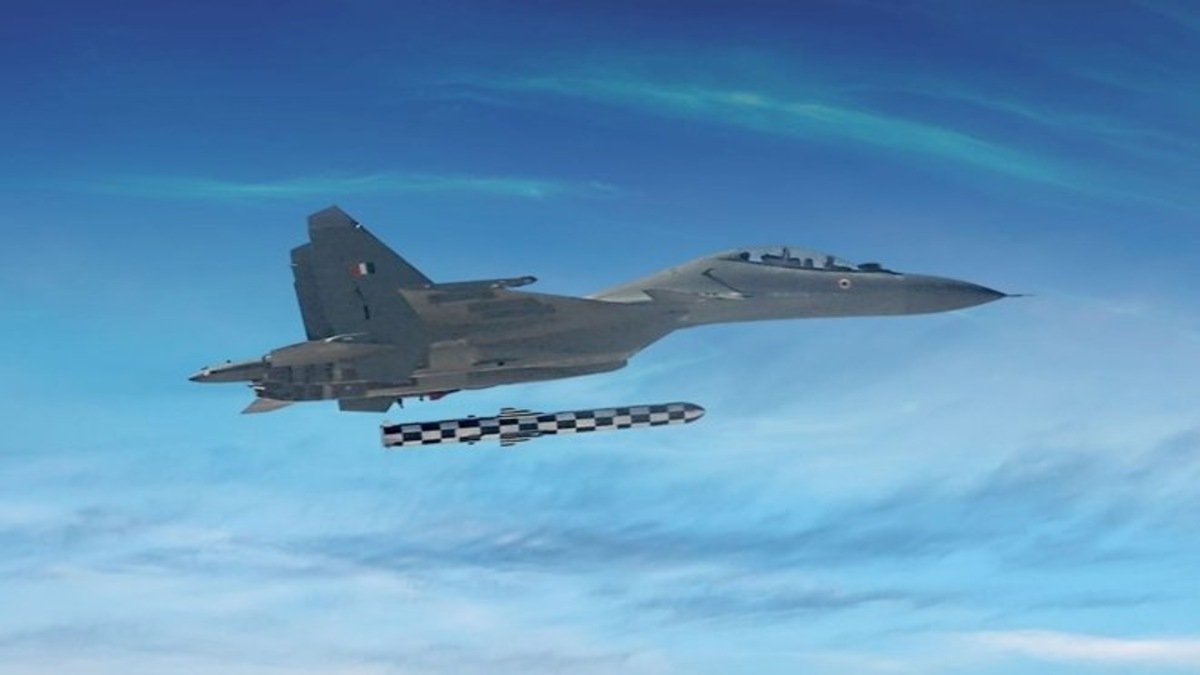
In its briefing, the Indian Air Force said Pakistani military targets at Rafiqui, Murid, Chaklala, Rahim Yar Khan, Sukkur, and Chunian were engaged with air-launched precision weapons from fighter aircraft.
The strongest support for the role of cruise missiles comes from two directions.
The Stimson Center’s assessment of the crisis, “Four Days in May,” found that this was the first time India used cruise missiles against Pakistan, naming both the BrahMos and the European SCALP-EG, and that Indian strikes hit at least 11 sites. Pakistan’s own prime minister has said publicly that BrahMos missiles were used against Pakistani bases, including Rawalpindi, as reported by the Tribune.
The BrahMos itself is a supersonic cruise missile built by a joint venture between India’s defence research organization and Russia’s NPO Mashinostroyeniya, and published ranges vary by variant.
What the public record does not establish is the detail: how many were fired, which aircraft carried each one, exactly which targets each weapon hit, and how much damage resulted. Combat employment establishes that a weapon has entered operational use; it does not by itself establish its effectiveness, reliability, or strategic value.
Air-launched standoff weapons let the Air Force strike from inside Indian airspace, which lowers the exposure of aircrews to Pakistan’s air defences, but that describes the design logic and not a verified battlefield result.
The wider outcome is contested, and it is important to keep that visible. India has declined to say whether it lost aircraft, and Stimson describes a non-denial that seems to imply at least one aircraft may not have landed safely, and assesses that India likely lost several aircraft on May 7.
India’s Chief of Defence Staff later acknowledged early aircraft losses without giving a number, while calling Pakistan’s claim of six shot down “absolutely incorrect.”
Pakistan’s account of the fighting, including its counter-strikes under the name Operation Bunyan-um-Marsoos, differs sharply from India’s. This article uses only what each government has said on the record and what independent analysts have been able to confirm.
Two smaller episodes show how much detail remains disputed. Indian media reported that a Pakistani Fatah-series missile was intercepted near Sirsa in Haryana on May 10, and reports citing government sources identified the interceptor as the Barak-8 system. The reporting varies on which Fatah variant it was and on whether it was aimed at the capital region, so the safest statement is that an interception near Sirsa was reported.
On the ceasefire, India’s Foreign Secretary said Pakistan’s Director General of Military Operations initiated a call at 3:35 p.m. on May 10, with firing to stop at 5:00 p.m., and India’s Ministry of External Affairs later told Parliament that contact was direct and that the United States had no role.
President Trump and Pakistani officials have offered different accounts, and India’s position that Pakistan changed course after its air bases were hit is India’s stated view, not an independently established cause.
Stimson’s assessment, by contrast, concluded that the United States played a major role in crisis management, especially in the final hours, while noting that public understanding of the diplomacy remains limited.
India’s Hypersonic Program Is Advancing, but Operational Status Remains Unclear
India’s best-known hypersonic weapon is the Long-Range Anti-Ship Missile, or LRAShM, developed for the Navy.
A dummy model of it was shown on a truck launcher at the Republic Day parade on January 26, 2026. The Ministry of Defence’s parade release, as quoted by Naval News, gave the first detailed official overview: a hypersonic glide missile on a quasi-ballistic trajectory that begins at about Mach 10 and averages about Mach 5, with multiple skips, able to engage static and moving targets.
Naval News gives its range as 1,500 kilometers, consistent with the Ministry’s 2024 statement that the range greater than 1,500 kilometers. The same release described indigenous avionics and high-accuracy sensor packages.
The flight-test record is thinner than the parade suggests. Naval News counts two known flight tests, one briefly mentioned in a 2023 Ministry annual report and one announced by press release for November 16, 2024.
In the 2024 release, the Ministry said range systems across several domains tracked the missile and that down-range ship stations confirmed terminal maneuvers and impact with highaccuracy.
In April 2026, Kamat said the glide missile was at an advanced stage, that initial trials were expected soon, and that the glide variant is ahead of the hypersonic cruise program. I found no announced flight since November 2024, and this article does not describe the missile as operational or inducted.
Analysts also caution against treating the label at face value. The War Zone noted that the LRAShM’s quasi-ballistic trajectory means it may combine features of a ballistic missile with glide capability rather than being a pure boost-glide vehicle, and that the guidance system has not been described in detail. The hypersonic cruise track is earlier still.
DRDO’s Defence Research and Development Laboratory reported on January 9, 2026, that an actively cooled scramjet combustor ran for more than 12 minutes in a ground test, which Defence Minister Rajnath Singh called a foundation for the cruise missile program.
A ground test of an engine component is not a flight, and the two should not be confused.
The useful way to read all of this is as a ladder: technology demonstration, flight test, integration, production, induction, and only then operational capability. India’s hypersonic program has clearly climbed the first rungs, but the public record doesn’t show it on the last ones.
As examined in Countries With Operational Hypersonic Missiles: Global Status 2026, operational status in this field depends on production, deployment, and integration with sensors, not on a single successful test.
India Is Building Missile Defence Alongside Offensive Strike
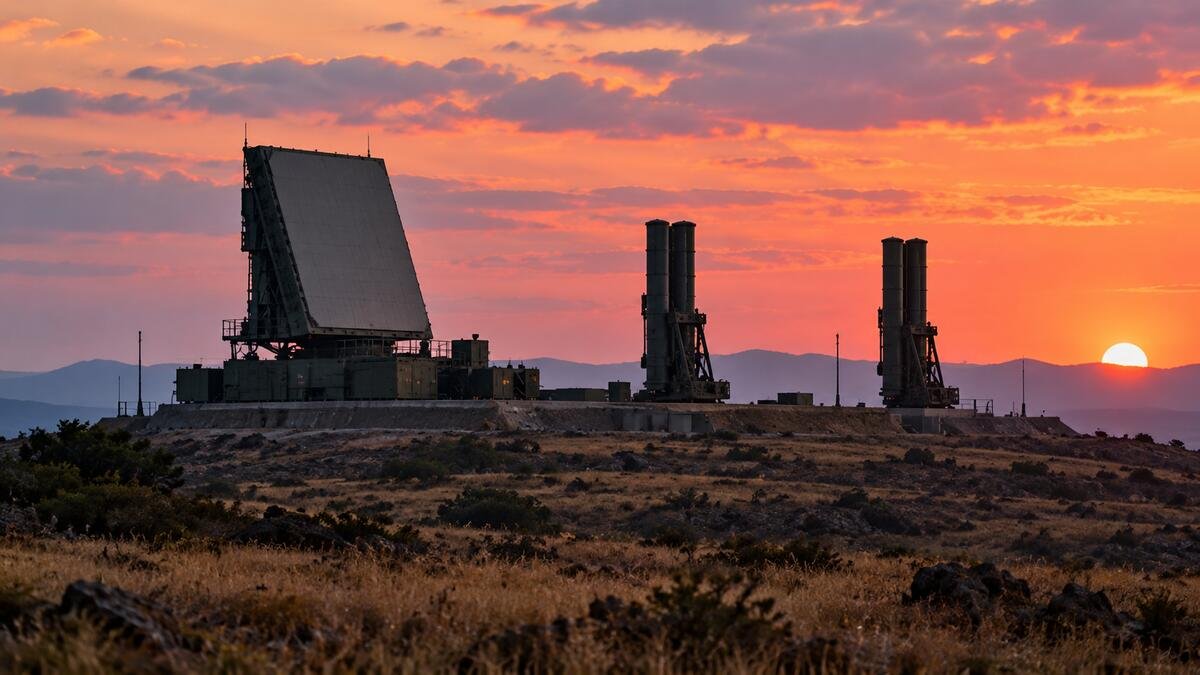
India’s offensive programs are usually the focus of attention, but the country is also developing defences. On June 10 and 11, 2026, DRDO tested two interceptors, the AD-1 and the AD-2, as part of its Phase-2 ballistic missile defence program, according to Naval News.
The AD-1 is an endo-atmospheric, short-range missile that engages within the atmosphere, and the AD-2 is exo-atmospheric with a longer range. Together, they are meant to form layers against long-range ballistic missiles, a design logic explained in Can Hypersonic Missiles Be Intercepted? Defence Systems, Technology, and Limits of Current Capability.
The same reporting covers other short-range tests that month, including a Rudram-2 anti-radar missile launched from a Su-30MKI on June 2. They widen India’s options below the strategic level, but the defensive tests matter more to this argument because offense and defence shape each other.
Missile defence needs early warning and tracking that reach beyond the interceptor’s own radar, and a layered strike force needs targeting data that arrives quickly enough to be useful.
India’s investments in those supporting layers are less visible than its launches, and public evidence of them is limited. The article on Tracking Hypersonic Missiles from Space: The Sensor Architecture Reshaping Missile Defense explains why the sensor layer is often the deciding factor for both sides in a missile competition.
Pakistan and China Create Different Missile Requirements
India’s missile decisions are made against two neighbors, and the balance looks different against each. Against Pakistan, the competition is over speed, dispersal, and conventional strike below the nuclear level.
Pakistan announced the creation of an Army Rocket Force Command in 2025, and on May 14, 2026, that command conducted a training fire of the Fatah-IV, a 750-kilometer ground-launched cruise missile, according to the military’s media wing, as reported by Dawn, the Express Tribune and The Week.
The statement described the launch as validating technical parameters of subsystems, which makes it a training fire and not a fielding announcement.
Pakistan also claims that its Ababeel missile carries multiple warheads. MP-IDSA, an Indian government-funded institute, notes that independent verification is limited and that some analysts have questioned the success and maturity of the program, so the claim should be stated as a claim. The 2025 crisis has also raised the stakes of the relationship.
SIPRI’s Yearbook, as quoted in reporting on it, describes Operation Sindoor as the most significant India-Pakistan armed conflict in decades and notes that India struck air and missile bases assessed to have nuclear missions, a detail that raises the risk in any future conflict.
Against China, the question is reach and survivability rather than local escalation. SIPRI’s estimates put China at about 620 warheads, with 34 deployed, against India’s 190 and 12, and India cannot answer that asymmetry with numbers. It has to rely on missiles that can reach targets deep inside a very large country and survive long enough to do so.
The IISS analysis of the Agni-Prime makes the geography concrete: it judges that a missile base in India’s high northeast, close to China, almost certainly houses the intermediate-range Agni-III, whose longer range lets India hold more of China’s territory at risk from that location.
That is the setting in which mobility, canisters and multiple warheads become strategically meaningful. India’s Defence Minister said the May 2026 test adds capability against “growing threat perceptions” and did not name a country.
Analysts commonly connect multiple warheads to the problem of missile defences, but the public record on Chinese defences is thin, so the link to China is an inference about intent and not a demonstrated requirement. Reporting on the SIPRI Yearbook adds that China and India may both have begun, on occasion, to deploy warheads on high operational alert, which would mark a shift in posture for both countries.
None of this makes the China balance a contest India is close to winning on numbers, and no Indian official claims that. The more realistic aim is a deterrent that an opponent cannot confidently disarm.
The wider force comparison is covered in China’s Military Modernization: Force Structure, Technology, and Strategic Ambition and in The Indo-Pacific Military Balance: US, China, and the Regional Powers, and India’s space-based capabilities form part of the same picture in India’s Mission Shakti and the ASAT Balance in the Indo-Pacific.
What the 2026 Testing Cycle Reveals About Priorities
The testing record for 2026 is best read as a pattern rather than a calendar.
In the same twelve months, India’s research organization ground-tested a hypersonic engine component, displayed a hypersonic glide missile, flew a multiple-warhead Agni, and tested two layers of ballistic missile defence, while an Air Force fighter fired a new anti-radar missile.
Strategic delivery, hypersonics, conventional strike, and defence are all being funded and flown at once, which suggests a program with broad backing and several tracks moving together.
A second feature of the pattern is how little detail accompanies it.
The Ministry’s releases typically confirm that objectives were met and little more, and public understanding is often shaped by airspace warnings issued before a launch. Those warnings produced the Agni-6 speculation in May, and warnings issued for further tests in September led to similar guesses.
This article does not treat the September warnings as completed events, because I found no official confirmation of what was launched. A warning shows that a launch was planned, not what happened.
The third feature is the distance between testing and induction.
Tests show that a technology can work, but induction depends on production lines, trained units, supporting sensors, and command arrangements that rarely appear in a press release.
India’s own officials are careful about dates, with Kamat describing some short-range systems as nearing induction and the hypersonic glide missile as awaiting initial trials. The tempo of testing tells us about intent and funding. It does not tell us how much of the force is ready to use.
Strategic Implications: A Force Whose Credibility Depends on What Others Can Verify
India’s missile modernization changes the regional balance mainly by improving survivability and complicating an opponent’s planning, not by adding raw numbers.
Canisterized, rail-mobile missiles are harder to find, multiple warheads are harder to defend against, and standoff cruise missiles give India conventional options short of crossing a nuclear threshold.
Those are real gains, and they follow directly from the doctrine India has held since 2003. But deterrence works through what an opponent believes, and belief depends on evidence.
Two acknowledged multiple-warhead tests, an unconfirmed count of warheads per missile, a hypersonic missile with two known flights, and a deployed-warhead count that is an outside estimate all leave room for doubt in both directions.
Some of that ambiguity serves India, because an adversary cannot be sure of the limits. Some of it costs India, because a claim that cannot be checked is easier to dismiss.
The most useful signals to watch are the ones that reduce ambiguity: whether the Ministry publishes user-trial results with more detail, whether the LRAShM completes further announced flights, whether a government decision on Agni-VI arrives, and whether SIPRI’s next Yearbook confirms or revises the deployed count.
In a field where each side controls most of what the public sees, independent assessment and consistent official reporting remain the best guides to what has actually changed.
Frequently Asked Questions
What is India’s longest-range missile, and how far can it reach?
The longest-range missile India has publicly tested in the Agni series is the Agni-5, first flown on April 19, 2012. It is commonly described as a three-stage solid-fuel missile with a range of about 5,000 to 5,500 kilometers, although the Ministry of Defence has officially labeled it an Intermediate Range Ballistic Missile. A version described as “Advanced Agni” was tested with multiple warheads on May 8, 2026. The Ministry did not give its range, and reports that it was an Agni-6 with a 12,000-kilometer range were not confirmed by any official statement. On April 30, 2026, DRDO’s chairman said the Agni-VI program awaits a government decision.
Does India have MIRV technology, and is it deployed?
India has publicly tested multiple-warhead technology twice on Agni missiles: on March 11, 2024, under Mission Divyastra, and on May 8, 2026, with the Advanced Agni. The Ministry of Defence said both flights released multiple payloads toward different targets. What India has not said is how many warheads these missiles carry, how many are in service, or whether the technology has been fielded operationally. Two tests just over two years apart demonstrate that the technology works in flight, but they do not by themselves show a deployed force, and independent analysts consistently separate those two claims.
How many nuclear warheads does India have?
The Stockholm International Peace Research Institute estimated in its 2026 Yearbook that India had about 190 nuclear warheads as of January 2026, up slightly from the previous year. Of those, SIPRI estimates that 12 were deployed, the first time it has placed any Indian warheads in that category, linking the change to a possible deployment on a ballistic missile submarine on patrol. SIPRI attaches an uncertainty caveat to the figure, and India does not publish warhead numbers. For comparison, the same Yearbook estimates about 170 for Pakistan and about 620 for China.
Is India’s hypersonic missile operational?
Not according to the public record. The LRAShM, a hypersonic glide missile for anti-ship use, was shown at the Republic Day parade on January 26, 2026, and a dummy model was shown at the parade, with the Ministry’s 2024 release describing a range greater than 1,500 kilometers. Naval News counts two known flight tests, the most recent announced on November 16, 2024, and DRDO’s chairman said in April 2026 that initial trials were expected soon. No source I found describes it as inducted or operational, and India’s hypersonic cruise missile program is at an earlier stage, with a scramjet engine component ground-tested for more than 12 minutes in January 2026.
What did the BrahMos missile do in Operation Sindoor?
During Operation Sindoor in May 2025, India used BrahMos and European SCALP-EG cruise missiles against Pakistani military targets, according to the Stimson Center’s assessment, and Pakistan’s prime minister has publicly said BrahMos missiles were used against bases including Rawalpindi. The Indian Air Force named air bases including Rafiqui, Murid, Chaklala, Rahim Yar Khan, Sukkur and Chunian as targets engaged with air-launched precision weapons. Combat use shows that the weapon entered operational service, but it does not establish effectiveness. The wider results of the conflict are disputed: both countries reported losses differently, India has not given an aircraft loss figure, and claims about what led to the May 10 ceasefire differ between India, Pakistan and the United States.
Sources and References
Ministry of Defence, Government of India, Press Information Bureau, “Successful flight test of Agni-5 with Multiple Independently Targetable Re-entry Vehicle technology under Mission Divyastra,” March 11, 2024.
Ministry of Defence, Government of India, Press Information Bureau, “India conducts successful flight trial of Advanced Agni missile with MIRV system,” May 9, 2026.
Ministry of Defence, Government of India, Press Information Bureau, “Successful test-firing of Agni 5 Intermediate Range Ballistic Missile,” August 20, 2025.
Stockholm International Peace Research Institute — SIPRI Yearbook 2026, World Nuclear Forces, June 2026.
International Institute for Strategic Studies — Missile Dialogue Initiative, “On track: India’s rail-based Agni-Prime,” 2026.
Manohar Parrikar Institute for Defence Studies and Analyses (MP-IDSA) — “India Tests Agni-5 with MIRV Capability,” May 2026.
Stimson Center — “Four Days in May: The India-Pakistan Crisis of 2025,” 2025.
Ministry of External Affairs, Government of India — Weekly Media Briefing transcript, May 13, 2025.
Naval News — “India showcases first Hypersonic Anti-Ship Missile System in national parade,” January 29, 2026.
Naval News — “India Conducts Spate of Tests for Anti-Ship, Land Attack, BMD and Hypersonic Ground Attack Missiles,” June 2026.
Naval News — “India Conducts Maiden Tests of Long Range Hypersonic and Subsonic Naval Missiles,” November 2024.
The War Zone — “India’s New Hypersonic Anti-Ship Missile Shown Off During Military Parade,” January 26, 2026.
ANI — coverage of DRDO Chairman Samir Kamat at the National Security Summit, April 30, 2026.
The Week — “DRDO conducts extended long-duration ground test of scramjet combustor,” January 9, 2026.
Dawn — “Pakistan successfully test fires Fatah-IV cruise missile: ISPR,” May 14, 2026.
Dawn — coverage of Pakistan’s Army Rocket Force Command, August 2025.
The Tribune — coverage of Operation Sindoor air strikes, the Pakistani prime minister’s statement on BrahMos strikes, and the May 10, 2025 ceasefire.
The Week — “Pakistan’s strike power continues to grow with another precision missile; Army Rocket Force Command tests Fatah-IV,” May 14, 2026.
Related Analysis
For the global comparison of countries fielding hypersonic weapons, read Countries With Operational Hypersonic Missiles: Global Status 2026.
For the wider strategic setting in which India’s missile decisions are made, read The Indo-Pacific Military Balance: US, China, and the Regional Powers.
For India’s satellite and anti-satellite capabilities, read India’s Mission Shakti and the ASAT Balance in the Indo-Pacific.
For how small nuclear forces stay credible, read Nuclear Deterrence in the Space Age: How Orbital Warfare Is Changing the Calculus.
For how missile defences work against the fastest threats, read Can Hypersonic Missiles Be Intercepted? Defense Systems, Technology, and Limits of Current Capability.
