


Analysis · StrikeOrbit | 2026
The question that has defined hypersonic weapons development since Russia first used the Kinzhal in combat in Ukraine in March 2022 is not whether hypersonic missiles can be built — they clearly can, as discussed in depth in Countries With Operational Hypersonic Missiles in 2026.
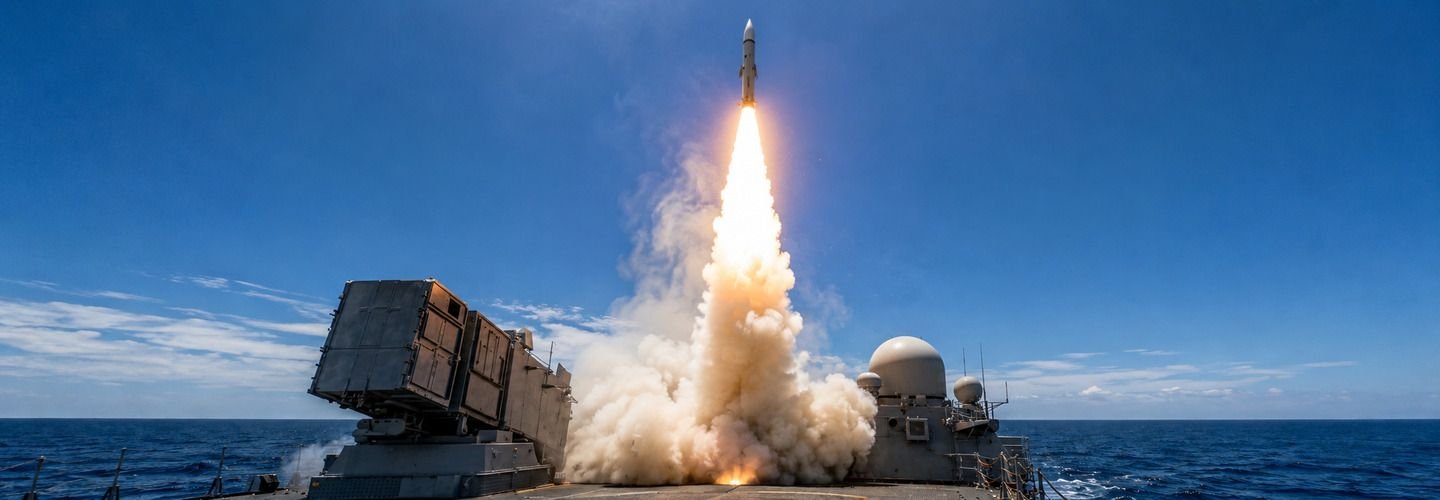
The question that defense planners, governments, and military strategists across the world are now urgently attempting to answer is whether hypersonic missiles can be stopped. The operational record so far is mixed, sobering, and more nuanced than either side of the debate typically acknowledges.
Ukraine’s Patriot PAC-3 battery achieved the first confirmed interception of a Kinzhal hypersonic missile in May 2023 — a single data point that simultaneously proved that hypersonic missiles are not physically impossible to intercept and confirmed that intercepting them requires the most capable air defense systems available to NATO, operated at the edge of their design parameters.
Iran’s Fattah-2 hypersonic missile evaded multiple Israeli air defense systems, including Iron Dome and Barak-8 interceptors, in March 2026, striking its target despite attempts to intercept it with systems that were not designed for the engagement geometry that hypersonic glide vehicles create. Both data points are accurate. Both are simultaneously true.
Together, they define the current state of hypersonic missile defense: technically possible under specific conditions, but operationally insufficient against the full range of threats posed by current hypersonic arsenals.
The fundamental challenge of hypersonic interception is not simply speed, though speed is a serious complicating factor at Mach 5 and above. It is the combination of speed, unpredictable maneuvering, and atmospheric flight profile that together create a detection, tracking, and intercept geometry that existing air defense systems were not designed to solve.
To understand why these flight characteristics were deliberately engineered, see Hypersonic Weapons in 2026: The Real Global Strike Balance, which examines how speed, maneuverability, and trajectory combine to reshape long-range strike capabilities.
Understanding why requires understanding the physics of the problem — and the specific solutions that the United States, Europe, Israel, and others are now racing to field before hypersonic arsenals in China, Russia, North Korea, and Iran expand further.
For an overview of which countries currently field operational hypersonic weapons and how their arsenals compare, see Countries With Operational Hypersonic Missiles in 2026.
Why Hypersonic Missiles Are Harder to Intercept Than Ballistic Missiles
Traditional ballistic missiles follow a predictable, computable trajectory. They are launched on a ballistic arc that carries them high into space — some as high as 1,000 kilometers above Earth during their midcourse phase — before re-entering the atmosphere and descending toward their target.
That predictable arc is what makes them interceptable: once a radar detects the launch and computes the trajectory, an interceptor can be positioned on a calculated intercept course. The physics are demanding but tractable.
Ground-Based Midcourse Defense, THAAD, Patriot PAC-3, and Aegis SM-3 were all designed around this fundamental geometry.
Hypersonic glide vehicles break this geometry in three specific ways that compound each other.
They separate from their rocket boosters at high altitude and glide unpredictably through the atmosphere rather than following a ballistic arc — spending their entire flight in the 30 to 60 kilometer altitude band that sits below the coverage ceiling of space-based midcourse interceptors and above the effective engagement envelope of terminal-phase systems like Patriot.
They maneuver continuously rather than following a predictable path — a Chinese research paper published in March 2026 found that intercepting a wedge-shaped hypersonic glider requires the interceptor to achieve two to three times the lateral acceleration of the target, because the glider can flip and execute sharp terminal dives that require constant real-time adjustments to any intercept solution.
And they reduce the warning time available to defenders — a hypersonic missile travelling at Mach 8 crossing a ground-based radar’s horizon arrives at its target in minutes, not the tens of minutes that ballistic trajectory tracking provides.
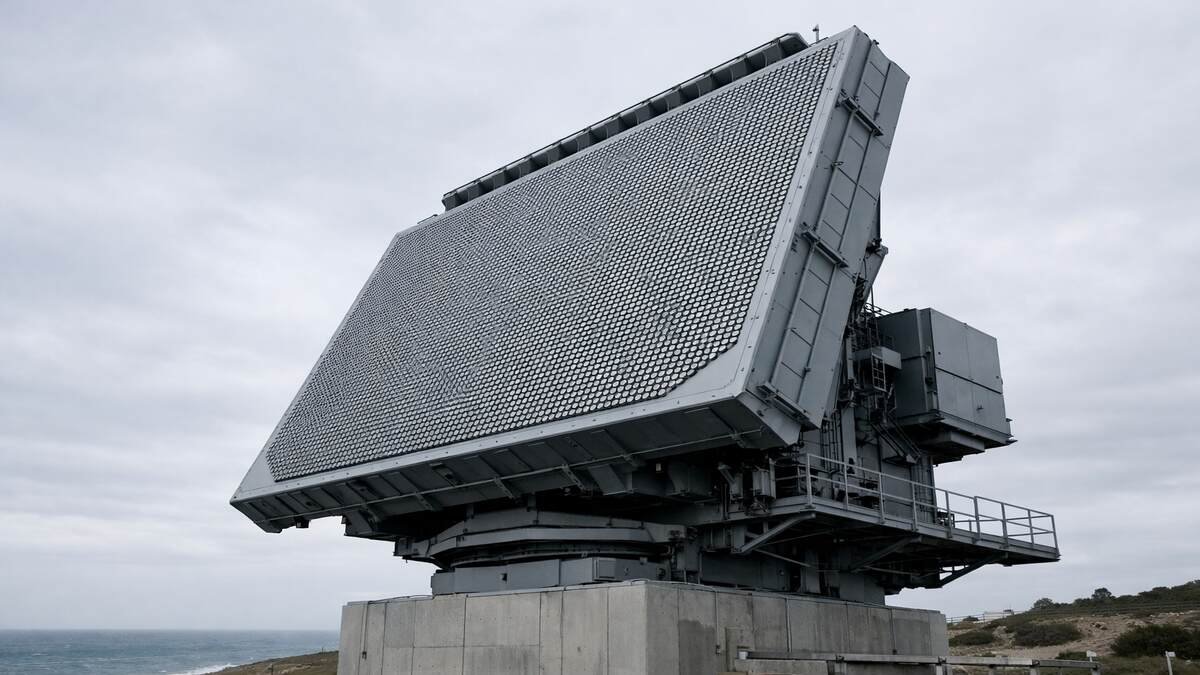
Northrop Grumman’s description of the tracking problem is precise and honest: a surface radar’s horizon is limited by the curvature of the Earth, and a low-flying hypersonic travelling at Mach 5 or higher will not cross that horizon until it is too late for current weapons to generate and execute an intercept.
Even if a satellite detects a hypersonic threat at launch, tracking it continuously through its glide phase — especially amid multiple simultaneous launches designed to overwhelm defensive systems — requires a sensor architecture that does not yet exist at operational scale.
The space-based early warning architecture that provides the first layer of hypersonic detection is examined in Missile Warning Satellites and Early Warning Systems Explained, where infrared launch detection and missile tracking networks are discussed in detail.
Maintaining continuous custody of maneuvering hypersonic weapons also depends on the orbital tracking network examined in Space Situational Awareness: Tracking and Securing the Orbital Domain.
The 44-interceptor Ground-Based Midcourse Defense system, the current backbone of US homeland defense, was designed for rogue-state ballistic missile threats and cannot reliably distinguish a warhead from its decoys even against limited peer-level strikes, according to a 2025 report by the American Physical Society.
The Three Phases of Hypersonic Flight and Where Interception Is Theoretically Possible
Understanding when hypersonic missiles can be intercepted requires mapping the engagement opportunities against the three distinct phases of hypersonic flight, because the physics of each phase creates fundamentally different intercept geometries with different system requirements and different probability of kill.
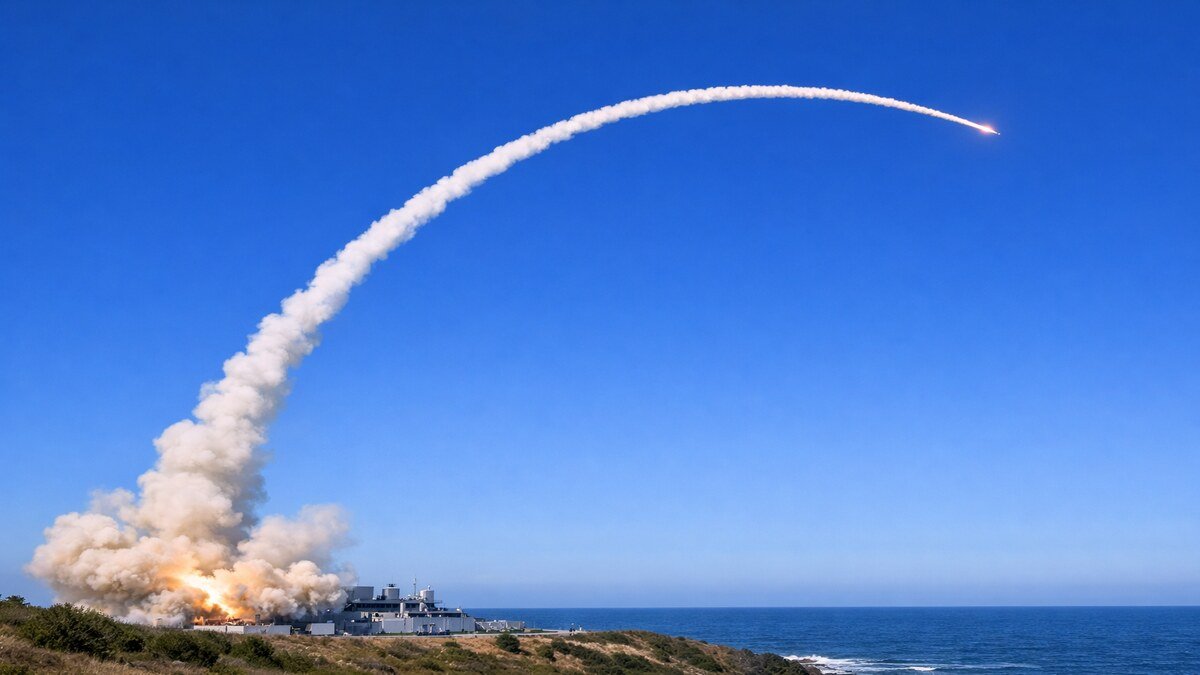
Boost phase — the period immediately after launch when the rocket booster is still burning and carrying the vehicle upward — is theoretically the most attractive intercept window.
The missile is still climbing, predictable, radiating heat strongly enough for infrared sensors to track, and has not yet released its glide vehicle.
Boost-phase interception could, in principle, destroy the weapon before it reaches hypersonic speed. The operational reality is that the boost phase lasts only two to five minutes, requires interceptors to be positioned within a few hundred kilometers of the launch site at the moment of launch, and means that effective boost-phase defense against a peer adversary would require forward-basing interceptors on or near adversary territory — a politically and operationally implausible requirement.
Golden Dome‘s space-based interceptor component is explicitly designed to solve this geometry problem from orbit.
The Congressional Budget Office’s May 2026 assessment placed the cost of the full architecture at $1.2 trillion over twenty years — a figure that reflects the scale of what solving it from orbit genuinely requires.
Glide phase — the extended atmospheric flight after booster separation — is where hypersonic glide vehicles are most vulnerable in a specific and important sense: they are maneuvering broadly, bleeding off heat, and can still be tracked well enough by advanced sensors to generate fire control solutions. This is precisely why the Glide Phase Interceptor is the Pentagon’s most urgent hypersonic defense priority.
An Aegis-compatible interceptor launched from a US Navy surface warship to engage the glide vehicle during this phase closes the specific capability gap that no current system adequately addresses.
MDA officials have been explicit: the glide phase is the window that existing interceptors miss entirely, and the GPI is designed specifically to exploit it.
The April 2026 contract modification lifting the program to over $1.3 billion and accelerating toward a June 2028 preliminary design review milestone reflects the institutional priority assigned to closing this gap before adversary hypersonic arsenals mature further.
Terminal phase — the final descent toward the target — is where current systems like Patriot PAC-3, THAAD, and SM-6 have their best theoretical engagement geometry. The hypersonic vehicle is approaching at high speed but within the radar coverage of ground-based terminal defense systems.
Ukraine’s Patriot interception of the Kinzhal in May 2023 occurred in the terminal phase.
The operational limitation is the engagement time available: at Mach 8, a hypersonic missile travels approximately 2.7 kilometers per second, leaving terminal defense batteries a matter of seconds to acquire, track, compute an intercept solution, and launch.
THAAD’s Build 5.0 upgrade, scheduled for operational status in July 2026, incorporates improved guidance algorithms, processing speed, and seeker software to incrementally improve this engagement window — but THAAD 5.0 still deploys the legacy Talon missile with fundamental kinematic constraints that cannot be fully overcome through software upgrades alone.
What Current Systems Can and Cannot Do
The operational performance record of existing systems against hypersonic threats provides a clearer picture of the current defense gap than program descriptions alone.
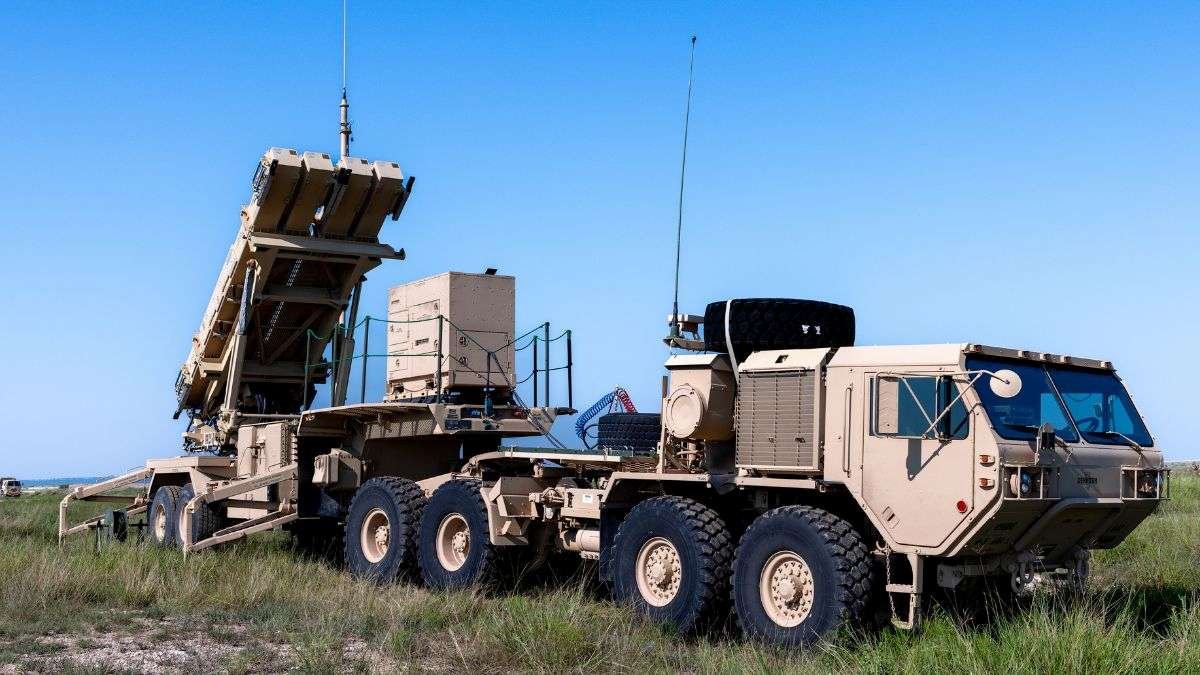
Patriot PAC-3 MSE is the most capable terminal-phase interceptor currently deployed at scale and the system that achieved the historic Kinzhal interception in Ukraine. Its capability against slower hypersonic cruise missiles and air-launched ballistic missiles operating in the Kinzhal’s flight regime is real.
Its performance against advanced hypersonic glide vehicles optimized to exploit terminal-phase engagement geometry — the class of threat China’s DF-17, DF-ZF, and Russia’s Avangard represent — is significantly more limited, because these systems are designed specifically to exploit the engagement timing and geometry constraints of terminal defense.
THAAD provides midrange terminal-phase defense at higher altitudes than Patriot, with a proven intercept record against ballistic threats in combat operations in the Middle East. Seven batteries are deployed globally, with an eighth expected in 2026.
The THAAD 4.0 software upgrade currently being fielded enables networking with PAC-3 MSE, allowing THAAD’s AN/TPY-2 radar to enhance Patriot’s targeting — a genuine force multiplier for layered defense.
THAAD 5.0 follows in July 2026. The system’s fundamental limitation against hypersonic glide vehicles is the same as Patriot’s: it was designed for ballistic trajectories, not for the unpredictable atmospheric maneuvering that glide vehicles execute.
The Army’s FY2027 budget request reinforced this expansion, seeking 857 new THAAD interceptors — a stockpiling scale that reflects Golden Dome’s broader logic of increasing raw interceptor inventory as the fastest available near-term improvement, even as the more transformative space-based and glide-phase layers remain years from operational status.
Aegis SM-6 in its Block IA configuration — the Increment 3 Sea-Based Terminal capability — achieved a simulated hypersonic intercept in the FTX-40 flight test on March 24, 2025, using a USS Pinckney-based system against a medium-range ballistic missile mounting a hypersonic test vehicle.
This is the most current confirmed test success against a hypersonic-class target for a currently fielded system, and it demonstrates that SM-6 with enhanced guidance electronics has genuine capability against some categories of hypersonic threat in the terminal phase.
The Glide Phase Interceptor is designed to complement rather than replace SM-6 by engaging threats earlier in their flight — before they enter the terminal geometry where SM-6 can potentially engage but engagement windows are extremely tight.
Northrop Grumman’s official Glide Phase Interceptor programme page documents the system’s fully digital development environment, Aegis compatibility, and modular open systems architecture—the technical foundation enabling the programme to accelerate toward its 2028 preliminary design review milestone.
The honest assessment across all three systems is the same: current American interceptors can potentially intercept some hypersonic missiles in some engagement geometries under some conditions. They cannot provide reliable, all-weather, all-aspect interception against the full range of hypersonic threats that Russia and China currently field at scale. That gap is the strategic driver behind every program described above.
The Glide Phase Interceptor and Golden Dome — The American Strategic Response
The United States’ response to the hypersonic interception gap is built around two interrelated programs that together represent the most significant restructuring of American missile defense since the Cold War.
The Glide Phase Interceptor is the specific system designed to close the glide-phase engagement gap.
Northrop Grumman was selected as prime contractor in 2024.
The April 2026 contract modification lifted the program’s value above $1.3 billion — including a $475 million injection from the 2025 reconciliation bill — accelerated progress toward a June 2028 preliminary design review milestone, and aligned the system with Aegis launch infrastructure already deployed across the US Navy’s surface combatant fleet.
Japan is a formal development partner, leading rocket motor and propulsion component development, with US-Japan cooperation formalized in May 2024. Initial operational capability is now targeted for 2029 — a four- to five-year improvement over the previous 2035 baseline driven by the combination of additional funding and congressional pressure to accelerate.
The GPI’s Aegis compatibility is strategically important: it allows the interceptor to deploy on existing Burke-class destroyers without requiring new ship infrastructure, extending hypersonic defense coverage across the Pacific and Atlantic approaches to North America using existing naval assets.
Golden Dome is the broader homeland missile defense architecture within which GPI is one component.
Because much of Golden Dome’s architecture depends upon persistent space-based sensing and interception, it also reflects the broader military competition examined in What Is Orbital Warfare? How Space Became a Contested Military Domain.
Announced by President Trump’s January 2025 executive order and formally progressed at a Pentagon showcase on April 23, 2026, the program envisions a layered architecture combining space-based sensors, space-based interceptors, ground-based interceptors including Next Generation Interceptor, THAAD, and Patriot, Aegis sea-based systems, and the GPI as the hypersonic-specific layer.
The FY2027 defense budget requested $17.9 billion for initial deployment.
The CBO’s May 2026 estimate of $1.2 trillion over twenty years reflects both the genuine complexity of the problem and the political difficulty of sustaining multi-decade defense investment at these levels through multiple administrations and budget cycles.
The strategic logic of Golden Dome’s emphasis on boost-phase intercept deserves specific attention.
Intercepting a missile during its boost phase — before it releases maneuvering warheads or glide vehicles, before it reaches hypersonic speed, and before it can deploy decoys — solves many of the tracking and intercept geometry problems that make glide-phase and terminal-phase interception so demanding.
Space-based interceptors positioned in orbits providing persistent coverage of adversary launch sites could, in principle, engage threats within minutes of launch. The operational and cost challenges are equally immense — but the architectural logic is sound, and it represents the most significant departure from Cold War missile defense concepts that arms control agreements effectively foreclosed for decades.
The program has moved from architecture to early execution since that estimate was published.
The Pentagon has allocated $3.2 billion toward space-based interceptor prototypes from four vendors — Anduril, Lockheed Martin, Northrop Grumman, and True Anomaly — with initial ground and flight testing scheduled before the end of 2026 and orbital demonstrations planned for 2027.
Golden Dome’s director, General Michael Guetlein, told the Space and Missile Defense Symposium in August 2026 that contractors had passed an initial feasibility milestone, but emphasized that no decision to actually produce operational space-based interceptors would be made until industry had demonstrated the concept works — a meaningful caveat given how much of the program’s total cost and strategic value depends on that specific layer succeeding.
In August 2026, the Army also assigned its first air defense unit to the Golden Dome mission specifically. However, the unit’s identity, home station, and equipment remain unconfirmed as integration testing begins.
Coordinating this layered missile defense architecture increasingly depends on artificial intelligence for sensor fusion, target tracking, and decision support, as discussed in Military AI and the Future of Warfare: Applications, Risks, and US-China Competition.

European and Israeli Programs Are Addressing the Gap Independently
The hypersonic interception problem is not being addressed only by the United States. European and Israeli programs reflect the same strategic recognition that existing air defense systems were designed for a threat environment that hypersonic weapons have fundamentally changed.
Europe’s HYDIS2 program under OCCAR — the Organization for Joint Armament Cooperation — is the European response to the pressing need for an endoatmospheric interceptor against hypersonic threats.
Eleven initial interceptor concepts were down-selected to six promising designs as of June 2025, with an Initial Concept Review scheduled for October 2025 selecting the top two for further development.
MBDA’s Aquila interceptor concept is among the contenders. The program’s in-service target is 2035 — reflecting both the genuine development timeline required and the urgency that Russia’s demonstrated hypersonic capability has created for European NATO members who cannot rely on American GPI deployment timelines alone.
Israel’s Rafael Advanced Defense Systems unveiled the SkySonic interceptor in 2023, designed specifically to match the maneuverability and speed of hypersonic weapons flying at Mach 5 to Mach 10.
SkySonic’s two-stage design — a solid-fuel booster and a rocket-powered kill vehicle — is intended to engage ballistic missiles, hypersonic cruise missiles, and hypersonic glide vehicles across the full spectrum of current and projected hypersonic threats.
Israel’s operational experience in 2026, including the Fattah-2 intercept failures, provides precisely the threat environment data that drives SkySonic’s development requirements — making the Israeli program both more urgent and more practically informed than programs developed in the absence of real operational data.
The Deterrence Question That Interception Cannot Fully Answer
The development of effective hypersonic interception capability raises a strategic question that goes beyond the technical performance of any specific system: what happens to the strategic logic of hypersonic weapons if they can be reliably intercepted?
The interaction between missile defense, strategic stability, and nuclear deterrence is explored further in Nuclear Deterrence in the Space Age: How Orbital Warfare Is Changing the Calculus.
Russia and China have invested in hypersonic weapons specifically because their speed, altitude, and maneuvering combine to defeat the missile defense systems that previously neutralized ballistic missiles as strategic tools.
The Avangard is explicitly described by Russian doctrine as a system designed to defeat American missile defense infrastructure. If American missile defense evolves to reliably intercept hypersonic glide vehicles, the strategic logic justifying the enormous investment in these systems is undermined — creating an incentive to develop the next generation of penetrating capability rather than accepting that existing hypersonic systems have been neutralized.
Both Russia and China have publicly characterized US missile defense expansion as strategically destabilizing — arguing that a homeland shield capable of intercepting retaliatory strikes reduces the credibility of their nuclear deterrents and creates an asymmetric incentive to expand offensive arsenals to overwhelm any defensive system.
China’s rapid ICBM expansion, including road-mobile missiles and fractional orbit bombardment systems, tracks directly with this logic.
Russia’s investment in further hypersonic development is explicitly framed as maintaining penetration capability against American missile defense.
Atlantic Council’s May 2026 assessment argued that Golden Dome represents a strategic necessity rather than a destabilizing provocation because the evolving threat environment of hypersonic glide vehicles, fractional orbit bombardment systems, and advanced cruise missiles has made the existing 44-interceptor Ground-Based Midcourse Defense architecture inadequate for the scale and sophistication of peer-level threats facing the United States.
The strategic competition between hypersonic offence and hypersonic defense is locked in the same action-reaction dynamic that has characterized offensive-defensive arms competition throughout the nuclear age — meaning that improved interception capability incentivizes improved penetration capability rather than producing a stable deterrence equilibrium.
Conclusion
Hypersonic missiles can be intercepted — the evidence from Ukraine proves that.
They cannot currently be intercepted reliably, comprehensively, or cost-effectively against the full range of threats that Russia and China field — the evidence from every serious technical assessment, including the American Physical Society, the Congressional Budget Office, and the Chinese research community, confirms that.
The gap between those two statements is precisely the space in which billions of dollars in development investment, multiple competing interception programs across five countries, and the most consequential missile defense decisions of the current generation are all operating simultaneously.
The space infrastructure underpinning both the offensive hypersonic threat and the defensive response is inseparable from this competition — as discussed in Missile Warning Satellites and Early Warning Systems Explained and in the tracking architecture discussed throughout StrikeOrbit‘s Space and Orbital Warfare analysis.
The Hypersonic and Ballistic Tracking Space Sensor, the Space Development Agency’s tracking layer, and the space-based interceptor component of Golden Dome are all expressions of the same recognition: that solving the hypersonic interception problem from the ground up is geometrically limited, and that the sensor and interceptor coverage required to close the gap must extend into orbit.
The Glide Phase Interceptor is expected to reach initial operational capability by 2029.
THAAD Build 5.0 is deploying in July 2026.
SM-6 Block IA has demonstrated hypersonic intercept capability in testing.
Golden Dome is moving from concept to funded programme.
These are real steps forward from a position of recognised inadequacy. The question of whether they will be sufficient — against adversary hypersonic arsenals that are simultaneously maturing, expanding, and being specifically redesigned to defeat whatever interception capability is fielded — is the most consequential open question in contemporary missile defense planning.
Ultimately, the race between hypersonic strike systems and missile defense reflects the broader geopolitical competition analyzed in Great Power Competition and the New Global Order, where military innovation increasingly shapes international power balances.
Frequently Asked Questions
Can hypersonic missiles be intercepted by current defense systems?
Yes, under specific conditions — but not reliably against the full range of current hypersonic threats. Ukraine’s Patriot PAC-3 achieved the first confirmed interception of a Russian Kinzhal hypersonic missile in May 2023, demonstrating that interception is physically possible. However, Iran’s Fattah-2 evaded multiple Israeli air defense systems, including Iron Dome and Barak-8, in March 2026. Current systems, including Patriot, THAAD, and SM-6, were designed for ballistic missile trajectories rather than the unpredictable maneuvering glide flight profiles used by advanced hypersonic glide vehicles. The United States is developing the Glide Phase Interceptor specifically to close this gap, with initial operational capability targeted for 2029.
What makes hypersonic missiles so difficult to intercept?
Three factors combine to create the interception challenge. Speed — at Mach 5 and above, the warning time between radar detection and impact is compressed to seconds rather than minutes. Altitude — hypersonic glide vehicles fly in the 30 to 60 kilometer band below space-based midcourse interceptors and above the optimal engagement envelope of terminal systems. And manoeuvring — hypersonic glide vehicles continuously alter course during flight, requiring any interceptor to achieve two to three times the lateral acceleration of the target to maintain an intercept solution. No current deployed system was designed to address all three challenges simultaneously, which is the central driver behind the Glide Phase Interceptor program.
What is the Glide Phase Interceptor and when will it be ready?
The Glide Phase Interceptor is a dedicated anti-hypersonic weapon being developed by Northrop Grumman for the US Missile Defense Agency, designed to engage hypersonic glide vehicles during their glide phase — the extended atmospheric flight after booster separation where targets are most trackable but where no current interceptor can engage effectively. The program received a $475 million funding injection in April 2026, raising its total value above $1.3 billion, and is targeting a June 2028 preliminary design review milestone with initial operational capability by 2029. Japan is a formal development partner. The GPI is fully compatible with the Aegis weapon system deployed on existing US Navy surface combatants, allowing deployment across the Pacific without requiring new ship infrastructure.
What is Golden Dome and how does it relate to hypersonic defense?
Golden Dome for America is a comprehensive US homeland missile defense architecture announced in President Trump’s January 2025 executive order, designed to defend against ballistic missiles, hypersonic weapons, cruise missiles, and fractional orbit bombardment systems. Its May 2026 Congressional Budget Office assessment placed the cost at $1.2 trillion over twenty years, with an FY2027 budget request of $17.9 billion for initial deployment. The architecture combines space-based sensors and interceptors, ground-based interceptors including Next Generation Interceptor, THAAD, Patriot, and Aegis sea-based systems, with the Glide Phase Interceptor as the specific hypersonic defense layer. Golden Dome’s emphasis on boost-phase intercept reflects the recognition that glide-phase and terminal-phase interception face fundamental geometric constraints that only space-based coverage can fully resolve. As of August 2026, the program had moved into early testing: $3.2 billion has been allocated to space-based interceptor prototypes from four vendors, with initial tests planned before the end of 2026 and orbital demonstrations in 2027, though officials have been clear that a decision to produce operational interceptors will wait until feasibility is actually demonstrated.
How are Russia and China responding to US hypersonic defense development?
Both states have publicly characterised US missile defense expansion as strategically destabilising, arguing that a reliable homeland shield undermines the credibility of their nuclear deterrents by potentially intercepting retaliatory strikes — creating an asymmetric incentive to expand offensive arsenals to overwhelm any defensive system. China’s rapid ICBM expansion, including road-mobile missiles and fractional-orbit bombardment systems, directly aligns with this logic. Russia’s investment in Avangard and further hypersonic development is explicitly framed as maintaining penetration capability against American missile defense. The strategic competition between hypersonic offence and hypersonic defense is locked in the same action-reaction dynamic that has characterised offensive-defensive arms competition throughout the nuclear age.
Sources and References
Missile Defense Agency — Glide Phase Interceptor Program Overview (April 2026)
Army Recognition — US Speeds Up $1.3B Glide Phase Interceptor for Early Hypersonic Missile Intercept Capability (April 2026)
Congressional Budget Office — Golden Dome for America Cost Assessment (May 2026)
Atlantic Council — Golden Dome Is the Missile Defense the US Needs (May 2026)
European Security and Defense — Hypersonic Weapon Interceptor Developments (September 2025)
Aerospace Global News — Can US Missile Defense Intercept Iran’s Fattah-2 Hypersonic Weapons? (March 2026)
Northrop Grumman — Glide Phase Interceptor Program (2026)
Arms Control Association — Current US Missile Defense Programs at a Glance (2025)
Congressional Research Service — Hypersonic Weapons: Background and Issues for Congress (2025)
American Physical Society — Ground-Based Midcourse Defense Assessment (2025)
The Defense Watch — Golden Dome Missile Defense Pentagon Progress in 2026 (April 2026)
Air and Space Forces Magazine — Extra Funding Puts Hypersonic Interceptor Program Back on Track (April 2026)
Breaking Defense — Space-Based Interceptor Contractors Passed First Golden Dome Milestone: Guetlein (August 2026)
Army Recognition — US Defense Department Plans First Golden Dome Space Interceptor Tests Before End of 2026 (August 2026)
Army Recognition — US Army Assigns First Air Defense Unit to Golden Dome Missile Defense Mission (August 2026)
The National Interest — Golden Dome Preparations? The US Army Is Stocking Up on THAAD Missiles (June 2026)
Related Analysis
For analysis of which countries currently possess operational hypersonic missiles and what their capabilities represent, read Countries With Operational Hypersonic Missiles in 2026.
For analysis of the missile warning satellite architecture that provides the early detection foundation any hypersonic interception system depends on, read Missile Warning Satellites and Early Warning Systems Explained.
For analysis of hypersonic weapons in the broader context of the global strike balance and strategic competition, read Hypersonic Weapons and the Emerging Global Strike Balance.
For analysis of the space-based tracking infrastructure being developed to address the hypersonic detection gap, read Space Situational Awareness: Tracking and Securing the Orbital Domain.
For analysis of nuclear deterrence in the space age and how hypersonic weapons are changing the strategic calculus, read Nuclear Deterrence in the Space Age: How Orbital Warfare Is Changing the Calculus.
