


Analysis · StrikeOrbit | 2026
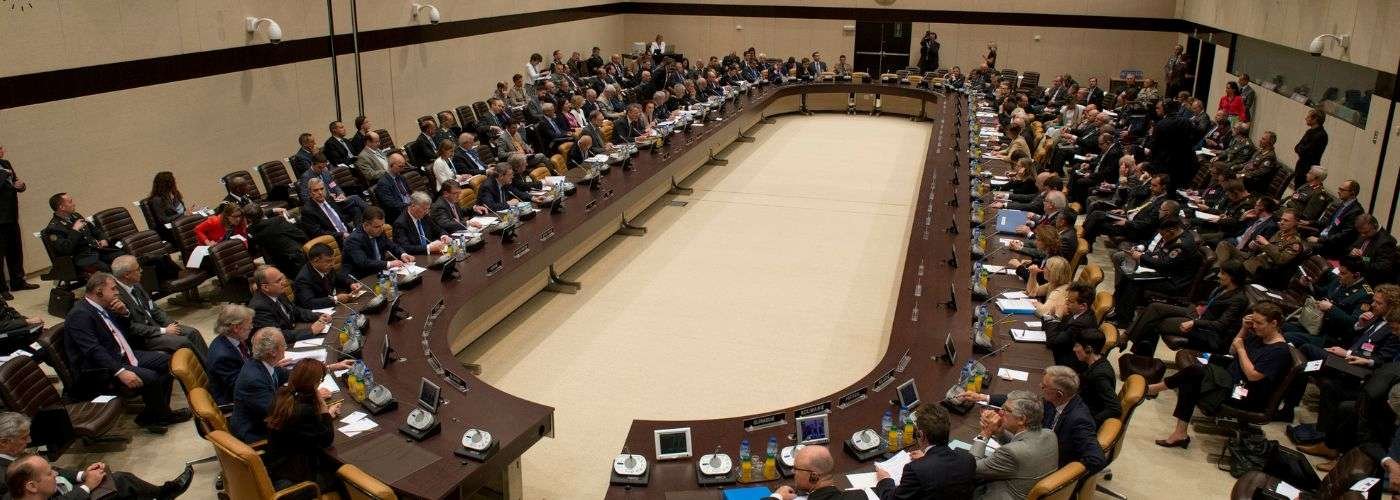
On July 7 and 8, 2026, NATO leaders gathered in Ankara for a summit unlike any in the alliance’s history. Not because the threats NATO faces are unprecedented, though the convergence of Russian aggression, Chinese military expansion, and the erosion of arms control frameworks would each individually constitute the most serious security challenge of a generation.
The Ankara summit was historic because, for the first time since the Washington Treaty was signed in 1949, the question being asked in allied capitals was not how to strengthen the alliance but whether the alliance’s central bargain — American military power extended across the Atlantic in exchange for collective defense commitments — could survive the political conditions now shaping American strategic priorities.
The summit’s actual outcome was, by most assessments, more reassuring than the uncertainty preceding it suggested.
All 32 allies reaffirmed Article 5 and NATO’s 360-degree approach to collective defense, announced more than $50 billion in new joint procurements, and pledged €70 billion in military support to Ukraine for 2026 with sovereign commitments to sustain equivalent levels in 2027.
Secretary General Mark Rutte declared that total defense and security spending had already reached roughly 4 percent of GDP alliance-wide, just one year into the ten-year push toward 5 percent. Notably, the closing communiqué did not commit to holding a summit in 2027, a small but telling sign that not all uncertainties were resolved.
NATO has survived seventy-six years of crises, disagreements, and near-ruptures — including France’s withdrawal from the integrated command structure, the burden-sharing controversies of the Cold War, and the post-Cold War identity crisis that followed the Soviet collapse.
The institutional logic underpinning the alliance has proven durable through every previous stress test: that a credible collective defense guarantee deters aggression more effectively than any arrangement of independent national deterrents.
The question confronting Ankara is whether that logic survives the stress test of an era in which American strategic attention has shifted structurally toward the Indo-Pacific, and in which the Article 5 commitment itself has been explicitly conditioned in ways no previous administration in the alliance’s history has attempted.
Understanding what is actually changing, and what is not, is where the most consequential decisions about European security for the next generation will be made.
The challenge is therefore not simply measuring NATO’s military strength but assessing whether its political cohesion, industrial capacity, and strategic priorities are adapting quickly enough to support that strength in an increasingly contested international environment.
As analyzed in Great Power Competition and the New Global Order, the broader context of great power competition defines the strategic environment in which NATO must now function — not as a Cold War relic but as the primary institutional mechanism through which the democratic world organizes its collective response to the revisionist challenge that Russia and China together represent.
The Hague Committed NATO to Its Most Significant Defense Investment Pledge in Generations
The June 2025 NATO Summit in The Hague produced the most concrete and consequential collective defense commitment the alliance has made in decades.
Thirty-two allied heads of state and government agreed to invest a minimum of 5 percent of GDP annually on core defense requirements and defense-related spending by 2035 — more than doubling the previous 2 percent target that itself had only been universally met for the first time in 2025, eleven years after it was agreed at the 2014 Wales Summit.
The commitment is structured in two tiers: a minimum of 3.5 percent of GDP for core military expenditure — personnel, operations, equipment, and maintenance — and up to 1.5 percent for defense-related spending encompassing cyber defense, critical infrastructure protection, civil preparedness, and defense industrial resilience.
The scale of what was agreed is hard to grasp in institutional terms. NATO Secretary General Mark Rutte described it as a transformational leap.
Meeting the 5 percent target across all 32 member states requires an additional $1.9 trillion in annual allied defense spending compared to current levels.
European allies and Canada collectively increased their defense spending by 20 percent between 2024 and 2025 alone, bringing the combined total to over $574 billion. For the first time since the alliance’s founding, all 32 members simultaneously met or exceeded the 2 percent baseline target in 2025 — a milestone that would have been almost unimaginable in 2016 when only five allies met it.
The political context producing this commitment matters as much as the commitment itself.
The summit took place against a backdrop of genuine uncertainty about American strategic priorities — with Washington making explicit demands for European allies to assume dramatically greater responsibility for their own defense, signals that American force posture in Europe would be reduced, and warnings that Article 5 commitments might be conditioned on allied compliance with spending and procurement demands.
European leaders calculated, correctly, that delivering a headline spending commitment was the most reliable mechanism for buying continued American engagement at the moment when that engagement appeared most uncertain.
The Peterson Institute for International Economics noted that the political significance of the 5 percent target may ultimately exceed its practical implementation value unless allied spending commitments are translated into deployable military capability.
Whether a spending pledge made under political pressure will produce the actual capabilities the alliance needs is the central implementation question that the Ankara summit will begin to address.
Transforming higher defense spending into genuine military capability depends on the broader modernization trends explored in Military Modernization in the 21st Century: Precision Strike, Autonomy, and Network-Centric Warfare, where the relationship between investment, technology, and operational effectiveness is examined in greater detail.
The May 2026 US Troop Drawdown From Germany Changed the Political Atmosphere
The fragile political equilibrium that The Hague produced was disrupted within eleven months.
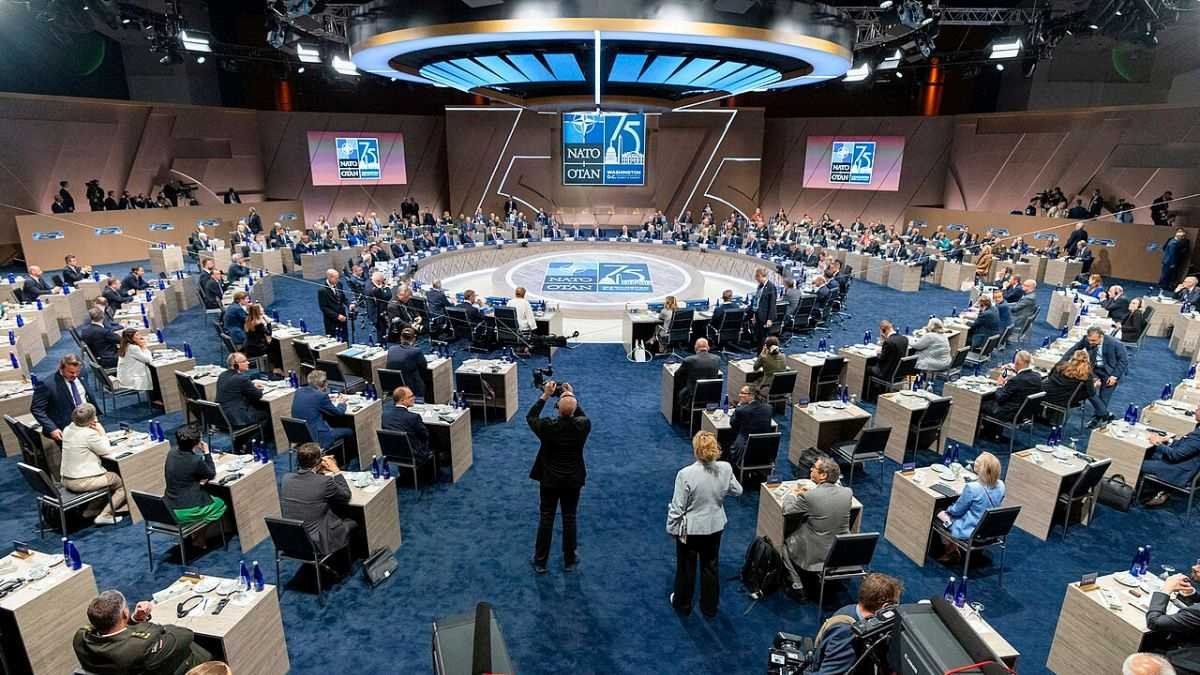
On May 1, 2026, the Pentagon announced the withdrawal of approximately 5,000 US troops from Germany — reducing American combat presence from four brigade combat teams to three — directly linked to bilateral tensions over German criticism of US military action against Iran.
NATO’s spokesperson described the announcement as highlighting the need for Europe to assume a greater share of responsibility for shared security — language that was diplomatically careful but unmistakably acknowledged vulnerability. EU High Representative Kaja Kallas called the announcement surprising while using it to reinforce a point that had been building for months: Europe must do more, faster, on its own terms.
The drawdown is partial, and the United States is not abandoning its European presence — Germany will remain the central node of American military infrastructure on the continent, and the nuclear extended deterrence guarantee has not been called into question. But the political signal reflects something larger than a single bilateral disagreement.
Three structural factors now distinguish the current American strategic posture from all previous periods of burden-sharing friction: bipartisan consensus that China is the primary long-term strategic competitor, explicit questioning of unconditional Article 5 commitments by American officials, and concrete force posture adjustments reflecting Indo-Pacific prioritization in the 2026 National Defense Strategy.
Together, these suggest structural rather than cyclical change in American strategic orientation — a shift in where American military power is directed that will persist regardless of which administration is in office, driven by the underlying logic of great power competition with China rather than by any particular political moment.
For European defense planners, this is the central challenge. Previous warnings about American disengagement proved premature across multiple decades.
The present convergence of strategic, doctrinal, and political signals is different in character, and hedging against its consequences has become the organizing principle of European defense investment rather than a marginal theoretical concern.
Germany’s Rearmament Is the Most Consequential European Defense Development Since the Cold War
Germany’s response to this new strategic reality is the most significant transformation of European security since German reunification in 1990.
Chancellor Friedrich Merz‘s government has undertaken a constitutional change removing the borrowing limit for defense spending, approved a budget with multibillion-euro investments in armor, artillery, air defense, ammunition production, and modernization, and publicly committed to Germany becoming the strongest conventional army in Europe by the end of the decade — a goal that would have been politically inconceivable before 2022 given Germany’s postwar constitutional culture of strategic restraint.
These conventional procurement programs also exist alongside growing investment in long-range precision-strike capabilities, examined in Hypersonic Weapons in 2026: The Real Global Strike Balance, which are increasingly influencing NATO’s future deterrence posture.
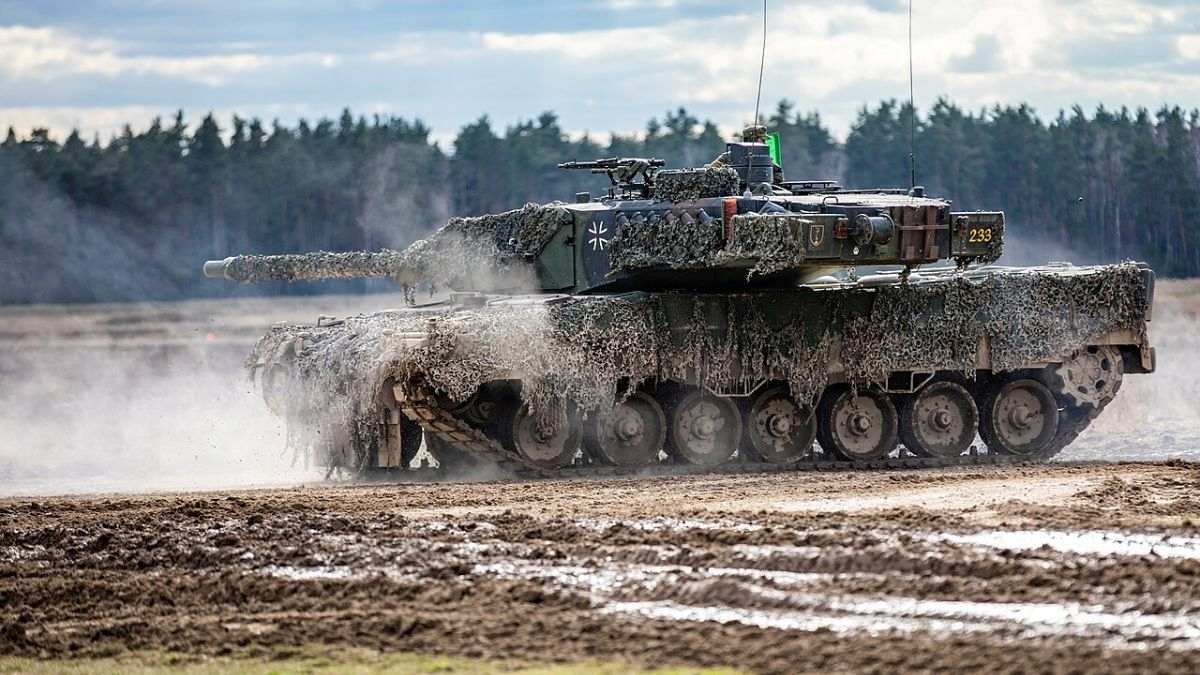
The scale of German procurement is without peacetime precedent in the Federal Republic’s history. Several hundred upgraded Leopard 2 tanks. Up to 5,000 Boxer armored personnel carriers in multiple configurations.
€70.3 billion specifically allocated for ammunition production — a figure reflecting the lessons learned from Ukraine about the scale of consumption in high-intensity conventional conflict.
A first defense strategy published in April 2026 explicitly names Russia as the central threat, mentioning it seventeen times, and frames German rearmament in terms of providing the Bundeswehr with meaningful capability to contribute to NATO collective defense rather than simply maintaining a minimal defense posture.
A March 2026 assessment by Small Wars Journal argued that Germany’s military transformation will play a central role in shaping Europe’s future defense posture as Berlin expands investment in conventional military capability after decades of strategic restraint.
The limitations are real and acknowledged.
The April 2026 defense strategy has drawn criticism from defense analysts for underweighting the new-paradigm capabilities — autonomous systems, AI-supported reconnaissance and fire control, drone defense, and electronic warfare — that Ukraine has demonstrated are decisive in modern high-intensity conflict.
Germany continues to allocate a relatively small and declining share of its procurement budget to these categories compared to Poland, which has increased its budget allocation to new-paradigm weapons eightfold since 2020, or the United Kingdom, which has more than doubled its spending on these capabilities in absolute terms.
Germany’s conventional rearmament is real and significant — its new-paradigm transformation remains incomplete.
Germany’s procurement choices also create tension with European strategic autonomy ambitions.
Approximately 92 percent of its $83 billion annual procurement budget is directed toward national or European programs — the F127 frigate, Eurofighter Tranche 5, IRIS-T SLM — but its acquisition of American F-35 fighters reinforces precisely the technology dependency that France and others argue must be reduced if Europe is to have genuinely autonomous defense capability.
These are not merely industrial policy questions — they reflect incompatible strategic visions about whether European defense autonomy means building capability independent of American platforms or building capability integrated with American platforms within a rebalanced transatlantic relationship.
European Strategic Autonomy Is Being Built Incrementally Rather Than Architecturally
The concept of European strategic autonomy — Europe’s ability to act independently in defense and security without requiring American leadership or permission — has moved from a French doctrinal ambition to a practical imperative shared across the alliance’s European membership.
The strategic shock of discovering that American commitments could be conditioned on political compliance rather than treaty obligation has converted theoretical support for greater European defense independence into concrete policy across governments of very different strategic traditions.
The practical reality is that European strategic autonomy is being assembled through dozens of overlapping bilateral and multilateral frameworks rather than through a single coherent institutional design.
France’s nuclear deterrent — the only fully sovereign European nuclear capability — has been offered as a potential extended deterrence contribution to European partners, though the French doctrine of absolute decision-making autonomy makes formalizing this within NATO structures problematic.
The Joint Expeditionary Force, led by the United Kingdom, provides a northern European expeditionary framework outside EU structures.
NORDEFCO provides Nordic-Baltic defense cooperation. Poland and the Baltic states, facing the most immediate Russian threat, are building defense capabilities at the fastest pace in Europe — Poland at 4.7 percent of GDP, Estonia and Lithuania among the first allies to publicly commit to the 5 percent target — and are generally skeptical of EU-led frameworks that dilute American integration rather than adding to it.
The European defense industrial base is the most acute structural constraint on this aspiration.
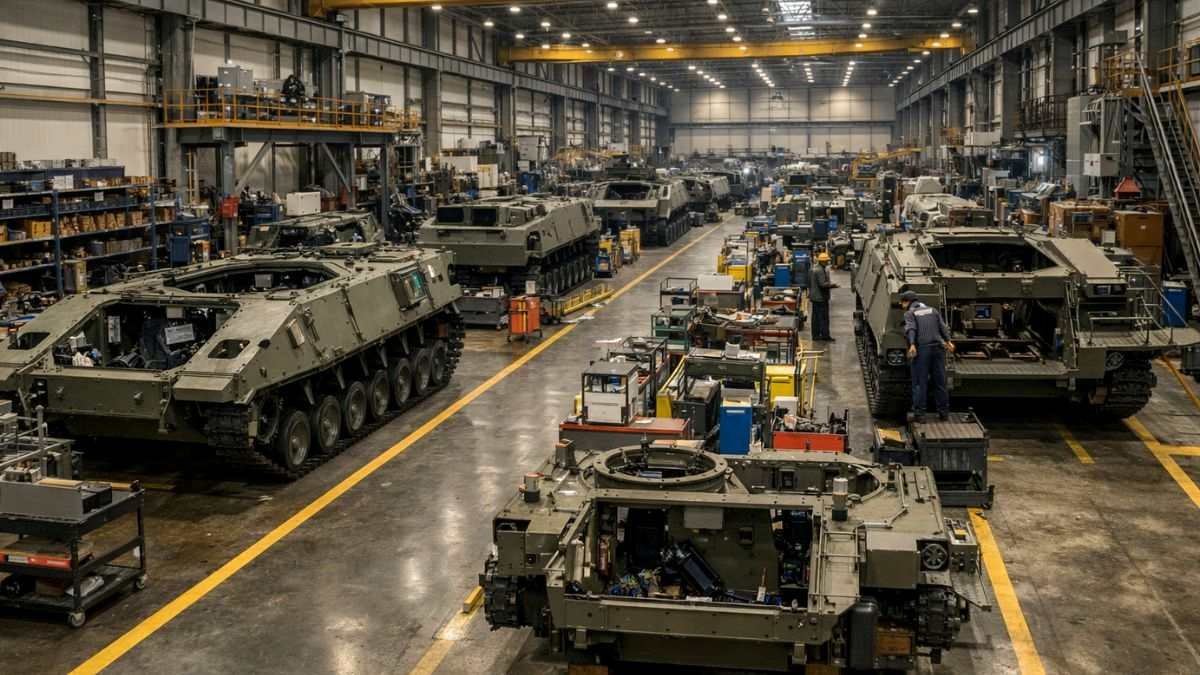
Europe’s ability to manufacture the systems it needs at the pace and scale credible deterrence requires is genuinely limited — as demonstrated by the price inflation that accelerating procurement has already produced.
Artillery shells that cost $2,000 before 2022 now exceed $8,000.
Leopard 2 tanks sold in October 2024 at $23 million were sold again in February 2025 at $30 million. Without pooled procurement, integrated industrial investment, and common standards, the $1.9 trillion in additional spending the 5 percent pledge requires risks of producing inflation rather than capability.
A May 2026 analysis by Bruegel also noted that European states have significantly increased purchases through US Foreign Military Sales programs since 2020, reinforcing dependence on American defense suppliers, at the same time European governments are attempting to strengthen indigenous industrial capacity.
This is the most consequential economic challenge in European defense today, and it does not yet have an institutional solution adequate to its scale.
The debate therefore extends beyond defense spending alone. It increasingly concerns whether Europe can generate the industrial scale, technological innovation, and procurement coordination required to transform financial commitments into credible long-term military capability.
The Ankara Summit Is Defined by NATO’s Turkey Paradox
The July 2026 Ankara summit adds a dimension to these already complex dynamics that would be challenging under any circumstances: it is being hosted by the alliance’s most strategically valuable and politically contested member.
Ahead of the summit, analysts at the European Policy Centre highlighted burden-sharing, transatlantic cohesion, and the future direction of European defense as central themes likely to shape discussions in Ankara.
Turkey presents NATO with what analysts at West Point’s Modern War Institute have called an enduring paradox — it fields the alliance’s second-largest army, its geography places it at the intersection of the Black Sea, eastern Mediterranean, Middle East, and Caucasus, and its recent Steadfast Dart 2026 exercise demonstrated a genuine ability to rapidly deploy joint forces to the Baltic region.
It is also the ally that most consistently uses NATO’s consensus procedures as leverage for bilateral demands, has maintained energy and economic relationships with Russia through the invasion of Ukraine, and whose acquisition of Russian S-400 air defense systems prompted American suspension of Turkey’s F-35 participation.
Turkey’s strategic calculus is shifting. Turkish Foreign Minister Hakan Fidan has described transatlantic ties as a strategic necessity and called the Ankara summit a historic opportunity to reaffirm NATO unity.
Turkey has been progressively distancing itself from Moscow — reducing energy dependence on Russian supply, pruning economic and defense ties, and delivering pro-alliance messaging in the months leading to the summit.
Foreign Affairs analysts assess that Turkey’s realignment reflects Ankara’s recognition that it is in a stronger position to pursue its interests when working with the United States and Europe than in opposition to them — and that Turkey’s defense industry, which depends on Western technology and financing, cannot genuinely sustain itself on Russian partnership alone.
Turkey’s own agenda for the Ankara summit extends beyond bilateral rehabilitation.
Ankara is pressing for European security architecture to be conceived more broadly than an EU members-only project — specifically for closer cooperation between NATO’s EU members and its non-EU members, including Turkey, the United Kingdom, and Norway.
From Turkey’s perspective, European security requires the full alliance rather than an EU subset of it, and the Ankara summit is an opportunity to institutionalize that broader conception before European strategic autonomy debates calcify into EU-centric frameworks that formally marginalize Turkey’s contribution.
The summit validated much of this calculus. Turkish officials framed the gathering domestically as a diplomatic triumph and a demonstration of Ankara’s ability to extract results from its allies while preserving strategic autonomy — even though Pew Research polling in 2026 found Turkish public opinion of NATO among the least favorable of any member state, with 59 percent holding an unfavorable view.
The gap between elite diplomatic success and public ambivalence is itself a data point about how fragile the domestic political foundations of alliance cohesion can be, even in a member state whose government is actively working to demonstrate value to Washington and Brussels.
The Three Tensions NATO Cannot Resolve Through Declaration Alone
The fundamental strategic challenge that Ankara will illuminate without resolving is that NATO currently contains three structural tensions that spending pledges and summit communiqués can manage but cannot eliminate.
The first is geographic divergence in threat perception.
For Poland, Estonia, Latvia, and Lithuania, Russia represents an existential immediate threat requiring overwhelming conventional deterrence with unambiguous American involvement — making any reduction in American commitment not merely uncomfortable but strategically catastrophic.
For France, Italy, and southern European members, the primary security concerns include migration, terrorism, energy security, and economic coercion — threats for which expensive conventional rearmament seems disproportionate.
These are not policy disagreements resolvable through negotiation — they reflect fundamentally different security realities rooted in geography and history, and they will produce different capability priorities regardless of what any summit communiqué says.
The second is the contradiction between European strategic autonomy and the transatlantic interdependence on which allied deterrence actually rests.
The European capability needed to substitute for reduced American engagement does not exist yet and will not exist within the 2035 timeframe of the spending pledge — meaning European strategic autonomy is simultaneously more necessary than ever and further from realization than allied public rhetoric suggests.
The defense industrial infrastructure, the strategic enablers, the command architecture, and the political unity required all represent gaps that spending commitments identify but cannot close on their own.
Many of these capability gaps increasingly extend into the space domain, where satellite communications, positioning, intelligence, and missile warning systems have become integral to alliance operations, as explored in What Is Orbital Warfare? How Space Became a Contested Military Domain.
The third is the question of what NATO does about Ukraine.
Five years of Russian full-scale invasion have produced a situation in which Ukraine has demonstrated that conventional military capability, asymmetric adaptation, and Western technology can impose enormous costs on a major military power — but have not produced a political resolution or a clear allied consensus on the path from current conflict to durable European security.
Key NATO members hold genuinely divergent assessments of the Russian threat, adequate Ukrainian support, and what security architecture for Europe looks like after the conflict ends. These cannot be resolved by alliance consensus when allied governments hold fundamentally different views of the stakes involved.
Conclusion
NATO in July 2026 is an alliance simultaneously stronger and more uncertain than at any moment since the Cold War. Stronger because every ally for the first time meets the basic defense investment standard, because European military capability is growing at its fastest pace in three generations, and because the shared recognition of Russian and Chinese threats has produced a degree of strategic alignment that would have seemed remarkable in 2020.
More uncertain because the American commitment that has underpinned allied deterrence for seventy-six years is now conditioned in ways no alliance document anticipated, because European capability cannot yet substitute for American engagement in any realistic conflict scenario, and because the alliance contains genuine divergences in threat perception that paper over rather than resolve.
The space and technology dimensions examined throughout StrikeOrbit‘s analysis are inseparable from NATO’s strategic future.
NATO’s increasing reliance on commercially operated satellite networks for communications, intelligence, and resilience is explored in Commercial Satellites as Military Infrastructure: Dependency, Control, and Strategic Risk.
The missile warning architecture underpinning NATO’s nuclear deterrence and strategic decision-making is examined further in Missile Warning Satellites and Early Warning Systems Explained.
The satellite communications enabling JADC2 operations, examined in JADC2 Explained: How the US Military’s Joint Command Network Works, and the electronic warfare contest in which the Kaliningrad corridor already affects NATO airspace, discussed in Electronic Warfare and the Future of the Electromagnetic Battlespace, together with the counterspace capabilities that can degrade allied military operations, analyzed in Anti-Satellite Weapons: Capabilities, Systems, and Strategic Implications — all of these determine the actual military capability behind the spending pledges Ankara reaffirmed.
The emerging generation of autonomous systems, AI-enabled command networks, and drone warfare that Autonomous Weapons and the Ethics of Lethal Autonomy and Military AI and the Future of Warfare: Applications, Risks, and US-China Competition examine directly will shape NATO’s operational capability at least as decisively as the conventional procurement programs dominating current European defense budgets.
Looking beyond the immediate summit, three structural trajectories are plausible for NATO over the coming decade.
In the first, a genuine renewal of transatlantic cohesion occurs — American strategic competition with China requires allied burden-sharing, Europe delivers on the 5 percent commitment in ways that produce real capability, and the alliance evolves into a more balanced partnership rather than an asymmetric dependency.
In the second, a progressive Europeanisation of collective defense takes hold — European capability grows sufficiently to sustain deterrence at a reduced level of American forward presence, and the alliance becomes a framework for coordinating European military power with residual American extended deterrence rather than a structure dependent on American conventional engagement.
In the third, fragmented management becomes the default — individual allies pursue bilateral arrangements, regional groupings substitute for collective planning, and the alliance’s formal structures persist while its operational coherence erodes.
Which trajectory prevails will be determined not by the Ankara summit declaration but by the procurement decisions, institutional investments, and political choices made in the decade between now and 2035.
For NATO, the coming decade is therefore less likely to be defined by whether the alliance survives than by how successfully it transforms. The credibility of collective defense will increasingly depend on the alliance’s ability to integrate new technologies, strengthen industrial resilience, maintain political cohesion, and adapt faster than the strategic environment around it.
An alliance that commits 5 percent of GDP but lacks the space resilience, electronic warfare competence, and integrated command architecture to operate effectively in a contested environment is no more secure than one that spends less but invests in the capabilities that modern conflict actually requires. That is the question the Ankara summit did not answer — its communiqué did not even commit the alliance to holding another summit in 2027 — but it is a question the decade ahead cannot avoid.
Frequently Asked Questions
What was decided at the 2025 NATO Summit at The Hague?
The June 2025 NATO Summit in The Hague produced NATO’s most significant collective defense commitment in decades. All 32 allies agreed to invest a minimum of 5 percent of GDP annually on core defense requirements and defense-related spending by 2035, structured as at least 3.5 percent for core military expenditure and up to 1.5 percent for defense-related areas including cyber, critical infrastructure, and industrial resilience. The commitment more than doubled the previous 2 percent target and was agreed in the context of sustained American pressure for European allies to assume dramatically greater responsibility for their own defense. Meeting the target requires an additional $1.9 trillion in annual allied spending — a figure that underlines both the ambition and the implementation challenge of what was agreed.
Why did the United States withdraw troops from Germany in May 2026?
The Pentagon announced on May 1, 2026, the withdrawal of approximately 5,000 US troops from Germany — reducing from four brigade combat teams to three — in a move directly linked to bilateral tensions over German criticism of US military action against Iran. Its political significance extends beyond the immediate trigger: it demonstrated that American force posture in Europe is now explicitly conditional on political alignment rather than a fixed strategic commitment. European defense planners have interpreted it as evidence that American disengagement from Europe reflects a structural shift in strategic priorities toward the Indo-Pacific — one driven by the long-term logic of great power competition with China rather than by any single bilateral dispute.
What is European strategic autonomy and why does it matter for NATO?
European strategic autonomy refers to Europe’s ability to act independently in defense and security — to deter, defend, and if necessary fight — without requiring American leadership or permission. It matters for NATO because the alliance’s current deterrence posture depends heavily on American capabilities — nuclear extended deterrence, intelligence, advanced strike systems, logistics — that Europe cannot yet replace. Building European capability sufficient to sustain deterrence even if American support were temporarily reduced or conditioned has become the central organizing principle of European defense policy, but the industrial and institutional infrastructure required does not yet exist at the scale needed, and the 5 percent spending pledge identifies the gap without providing the coordinated industrial and procurement strategy required to close it.
What is the significance of the 2026 NATO Summit being held in Ankara?
The Ankara summit, held July 7-8, 2026, placed NATO’s most strategically valuable and politically contested member at the center of alliance politics. Turkey fields the alliance’s second-largest army, and its geography spans the Black Sea, eastern Mediterranean, and Middle East. Turkey has also maintained relationships with Russia through the Ukraine invasion and was removed from the F-35 program over S-400 acquisition. The summit itself produced a reaffirmation of Article 5, more than $50 billion in new joint procurement announcements, and a €70 billion Ukraine support pledge for 2026 — outcomes that Turkish officials framed domestically as a diplomatic success, even as broader NATO-wide polling showed Turkish public opinion of the alliance among the least favorable of any member state.
Can NATO survive the current combination of threats to alliance cohesion?
The alliance has survived every previous stress test across seventy-six years. The current combination is structurally different in one important respect: previous American administrations questioned European burden-sharing while maintaining unambiguous commitment to collective defense. The current strategic environment combines bipartisan American consensus on China as the primary competitor, explicit conditioning of Article 5 on allied compliance, and concrete Indo-Pacific force posture adjustments — suggesting structural rather than cyclical change. NATO is not on the verge of collapse. But adapting to a strategic environment in which American engagement is increasingly conditioned rather than guaranteed — without losing the deterrence credibility that has underpinned European security for three generations — is the central challenge of the current decade.
Sources and References
NATO — The Hague Summit Declaration (June 2025)
NATO — Defense Expenditures and NATO’s 5% Commitment (April 2026)
NATO — Funding NATO: 2026 Common Funded Budgets (December 2025)
Atlantic Council — Experts React: NATO Allies Agreed to a 5 Percent Defense Spending Target (June 2025)
European Policy Centre — Countdown to the NATO Summit in Ankara: Challenges, Expectations, Goals (June 2026)
Modern War Institute, West Point — NATO’s Turkey Paradox (June 2026)
Bruegel — Europe’s Dependence on US Foreign Military Sales and What to Do About It (May 2026)
Bruegel — German Rearmament Under the Spotlight (June 2026)
Small Wars Journal — Germany’s Military Reawakening and the Future of European Security (March 2026)
Peterson Institute for International Economics ( PIIE ) — Trump’s Five Percent Doctrine and NATO Defense Spending (February 2025)
Foreign Affairs — Turkey’s Quiet Realignment: Russia’s Loss Is NATO’s Gain (June 2026)
Chatham House — Turkey Presses NATO’s EU Members to Broaden Their Horizons (June 2026)
NATO — Secretary General on the Ankara Summit: NATO Delivers (July 2026)
NATO — The Ankara Summit Declaration (July 2026)
Atlantic Council — Eleven Takeaways from the NATO Summit in Ankara (July 2026)
Pew Research Center — NATO Member Public Opinion Survey (2026)
Related Analysis
For analysis of the great power competition framework within which NATO’s current strategic challenges are embedded, read Great Power Competition and the New Global Order.
For analysis of the Indo-Pacific military balance and how American strategic prioritisation of China shapes US commitment to European security, read The Indo-Pacific Military Balance: US, China, and the Regional Powers.
For analysis of JADC2 and the integrated command architecture on which NATO’s operational military effectiveness depends, read JADC2 Explained: The US Military’s Joint Command Network.
For analysis of nuclear deterrence in the space age and how orbital warfare is changing the calculus underpinning NATO’s extended deterrence guarantee, read Nuclear Deterrence in the Space Age: How Orbital Warfare Is Changing the Calculus.
For analysis of electronic warfare and how the Kaliningrad corridor’s GPS spoofing is already affecting NATO member state airspace, read Electronic Warfare and the Future of the Electromagnetic Battlespace.
