


Analysis · StrikeOrbit | 2026
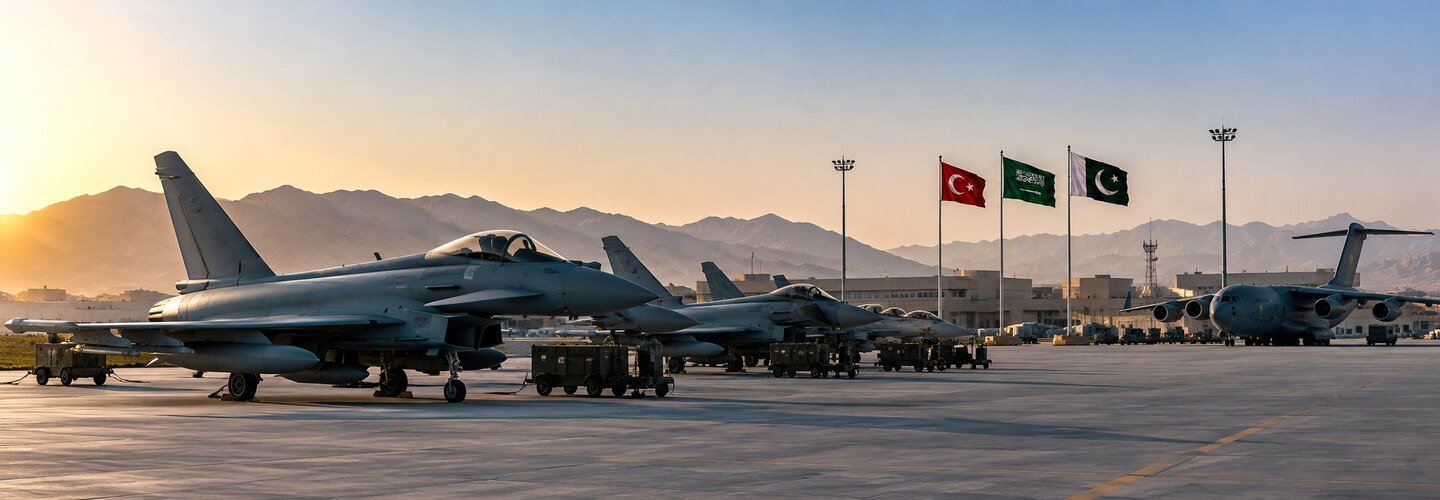
The Mecca defense pact is a mutual-defense agreement signed on August 7, 2026, by Saudi Arabia, Pakistan and Turkey, under which an armed attack on one of the three is to be treated as an attack on all. Its full text has not been published, no joint command has been announced, and Turkey’s parliament has not yet ratified it.
On October 5, the three states’ senior committee decided to “move immediately to the practical implementation of the collective defense commitments,” and in the days since, Yemen’s Houthi movement has carried out deadly attacks on Riyadh’s airport, which is the first public test of what the pact can and cannot do.
Official documents and many news reports use the spellings Makkah and defense, so the same agreement also appears as the Makkah Joint Defense Agreement, the Mecca Defense Alliance, the Makkah Alliance for Defense, and the Mecca pact. This article uses one set of spellings and treats them as a single agreement. It separates what governments have confirmed, what officials have said without documents, and what analysts only expect.
The questions that matter are practical ones. Why did these three states sign? Why now, who drove it, why not more members, what each side actually contributes, how Israel, India, Iran, and the United States read it, and how it could fail. The status below is as of October 14, 2026, drawing on reporting through October 14.
The Mecca Defense Pact Is a Mutual-Defense Agreement Whose Text Remains Unpublished
The agreement was signed in Mecca on August 7, 2026, and Al Jazeera’s coverage names Saudi Crown Prince Mohammed bin Salman, Turkish President Recep Tayyip Erdoğan and Pakistani Prime Minister Shehbaz Sharif as its principal figures.
The Pakistani Foreign Ministry’s release, as quoted by GlobalSecurity.org, says any armed attack against one of the three “shall be regarded as an attack against them all.” The stated aims are stronger deterrence and closer defense cooperation, and the principle that an attack on one is an attack on all is as close as the pact has to a public motto.
The Institute for National Security Studies (INSS) in Tel Aviv states that the full text has not been released and that media reports describe a mutual-defense clause.
GlobalSecurity.org lists what remains undisclosed: the duration, ratification requirements, withdrawal provisions, geographic scope, how new members join, the command and consultation machinery, and whether any duty to respond exists beyond consultation. The comparison to NATO’s Article 5 is an analyst’s shorthand and not a description of the text.
The governments have also said what the pact is not. INSS notes that official statements describe it as “not directed against any actor,” and Turkish Parliament Speaker Numan Kurtulmuş said on September 25 that Turkey never sees it as “a pact against Iran.” Those statements describe intent and not constraint, and they sit uneasily beside an October decision to send forces to defend Saudi territory against an Iran-aligned group.
Each Government Wanted Something Different, and the Timing Reflects Three Pressures
For Saudi Arabia, the immediate problem is missiles and drones from Yemen, and the longer-term problem is how far to rely on one guarantor. Andreas Krieg of King’s College London, quoted by Al Jazeera, argues that American power “remains indispensable” but that Riyadh wants “more strategic depth.”
Karen Elliott House, in a Belfer Center roundup, reads the pact as another Saudi effort to hedge against dependence on an “increasingly erratic” American president while arguing that only the United States can truly protect the kingdom from Iran.
Pakistan and Turkey gain different things. Julia Sochacka of the Polish Institute of International Affairs (PISM) assesses that Pakistan gains a Saudi partner and a counterweight to India-Israel ties, while Turkey gains a larger regional security role, and INSS notes that Saudi investment could expand Turkey’s defense industry and arms exports.
Three pressures explain the timing.
The first is an existing foundation: Riyadh and Islamabad signed a Strategic Mutual Defense Agreement in September 2025, and GlobalSecurity.org, summarizing Reuters, reports that talks toward the trilateral pact ran for nearly a year.
The second is the regional war environment, including the US-Israel war with Iran and doubts about American staying power, which PISM links to reports of a possible US drawdown from the Gulf and frames as filling a gap and not opposing Washington.
The third is Yemen: the 2022 truce collapsed in July after Houthi attacks on Saudi vessels, according to Middle East Eye, and Abdulaziz Alghashian of the Gulf International Forum told Al Jazeera that the Houthi attacks “really hastened the Mecca alliance.”
Timing does not prove cause. The governments describe the pact as building on longstanding ties, and no record of the negotiations has been published.
The Public Record Does Not Establish Who First Proposed the Pact, and Membership Reflects Choices as Well as Capabilities
The public leaders are clear, because Al Jazeera’s report of the August 31 Istanbul meeting lists the delegations: Ishaq Dar, Asim Munir and Khawaja Asif for Pakistan, Hakan Fidan, Yaşar Güler and Selçuk Bayraktaroğlu for Turkey, and Faisal bin Farhan, Khalid bin Salman and Fayyadh al-Ruwaili for Saudi Arabia. The identity of the person who first proposed the arrangement is not public.
Pakistan’s National Assembly Speaker, in an August 8 release, called the agreement an achievement of Prime Minister Sharif while crediting the Crown Prince and Erdoğan with leading the initiative alongside him, which is credit-claiming and not proof of origin.
The visible institutional choices are that the secretariat sits in Riyadh and the first secretary-general is Pakistani, giving Saudi Arabia the host role and Pakistan the first administrative role.
The three states offer complementary strengths, a useful frame but not a formal allocation of roles. Rabia Akhtar, in the Belfer roundup, says each member contributes distinct strengths and calls the pact an experiment in middle-power cooperation, not an “Islamic NATO.” Fidan has called the three the “core countries” and said the alliance is open to others.
Egypt is the obvious question. Fidan has called Egypt a “natural partner” and said a few technical issues remain, while Al Jazeera reported that Egypt’s foreign minister says Cairo is still weighing legal questions. An anonymous report that Saudi Arabia opposed Egypt’s inclusion has not been confirmed by Riyadh, so it should be read as a claim and not a finding.
PISM names Egypt as a leading candidate but notes its economic troubles and UAE ties may keep it out; Qatar and Bahrain have shown interest, while Bangladesh has signaled interest, according to Al Jazeera.
The United Arab Emirates is absent, and INSS flags that as a sign of regional divisions. Absence is not hostility, however: Middle East Eye reports that Saudi Arabia hosted UAE Vice President Mansour bin Zayed the week before the October 5 decision to show unity against the Houthis.
A separate four-country grouping of Turkey, Egypt, Pakistan, and Saudi Arabia issued joint statements on September 22 and October 11, but those statements do not mention the pact, and Egypt’s participation in them is not membership in it.
From Signing to Implementation, the Pact Faces Its First Public Test
On August 31, the three foreign and defense ministers and military chiefs met in Istanbul, named the arrangement the Mecca Defense Alliance and began work through the Strategic Political and Defense Committee.
Fidan said a secretariat had been set up in Riyadh with a Pakistani first secretary-general. The agenda covered interoperability, joint exercises, defense-industrial cooperation and counterterrorism, and Al Jazeera recorded the agenda but no specific decisions.
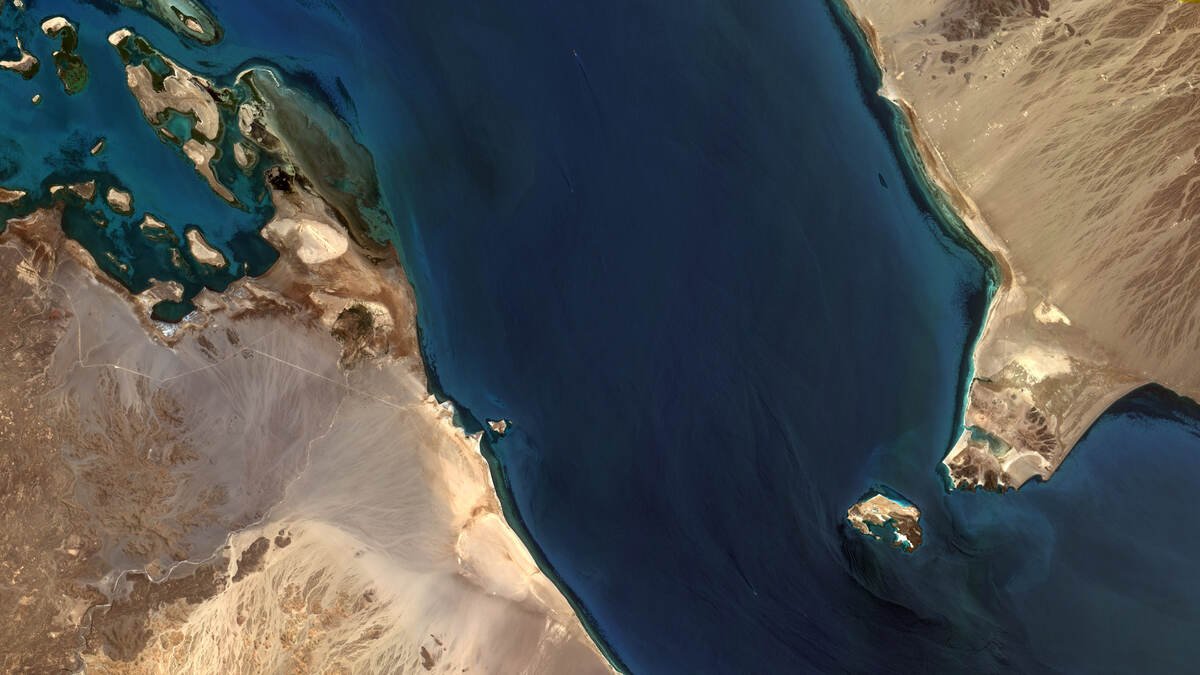
The trigger was Yemen. The Houthis fired missiles toward Saudi Arabia in early September and later launched an offensive down the Red Sea coast, and on October 5 the Yemeni government launched a Saudi-backed counteroffensive. The committee met in an emergency session in Riyadh the same day, and Khalid bin Salman wrote that it “agreed to activate collective deterrence measures, within the framework of the Alliance.”
Al Jazeera reported that a joint statement from Pakistan’s Foreign Ministry said the three would “provide the agreed military forces and capabilities and ensure their rapid deployment” in Saudi Arabia, subject to approved arrangements and each country’s national laws, and Euronews and Al-Monitor reported the same rapid-deployment decision. Pakistan’s state news agency, in its own account of the meeting, confirms that the committee endorsed retired Lt. Gen.
Nauman Mahmood, as the first secretary-general, condemned the “attempted targeting” of Mecca and Medina, but that account carries no deployment language, so the deployment commitment rests on the other outlets’ reporting. Hurriyet Daily News reported the appointment as a three-year term, and Asharq Al-Awsat’s rendering adds condemnation of continuing attacks on Saudi cities and civilian and economic facilities.
The public record gives no troop numbers, force composition, timetable, or description of the forces’ tasks. Some outlets describe the pact as “activated” or “invoked,” but the official language is practical implementation, and this article follows the official wording because a decision to implement does not establish that every deployment or legal obligation has been carried out.
The Three Militaries Offer Different Strengths, and Pakistan’s Arsenal Is Not an Automatic Umbrella
On paper, the numbers are large. Al Jazeera’s August 11 explainer, citing the 2026 Global Firepower Index, puts combined active personnel at about 1.4 million (660,000 Pakistani, 481,000 Turkish and 247,000 Saudi) and combined annual defense spending at about $124.4 billion ($63.9 billion Saudi, $51.4 billion Turkish and $9.1 billion Pakistani). These are compilation figures and not official inventories, and they say nothing about readiness, munitions, or whether the forces can operate together.
The contrast between money and manpower is the more telling point. Saudi Arabia spends the most and fields the smallest army, while Pakistan fields the largest army on the smallest budget, and Euronews describes Turkey as NATO’s second-largest army. That shorthand is an analyst’s frame and not a division of roles written into the agreement.
Pakistan is the only nuclear-armed state in the Muslim world, and the Stockholm International Peace Research Institute estimates its arsenal at 170 warheads as of January 2026, all in storage. INSS states that the arsenal “does not provide an automatic nuclear umbrella” because it is aimed mainly at India, and Akhtar says no extension of Pakistan’s deterrent to partners has been announced.
Pakistan’s nuclear posture has primarily been shaped by its deterrence relationship with India, and the ambiguity about the Gulf is the same kind of unresolved guarantee examined in nuclear deterrence in the space age.
Air and Missile Defense Is Where Cooperation Is Most Likely to Become Real
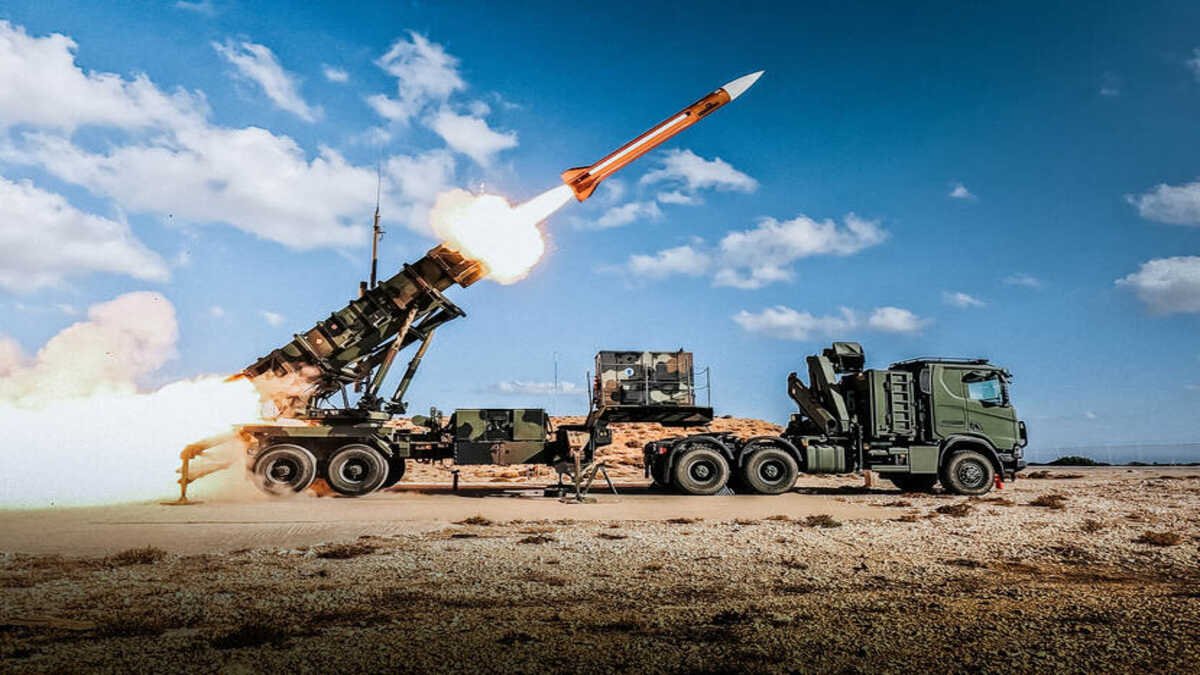
The most concrete need is protecting Saudi territory from missiles and drones. Analysts expect the allies to help here, but none of it is confirmed.
Dania Thafer of the Gulf International Forum says Riyadh mainly wants help defending its territory and reinforcing air and missile defenses; Tughral Yamin of the Institute of Policy Studies expects Pakistan to add air defense units, drones, communications, cyber, and engineering support; and Gökhan Ereli of Ibn Haldun University expects a mostly non-ground Turkish role built on intelligence sharing and emergency resupply of air defense, drones, and electronic warfare.
Integration is a technical problem before it is a political one. Saudi air defense has long relied on American systems such as Patriot, the layered architecture, and the interceptor-supply problem examined in Patriot and THAAD: Inside America’s Layered Missile Defense and the Interceptor Shortage.
As a general principle, forces equipped to different standards do not share data links or fire-control networks automatically, so building one defended picture takes secure communications, agreed procedures and training, and the public record does not yet show that work.
The Istanbul agenda item on interoperability therefore matters more than headline troop totals. An integrated air picture is also only as good as its warning sensors, which is the subject of Missile Warning Satellites and Early Warning Systems Explained. Which partner would supply that layer for the alliance has not been addressed publicly.
The Houthi Front Shows What the Pact Does and Does Not Do
Officials have drawn limits on the allies’ roles. Pakistani Defense Minister Khawaja Asif told Geo News that Pakistani and Turkish forces are in a “supporting role,” including reconnaissance, while Saudi forces fight, and Pakistan’s military says forces are deployed to protect the kingdom and its holy sites.
Turkish Foreign Minister Fidan said on October 8, “This is not an attack agreement,” and that it does not let Turkey send troops to another country to attack, and on October 9.
Foreign Office spokesman Sajjad Haider Khan said, as reported by Pakistan’s state news agency, that Pakistani forces “would not cross into Yemen to launch attacks against Houthi forces” but could be used to defend Saudi territory, and he called reports of Pakistani jets joining strikes false.
Reports point to a wider footprint, and they should be held to their stated level of certainty. Middle East Eye says Reuters reported four planeloads of Pakistani weapons to Aden, that a Western official said Pakistani personnel are already in southern Yemen under an unclear status, and that Pakistan already has tens of thousands of troops in the kingdom, though Pakistan has not disclosed its numbers.
Al-Monitor reported on October 12 that Pakistan reportedly shipped weapons and sent advisers to Yemen’s government, and the Saudi-led coalition says 100 of its fighter jets support the counteroffensive, a claim about Saudi-led air operations and not about Pakistani or Turkish participation.
The attacks themselves are now documented. Saudi civil aviation officials said at least 12 people were killed and about 309 wounded in the October 10 attack on King Khalid International Airport, and India’s embassy later reported another death that raised the toll to 13. A further attack on October 11 killed one person and injured 11, according to the same authority, after a Thursday attack that killed at least three Saudi citizens.
The Houthis declared Saudi airspace a military zone; the coalition vowed to “respond decisively,” and President Donald Trump, asked on October 10 whether the United States would join Saudi strikes, said, “We may. We’re going to look at it.”
On October 13, according to Gulf Business, Saudi Arabia’s Ministry of Energy said an administrative building belonging to Aramco in Dhahran had been targeted, causing a limited fire and no reported injuries.
The Saudi-led coalition separately said its air defenses destroyed a Houthi ballistic missile launched toward Dhahran, another at Haradh, and three drones north of Riyadh, and the Houthi military spokesman warned civilians near Aramco facilities to evacuate. The reporting reviewed for this article does not say who struck the building, whether the intercepted Dhahran missile was linked to it, or what role forces operating under the pact played in any interception.
The attacks occurred after the October 5 implementation decision, which shows that the announcement did not prevent further strikes. They do not establish whether the agreed measures reduced the damage, improved the response, or would have changed the outcome without the pact, because the public record shows too little about the forces deployed or their tasks to judge operational effectiveness.
What can be said is that the pact’s present value in Yemen is signaling and defensive support, and the stated limits on Pakistani and Turkish roles keep it short of a unified offensive.
Iran and Its Proxies Shape How the Pact Is Read
Iran’s government has sent measured signals. Foreign Ministry spokesman Esmaeil Baghaei said on August 10 that Tehran saw no need to worry that the pact targeted Iran and that it showed a “change in perception” toward the United States, and on August 24 he said Iran had received no formal invitation to join.
A parliamentary news agency head claimed Iran had been invited and was considering it, but neither Tehran nor the three states has confirmed that.
Other voices are harsher, and they are individual voices, not government policy. Parliamentarian Ibrahim Rezaei said an agreement “on paper” would not bring Riyadh security, and Javad Heiran-Nia of the Persian Gulf Studies Group in Tehran told Al Jazeera that Iran would tolerate a purely defensive Pakistani deployment but would treat offensive participation against the Houthis as a red line. Yamin warned that Pakistan’s credibility with Iran would suffer if the pact became explicitly anti-Iran.
Officially, the pact names no adversary, and analysts disagree on the intended target. PISM assesses its short-term focus as deterring Iranian-aligned attacks on Saudi Arabia, while Iranian analyst Hamid Asfi told The New Arab that its main purpose is to counter Iran and its allies and not Israel.
The proxy question needs precision. The Houthis are the group most directly tied to the pact’s implementation, and PISM places the pact against Iran’s wider network, including Hezbollah, Iraqi militias, and the Houthis. Those groups differ in structure, interests, and dependence on Tehran, and deterring an attack by Iran is a different problem from deterring a group that receives Iranian support. No source reviewed for this article shows the pact was built to confront Hezbollah or Iraqi groups.
Three outcomes are plausible, and none is a prediction. Defensive cooperation could deter and reduce attacks; competition could continue with deeper coordination but unresolved conflict; or defensive aid could become entangled with offensive operations and widen the war, a risk Al Jazeera ties to possible US entry and Houthi threats to shipping at Bab al-Mandeb.
Israel, India and the United States Read the Pact in Different Ways
Israel has no single public position. Al Jazeera reported on August 8 that Israel had yet to respond officially, and an unnamed senior Israeli official told Ynet, “The agreement worries us. This is an alliance aimed against Israel,” according to Algemeiner. Eitan Shamir of the Begin-Sadat Center calls the pact “more declarative than substantive.”
INSS recommends that Israel avoid openly opposing it and keep channels open with Turkey, and PISM sees a long-term setback for Israel through reduced prospects for Saudi normalization.
India’s government has been measured. Foreign Ministry spokesman Randhir Jaiswal said on August 11, as reported by The Tribune, that India was examining the pact’s implications “from the perspective of our national security” and would “take all necessary measures” to safeguard its interests.
The structural concern is that Pakistan now has a formal defense relationship with two larger partners, one of which is a NATO member. Still, the announced clause concerns an armed attack on a member and does not commit Saudi Arabia or Turkey to back Pakistan in a conflict with India. The wider balance is examined in India’s Missile Force Explained: Agni, BrahMos and the Hypersonic Push.
The United States has been welcoming in tone and cautious in practice. Trump said on August 16 that he was pleased the three states had taken a “BIG, BOLD, IMPORTANT FIRST STEP,” and on October 10, asked whether Washington would join Saudi strikes on the Houthis, he said, “We may. We’re going to look at it.”
A Daily Jang report of September 21, citing unnamed officials, said he had earlier called off planned strikes after a Saudi appeal, partly over fear of Houthi retaliation against US ships, which, if accurate, would help explain Riyadh’s interest in other partners. The wider war context is examined in Iran’s Missile Force Explained: Arsenal, Range Limits and the Evidence From the 2026 War.
The Pact Could Fail Through Politics, Law and Operations Before It Fails in Combat
The central weakness is that the three members do not share an enemy. INSS sets out the divergence: Turkey looks toward Russia, Syria, and the Caucasus; Pakistan toward India and Afghanistan; and Saudi Arabia toward Iran, Yemen, and the Gulf, with no shared borders and rivalries over the Sunni world, the Muslim Brotherhood, and Qatar.
INSS also cites Pakistan’s conduct in 2015 over Yemen and in 2019 after attacks on Saudi oil facilities as a pattern of “limits of commitment,” and Senem Aydin Düzgit writes in the Belfer roundup that an Article 5-style commitment “may prove less consequential than its political symbolism suggests.”
Law is a second limit. Fidan said on October 8 that preparations to send the pact to parliament were finished, and on October 12 Erdoğan said, according to Reuters, that Turkey would send it for ratification in the coming days.
The reporting reviewed does not show that ratification had occurred by October 14, and Turkish opposition politician Özel argued on October 11 that Article 92 of the constitution requires separate parliamentary consent to send troops abroad even once the pact is submitted, which is the opposition’s reading and not a legal ruling.
Pakistan’s 2015 parliamentary resolution backed neutrality in Yemen while pledging to defend Saudi territory and the holy sites, and Yamin argues the burden is on Islamabad to set clear red lines.
Operations are the third. Interoperability, communications, logistics and command relationships all affect whether forces can act together, and none has been shown yet. Edward Djerejian asks in the Belfer roundup whether the pact will remain “ink on paper,” and the likelier failure is not a dramatic collapse but a gap between political language and what governments are willing to do under pressure.
Six Indicators Will Show Whether the Pact Becomes an Alliance, and the Early Evidence Supports a Cautious Reading
Observable signals can be tracked. The first is the publication of the agreement or its operative articles. The second is Turkish ratification, with a separate decision on any deployment. The third is a standing planning cell or integrated command, which neither the Riyadh secretariat nor the committee yet amounts to.
The fourth is joint exercises that rehearse integrated air and missile defense. The fifth is a joint production or procurement program with money and named systems. The sixth is membership, because every new member would test whether the founders agree on whose security they will defend.
One distinction matters across all six. A secretariat and a committee show political institutionalization, not that three militaries can run an integrated air-defense operation; the real question is whether the pact produces capability beyond the bilateral cooperation and national forces that already existed.
Three things are established. The agreement has been signed, its members have announced measures to implement their collective-defense commitments, and Pakistan and Turkey have become involved in supporting Saudi security within limits they have publicly stated. The scale of the forces, the command arrangements, the legal text, and the risks each government will accept if the war widens remain unclear.
The consequences so far are political rather than military. For Saudi Arabia, the pact adds partners and options without ending its reliance on American systems. For Pakistan, it deepens a valuable relationship while raising the risk of being pulled into Yemen and, as Yamin warns, damaging its credibility with Iran. For Turkey, it brings influence and defense-industrial opportunity but also a constitutional argument at home.
For the region, it signals that Gulf states are widening their partnerships, tells Iran and the Houthis that Riyadh has more than one guarantor, and tells New Delhi that Pakistan’s external ties have grown, while the evidence for larger claims, including a “Muslim NATO,” is thin. What would change that assessment is the slow work of integration, and that is what this publication will keep tracking.
Frequently Asked Questions
What is the Mecca defense pact?
The Mecca defense pact is a mutual-defense agreement signed by Saudi Arabia, Pakistan, and Turkey on August 7, 2026, under which an attack on one is to be treated as an attack on all. It is also called the Makkah Joint Defense Agreement, the Mecca Defense Alliance, and the Makkah Alliance for Defense. Its full text is unpublished, so the public knows the core principle and the committee structure, but not the detailed obligations, duration, or withdrawal terms.
Is the Mecca Pact the same as NATO’s Article 5?
No, not on the public evidence. The mutual-defense principle resembles the NATO clause, but the Mecca text is unpublished, and the comparison is an analyst’s shorthand. NATO has an integrated command, standing forces, and decades of planning, while the Mecca alliance has a committee, a secretariat in Riyadh, and no announced joint command, and Düzgit judges that its commitment “may prove less consequential than its political symbolism suggests.”
Are Pakistani and Turkish troops fighting the Houthis?
Officials say no. Pakistan’s Foreign Office said on October 9 that its forces would not cross into Yemen to attack Houthi forces; Turkey’s foreign minister said the pact does not allow offensive deployments abroad; and Pakistan’s defense minister described a supporting role. Reports of Pakistani arms shipments and personnel in Yemen exist but come from media and unnamed officials, and Turkey has not publicly confirmed a deployment.
Does Pakistan’s nuclear arsenal protect Saudi Arabia under the pact?
No government has said it does. SIPRI estimates Pakistan holds 170 warheads, all in storage, and INSS states the arsenal “does not provide an automatic nuclear umbrella” because it is aimed mainly at India. Akhtar notes that no extension of Pakistan’s nuclear deterrent to partners has been announced.
Is the pact aimed at Iran, Israel or India?
Officially, at none of them. The signatories call it defensive and not directed against any actor, and Turkish officials say Iran could join. In practice each outside power reads it through its own concerns: Iran sees a possible bloc, some Israeli officials see an alliance aimed at Israel while Israeli analysts call it largely declarative, and India sees Pakistan gaining formal partners. The evidence points to a pact shaped chiefly by Saudi concerns over Yemen and Iran-aligned threats.
Sources and References
Al Jazeera — What are Saudi Arabia, Türkiye, and Pakistan’s joint military capabilities? (August 11, 2026).
Al Jazeera — Israel mulls Saudi, Türkiye, Pakistan pact as elections loom (August 8, 2026).
Al Jazeera — Pakistan, Saudi Arabia, Türkiye meet: What’s next for their defense pact? (August 31, 2026).
Al Jazeera — Türkiye, Pakistan agree Saudi Arabia military deployment under Mecca pact (October 5, 2026).
Al Jazeera — Pakistan, Türkiye and Saudi deterrence against Houthis: What that means (October 6, 2026).
Al Jazeera — Saudi Arabia says 12 killed, 300 wounded in Houthi attack on Riyadh airport (October 10, 2026).
Al Jazeera — Saudi Arabia says 1 dead, 11 injured in latest attack on Riyadh airport (October 12, 2026).
Algemeiner — New ‘Muslim NATO’ ‘Aimed at Israel,’ Official Warns, but Experts Say Pact Is Largely Declarative.
Al-Monitor — Why Saudi-Pakistan defense pact remains key as Mecca alliance takes shape (October 12, 2026).
Al-Monitor and Reuters — Pact with Saudi and Pakistan could expand to Muslim world, Iran, Turkish speaker says (September 25, 2026).
Anews — Türkiye, Egypt, Pakistan, Saudi Arabia condemn hostile Houthi attacks on Saudi Arabia (October 11, 2026).
Associated Press of Pakistan (APP) — DPM, Defense Minister, CDF attend meeting of SPDC under Makkah agreement (October 2026),
Asharq Al-Awsat — Makkah Alliance Activates Collective Deterrence Following Attacks on Saudi Arabia (October 2026).
Associated Press of Pakistan (APP) — Pakistan reaffirms support for Saudi Arabia’s defense, rejects reports of fighter jets in Yemen (October 9, 2026).
Belfer Centre for Science and International Affairs — How Impactful Will the Mecca Joint Defense Agreement Be Strategically? Experts React.
CTV News — Trump welcomes defense pact between Saudi Arabia, Türkiye and Pakistan (August 16, 2026).
Euronews — Turkey and Pakistan to send troops to Saudi Arabia under defense pact (October 6, 2026).
Daily Jang — Why Trump decided against Saudi-requested strikes on Yemen’s Houthis (September 21, 2026).
Express Tribune — FO quashes speculation over Yemen combat role (October 10, 2026).
Express Tribune — Trump says US may join Saudi strikes against Houthis in Yemen (October 11, 2026).
GlobalSecurity.org — Makkah Joint Defense Agreement. Gulf Business, Saudi Aramco building targeted as missiles intercepted over Dhahran (October 14, 2026).
Hurriyet Daily News — Mecca defense pact to go before Turkish parliament and Mecca defense deal should pass through parliament, Özel says (October 2026).
Institute for National Security Studies, Yoel Guzansky and Gallia Lindenstrauss — The Mecca Agreement: Real Substance or Mere Intent? INSS Insight No. 2187 (August 20, 2026).
Outlook India — Türkiye won’t send troops for attacks under the Mecca defense pact, says Fidan (October 8, 2026).
Middle East Eye — Saudi Arabia, Turkey and Pakistan activate Mecca pact amid war with Houthis, and Iran says it is not concerned by new Mecca Joint Defense Agreement (August 10, 2026).
National Assembly of Pakistan — press release welcoming the Joint Defense Agreement (August 8, 2026).
Outlook India — Iran says it was not invited to join the Saudi-Pakistan-Türkiye defense pact (August 24, 2026).
Polish Institute of International Affairs (PISM), Julia Sochacka — The Saudi-Turkish-Pakistani Mecca Agreement, PISM Spotlight no. 42-2026 (August 21, 2026).
Yeni Şafak — Türkiye, Pakistan, Egypt condemn Saudi attacks, reiterate security support (September 22, 2026).
The New Arab — How does Iran view the new Mecca Defense Agreement between Turkey, Pakistan, and Saudi Arabia? Reuters (via Internazionale),
Stockholm International Peace Research Institute — SIPRI Yearbook 2026, world nuclear forces (June 8, 2026).
The Tribune (India) — Examining implications: India reacts to Pakistan-Saudi-Turkey defense pact (August 11, 2026).
Yeni Şafak — Türkiye ready to submit Mecca defense pact to parliament: Fidan (October 8, 2026).
The New Arab — Turkey to send Mecca agreement to parliament soon, Erdogan says (October 12, 2026).
Related Analysis
To understand how layered missile defense works and why interceptor availability matters, read Patriot and THAAD: Inside America’s Layered Missile Defense and the Interceptor Shortage.
For an assessment of Iran’s missile capabilities, operational limitations, and the evidence emerging from the 2026 war, read Iran’s Missile Force Explained: Arsenal, Range Limits and the Evidence From the 2026 War.
For a closer look at India’s missile capabilities and their strategic implications, read India’s Missile Force Explained: Agni, BrahMos and the Hypersonic Push.
For an analysis of how nuclear deterrence is changing as military operations increasingly depend on space-based systems, read Nuclear Deterrence in the Space Age: How Orbital Warfare Is Changing the Calculus.
For an explanation of how space-based sensors detect missile launches and contribute to early-warning systems, read Missile Warning Satellites and Early Warning Systems Explained.
