



Analysis · StrikeOrbit | 2026
Military power now depends on assets that do not operate on land, at sea, or in the air. The systems that guide precision weapons, enable command communications, provide continuous surveillance, and deliver early warning of missile launches operate in orbit, hundreds to thousands of kilometres above the Earth’s surface. They were built to support military operations. They were not built to survive them.
That structural contradiction — essential but exposed, indispensable but indefensible — is the condition from which orbital warfare emerges.
Orbital warfare is the use of military capabilities in, from, or against Earth’s orbital environment to achieve strategic or operational advantage. It is not a future scenario. It is an active and accelerating strategic reality, shaped by the investments, doctrines, and operational decisions of multiple states.
The United States, China, Russia, India, France, Japan, and a growing number of actors are developing the means to exploit space-based advantages and deny them to adversaries.
Space systems are not targets of opportunity. They are preconditions of modern warfare.
The question is no longer whether space will become a contested domain. It already is. The question is how competition in orbit will shape the conduct, escalation, and outcomes of future wars.
The Origins of Military Space Competition
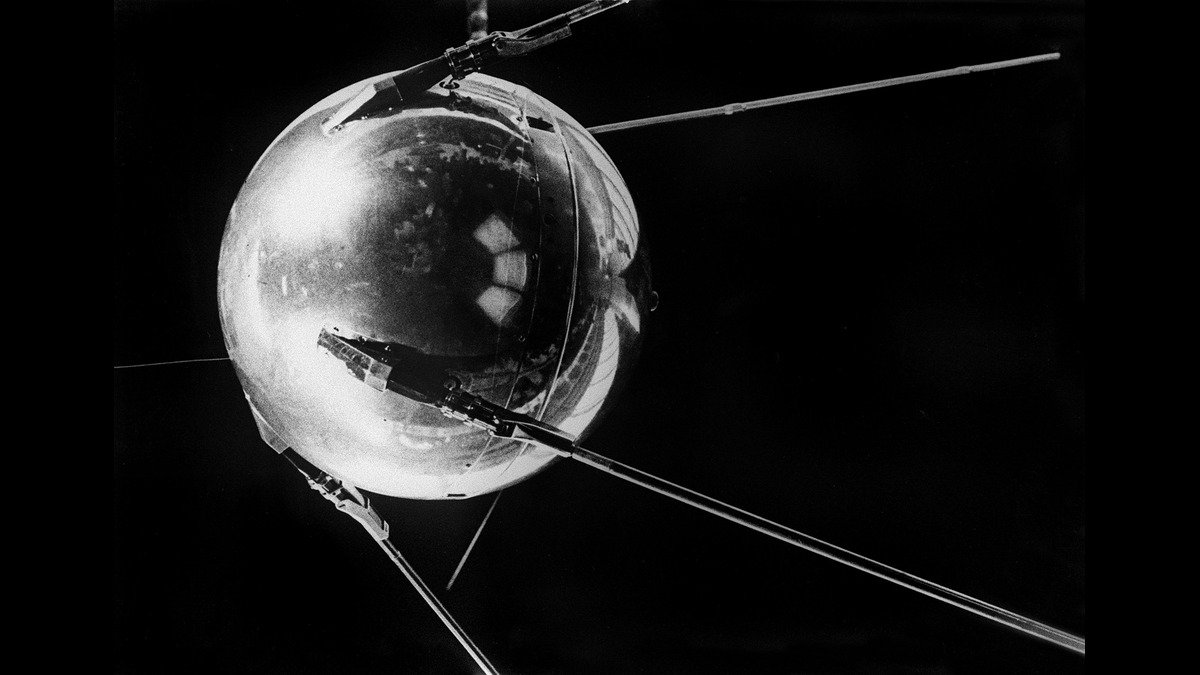
The militarisation of space began alongside the space age itself. When the Soviet Union launched Sputnik in 1957, the technological milestone immediately carried strategic implications. A launch vehicle capable of placing a satellite into orbit could deliver a nuclear payload across continents. Space was therefore inseparable from nuclear deterrence from the beginning.
During the Cold War, reconnaissance satellites became essential to strategic stability. They provided visibility into adversary capabilities and reduced the likelihood of miscalculation. Both superpowers depended on these systems, and an implicit restraint emerged around targeting them, even as anti-satellite technologies were explored.
The Outer Space Treaty of 1967 formalised part of this reality by banning weapons of mass destruction in orbit while leaving conventional military uses of space untouched. Space was not demilitarised. It was structured.
The Gulf War of 1990–1991 demonstrated how deeply space had transformed conventional warfare. GPS enabled precision navigation and targeting, satellite communications accelerated command decisions, and space-based intelligence supported near real-time operations. The lesson was clear: space had become the nervous system of modern military power.
That lesson has been reinforced in the decades since. The ongoing war in Ukraine has provided the clearest operational validation. Space-enabled warfare is no longer theoretical. It is embedded in active conflict.
How Orbital Warfare Works — The Full Spectrum of Capabilities
The concentration of critical military satellites in low Earth orbit makes it the primary operational zone of orbital warfare. However, the methods used to contest this domain extend across a wide spectrum of capabilities.
Direct-ascent anti-satellite weapons represent the most visible form of counterspace capability. These systems intercept satellites through kinetic impact. China’s 2007 test created long-lasting debris fields, while India’s 2019 demonstration showed similar capability under more controlled conditions. Russia’s 2021 ASAT test further illustrated the operational risks by generating debris that affected crew safety aboard the International Space Station.
Co-orbital systems introduce a more complex and less visible threat. These are satellites manoeuvred into proximity with others, where they can observe, interfere with, or potentially disable them. Recent developments, including publicly disclosed concerns about Russian deployments in 2024, indicate an increasing willingness to operate in this grey zone.
These developments are documented in the global counterspace capabilities report, which tracks the evolution of anti-satellite systems across major powers.
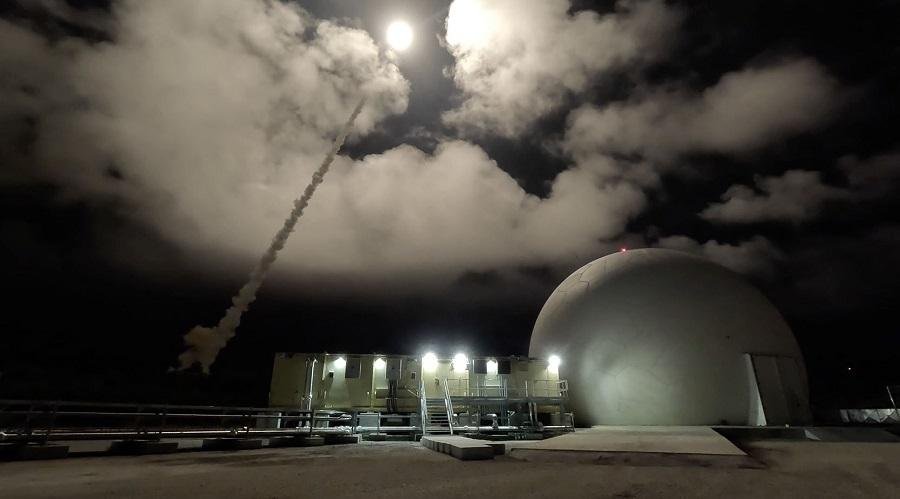
Electronic warfare targets the signals that satellites rely on. In a military environment dependent on precision strike systems, degrading navigation and targeting data has direct operational consequences. Jamming disrupts communications, while spoofing introduces false data. Russian operations in Ukraine have demonstrated how degrading satellite navigation can directly affect military effectiveness, particularly for forces dependent on precision systems.
Directed energy weapons offer the ability to damage or degrade satellites without physical destruction. Lasers can blind optical sensors, while high-powered microwaves can affect onboard electronics. These systems enable disruption while avoiding the long-term consequences associated with debris generation.
Cyber operations extend the battlefield to ground infrastructure and networked systems. Satellites depend on software and communication links, making them vulnerable to cyber intrusion. The Viasat incident in 2022 showed that targeting ground systems can disable space-based capabilities at scale.
Orbital warfare is therefore defined not by a single class of weapons, but by a layered set of capabilities that range from reversible disruption to permanent destruction.
The Major Players and Their Programmes
The United States established the Space Force in December 2019 and re-established United States Space Command as a unified combatant command in the same year. American investment in space domain awareness — the ability to track, characterise, and attribute the behaviour of objects in orbit — is the most extensive in the world. The Space Fence radar installation in the Marshall Islands can track objects in low Earth orbit smaller than a softball.
In 2024 and into 2025, the Space Force accelerated its Proliferated Warfighter Space Architecture programme, a resilient LEO constellation designed to distribute communications and missile warning functions across hundreds of smaller satellites, directly addressing the single-point vulnerability problem that has long characterised American space architecture. This approach is outlined in the Defense Space Strategy, which emphasizes resilience and deterrence in orbit.
China’s approach has been shaped by the PLA’s analysis of American operations since the Gulf War and by what its strategists have described as the imperative to blind and deafen a technologically superior adversary by striking its space infrastructure. The PLA Strategic Support Force, established in 2015 and restructured under the broader PLA reform process of 2024 into a new Information Support Force, consolidated space, cyber, and electronic warfare capabilities under unified command — a structural recognition that these domains are operationally interdependent.
China’s Guowang constellation, a state-backed LEO communications network planned at over twelve thousand satellites, represents both a strategic communications asset and a direct competitive challenge to Starlink’s military utility. China has developed DA-ASAT missiles, co-orbital systems, ground-based laser systems, and a sophisticated electronic warfare programme. Its BeiDou navigation constellation, now global in coverage, reduces Chinese dependence on GPS and provides an alternative positioning infrastructure for partner states.
Russia’s approach draws on deep Soviet-era expertise in counterspace operations and a strategic culture that consistently views space as a domain where asymmetric leverage can be applied against technologically superior adversaries.
The Nudol DA-ASAT system remains operational. Russia’s co-orbital programme has become increasingly assertive, with the 2024 satellite deployment flagged by Washington as a direct on-orbit threat representing a qualitative escalation in the conduct of grey-zone space operations. Russian electronic warfare capabilities — jamming and spoofing systems capable of operating across wide areas — remain among the most operationally developed and combat-tested in the world, with Ukraine providing a continuous live testing environment.
India’s Mission Shakti placed New Delhi among states with demonstrated kinetic ASAT capability and signalled its determination not to accept a permanent asymmetry in space power relative to China. India’s Defence Space Agency has since expanded its remit, and New Delhi has deepened space security cooperation with Washington under the framework of the broader strategic partnership.
France has established a Space Defence Command with a doctrine that explicitly includes active defence of French satellites. Japan’s Self-Defence Forces operate a Space Operations Squadron in close coordination with the United States, and Tokyo has made space a priority investment area in the context of its broader defence build-up following the 2022 National Security Strategy revision. Australia, the United Kingdom, Germany, South Korea, Israel, and the United Arab Emirates are all integrating space into their military structures at a pace that reflects the domain’s broadening strategic importance.
Recent findings in the space threat assessment highlight the rapid expansion of counterspace capabilities across multiple actors.
The pattern that emerges is not a small number of advanced states holding a capability monopoly. It is accelerating proliferation in which the number of actors with meaningful counterspace capabilities is expanding, the diversity of those capabilities is growing, and the strategic logic driving investment is reinforcing itself across multiple independent security contexts simultaneously.
Commercial Space and the Blurring of Military Infrastructure
The rapid commercialisation of space has introduced a dimension of orbital warfare that existing doctrine and law are poorly equipped to handle. Private companies now operate satellite constellations of a scale and capability that rival many national space programmes — and they are being used for military purposes in active conflict.
The war in Ukraine has provided the most consequential illustration. Ukrainian forces relied on commercial satellite imagery from Planet Labs and Maxar Technologies for near-real-time battlefield awareness. SpaceX’s Starlink terminals provided communications resilience across the front lines in the face of Russian jamming and infrastructure destruction.
By 2024, Starlink had become so deeply integrated into Ukrainian military operations — including drone targeting and artillery coordination — that its status as a civilian commercial service had become essentially notional. The autonomous systems operating across that conflict, examined in Drone Warfare and Autonomous Systems in Modern Conflict, depended on the same space-enabled connectivity that orbital warfare puts at risk.

Russia’s response has been instructive. Beyond the initial Viasat attack, Russian efforts to jam Starlink terminals evolved throughout the conflict, with SpaceX repeatedly updating software to counter interference — a live cycle of electronic warfare and countermeasure development conducted in public, between a private company and a state military, that has no real precedent. The exchange has accelerated both the military integration of commercial space capabilities and the development of counterspace electronic warfare techniques on both sides.
This development poses a fundamental challenge to the traditional distinction between civilian and military space assets. When a commercial satellite constellation is providing targeting support to an active military force, it occupies a legal and operational grey zone. Targeting it may have global economic consequences — Starlink serves hundreds of thousands of civilian customers across dozens of countries. Not targeting it may leave an adversary with a persistent operational advantage. Neither option maps cleanly onto existing frameworks.
States are responding by integrating commercial capabilities explicitly into military planning. The United States has formalised relationships with commercial imagery and communications providers through the National Reconnaissance Office and Space Force. China is developing its own commercial space ecosystem, with Guowang and other state-backed constellations positioned for dual-use exploitation. The distinction between state and commercial space infrastructure is not simply blurring. In important respects, it is disappearing.
The Legal Framework and Its Limits
The legal architecture governing military activities in space was built for different problems in a different era. The Outer Space Treaty of 1967 remains the foundational instrument, and its core prohibitions have held — no state has placed nuclear weapons in orbit. But the treaty was designed to address the specific dangers of the Cold War nuclear competition. It is structurally inadequate for the multi-actor, dual-use, non-kinetic character of contemporary orbital warfare.
The treaty prohibits weapons of mass destruction in orbit but is silent on conventional weapons systems. It establishes state responsibility for national space activities but the attribution challenges of orbital warfare — particularly co-orbital operations and cyber attacks — make accountability difficult to establish. There are no binding international agreements restricting anti-satellite weapons or codifying what constitutes a hostile act in orbit.
Efforts to develop new instruments have made limited progress. The United Nations Open-Ended Working Group on Reducing Space Threats, which concluded its most recent sessions in 2023, produced a report that acknowledged the seriousness of the threat environment but fell short of producing binding norms.
The United States, United Kingdom, Canada, and a number of allies committed in 2022 to a unilateral moratorium on destructive direct-ascent ASAT testing — a politically significant but legally non-binding step that Russia and China declined to join. The EU’s proposed Code of Conduct for Outer Space Activities was negotiated through the 2010s without achieving consensus, and subsequent diplomatic efforts have not bridged the fundamental divide between the major space powers on the question of constraints.
The practical consequence is that the thresholds for escalation in orbital warfare remain undefined. A satellite manoeuvring close to another state’s spacecraft may be conducting inspection operations, testing proximity capabilities, or positioning for an attack. The target state has no established legal recourse and no agreed framework for a proportionate response. In a domain where most operations are conducted silently and invisibly, the absence of norms creates conditions in which miscalculation is a persistent structural risk.
Space Debris, Orbital Dynamics, and the Kessler Constraint
Unlike any other military domain, actions in space have persistent physical consequences that extend indefinitely beyond the immediate operation. The destruction of a satellite in low Earth orbit generates debris — fragments ranging from large trackable pieces to sub-centimetre particles invisible to ground-based radar — that remains in orbit for years or decades. At orbital velocities, even small fragments carry enough kinetic energy to destroy a spacecraft. The 2007 Chinese ASAT test generated more trackable debris than any previous event in the history of spaceflight.
Russia’s 2021 Cosmos 1408 test added further stress to an orbital environment already under strain. As of 2025, the European Space Agency tracks over thirty thousand debris objects larger than ten centimetres in orbit, with an estimated one million smaller fragments — each capable of mission-ending damage — as reflected in current space debris statistics.

This creates a strategic paradox with no equivalent in terrestrial warfare. A state may possess the capability to destroy an adversary’s satellites, but doing so imposes long-term costs on all actors in the orbital environment — including itself. If a Kessler cascade were triggered at the altitude bands most densely populated by military and commercial satellites, the result would be loss of access to those orbits for all nations for generations. The side that loses access to orbit does not fight at a disadvantage. It fights blind.
This constraint does not rule out kinetic counterspace operations in a conflict where survival is at stake. But it shifts the operational preference hierarchy toward non-kinetic options — jamming, spoofing, directed energy, cyber — that achieve disruption without permanent environmental consequences. It creates an incentive structure that favours reversible effects, preserving the option for stabilisation after a crisis without having permanently compromised the commons on which all space activity depends.
The 2022 US-led moratorium on destructive DA-ASAT testing reflects precisely this logic: the political and environmental costs of kinetic testing had come to outweigh the military value of demonstration.
How Orbital Warfare Changes the Way Wars Begin and Escalate
The integration of space systems into military operations at every level has significant implications for crisis dynamics and escalation. Because space assets are critical to early warning, command communications, precision strike, and logistics coordination, they are likely to become targets in the earliest phases of conflict — possibly before terrestrial forces have engaged at all.
This creates incentives for preemptive action not present in most other domains. If a state believes its space assets are vulnerable to early attack and that losing them would decisively degrade its operational capability, it has an incentive to strike adversary space systems first. The logic is structurally similar to the instability generated by vulnerable nuclear forces in Cold War strategic doctrine — a use-it-or-lose-it dynamic that can accelerate the transition from crisis to conflict.
The relationship between counterspace operations and nuclear stability is among the most consequential and least publicly understood dimensions of orbital warfare: early warning satellites that detect ballistic missile launches are foundational to nuclear deterrence, and attacking them could be interpreted as a precursor to a nuclear first strike.
In orbital warfare, the first move may not destroy forces. It may simply remove their ability to function.
The ambiguity of non-kinetic operations compounds this instability. A disruption to satellite communications or navigation may be difficult to attribute with certainty in real time. Was it caused by an adversary’s jamming, a technical malfunction, or deliberate cyber interference? The answer determines the appropriate response, and the time available to determine it in a fast-moving crisis may be very short. Non-kinetic orbital attacks can generate escalatory pressures even when their perpetrators intend to remain below the threshold of overt conflict.
Asymmetric dependence adds a further dimension. States with more sophisticated space capabilities are in some respects more vulnerable, because they have built greater dependence into their military operations. A force that relies on GPS for all precision navigation is more affected by GPS jamming than a force that retains alternative navigation methods.
This asymmetry can be exploited by less technologically advanced adversaries who have invested in counterspace capabilities precisely because they cannot match their adversary in conventional military power — the logic that drove China’s early investment in ASAT systems and that continues to drive counterspace proliferation across multiple strategic contexts. The sustained Russian electronic warfare campaign against GPS signals over Ukraine, now in its fourth year of continuous operation, has provided the most extensive real-world data set on the operational effects of space signal disruption ever generated in active conflict.
The Future — Resilience, Proliferation, and the Long Competition
As orbital warfare matures, the response of advanced militaries has shifted from a focus on dominance to a focus on resilience. The assumption that a small number of high-value satellites can be adequately defended has given way to an understanding that distributed, redundant, and rapidly reconstitutable architectures offer greater survivability in a contested environment.
The United States has led this shift through investment in proliferated LEO constellations that distribute capability across hundreds of smaller satellites rather than concentrating it in a few expensive platforms. The Space Force’s Proliferated Warfighter Space Architecture, currently in active deployment, reflects a doctrine that treats individual satellite loss as expected rather than catastrophic and designs resilience into the system architecture from the outset.
China is developing its own proliferated constellations, with Guowang proceeding toward operational deployment. Europe is investing in sovereign communications and positioning infrastructure, with the EU’s IRIS² constellation programme advancing toward a deployment timeline in the late 2020s. The strategic logic is consistent across actors: distribute, redundify, and reconstitute.
Technological developments on the horizon will introduce new variables. On-orbit servicing capabilities — spacecraft that can refuel, repair, or upgrade satellites in orbit — are transitioning from experimental to operational, with several commercial providers now demonstrating life-extension missions on geostationary satellites. These capabilities carry inherent dual-use potential: a spacecraft that can extend a satellite’s life can also manoeuvre close enough to disable it. Advances in space situational awareness, driven by both government investment and commercial remote sensing, are making the orbital environment more transparent and reducing the ability of actors to conduct proximity operations without attribution.
The competitive dynamics driving these investments show no sign of abating. The deepening strategic competition between the United States and China has placed space near the top of both sides’ priority lists. Both are building capabilities to hold the other’s space infrastructure at risk. Both are building resilience to reduce their own vulnerability.
The mutual dependence and mutual threat that characterises this dynamic has structural similarities to the nuclear competition — without the decades of arms control negotiation, crisis management experience, and tacit rule-making that eventually produced a degree of stability in that domain. The decisions made in the coming decade on proliferation, resilience, arms control, and the legal status of commercial space infrastructure will determine the character of orbital warfare for a generation.
Orbital Warfare Is Not a Future Scenario
Orbital warfare is frequently framed as an emerging threat, a possibility on the horizon. That framing is no longer accurate. The elements that define it — counterspace weapons, electronic interference with satellite signals, cyber operations against space infrastructure, co-orbital proximity operations, and the full integration of space into active military operations — are already in place and already in use.
The significance of orbital warfare lies not in the prospect of weapons being fired in space, but in the integration of space into the broader conduct of war on Earth. Space is not a neutral environment that supports operations below it. It is a domain where military advantage can be gained, contested, and lost — and where losing it has direct consequences for what happens on the ground, at sea, and in the air.
The satellites that enable navigation and precision strike, examined in Precision Strike Weapons and Modern Warfare, are simultaneously the targets that adversaries are developing the means to attack. The autonomous systems proliferating across battlefields, covered in Drone Warfare and Autonomous Systems in Modern Conflict, depend on the space infrastructure that orbital warfare puts at risk.
The hypersonic weapons reshaping global strike balances, analysed in Hypersonic Weapons and the Emerging Global Strike Balance, are in part designed to defeat the early warning and tracking systems that operate from orbit. Space is not separate from modern warfare. It is the domain through which modern warfare runs.
Control of territory remains central to military strategy. But control of information, connectivity, timing, and the targeting data that makes precision warfare possible — much of which flows through space — may prove equally decisive in determining the outcome of the next major conflict. Orbital warfare does not replace traditional forms of conflict. It reshapes the conditions under which they occur, and it will continue to do so with increasing consequence.
Frequently Asked Questions
What is orbital warfare in simple terms?
Orbital warfare refers to military activities in, from, or against Earth’s orbital environment, designed to exploit or deny the capabilities provided by satellites. It includes actions that destroy, disable, disrupt, or degrade satellites and their supporting infrastructure. Unlike traditional warfare domains, it is defined less by physical combat between forces and more by competition over the information, communications, and navigation systems that enable modern military operations. A state that denies its adversary access to functioning space systems can degrade military effectiveness without ever directly engaging its forces on the ground.
What is the difference between militarisation and weaponisation of space?
Militarisation refers to the use of space for military support functions — reconnaissance, communications, navigation, early warning — which has been a feature of the space age since its earliest years. Weaponisation refers to the deployment or use of weapons systems in or through space. The Outer Space Treaty prohibits weapons of mass destruction in orbit but does not prohibit conventional weapons or military satellites. Most counterspace capabilities currently in use operate from ground level rather than from orbit, placing them in a legal and definitional grey area that existing treaties do not clearly address and that new international norms have so far failed to fill.
How do anti-satellite weapons work?
Anti-satellite weapons take several forms. Direct-ascent systems are launched on trajectories that intercept a satellite through kinetic impact or proximity detonation. Co-orbital systems are placed in orbit and manoeuvred close to a target before engaging it physically or through directed energy. Electronic warfare systems jam or spoof satellite signals without physical damage. Directed energy weapons use lasers or microwave energy to damage sensors or electronics at range. Cyber tools target the software and networks that operate satellites and ground infrastructure. Each method offers different levels of reversibility, attribution risk, and escalatory potential, and major powers have invested across the full range.
Which countries have demonstrated orbital warfare capabilities?
The United States, Russia, China, and India have each demonstrated direct-ascent anti-satellite capabilities through live or announced tests. The United States, Russia, and China have additionally developed co-orbital systems, directed energy capabilities, and electronic warfare tools with counterspace applications. Russia’s deployment in 2024 of what the United States publicly characterised as a co-orbital weapon represents the most direct on-orbit threat acknowledgement between major powers in the space age. France, Japan, Israel, Australia, and the United Kingdom are investing in space domain awareness and defensive capabilities, reflecting a broader global recognition of space as a contested military domain.
Why is space so critical for modern military operations?
Space systems provide functions that underpin virtually every dimension of modern military operations. Navigation satellites provide the positioning and timing data on which precision munitions, troop coordination, and logistics depend. Communications satellites enable command and control across global theatres at speeds and volumes terrestrial systems cannot match. Imagery and signals intelligence satellites provide persistent global surveillance. Missile warning satellites detect ballistic missile launches within seconds of ignition. Disrupting any of these capabilities degrades military effectiveness at every level — from the individual soldier’s navigation to the strategic commander’s situational awareness. The war in Ukraine has demonstrated these dependencies in active combat conditions at sustained operational scale
What is the Kessler Syndrome and why does it constrain orbital warfare?
The Kessler Syndrome describes a cascade in which debris density in a given orbital altitude triggers a self-sustaining chain reaction — each collision generating additional debris that causes further collisions, eventually rendering that orbital band unusable. Kinetic anti-satellite attacks generate debris fields that contribute to this risk, imposing long-term costs on all space users, including the attacking state. With over thirty thousand trackable debris objects already in orbit as of 2025, the environment is under measurable strain. This creates a strategic constraint unique to the space domain: the most decisive physical attacks on adversary space infrastructure also degrade the orbital commons on which the attacker itself depends.
Sources and References
U.S. Department of Defense — Defense Space Strategy (2020)
U.S. Space Force — Spacepower: Doctrine for Space Forces (2020)
U.S. Space Force — Space Capstone Publication (2020)
NATO — Brussels Summit Communiqué: Space as an Operational Domain (2021)
Congressional Research Service — Space Force and Space Command: Issues for Congress
Congressional Research Service — Anti-Satellite Weapons: Potential Arms Control Approaches
RAND Corporation — Space as a Warfighting Domain: Implications for National Security
RAND Corporation — Counterspace Operations and the Future of Space Security
Centre for Strategic and International Studies (CSIS) — Space Threat Assessment (annual)
Secure World Foundation — Global Counterspace Capabilities: An Open Source Assessment (annual)
International Institute for Strategic Studies (IISS) — The Military Balance (annual)
European Space Agency — Space Debris by the Numbers (2025)
United Nations Office for Outer Space Affairs — Outer Space Treaty (1967)
United Nations Open-Ended Working Group on Reducing Space Threats — Final Report (2023)
Related Analysis
For analysis of how precision strike systems depend on satellite infrastructure, see Precision Strike Weapons and Modern Warfare, which examines how navigation and targeting rely on space-based systems.
For analysis of autonomous and unmanned systems, see Drone Warfare and Autonomous Systems in Modern Conflict, which explores how drones depend on satellite communication and positioning.
For analysis of high-speed strike capabilities, see Hypersonic Weapons and the Emerging Global Strike Balance, which examines the relationship between hypersonic systems and space-based tracking and warning.
For broader structural analysis, see Military Modernization in the 21st Century, which explores how technological change is reshaping force structures.
For geopolitical context, see Strategic & Geopolitical Intelligence and the New Global Power Balance, which examines the strategic competition driving space militarisation.
