


Analysis · StrikeOrbit | 2026
Iran entered the 2026 war with what the CSIS Missile Threat project calls the largest and most diverse missile arsenal in the Middle East.
Iran’s missile force fired more than 500 ballistic missiles and over 2,000 drones within four days, according to US Central Command.. A week later, CSIS reports, the rate of missile launches had fallen by roughly 90 percent.
That sequence raises a harder question than how many missiles Iran had before the war: how much of the force could it actually sustain? The public record gives two very different answers.
The New York Times reported in May, citing unnamed US officials, that Iran retained roughly 70 percent of its pre-war missile stockpile. Analysts at the Foundation for Defense of Democracies judged the same month that Iran may have lost a third to half of its ballistic missiles and about half of its launchers.
None of this began in 2026. In the twelve-day war of June 2025, Iran fired roughly 550 ballistic missiles, according to the Israeli military, which also said it destroyed about two-thirds of Iran’s launchers. What changed in 2026 was the tempo: more than 500 missiles in four days against roughly 550 in twelve, although the two counts come from different militaries and cover different target sets.
This article separates what Iran declares, what the war demonstrated, and what outside analysts can verify, and it applies that test to four different numbers: the missiles Iran may possess, the missiles that remain usable, the launchers that can fire them, and how long the force can sustain launches.
It argues that the more useful measure of Iran’s force is not simply how many missiles it holds, but how many launchers it can keep working and how long it can sustain them. It covers capabilities and evidence, not the merits of the war, and it is dated October 4, 2026, with source material through that date, because the situation is still changing.
Iran Built Its Missile Force for Saturation and Survival
Iran’s missile program grew out of the Iran-Iraq war into a domestic industry producing short- and medium-range ballistic missiles. Iran has not fielded an air force comparable to those of its main adversaries, and missiles became a central means of striking targets across the region. The logic of volume follows from that.
A large salvo can impose a disproportionate burden on a defender because costly interceptors may be spent against many incoming weapons, yet some still get through.
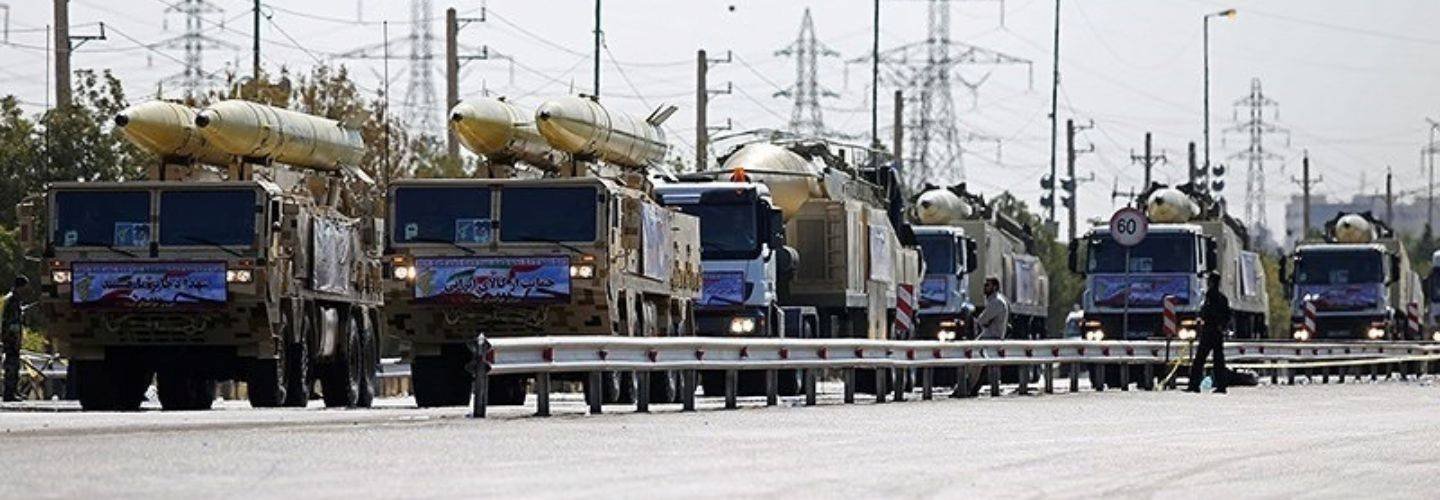
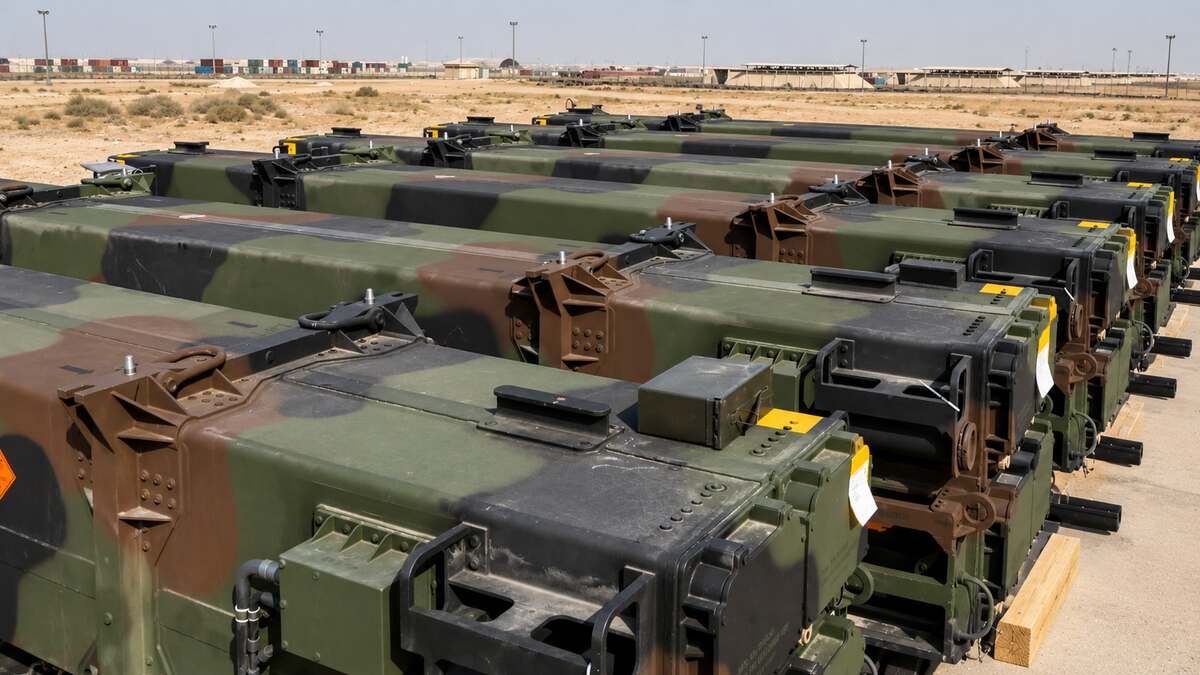
Survival is the other half of the design. Iran stores many of its missiles in deep underground complexes and fires them from mobile launchers that can be hidden under bridges, in tunnels and in urban areas.
CENTCOM released footage on March 10 showing strikes on partly concealed launchers in exactly those settings, as reported by Gulf News. This is why counting launchers can tell us more than counting stored missiles.
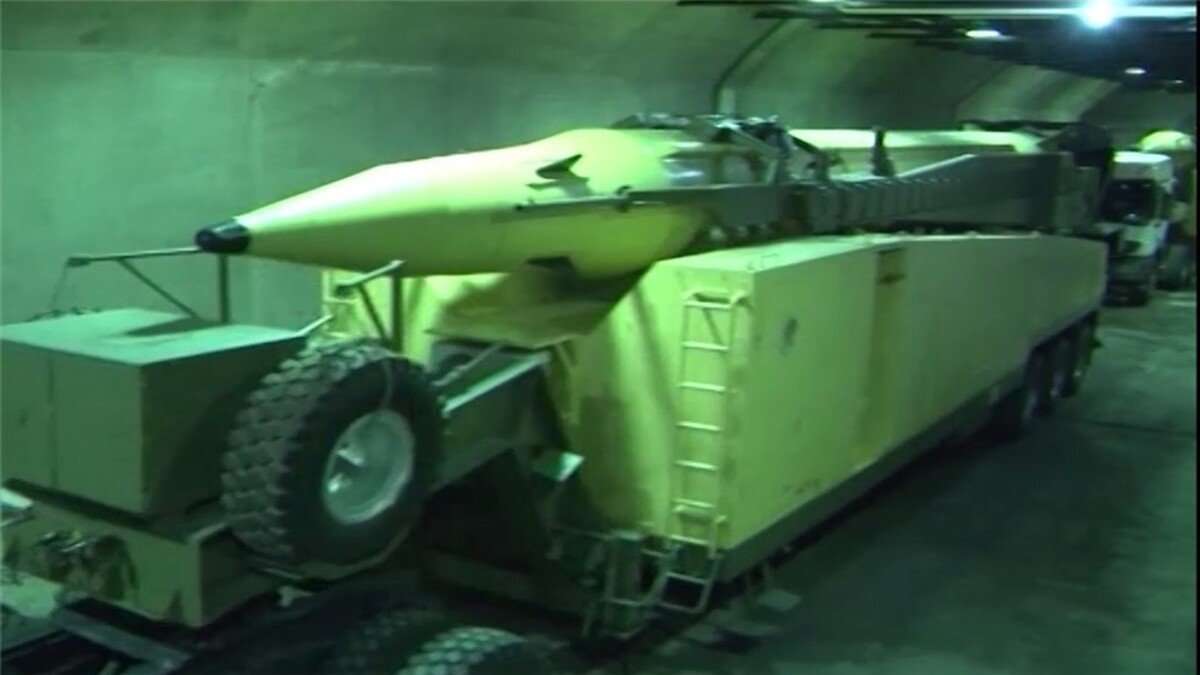
A missile that cannot be fired does not add to a salvo. But first, how far can those launchers reach?
A Missile Has No Single Range, and Iran’s 2,000-Kilometer Limit Is a Declared Choice
Range is not a fixed property of a missile. It depends on the payload, the trajectory, and the configuration, so published figures can differ even for the same system.
CSIS Missile Threat lists the Shahab-1 at 285 to 330 kilometers, the Shahab-3 at 1,300 kilometers, the Emad at 1,700 kilometers, and the Sejjil and Khorramshahr at 2,000 kilometers each. Other compilations give lower figures for the Shahab-3, roughly 800 to 1,200 kilometers, and those differences reflect what each source assumes about payload and status.
Payload makes the biggest difference. Iran says the liquid-fueled Khorramshahr reaches 2,000 kilometers with a warhead of up to 1,800 kilograms, according to SIPRI missile expert Markus Schiller. A defense expert writing in The Conversation noted that a Khorramshahr carrying a smaller warhead has been reported to reach about 3,000 kilometers.
The declared ceiling is political as well as technical. Foreign Minister Abbas Araghchi said in February 2026 that Iran had deliberately kept its missile range below 2,000 kilometers. SIPRI notes the limit was set years ago by Iran’s leadership and that observers long believed Iran was working on technologies that could cross it quickly.
A 2,000-kilometer limit covers Israel, the Gulf states, and US bases in the region while leaving most European capitals outside the circle.
Four Different Numbers Describe an Arsenal, and None Can Be Established Precisely From Public Data
For that reason, four numbers matter, although none can be established precisely from the public record: the missiles that may exist, the missiles that are serviceable and accessible, the launchers that can fire them, and the rate at which the force can sustain launches. Most of the confusion in the public debate comes from mixing them.
Start with the estimated inventory. Israel’s military put Iran’s stockpile at about 2,500 ballistic missiles before the June 2025 war, according to France 24. Reuters reported before the 2026 war that estimates ranged from 2,500 to around 6,000.
JINSA, an advocacy group, estimated about 2,000 medium-range and 6,000 to 8,000 short-range missiles. The estimates differ because some count only missiles able to reach Israel, others count every ballistic missile, and some count stored missiles while others count missiles that can actually be fired.
The next two numbers are smaller. After the 2025 war, the Israeli military estimated Iran still held between 1,000 and 1,500 ballistic missiles and only about 100 launchers, according to the Times of Israel. Israel’s Alma Center assessed in February 2026 that 1,000 to 1,200 missiles were available and that about 100 of 480 launchers were serviceable. Iran then moved to rebuild.
The fourth number, sustained capacity, depends on production. CENTCOM’s commander, Admiral Brad Cooper, said allied operations had damaged or destroyed more than 85 percent of Iran’s ballistic missile, drone, and naval defense industrial base, as relayed by FDD. That is a US military assessment, and Iran’s Revolutionary Guards say production continues. No outside party has audited either claim, so any single stockpile figure is best read with its source attached. The war did offer something estimates could not: a live test.
The War Tested the Estimates: Iran Fired in Mass, Then the Rate Fell
In the first four days of the 2026 war, CENTCOM reports that Iran fired more than 500 ballistic missiles and over 2,000 drones.
CSIS reports that after a week, missile launches were down about 90 percent and drone launches about 83 percent. The pattern, a very large first strike followed by a rapid fall, is consistent with a force built for saturation that could not repeat it at the same rate.
Why the rate fell is the real question. One major explanation is the campaign against launchers. The Israeli Air Force reported destroying or disabling around 300 launchers by March 3, according to FDD’s Long War Journal, and a senior Israeli official told the Institute for the Study of War that up to 290 of an estimated 410 to 440 launchers had been put out of service. Those are Israeli figures from two different dates, and Iran’s pre-war launcher count is itself uncertain.
Other explanations are plausible. Iran may have rationed missiles for a longer war. Operators may have held fire because launching meant risking detection and destruction. Strikes on storage, command and support sites may have slowed the cycle.
FDD’s analysis lists all of these, and the public evidence cannot say how much each mattered. FDD also observed that in the final stretch before the April 8 ceasefire, Iran leaned on drones to keep up its tempo of attack while conserving missiles.
A falling launch rate tells us something important, but not necessarily what remained in Iran’s magazines. That leaves the harder question of what survived.
Estimates of What Survived Disagree Because They Measure Different Things
CBS News reported in April, citing three US officials, that about half of Iran’s ballistic missile stockpile and its associated launch systems were still intact when the ceasefire began.
A month later, the New York Times reported, citing classified US intelligence assessments, that Iran retained roughly 70 percent of its pre-war missile stockpile and about 70 percent of its mobile launchers. The same reporting said Iran had regained operational access to 30 of the 33 missile sites along the Strait of Hormuz and that about 90 percent of its underground missile facilities were at least partly operational.
The higher figure may reflect recovery of buried assets or simply a different method, and the public record cannot say which.
FDD analysts Mark Dubowitz and Behnam Ben Taleblu reached a different reading. On May 26. They judged that Iran may have lost a third to half of its ballistic missiles and about half of its launchers, while acknowledging that the public does not know how many were destroyed, how many were damaged, and how many were simply made inaccessible.
Both estimates drew pushback. CENTCOM commander Adm. Brad Cooper told the Senate Armed Services Committee on May 14 that the press reports of Iran’s retained stockpile were “not accurate,” without offering a number, and FDD noted that the Times’ accounting reportedly combined ballistic and cruise missiles, which fly different profiles.
An Israeli Air Force official estimated on April 5 that just over 1,000 missiles able to reach Israel remained, against the roughly 2,500 the Israeli military said Iran held at the start of the war, as FDD relayed.
Here, the numbers become difficult. Two serious assessments can describe the same force and arrive at very different conclusions, partly because “retained” and “lost” are not the same measure. A missile buried under rubble may be counted as retained by one analyst and lost by another. The political context adds pressure.
Defense Secretary Pete Hegseth said on April 8 that the campaign had “decimated Iran’s military and rendered it combat ineffective for years to come,” and President Trump has said Iran’s missile stockpiles were “down to a scatter,” while the intelligence assessments described by the Times and CBS pointed the other way.
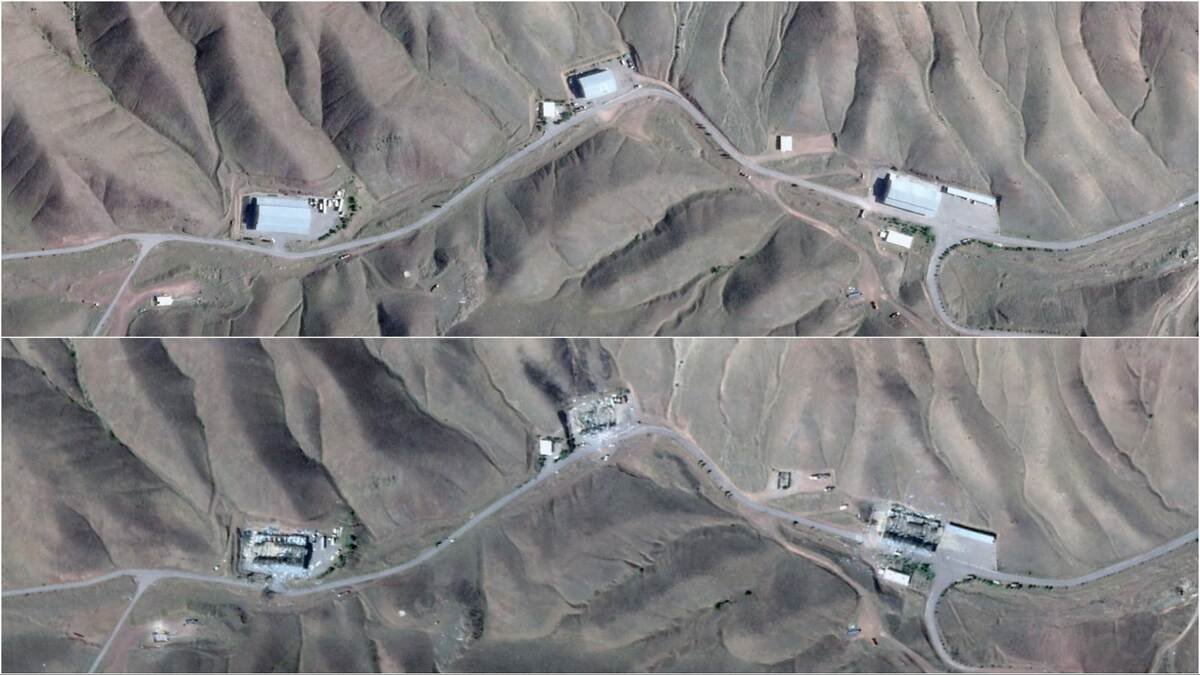
The practical consequence is that independent satellite imagery of launcher sites, the pace of excavation at bombed facilities, and any renewed salvo will tell us more than another unsupported stockpile estimate. A renewed salvo would show directly how many launchers are working.
Diego Garcia Raised Questions About the 2,000-Kilometer Ceiling Without Answering Them
On March 20, according to the Wall Street Journal, citing US officials, Iran fired two ballistic missiles toward Diego Garcia, the joint US-UK base in the Indian Ocean, about 4,000 kilometers from Iranian territory. The confirmed facts are narrow.
UK Defense Secretary John Healey told Parliament on March 23 that two Iranian missiles had been launched in the direction of the base, that one fell short and the other was brought down short of its target, and that neither missile got close, as reported by Al Jazeera.
Iran denied the attack, calling it an “Israeli false flag,” and NATO’s secretary-general said the alliance could not confirm Israel’s claim that the missiles were intercontinental.
Beyond that, the picture is assessed rather than established. Israel’s chief of staff, Eyal Zamir, said Iran had launched “a two-stage intercontinental ballistic missile with a range of 4,000 kilometers.”
Analysts disagree on what the weapon was. Hudson Institute’s Can Kasapoglu, citing Israeli assessments of a two-stage design, argued that it points away from the Khorramshahr family and toward Iran’s space launch vehicles.
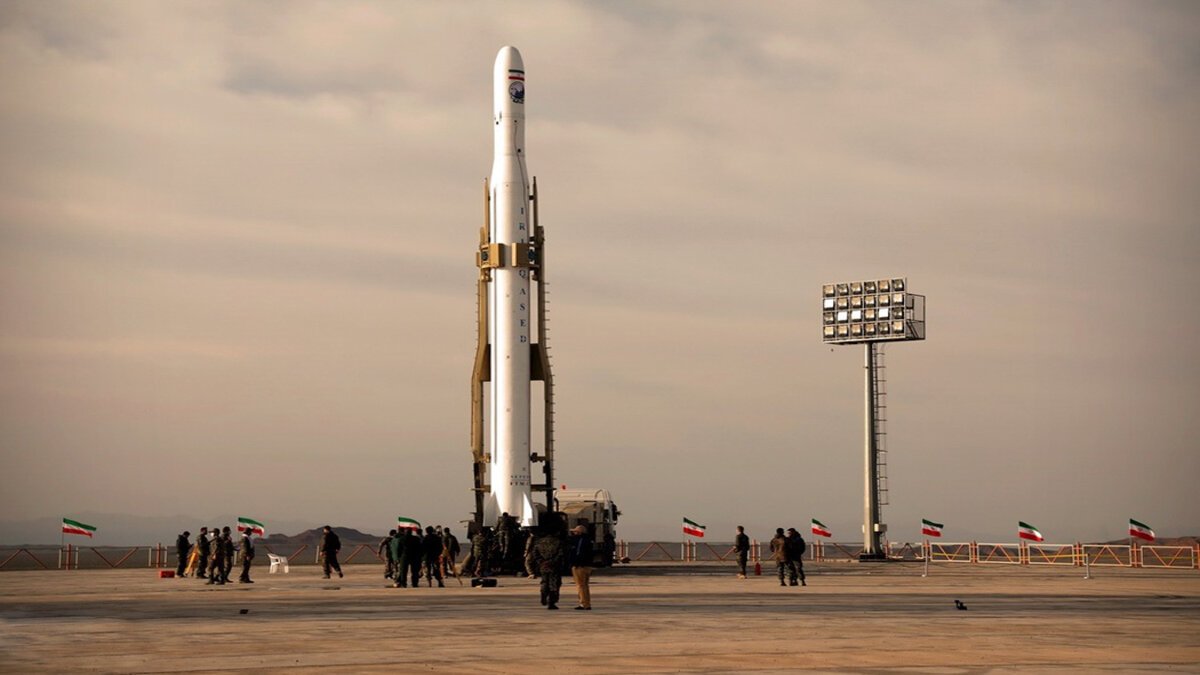
SIPRI’s Markus Schiller said there was not much to go on, named Khorramshahr as the obvious candidate if it carried a very light warhead, and noted that a “two-stage” description might reflect the warhead separating in flight.
So what did Diego Garcia show? That Iran was willing to attempt a strike at roughly twice its declared limit. It did not show that Iran can reliably do so, since neither missile reached its target, and it did not establish what the missile was or whether “ICBM” is the right label.
As examined in Nuclear Deterrence in the Space Age, the line between a space launcher and a long-range missile has always been thin, which is why the distinction matters well beyond Iran.
Iran Calls the Fattah Hypersonic, and the Label Needs Unpacking
Iran unveiled the Fattah in June 2023 as its first domestically made hypersonic missile and later announced a Fattah-2. Both claims come from Iranian state media, and independent verification of their performance is limited. The harder question is what the label actually means.
A ballistic reentry vehicle can itself travel at hypersonic speed, so speed is not the distinction. The difference is flight architecture. Technical commentary describes the Fattah as a ballistic missile whose reentry vehicle carries a small motor for maneuvering in the final phase.
A boost-glide weapon is different: after separating from its booster, a glide body performs sustained aerodynamic maneuvering within the atmosphere.
During the 2026 war, the Revolutionary Guards claimed on March 2 to have used “Khyber” missiles against senior Israeli positions. Impact photographs alone cannot show which variant was used, and the exact type remains unclear. Whether terminal maneuvering degraded interception is plausible but unmeasured, since no public data shows how often it happened.
As examined in Can Hypersonic Missiles Be Intercepted? Defense Systems, Technology, and Limits of Current Capability, a maneuvering warhead is not necessarily a hypersonic glider, and Iran’s place among hypersonic powers is covered in Countries With Operational Hypersonic Missiles: Global Status 2026.
Missile Defenses Absorbed the Salvos, but Interceptor Stocks Became the Constraint
Iran’s missiles met layered defenses that include US Patriot and THAAD batteries and Israel’s Arrow and David’s Sling systems. Public statements on how many incoming weapons were stopped come mostly from the governments involved, and no independent audit of interception rates exists, so this article relies on none of them. What can be said comes from a more durable source.
The Congressional Budget Office estimated in a September 15 letter that the US has probably used between one-half and two-thirds of its combined inventory of certain Patriot, THAAD, Standard Missile-3 and Standard Missile-6 interceptors since June 2025, spanning both conflicts.
It added that rebuilding those inventories would probably take at least five years even if production increased, and warned the shortfall would be especially problematic in a conflict with an opponent holding large numbers of ballistic and cruise missiles. That is the pattern examined in Patriot and THAAD: Inside America’s Layered Missile Defense and the Interceptor Shortage, where production, not technology, limits how long a layered defense can be sustained.
The sensor layer matters as much as the interceptors, a point developed in Tracking Hypersonic Missiles from Space: The Sensor Architecture Reshaping Missile Defense.
The asymmetry runs both ways. A defender who must spend a costly interceptor on each incoming missile pays more than the attacker, while an attacker that loses launchers cannot keep firing. The war pressed on both limits at once, and neither has yet been fully measured.
Where Things Stand on October 4 Matters Only for What It Reveals About the Force
A ceasefire began on April 8, and a memorandum signed on June 17 set out terms to end the war. The memorandum was declared over in early July, and exchanges of fire resumed. JINSA counts at least 564 Iranian missiles and drones launched since then. As of October 4, there is no settlement, and diplomacy continues alongside the threat of renewed strikes.
What does that pattern say about the missile force? Fire since the resumption has been smaller than the opening salvo of February.
The New York Times, citing a Western security official, as summarized by JINSA, reported that Iran has carried out an average of ten anti-ship missile and thirty drone attacks per week against commercial vessels in the Strait of Hormuz since early August. If accurate, that is a different use of the force: sustained, low-volume fire against shipping instead of mass salvos against states.
Iranian officials have also made two claims about the force itself. An adviser to the Revolutionary Guards said on October 1 that Iran had used a long-range ballistic missile to hit a moving target for the first time, without saying what the target was, as reported by CBS News.
Iran’s army spokesman said on October 4 that Iran had begun extending its missiles’ range after concluding during the war that an upgrade was necessary, as reported by Iran International. Both are unverified statements by Iranian officials. They do indicate the direction Iranian officials say Iran is taking, toward range and anti-ship use, which are two of the questions this article has been tracking.
A force that is firing less is not the same as one that has been defeated, and it is not the same as one that is intact. Every claim about Iran’s capability needs its date attached, because a statement made in March describes a different arsenal than one made in October.
Strategic Implications: A Slower Force Is Not an Eliminated One
The evidence supports a narrower conclusion than either side’s public statements. Iran’s missile force showed it can deliver a very large opening salvo, and it showed that sustained fire depends on launchers that are vulnerable. At the same time, credible reporting suggests that a substantial share of the arsenal and its launchers survived, and that Iran can recover more. A force with reduced tempo and a recoverable inventory can still threaten, and it can be rebuilt.
Three questions will decide how this assessment ages.
The first is the launcher count and whether the 70 percent access reported in May holds up under independent imagery or renewed strikes.
The second is production, where the key question is how much manufacturing capacity remains after the reported damage to Iran’s defense industrial base, and how quickly that capacity can replace missiles lost in the war.
The third is range: whether the Diego Garcia attempt was a one-time demonstration or the first sign of a deployed long-range capability, a question made sharper by Iran’s October statement that it is extending missile range.
Ambiguity over Iran’s remaining strength affects both sides’ assessments, while public claims that the missile force has been severely degraded cannot substitute for independent evidence. The same gap between declared and verified capability runs through other missile programs, as India’s Missile Force Explained: Agni, BrahMos and the Hypersonic Push.
In a field where each side controls most of what the public sees, dated analysis and independent imagery remain the best guides, slower than the news cycle and more useful.
Frequently Asked Questions
How many ballistic missiles does Iran have?
Nobody outside Iran’s government knows, and public estimates range widely. Before the June 2025 war, the Israeli military put the stockpile at about 2,500, Reuters reported pre-2026 estimates of 2,500 to around 6,000, and JINSA estimated far higher short-range totals. After the 2026 war, the New York Times reported, citing US officials, that Iran retained about 70 percent of its pre-war stockpile, while FDD judged it may have lost a third to half. Each figure depends on what is counted and who is counting, so the honest answer is a range with its source attached.
What is Iran’s longest-range missile?
Iran says its missiles are limited to 2,000 kilometers, and Foreign Minister Abbas Araghchi repeated that in early 2026. CSIS’s table lists the Emad, Sejjil and Khorramshahr at roughly 1,700 to 2,000 kilometers, and some configurations are reported to be higher depending on payload. In March, Iran fired two missiles toward Diego Garcia, about 4,000 kilometers away, and the UK confirmed neither reached the base. On October 4, Iran’s army said it had begun extending missile range, an unverified statement. The attempt shows intent to strike at long range, but not that Iran can do so reliably.
Does Iran have hypersonic missiles?
Iran says it does, but independent verification is limited. It unveiled the Fattah in June 2023 as a hypersonic missile and later announced a Fattah-2, and technical commentary describes the Fattah as a ballistic missile with a maneuvering reentry vehicle. That is different from a boost-glide weapon, and the March 2026 Revolutionary Guards claims about “Khyber” missiles did not identify the type used. Operational status in this field depends on production and deployment evidence, which has not been published.
How did Iran’s missile force perform in the 2026 war?
Iran launched a very large opening salvo, but its launch rate fell sharply afterward. CENTCOM reports more than 500 ballistic missiles and over 2,000 drones in the first four days, and CSIS reports missile launches fell about 90 percent within a week. One major explanation is the campaign against launchers, though missile rationing, operator risk, and damage to support sites are also plausible, and public evidence cannot weigh them. A force that fires massively once and then slows sharply has shown both strength and a limit.
How many launchers and missiles survived the war?
Estimates conflict, and no independent count exists. CBS News reported in April, citing US officials, that about half of the stockpile and launch systems were intact at the ceasefire, and the New York Times reported a month later that Iran retained roughly 70 percent of its stockpile and mobile launchers. FDD judged it may have lost about half its launchers and a third to half of its missiles. Part of the difference is definitional, since buried but recoverable missiles can be counted either way, and the most useful future evidence will be independent imagery of launcher sites and any renewed salvo.
Sources and References
US Central Command — statements on opening-phase launches and on strikes against Iran’s missile industrial base, as reported by FDD and Gulf News, March to May 2026
UK government — confirmation of the Diego Garcia launches, as reported by CNBC, March 22, 2026
Congressional Budget Office — letter on the cost of the Iran conflict and interceptor use, September 15, 2026, as reported by Breaking Defense, CNBC and Military Times
Department of War — press briefing of April 8, 2026, as reported by CBS News, PBS NewsHour and Fox News
CSIS —Missile Threat, “Missiles of Iran”
CSIS — “Last Rounds? Status of Key Munitions at the Iran War Ceasefire,” 2026
SIPRI — “What does the reported attack on Diego Garcia tell us about Iran’s missile capabilities? A Q&A with Dr Markus Schiller,” 2026
Hudson Institute, Can Kasapoglu — “Iran’s Attempted Strike on Diego Garcia and the Emerging Strategic Threat,” 2026
Foundation for Defense of Democracies — Behnam Ben Taleblu, “Evaluating the Damage to Iran’s Ballistic Missile Arsenal,” May 26, 2026
FDD’s Long War Journal — “Analysis: Why Iran’s ballistic missile launches are declining,” March 2026
Institute for the Study of War and Critical Threats Project — Iran Update, March and September 2026
JINSA — Iran War Updates, September 1-2 and October 1-2, 2026, and “Iran’s Missile Firepower Has Almost Run Out,” March 2026
Alma Research and Education Center — “Iran Situation Assessment, February 2026”
CBS News —”Iran’s military more capable than Trump administration is publicly acknowledging, sources say,” April 2026, and live updates of October 1, 2026
The New York Times — reporting on US intelligence assessments of Iran’s missile stockpile, May 12, 2026, as relayed by i24NEWS, The Times of Israel, The Jerusalem Post and The New Arab
Reuters — reporting on Iran’s missile arsenal, February 28 and March 22, 2026, as republished by Malay Mail
FDD — Evaluating the Damage to Iran’s Ballistic Missile Arsenal
The Times of Israel — “The Israel-Iran war by the numbers, after 12 days of fighting,” June 2025
France 24 — “Looking back at Israel and Iran’s ’12-day war,'” December 2025
MS NOW — “Iran retains missile capabilities despite Trump’s claims, intelligence reports say,” 2026
Congressional Budget Office — The War in Iran: Costs to Date and Potential Costs to Go
Iran International — live coverage of October 4, 2026
The Conversation — “How far can Iran’s ballistic missiles reach?” March 24, 2026
Gulf News — reporting on CENTCOM footage of strikes on Iranian launchers, March 10, 2026
Al Jazeera — Iran denies targeting US, UK Diego Garcia airbase, claims false-flag attack
Related Analysis
For how interceptors perform against the hardest threats, read Can Hypersonic Missiles Be Intercepted? Defense Systems, Technology, and the Limits of Current Capability.
For the production and stockpile limits on Western air defense, read Patriot and THAAD: Inside America’s Layered Missile Defense and the Interceptor Shortage.
For how hypersonic programs compare across countries, read Countries With Operational Hypersonic Missiles: Global Status 2026.
For another case of declared versus verified missile capability, read India’s Missile Force Explained: Agni, BrahMos and the Hypersonic Push.
For the sensor layer that supports missile defense, read Tracking Hypersonic Missiles from Space: The Sensor Architecture Reshaping Missile Defense.
