


Analysis · StrikeOrbit | 2026
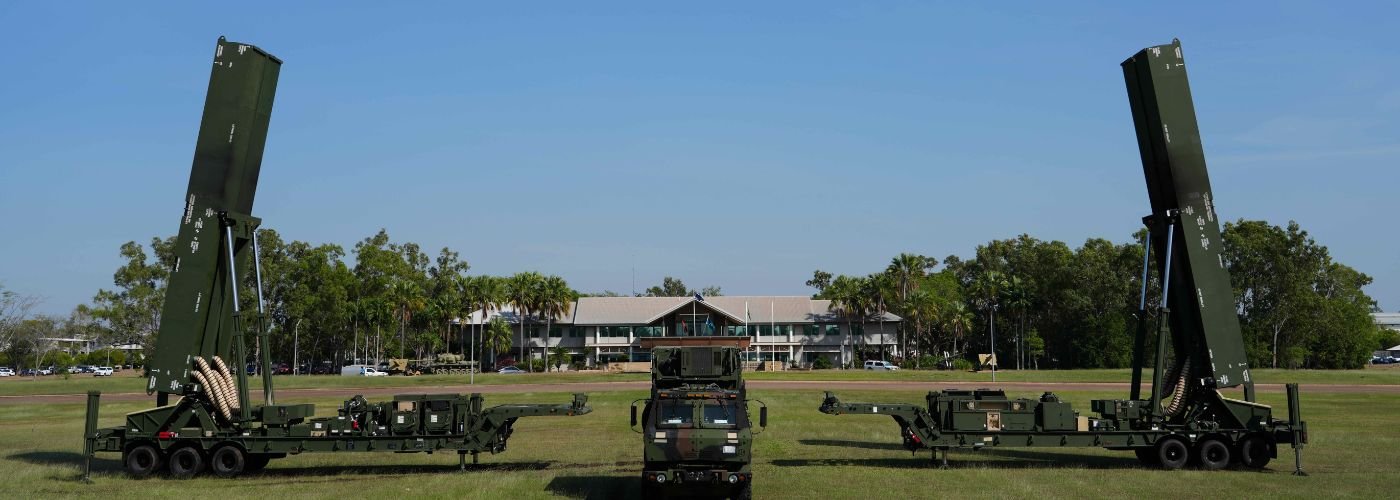
A soldier first handled hardware for the Dark Eagle hypersonic weapon in 2021. The unit received its first live missiles in 2025. It trained alongside Air Force fighters, deployed to Australia for its first employment outside the continental United States, received an official name, and activated as a dedicated battery.
As of September 2026, the United States still had not fully fielded its first hypersonic weapon. That gap is not a story of failure.
It is a story of a genuinely difficult technical problem colliding with an acquisition process that keeps announcing timelines it does not meet, and understanding it requires separating five things that get blurred together in almost every public account of this program: whether the technology has been developed, whether it has passed flight testing, whether it has been delivered to a unit, whether it has been validated as effective under realistic operational conditions, and whether enough of it exists to matter strategically.
Those are five different questions with five different answers. As examined in Countries With Operational Hypersonic Missiles: Global Status 2026, the United States is one of a small number of states now fielding or approaching the fielding of genuine hypersonic strike capability. What that article could only summarize in a paragraph, this one explains in full.
Why the United States Is Building Four Different Hypersonic Programs at Once
The American hypersonic portfolio is not one weapon under one name. It is four programs, run by three services, each built for a different launch platform.
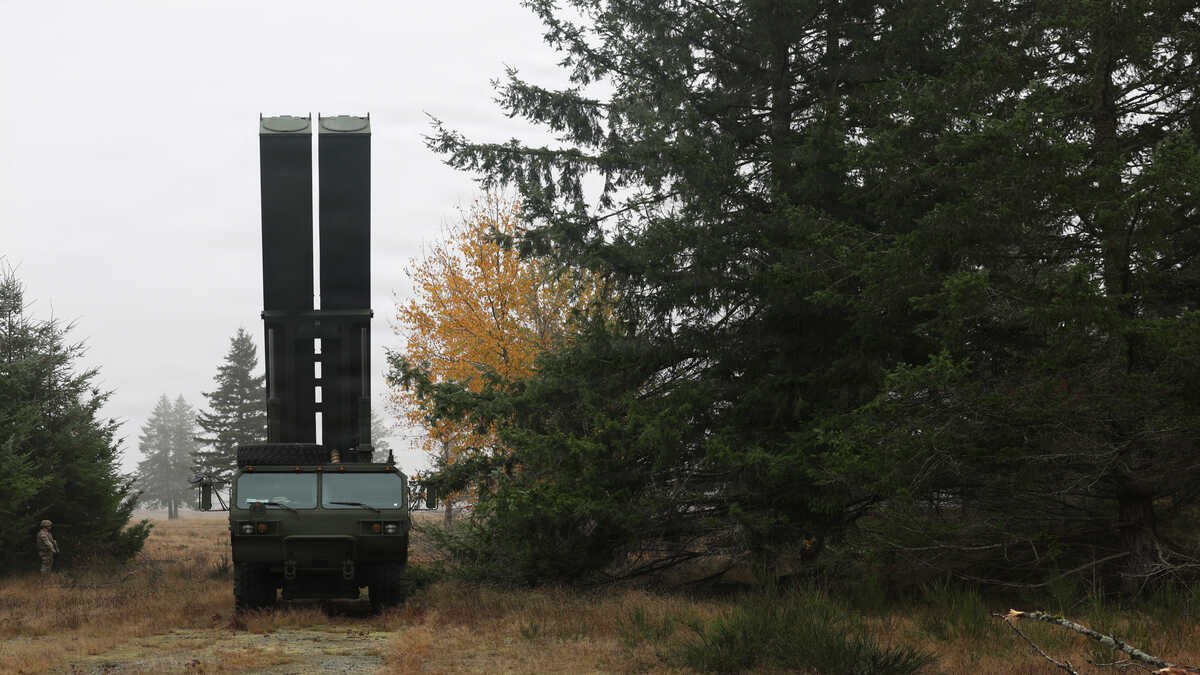
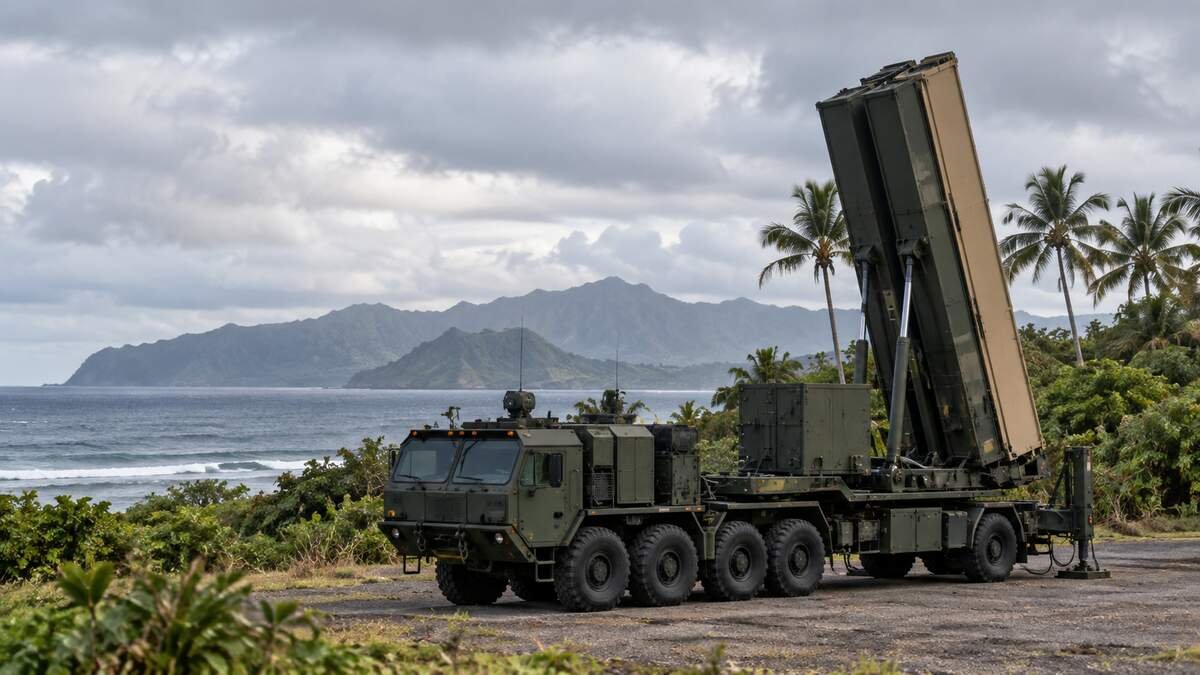
The Army’s Long-Range Hypersonic Weapon, officially designated Dark Eagle on April 24, 2025, is a ground-launched system fired from a truck-mounted battery, intended to strike time-sensitive or heavily defended targets from land-based positions in a theatre such as the Indo-Pacific.
The Navy’s Conventional Prompt Strike adapts the same underlying missile for launch from Zumwalt-class destroyers and, eventually, Virginia-class submarines, giving the fleet a hypersonic option that does not depend on land basing.
The Air Force runs two separate programs: the AGM-183A Air-Launched Rapid Response Weapon, a boost-glide missile carried by the B-52 bomber, and the Hypersonic Attack Cruise Missile, a smaller, air-breathing weapon Raytheon built for eventual carriage on F-15 fighters and bombers.
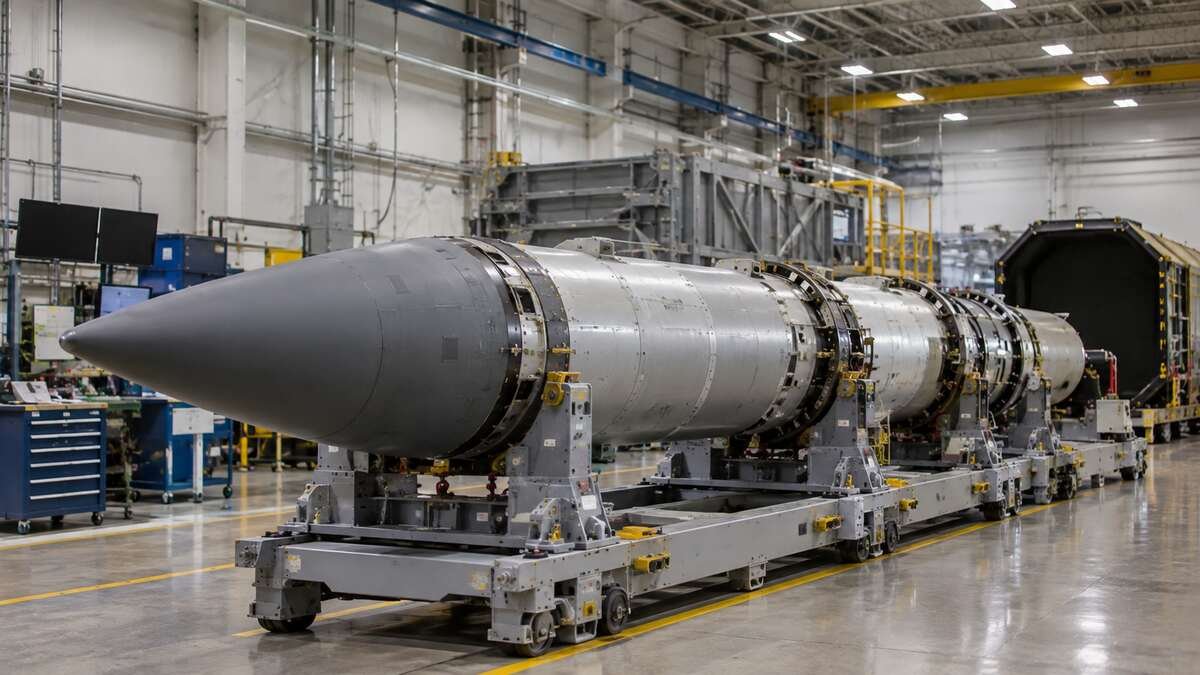
The Army and Navy programs are not simply similar weapons developed in parallel. They share a common missile and glide-body architecture, built around the Common Hypersonic Glide Body, adapted to two different launch environments.
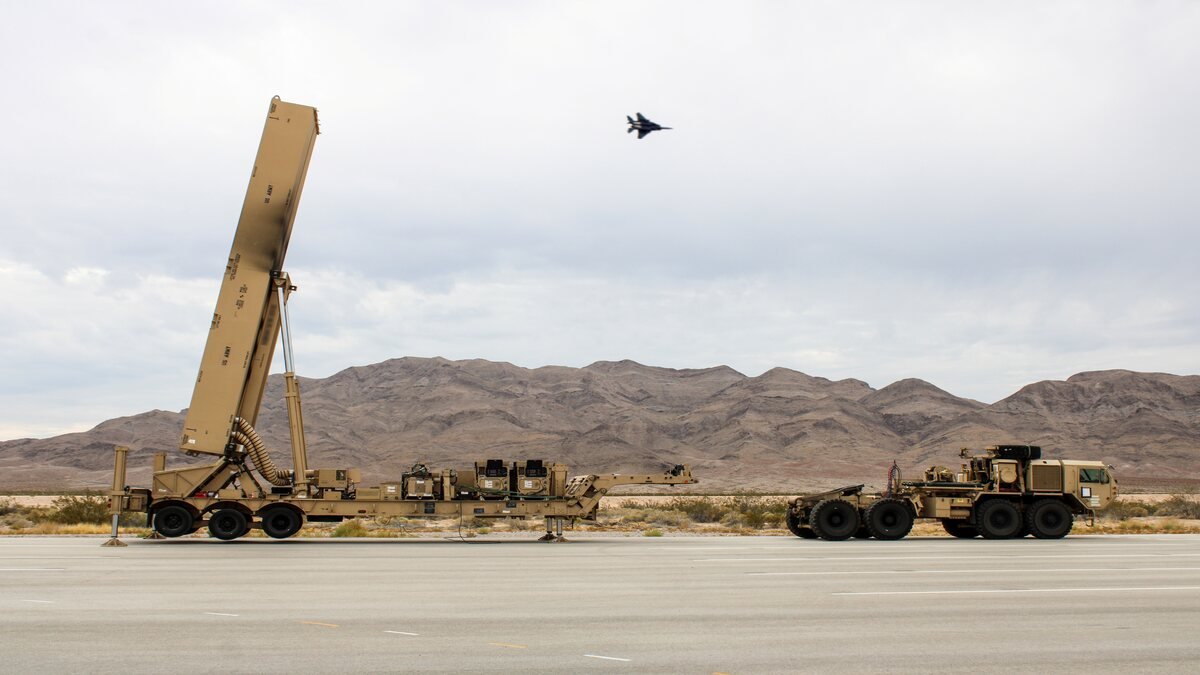
The Congressional Research Service describes the missile component as the common two-stage booster for both the Army’s LRHW and the Navy’s CPS. Dynetics, a Leidos subsidiary, is under contract to produce Common Hypersonic Glide Body prototypes for both services rather than manufacturing the complete weapon independently for each one.
Lockheed Martin serves as the Army’s weapon-system integrator, while Dynetics is under contract to produce Common Hypersonic Glide Body prototypes for both services. That shared foundation was meant to save money and accelerate delivery by avoiding duplicated engineering work. Whether it has actually done so is a separate, more complicated question.
Dark Eagle Hypersonic Weapon: The Long Road From Prototype to Fielding
The Army’s timeline for Dark Eagle shows both real, sustained investment and a persistent pattern of missed deadlines.
The 1st Multi-Domain Task Force’s designated battery at Joint Base Lewis-McChord received the system’s ground equipment, launchers, trucks, and battle operations center in 2021, well before any live missile arrived. That equipment fielding and the missile fielding that followed were, and remain, two distinct milestones, and the distinction matters because public reporting on the program has repeatedly treated the earlier one as though it were the whole story.
The Army originally planned to deliver live missiles by fall 2023. Test failures pushed that back repeatedly: a booster failure in October 2021, a full-system test failure in June 2022, and further delayed or aborted tests through 2023.
The program’s first genuinely successful end-to-end flight tests came in 2024, with a successful flight test from Hawaii in June and a second end-to-end test from Cape Canaveral in December, each adding confidence that the underlying missile design worked. Those successes cleared the way for the Army to formally name the system Dark Eagle in April 2025, and for missile deliveries to actually begin.
The first three missiles were distributed to the unit earlier in 2025, while the Army expected the remaining rounds needed to complete the battery’s basic load by the end of December, Defense News reported in October 2025.
Delivery of missiles is not the same as combat-ready capability, and the Pentagon’s own testing office has been explicit about that distinction.
Bloomberg reported in March 2025, citing the Director of Operational Test and Evaluation, that even as the Army targeted a fielding date of September 30 that year, the office responsible for independently assessing weapons performance said Dark Eagle had yet to prove it would be effective in combat, and that the Army still needed to demonstrate it could produce enough missiles to make fielding meaningful. That September 2025 target came and went.
A dedicated battery, Bravo Battery of the 1st Battalion, 17th Field Artillery Regiment, was formally activated at Joint Base Lewis-McChord in December 2025.
The system was deployed to Australia for Exercise Talisman Sabre in July 2025 and appeared again at Exercise Valiant Shield in 2026.
A $2.7 billion production contract followed in March 2026. Each of these was, in its own way, real progress. None of them, individually or together, has yet produced a fully fielded weapon.
National Defense Magazine’s reporting from September 1, 2026, states the fact plainly: following a year that repeatedly promised delivery, the United States had still not fielded a hypersonic weapon.
One Missile, Two Services, and a Coordination Problem GAO Will Not Let Go
The most consequential finding in the Government Accountability Office’s July 2026 Weapon Systems Annual Assessment is not about any single test failure. It is about how the Army and Navy manage the missile they share.
GAO’s related reporting on Navy hypersonic integration puts combined planned investment across Conventional Prompt Strike, Virginia-class submarine integration, and the Army’s Long-Range Hypersonic Weapon at more than fifty billion dollars. Despite that shared investment and a shared missile design, GAO found that while officials from both services describe themselves as coordinating, investment decisions are largely managed separately, which the report ties directly to the delays and inefficiencies affecting both programs.
The production line is the clearest evidence of the problem. GAO found Lockheed Martin currently capable of building only six to seven rounds of the shared missile per year, against a Navy target of twelve. The causes identified were specific and unglamorous: inconsistent work standards, contamination found in delivered parts, incomplete production kits, workforce gaps, and the underlying complexity of the glide body itself.
Two services can share a missile without sharing a production plan, and the shortfall in output is the visible cost of that gap.
The Navy’s own integration effort has been running on a parallel track of delay. Modernization of USS Zumwalt, the lead ship intended to carry Conventional Prompt Strike, was about ninety-four percent complete as of January 2026 but was running behind schedule due to unplanned additional work, and the GAO assessed the Navy as roughly twenty-four months behind in preparing its three Zumwalt-class destroyers to actually host the missile.
Shipboard flight testing has slipped from an original 2025 target to 2027, with Virginia-class submarine integration not expected until the early 2030s.
As examined in Satellite Constellations and Military Communications in Modern Warfare, complex weapons integration across multiple services routinely runs into exactly this kind of coordination friction, and hypersonic weapons have proven no exception.
The Air Force Shelved ARRW, Then Brought It Back and Expanded It
The Air Force’s hypersonic story took an unusual turn of its own. The service effectively halted the AGM-183A ARRW program in 2023 after a mixed flight test record, shifting its stated priority to the Hypersonic Attack Cruise Missile. That decision did not hold.
The fiscal year 2026 budget revived ARRW with new procurement funding, and in the fiscal year 2027 request, the Air Force’s own posture statement described plans to double production rates on both ARRW and HACM simultaneously, with a combined planned investment of $1.8 billion across the five-year defense program. National Defense Magazine’s September 2026 reporting confirms both programs are now being pursued in parallel rather than one replacing the other.
The public record does not establish a single, official reason for the reversal, and this article should not present one as settled fact. What can be said with confidence is that the timing lines up closely with HACM’s own schedule difficulties: GAO’s assessment found HACM behind its original plan, with its flight test campaign cut from seven tests to five due to design delays, and Raytheon projected to exceed its original cost baseline.
The Air Force now plans thirteen missiles during HACM’s rapid prototyping phase, with initial flight tests treated as the gating decision for whether the service proceeds to fielding in fiscal year 2027. One plausible reading of the evidence is that reviving ARRW functioned as a hedge against the risk that its intended replacement would not be ready on time, even though the Air Force has not publicly reduced its decision to that single explanation.
The fiscal year 2027 budget has since expanded that hedge further, funding an Increment 2 ARRW variant with a new seeker intended to give the weapon a moving-target, ship-killing capability relevant to a potential Pacific contingency.
How This Compares to China and Russia
The honest comparative picture requires holding two things at once, and most public commentary manages only one.
The first is that a broad body of expert opinion, including voices with real institutional standing, assesses the United States as behind both China and Russia in fielded hypersonic capability.
A 2025 Atlantic Council study produced by a task force of former senior Army, Air Force, Pentagon, and National Nuclear Security Administration officials concluded that American delays, combined with active Russian and Chinese deployment, have produced a real battlefield asymmetry.
Analysts at the Hudson Institute have described China building toward a large hypersonic stockpile by the end of the decade, while Russia, though behind China, remains well ahead of the United States, and the Defense Intelligence Agency has separately assessed that China leads Russia specifically in hypersonic development, potentially already possessing a weapon capable of striking American bases in the Pacific.
The second, less frequently reported half of the picture is a genuine methodological counterpoint from within the American analytical community itself.
Todd Harrison of the American Enterprise Institute has argued that America’s comparatively slow pace may sound worse than it is, because China does not possess the same density of maneuverable, high-value naval targets, such as aircraft carriers, that American hypersonic weapons were principally designed to threaten, pointing to China’s three-carrier fleet against eleven for the United States as one illustrative measure of that difference, not a complete accounting of it.
Tom Karako of CSIS offers a more measured version of the same underlying point: China built its early lead while American attention and resources were consumed by two decades of counterterrorism operations, and the United States is now closing that gap rather than starting from zero. Neither point cancels the other.
China and Russia have fielded operational hypersonic systems across a broader set of platforms than the United States has managed so far, with Russia’s Kinzhal already used repeatedly in the war in Ukraine, while the United States has established production lines and accumulated operational experience through exercises and forward deployments. Even as GAO’s own findings confirm that timelines keep slipping and inter-service coordination remains genuinely inadequate, both are true at once, and an article reporting only one would not tell the full story.
The Missing Half of the Equation: Missile Defense
Offensive hypersonic capability has dominated public attention, but the defensive side of the American program is advancing on its own track.
The Missile Defense Agency awarded Northrop Grumman roughly $475 million in additional funding in April 2026 to accelerate development of the Glide Phase Interceptor, a system designed specifically to destroy hypersonic glide vehicles during the middle phase of flight, when they are considered most vulnerable to intercept. That funding accelerated the program’s development timeline; it did not accelerate its arrival.
Initial operational capability remains projected for the early 2030s.
As examined in Can Hypersonic Missiles Be Intercepted? Defense Systems, Technology, and the Limits of Current Capability and Tracking Hypersonic Missiles from Space: The Sensor Architecture Reshaping Missile Defense, an offensive hypersonic arsenal built without a matching ability to detect and defeat an adversary’s own hypersonic weapons addresses only half of the strategic problem these systems were built to solve.
Conclusion
The honest assessment of America’s hypersonic weapons program in 2026 sits between the two extremes that usually get reported. Development has produced a working common missile architecture across two services. Testing has, after repeated failures, produced two confirmed successful end-to-end flights.
Fielding has produced ground equipment in soldiers’ hands since 2021 and live missiles arriving through 2025, an activated battery, and deployments to allied territory.
What has not yet been produced, by the Pentagon’s own independent assessments rather than any outside critic, is validated proof that the weapon performs reliably under realistic operational conditions, or production at a scale sufficient to matter strategically against the timelines China and Russia are already operating on.
That five-stage gap-development, testing, fielding, operational validation, and scale is the same kind of gap this publication examined on the other side of the Pacific in China’s Multi-Domain Precision Warfare: Inside the PLA’s Answer to JADC2, where doctrine and institutional investment have outpaced demonstrated capability in ways independent observers, including Taiwan’s own government, have been careful not to overstate.
The United States has translated its pursuit of hypersonic capability into four parallel programs rather than one. It has built substantial institutional investment behind that effort, including a shared missile design, dedicated units, and expanding production contracts.
Whether the acquisition system behind that investment can close the remaining distance from fielded to proven to sufficient before the strategic window these weapons were built to address closes remains, as of September 2026, the open question that remains unresolved in the Pentagon’s own testing assessments and the Government Accountability Office’s reviews.
Frequently Asked Questions
Is Dark Eagle operational in 2026?
Not fully, as of the most recent independent reporting. The Army has built substantial infrastructure around the system, including ground equipment fielded since 2021, live missile deliveries through 2025, an activated battery at Joint Base Lewis-McChord, successful flight tests in 2024, and deployments to Australia and Pacific exercises through 2025 and 2026. However, National Defense Magazine reported on September 1, 2026, that the United States had still not fully fielded a hypersonic weapon, and the Pentagon’s own Director of Operational Test and Evaluation stated as recently as March 2025 that the system had not yet proven it would be effective in combat. Fielding equipment and validating combat effectiveness are separate milestones, and the second has consistently lagged the first.
What is the difference between Dark Eagle and Conventional Prompt Strike?
Both weapons are built around the same Common Hypersonic Glide Body and share a common two-stage booster architecture, but they are integrated into different launch systems for different services. Dark Eagle is the Army’s ground-launched version, fired from a truck-mounted battery. Conventional Prompt Strike is the Navy’s version, adapted for launch from Zumwalt-class destroyers and, eventually, Virginia-class submarines. The shared design was intended to reduce costs and accelerate development for both services, though a Government Accountability Office review found that the two services do not fully coordinate their investment decisions on the shared production line they both depend on.
Why has Dark Eagle taken so long to field?
The program has faced a combination of technical setbacks and production bottlenecks stretching back to 2021, including a booster test failure, a full-system test failure in 2022, and multiple aborted or delayed tests through 2023. Successful flight tests did not come until 2024. Even after those successes, the shared Army-Navy production line has been able to build only about six to seven missiles a year against a target of twelve, due to issues including inconsistent manufacturing standards and contaminated parts, according to GAO’s 2026 assessment. The program’s total cost has exceeded twelve billion dollars since 2018.
Is the United States actually behind China and Russia in hypersonic weapons?
The weight of independent assessment says yes in terms of fielded capability, though the full picture includes real nuance. A 2025 Atlantic Council study led by former senior defense officials, Hudson Institute analysts, and the Defense Intelligence Agency have all assessed China and Russia as ahead of the United States, with Russia’s Kinzhal missile already used repeatedly in Ukraine. At the same time, analysts including Todd Harrison at the American Enterprise Institute argue the comparison is not a simple one-to-one gap, since China does not possess the same number of high-value maritime targets, such as aircraft carriers, that American hypersonic weapons are principally designed to threaten. Both the gap and that nuance are genuinely supported by the available evidence.
What is the Glide Phase Interceptor and when will it be ready?
The Glide Phase Interceptor is a missile defense system under development by Northrop Grumman, designed to intercept hypersonic glide vehicles during the middle portion of their flight, when they are considered most vulnerable to defensive engagement. The Missile Defense Agency awarded roughly $475 million in additional funding toward the program in April 2026 to accelerate its development timeline. Initial operational capability is still not expected until the early 2030s, meaning American offensive hypersonic development has significantly outpaced the corresponding defensive capability needed to counter the same class of weapon fielded by adversaries.
Sources and References
U.S. Government Accountability Office — Weapon Systems Annual Assessment, GAO-26-108457 (2026)
U.S. Government Accountability Office — Report on Navy Hypersonic Missile Integration and Conventional Prompt Strike (2026)
U.S. Department of Defense — Army Announces Official Name for its Long-Range Hypersonic Weapon (2025)
Congressional Research Service — The U.S. Army’s Long-Range Hypersonic Weapon (LRHW): Dark Eagle, IF11991 (2026)
Bloomberg — First US Hypersonic Weapon Still Isn’t Combat-Ready, Pentagon’s Tester Says (2025)
National Defense Magazine — U.S. Yet to Fully Field Hypersonic Weapon, But Progress Continues (2026)
Defense News — US Army’s First Hypersonic Battery to Be Fully Equipped by December (2025)
DVIDS, U.S. Army — Behind Dark Eagle: Contracting at the Speed of Hypersonic (2026)
DefenseScoop — GAO: Lockheed Martin Struggling to Build Navy Hypersonic Missile at Scale (2026)
DefenseScoop — Air Force Revives ARRW Hypersonic Missile With Procurement Plans for Fiscal 2026 (2025)
Atlantic Council, Hypersonic Capabilities Task Force — Study on US Hypersonic Weapons Gap Relative to Russia and China (2025)
Foreign Policy — China and Russia Are Winning the Hypersonic Missile Race (2025)
Related Analysis
For analysis of the global hypersonic landscape within which the American program sits, read Countries With Operational Hypersonic Missiles: Global Status 2026.
For an analysis of how missile defense systems are attempting to counter hypersonic threats, read Can Hypersonic Missiles Be Intercepted? Defense Systems, Technology, and the Limits of Current Capability.
For analysis of the space-based sensor architecture needed to detect and track hypersonic weapons in flight, read Tracking Hypersonic Missiles from Space: The Sensor Architecture Reshaping Missile Defense.
For analysis of China’s own command architecture, assessed by a comparable doctrine-institutions-capability framework, read China’s Multi-Domain Precision Warfare: Inside the PLA’s Answer to JADC2.
For analysis of the broader strategic strike balance that these weapons are reshaping, read Hypersonic Weapons in 2026: The Real Global Strike Balance.
