



Analysis · StrikeOrbit | 2026
Tracking hypersonic missiles begins long before an interceptor is launched. As explained in Can Hypersonic Missiles Be Intercepted? Defense Systems, Technology, and the Limits of Current Capability, every interceptor program shares a single prerequisite: no missile can be stopped unless it is first detected, tracked, and maintained under continuous custody.
The Glide Phase Interceptor, for example, cannot engage a hypersonic glide vehicle unless it has been provided with a fire-control-quality track.
THAAD cannot engage a threat its radar cannot find.
Patriot PAC-3 cannot intercept a missile that arrives with no warning.
Before any weapon in any interceptor program can do its job, a sensor somewhere must detect the launch, discriminate the threat from background noise, track it continuously through its entire flight, and pass a precise enough targeting solution to a weapon system that can use it — all within a window measured in minutes at best and seconds at worst.
This is the hardest part of the hypersonic defense problem, and it is the part least visible in public discussion. The physics makes it exceptionally demanding.
Hypersonic targets are 10 to 20 times dimmer than the ballistic missiles that existing satellites in geosynchronous orbit were designed to track — a figure cited by former Under Secretary of Defense for Research and Engineering Mike Griffin that captures precisely why the sensor architecture that worked for Cold War-era threats is structurally inadequate for the threats Russia and China have now deployed.
A hypersonic glide vehicle does not produce the brilliant exhaust plume of a boosting ballistic missile that geosynchronous infrared satellites were optimised to detect.
It glides through the atmosphere at high speed, generating a faint, diffuse heat signature from atmospheric friction rather than a concentrated rocket motor exhaust — a signal that requires fundamentally different sensors, in fundamentally different orbits, with fundamentally different detection algorithms to reliably identify and track.
The United States is spending nearly $35 billion through fiscal year 2029 to build that sensor architecture.
Understanding what it is, how it works, why it is proving more difficult to build than anticipated, and what the strategic consequences are if it fails to deliver on schedule is essential to understanding the true state of hypersonic missile defense in 2026.
The space-based sensor layer is not a supporting element of the missile defense system. It is the foundation without which no other element of the system can function.
As examined throughout StrikeOrbit’s Space and Orbital Warfare analysis — including Missile Warning Satellites and Early Warning Systems Explained — the evolution of space-based missile warning from Cold War detection to hypersonic tracking represents one of the most consequential ongoing military space programs in the world.
Why Ground-Based Radar Cannot Solve the Hypersonic Tracking Problem
Understanding why space-based sensors are necessary — rather than simply preferable — requires understanding the specific geometric and physical limitations of terrestrial radar against hypersonic threats, because these limitations are not engineering problems that better ground-based systems can overcome. They are consequences of physics that only orbital sensor placement can address.
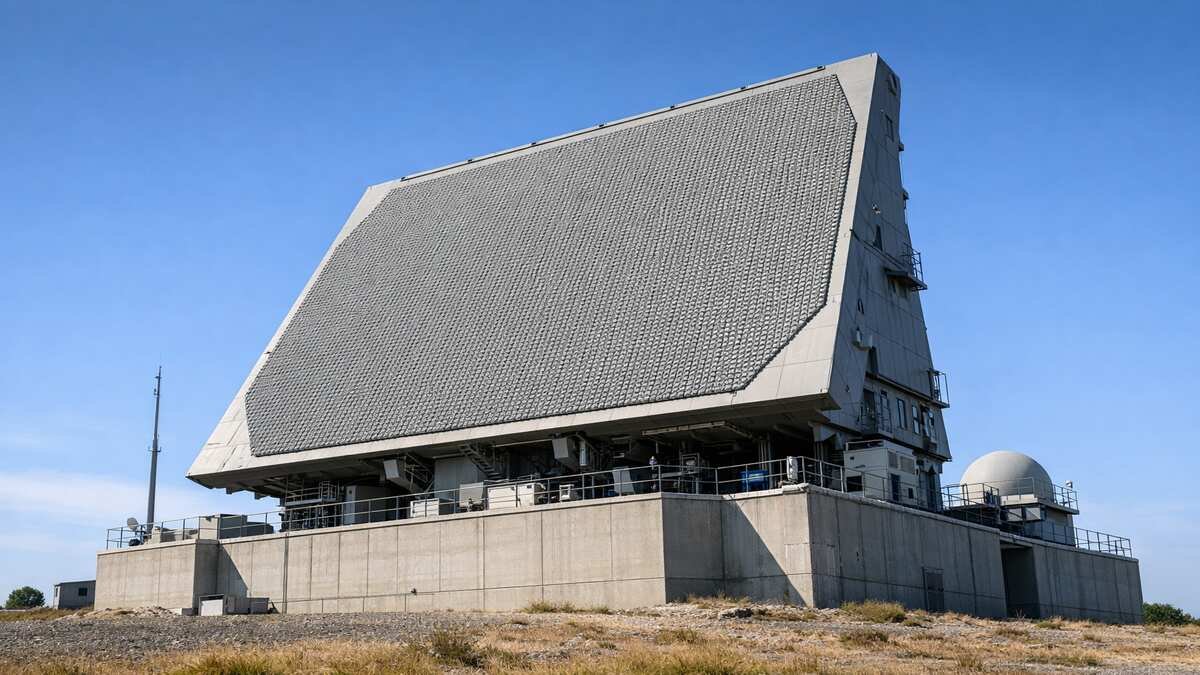
Ground-based radar is limited by the curvature of the Earth.
A radar station can only detect objects that have crossed its radar horizon — the point at which line-of-sight from the antenna meets the Earth’s surface. For a hypersonic glide vehicle flying at 30 to 60 kilometres altitude — below the coverage ceiling of space-based midcourse systems and above the optimal engagement envelope of terminal systems — the effective radar horizon is substantially constrained.
The Congressional Research Service has documented this problem explicitly: most terrestrial-based radars cannot detect hypersonic weapons until late in the weapon’s flight due to line-of-sight limitations, leaving minimal time for defenders to launch interceptors.
For a hypersonic missile travelling at Mach 8, crossing a radar’s horizon at a detection range of 400 kilometres gives a defender approximately 100 seconds from detection to impact — assuming perfect instantaneous response, which no operational system achieves in practice.
Space-based sensors in low Earth orbit do not face this horizon limitation in the same way.
A satellite at 1,000 kilometres altitude has a geometric horizon extending across thousands of kilometres of Earth’s surface, providing persistent observation of missile trajectories from launch through glide phase without the line-of-sight constraints that ground-based radar cannot escape.
This geometric advantage — being above the curvature rather than fighting against it — is the fundamental reason why space-based sensors are not merely a supplement to ground-based radar but a structural requirement for effective hypersonic defense. No improvement to ground-based radar technology changes the geometry of the Earth. Solving the detection problem means moving the sensor into orbit.
Operating these sensor constellations also depends on continuous monitoring of the orbital environment, explored in Space Situational Awareness: Tracking and Securing the Orbital Domain.
The Architecture of Space-Based Hypersonic Tracking — Four Layers Working Together
The United States is not building a single tracking satellite. It is building a layered architecture of multiple satellite systems in different orbits, each performing a distinct function in a chain that runs from initial detection of a launch to fire-control quality targeting data delivered to an interceptor.
This architecture also illustrates how space has evolved into an operational military domain rather than simply a support environment, as discussed in What Is Orbital Warfare? How Space Became a Contested Military Domain.
Understanding the architecture requires understanding each layer and how they interact — because the system only works if all four layers function as an integrated whole.
The first layer is the existing geosynchronous Overhead Persistent Infrared system — currently SBIRS, transitioning to Next Gen OPIR.
These satellites in geosynchronous orbit 22,000 miles above Earth have provided global ballistic missile launch warning for decades. Their wide-area coverage provides the initial detection of a launch — the birth-track that initiates the entire tracking chain.
Their fundamental limitation against hypersonic threats is sensitivity: their sensors were optimised for the bright, concentrated exhaust plumes of boosting ballistic missiles, not the dim, diffuse heat signatures of hypersonic glide vehicles in atmospheric flight.
Lockheed Martin is currently under contract for two Next Gen OPIR satellites with enhanced sensitivity launching in 2026 and 2027 — designed to improve detection of exactly the advanced threats that SBIRS struggles with. Next Gen OPIR represents an incremental improvement of the geosynchronous layer, not a transformation of the architecture.
Initial launch detection alone, however, is insufficient. Persistent tracking throughout the glide phase requires a second layer much closer to Earth — one that can maintain continuous custody of a maneuvering target across thousands of kilometres without the sensitivity and coverage limitations that geosynchronous altitude imposes.
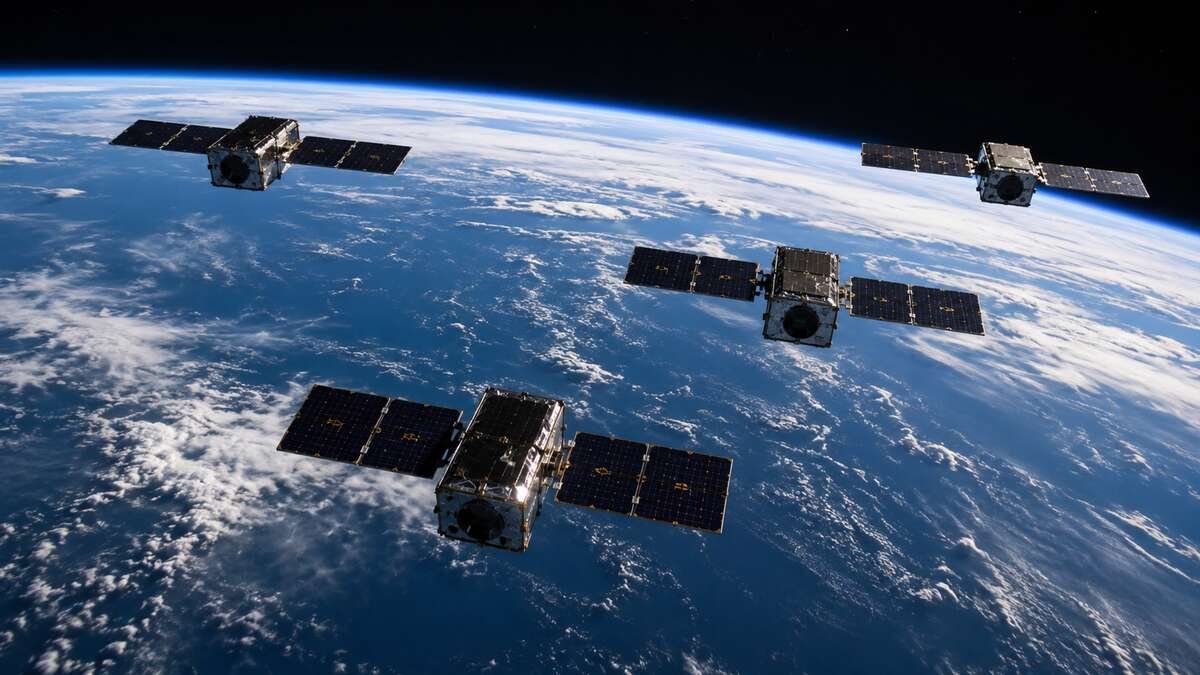
The second layer is the Space Development Agency’s Proliferated Warfighter Space Architecture tracking layer — a constellation of hundreds of small satellites in low Earth orbit, each carrying Wide Field of View infrared sensors designed to detect and track both conventional and advanced missile threats including hypersonics.
LEO satellites at approximately 1,000 kilometres altitude see the same geometry advantage described above — closer to the threats, below the curvature limitation, able to observe a missile throughout its glide phase rather than only at launch or terminal descent.
SDA has awarded contracts for Tranche 0 (launched April 2023), Tranche 1, Tranche 2, and Tranche 3 — the last awarded to Lockheed Martin for 18 satellites worth over $1 billion.
The transport layer — 300 to 500 satellites carrying data relay rather than sensors — connects the tracking satellites’ data to ground systems and weapon systems at low latency, ensuring that a track generated over the Pacific can reach a ship-based interceptor in the Atlantic within operationally useful timescales.
Total DoD commitment to PWSA since 2020 has reached nearly $11 billion, with $35 billion planned through FY2029.
The third layer is HBTSS — the Hypersonic and Ballistic Tracking Space Sensor. Where the PWSA tracking layer uses wide-field-of-view sensors for broad coverage and initial detection, HBTSS uses medium-field-of-view sensors for higher-precision tracking once a threat has been cued by the wide-field layer.
HBTSS provides fire control quality data — the precise position, velocity, and trajectory information that an interceptor’s guidance system needs to execute a successful engagement. Without HBTSS-quality data, a GPI or SM-6 has a target indication but not a weapons-grade track.
That declaration of readiness was not universally shared within the Space Force at the time: Chief of Space Operations Gen. Chance Saltzman cautioned in the same period that the broader PWSA architecture remained nowhere near finalized — a reminder that a single contractor’s production readiness for one satellite type is a narrower claim than the operational readiness of the fully integrated system this article describes.
The MDA awarded contracts to both L3Harris and Northrop Grumman in January 2021 to build competing prototype HBTSS satellites. Both were launched in February 2024.
Only the L3Harris satellite has satisfied program requirements — the Northrop Grumman prototype has not met all performance criteria.
Space News reported that L3Harris had gained an early advantage in the competition to develop space-based missile sensors for the Golden Dome architecture, reflecting the program’s emphasis on reliable detection and tracking of hypersonic missile threats before operational deployment.
In March 2025, HBTSS data successfully demonstrated detection, tracking, and simulated engagement of a maneuvering hypersonic target in a test with USS Pinckney. L3Harris declared readiness for full-rate production in April 2025.
L3Harris’s space-based missile warning and defense program page documents the company’s work across the Hypersonic and Ballistic Tracking Space Sensor (HBTSS), the Proliferated Warfighter Space Architecture (PWSA), the Space Force’s Wide Field of View missile warning sensor, and the Medium Earth Orbit Missile Track Custody program, illustrating how these systems contribute to the broader U.S. space-based missile tracking architecture.
The Discriminating Space Sensor — a new initiative to distinguish real warheads from decoys and debris — is being developed to complement HBTSS, with a prototype targeted for 2029.
The fourth layer is the Space Force’s Resilient Missile Warning and Missile Tracking program in Medium Earth Orbit — an intermediate altitude layer that adds low-latitude coverage and tracking custody to complement both the geosynchronous and LEO layers.
The Space Force requested $846 million for this program in FY2025.
In 2022, the Space Force established a Combined Program Office specifically to coordinate all three tracking efforts — PWSA, HBTSS, and MEO — recognizing that the architecture only delivers its full capability when all three layers function as an integrated system rather than as independent programs.
The constellation has continued to grow through 2026: SDA confirmed its third successful Tranche 1 transport-layer launch in July 2026, bringing more than 60 transport-layer satellites into orbit, with initial Tranche 1 warfighting capability targeted for 2027.
In July 2026, SDA also awarded a further $1.75 billion specifically to accelerate the tracking layer under Golden Dome — a new Accelerated Missile Defense Tracking Layer Tranche 3 effort, with L3Harris receiving $955 million for 18 HBTSS-like missile defense satellites and Sierra Space receiving $798 million for 18 additional missile warning and tracking satellites, both interoperable with the existing Tranche 1 and Tranche 2 constellations through a common ground system.
The GAO Has Identified Serious Delivery Risks — Published January 2026
The January 2026 GAO assessment provides the most direct independent examination of the space-based missile tracking architecture available outside classified channels. Report GAO-26-107085, published January 28, 2026, is titled “Missile Warning Satellites: Space Development Agency Should Be More Realistic and Transparent About Risks to Capability Delivery.” Its findings deserve direct engagement.
The GAO found that SDA’s strategy to use commercial products in a novel way has led it to overestimate the technology maturity of some PWSA-enabling technologies.
Both space and ground contractors told the GAO they had underestimated the complexity of PWSA development and integration. With limited integrated capability demonstrated in Tranche 0 and complex integration and interoperability requirements remaining, the GAO assessed the risk to delivering missile warning and tracking capabilities in Tranche 1 as high.
The report specifically identified SDA’s need to be more realistic and transparent about these risks in its communications with Congress and the public.
This is not a program cancellation signal — the GAO acknowledges that SDA is taking a new approach in Tranche 3 that may address some integration challenges.
But the January 2026 findings confirm a pattern that defense acquisition specialists recognize: the gap between individual component capability and system-level integrated performance is frequently larger than program offices acknowledge publicly, and the hypersonic tracking architecture is no exception.
A satellite that can track a hypersonic target in a controlled demonstration is not the same as an operational constellation that can reliably track multiple simultaneous hypersonic threats under adversary jamming, spoofing, and anti-satellite pressure in real combat conditions, with full integration to ground systems and interceptors. The distance between those two things is where the program’s real risk lives.

China and Russia Are Developing Space-Based Tracking of Their Own — and Targeting Ours
The space-based missile tracking competition is not unidirectional. China and Russia both understand that their hypersonic arsenals’ effectiveness depends on degrading American space-based tracking capability — and both have invested in counterspace capabilities specifically designed to target the sensor infrastructure that makes hypersonic interception possible.
China’s Information Support Force, restructured from the Strategic Support Force in April 2024, operates a comprehensive space surveillance and counterspace capability that includes co-orbital proximity operations, direct-ascent anti-satellite weapons, ground-based laser dazzling systems targeting satellite sensors, and electronic warfare directed at satellite uplink and downlink frequencies.
The HBTSS satellites, operating in low Earth orbit at an altitude of approximately 1,000 kilometers, are within the engagement range of Chinese and Russian ASAT capabilities — making the constellation’s survivability under actual conflict conditions a genuine open question that program cost estimates do not fully address.
The systems capable of threatening these constellations are examined in greater detail in Anti-Satellite Weapons: Capabilities, Systems, and Strategic Implications.
China is also building its own space-based missile tracking and warning infrastructure — not to defend against hypersonic missiles but to support their employment of them.
The Yaogan series of remote sensing satellites and the Jianbing reconnaissance constellation provide the persistent tracking of naval surface groups and ground targets that Chinese long-range precision strike weapons require to function effectively at the ranges they are designed for.
A DF-21D anti-ship ballistic missile cannot engage a carrier strike group 1,500 kilometres away without continuous space-based targeting data to update its terminal guidance.
The strategic symmetry here matters.
The Chinese military’s investment in space-based ISR is as much an enabler of its offensive hypersonic capability as an American HBTSS constellation is an enabler of American defensive interception capability. Both sides understand this symmetry and are acting on it simultaneously.
The DIA’s May 2026 assessment projected that China could have 4,000 hypersonic weapons by 2035 — a figure that directly shapes the scale requirements of any tracking architecture designed to provide adequate warning and fire control data.
An architecture designed to track dozens of simultaneous hypersonic threats is fundamentally different from one designed for hundreds — and the 300- to 500-satellite transport layer and hundreds of tracking satellites in the PWSA architecture reflect a design requirement driven by this threat scale assessment directly.
The Integration Challenge Is the Program’s Most Consequential Unresolved Problem
The hardest part of building the space-based hypersonic tracking architecture is not building any individual satellite. It is integrating the entire system — sensors in multiple orbits, transport layer relays, ground processing centres, battle management systems, and interceptor weapon systems — into a functioning chain that delivers fire control quality data to a shooter within the operationally relevant timeline.
Each link in that chain must work correctly, continuously, and under adversarial conditions for the system to provide the capability its designers intend.
The PWSA transport layer is the connective tissue of this architecture.
A tracking satellite over the Arctic that generates a precise hypersonic track needs to transmit that data through the transport layer to a ground station, from there to a battle management system, from there to a ship-based Aegis system, before a GPI can be launched against the target.
The latency of that entire chain must be shorter than the engagement timeline available — which for a hypersonic glide vehicle at Mach 8 may be measured in minutes.
Processing this volume of sensor information increasingly relies on artificial intelligence for sensor fusion, data prioritisation, and decision support, as explored in Military AI and the Future of Warfare: Applications, Risks, and US-China Competition.
SDA has committed to a meshed satellite communications architecture that routes data through multiple relay paths simultaneously, reducing single-point vulnerability and minimising latency, but the integrated performance of this system under full operational load has not yet been demonstrated.
The battle management layer adds another integration dependency. JADC2’s role in this architecture is direct and critical, as discussed in JADC2 Explained: The US Military’s Joint Command Network: the integrated command network that connects sensors to shooters across all domains is the framework within which space-based hypersonic tracking data must flow if it is to be operationally useful.
A tracking satellite that cannot talk to an Aegis ship because of data format incompatibility, network latency, or battle management software failure provides no defense regardless of how precisely it can detect a hypersonic glide vehicle.

What the Architecture Means Strategically When Complete
If the space-based hypersonic tracking architecture delivers on its full design intent — HBTSS providing fire control quality tracks, PWSA tracking layer providing global persistent coverage, Next Gen OPIR providing enhanced launch detection, MEO providing low-latitude custody, and the transport layer delivering data to interceptors within engagement timelines — it changes the strategic logic of hypersonic weapons in a way that adversary planners have explicitly acknowledged they fear.
Russia’s Avangard hypersonic glide vehicle and China’s DF-17 and DF-ZF were specifically designed to exploit the tracking gap that current geosynchronous sensors cannot close. Their manoeuvring capability, low altitude flight profile, and dim heat signature together defeat the SBIRS-era architecture.
If HBTSS and the PWSA tracking layer close that gap — if the combination of wide field of view cueing and medium field of view fire control tracking provides the GPI with weapons-grade targeting data throughout the glide phase — the strategic premise underlying these weapons is undermined.
They were designed to be untrackable. If they can be tracked, they can be intercepted. And if they can be intercepted, the strategic investment justifying their development must be re-evaluated.
Both Russia and China understand this logic exactly. Their counterspace programs, diplomatic opposition to American missile defense expansion, and offensive hypersonic development in parallel with defensive space sensor development all reflect the same recognition: the competition between hypersonic offence and hypersonic defense will be decided not by who builds the fastest missile or the most capable interceptor, but by who wins the sensor contest — who can see whom, from where, and fast enough to matter.
That contest is being decided right now, in orbit, in dozens of satellites whose significance most people cannot see.
Conclusion
The space-based hypersonic tracking architecture that the United States is building — HBTSS, PWSA tracking layer, Next Gen OPIR, MEO missile track custody, the transport layer connecting them all — is the most consequential and least publicly understood military space program of the current decade.
It is the foundation without which every interceptor, every dollar invested in GPI, every THAAD battery, and every Aegis-equipped destroyer is ultimately limited by the same constraint: you cannot intercept what you cannot track.
The program faces real challenges.
The GAO’s January 2026 assessment identified high risk to Tranche 1 delivery and called for greater transparency about integration difficulties that have been systematically underestimated. The counterspace threat to the constellation itself — from Chinese and Russian systems designed to blind, jam, or destroy the sensors that make hypersonic tracking possible — remains one of the most consequential unresolved vulnerabilities in the architecture.
And the integration chain from satellite sensor to fire control quality track to interceptor launch has not yet been demonstrated at operational scale under realistic adversarial conditions.
What the program also represents is something that deserves equal weight: the most serious and sustained effort any military has ever made to close a sensor gap that adversaries deliberately designed their most advanced offensive weapons to exploit.
Whether it succeeds — whether HBTSS and the PWSA constellation deliver the tracking capability their designers intend, on the timelines that the threat environment demands, against the counterspace pressure that Russia and China will apply to prevent them from doing so — is the most consequential open question in military space today.
The answer will determine not just the effectiveness of American missile defense, but the strategic logic of an entire generation of hypersonic weapons that were built on the assumption that being seen from space was impossible.
The race to build resilient space-based tracking networks reflects the wider geopolitical competition examined in Great Power Competition and the New Global Order, where technological superiority increasingly shapes military and strategic influence.
That assumption is being tested right now. In orbit. In satellites that most people will never know exist.
Frequently Asked Questions
Why can’t existing satellites track hypersonic missiles?
Existing geosynchronous missile warning satellites, including SBIRS, were designed to detect the bright, concentrated exhaust plumes of boosting ballistic missiles. Hypersonic glide vehicles produce heat signatures from atmospheric friction rather than rocket exhaust — signatures that are 10 to 20 times dimmer than ballistic missiles at the detection ranges geosynchronous orbit sensors were optimized for. The combination of this reduced signature, the 30 to 60 kilometer altitude band where hypersonic glide vehicles fly, and the continuous maneuvering that prevents predictive trajectory computation means that Cold War-era geosynchronous sensors cannot reliably detect, track, or generate fire control data for hypersonic glide vehicles throughout their flight. New sensor systems in lower Earth orbits with different detection algorithms are required to close this gap.
What is HBTSS and what does it actually do?
The Hypersonic and Ballistic Tracking Space Sensor is a satellite-based system developed by the Missile Defense Agency to provide fire control quality tracking data for hypersonic and ballistic missile threats. Where the PWSA tracking layer’s wide-field-of-view satellites provide broad-area detection and initial tracking, HBTSS uses medium-field-of-view sensors to generate the higher-precision targeting data that interceptors require for a successful engagement. Two prototype satellites — built by L3Harris and Northrop Grumman respectively — were launched in February 2024. The L3Harris satellite has satisfied program requirements. A March 2025 test demonstrated that HBTSS data could detect, track, and support a simulated engagement of a maneuvering hypersonic target in conjunction with USS Pinckney. L3Harris declared readiness for full-rate production in April 2025.
What is the Proliferated Warfighter Space Architecture and how does it relate to missile defense?
The Proliferated Warfighter Space Architecture is the Space Development Agency’s program to build a large constellation of small, affordable satellites in low Earth orbit, providing missile warning, missile tracking, and data transport. The tracking layer — planned at hundreds of satellites carrying infrared sensors — will provide global persistent detection and tracking of conventional and advanced missile threats, including hypersonic. The transport layer — 300 to 500 additional satellites — will relay tracking data at low latency to ground systems and weapon systems. DoD has committed nearly $11 billion to PWSA since 2020, with $35 billion planned through FY2029. The GAO’s January 2026 report identified high risk to Tranche 1 delivery, noting that the complexity of integration has been systematically underestimated by both space and ground contractors. The constellation has continued expanding since that report: SDA confirmed more than 60 transport-layer satellites in orbit as of July 2026, with initial Tranche 1 warfighting capability still targeted for 2027, and awarded a further $1.75 billion in July 2026 specifically to accelerate tracking-layer satellites under Golden Dome.
Why is the space-based tracking architecture important for Golden Dome?
Golden Dome’s effectiveness as a layered missile defense system depends entirely on space-based tracking. The Glide Phase Interceptor cannot engage a hypersonic target without fire control quality tracking data from HBTSS. Ground-based interceptors cannot engage threats beyond their radar horizon. Space-based interceptors for boost-phase engagement require precise launch detection and tracking from the first moments of flight. President Trump’s January 2025 executive order specifically directed the acceleration of HBTSS deployment as a core component of the Golden Dome program. The interceptors get the attention in public debate. The sensors are what actually make the system work.
What happens if adversaries attack the tracking satellites themselves?
China and Russia have both developed counterspace capabilities including direct-ascent anti-satellite weapons, co-orbital proximity operations, ground-based laser systems, and electronic warfare targeting satellite frequencies. The HBTSS and PWSA satellites in low Earth orbit are within the engagement range of these capabilities. The PWSA architecture’s proliferated design — hundreds of small satellites rather than a few large ones — is explicitly intended to provide resilience against counterspace attack, since degrading a constellation of hundreds of satellites requires far more effort than targeting a handful of critical assets. However the system’s integrated performance under sustained counterspace attack at operational scale remains untested, and the transport layer’s role as connective tissue creates potential concentration points that adversaries may target to degrade data flow rather than destroy individual sensors.
Sources and References
GAO — Missile Warning Satellites: Space Development Agency Should Be More Realistic and Transparent About Risks to Capability Delivery, GAO-26-107085 (January 2026)
Congressional Research Service — Hypersonic Missile Defense: Issues for Congress, IF11623 (May 2025)
Space News — L3Harris Gains Edge in Race to Build Golden Dome Missile Sensors (April 2025)
Air and Space Forces Magazine — Pentagon to Deploy Space Sensor as Part of Golden Dome (May 2025)
L3Harris Technologies — Space-Based Missile Warning and Defense Program (2026)
Northrop Grumman — Hypersonic and Ballistic Tracking Space Sensor Satellites (2026)
Lockheed Martin — Space-Based Missile Warning, Tracking and Defense (2026)
Defense Intelligence Agency — Golden Dome for America: Current and Future Missile Threats to the US Homeland (May 2026)
Space Development Agency — Proliferated Warfighter Space Architecture Program Overview (2025)
Congressional Budget Office — Golden Dome for America Cost Assessment (May 2026)
Air & Space Forces Magazine — Proliferated Warfighter Space Architecture (2026)
Breaking Defense — HBTSS Coverage and Architecture (2025)
Missile Defense Advocacy Alliance — Hypersonic and Ballistic Tracking Space Sensor (2025)
Space Development Agency — SDA Successfully Completes Third Launch of Tranche 1 Satellites (July 2026)
DefenseScoop — SDA Awards $1.75B in Deals for Additional Golden Dome Missile Tracking Satellites (July 2026)
Space Development Agency — SDA Issues Awards to Build 36 Accelerated Missile Defense Tracking Layer Satellites for Tranche 3 (July 2026)
Related Analysis
For analysis of the interceptors that depend on this tracking architecture to function, read Can Hypersonic Missiles Be Intercepted? Defense Systems, Technology, and the Limits of Current Capability.
For analysis of the existing missile warning satellite infrastructure that space-based hypersonic tracking is being built to supplement and eventually replace, read Missile Warning Satellites and Early Warning Systems Explained.
For analysis of the JADC2 network through which tracking data must flow to reach interceptors, read JADC2 Explained: The US Military’s Joint Command Network.
For analysis of the anti-satellite weapons threatening the tracking constellation described in this article, read Anti-Satellite Weapons: Capabilities, Systems, and Strategic Implications.
For analysis of the hypersonic weapons that this sensor architecture is specifically designed to track, read Countries With Operational Hypersonic Missiles in 2026.
