


Analysis · StrikeOrbit | 2026
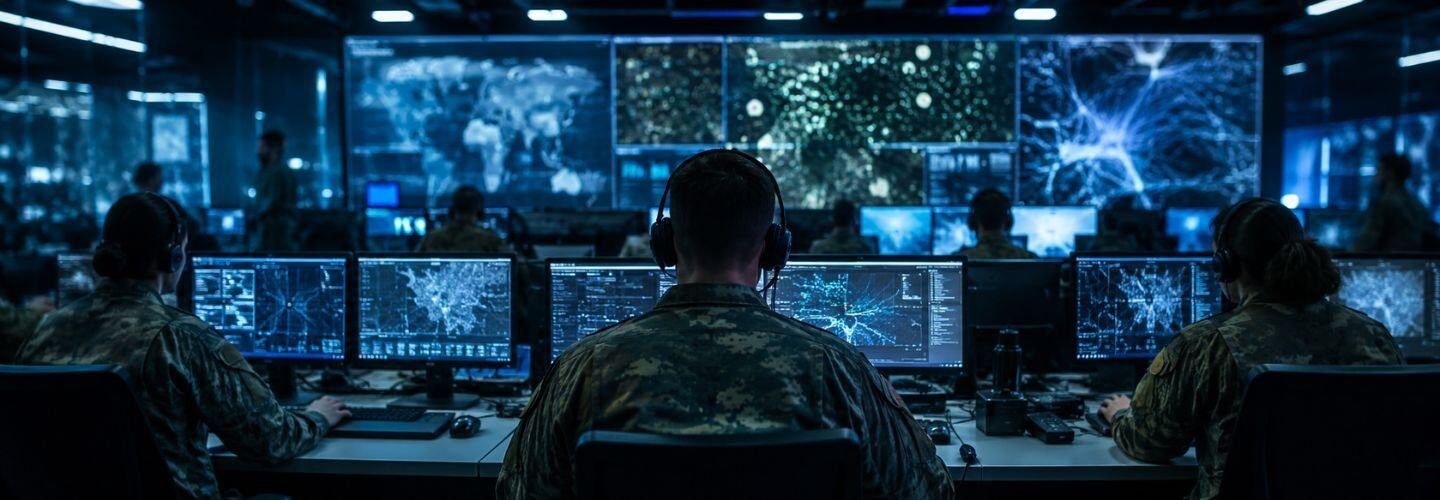
On January 9, 2026, the United States Department of War — the renamed Department of Defense — released its Artificial Intelligence Strategy for the American military.
The document’s tone was unlike any previous policy statement in the history of American defense planning. It declared 2026 the year the department would “emphatically raise the bar for Military AI Dominance.” It directed the military to adopt AI at wartime speed, rejecting the legacy linear model that moves from laboratory to program of record over many years.
The strategy established an Agent Network initiative to unleash AI agent development for battle management and decision support, from campaign planning to kill chain execution. It established a single Chief Technology Officer with department-wide decision authority, specifically designed to break the bureaucratic cycle that AI’s advocates had taken to describing as making entrepreneurs “run endless laps” around the Pentagon.
This is the most significant transformation in American military doctrine since the recognition of cyberspace as a warfighting domain — and it is happening faster, with less public deliberation, and against a more consequential set of unknowns than any previous military transformation in the modern era.
Artificial intelligence is not a new weapon being added to existing military capabilities. It is a new architecture being substituted for existing ways of thinking, deciding, and fighting.
Artificial intelligence is one element of the wider transformation reshaping modern armed forces, examined in Military Modernization in the 21st Century: Precision Strike, Autonomy, and Network-Centric Warfare, where AI is analyzed alongside precision strike, network-centric operations, and battlefield integration.
The implications of that substitution — for deterrence, civilian harm, escalation control, and the long-term balance of military power between the United States and China — are the most consequential unresolved questions in contemporary defense planning.
Understanding those implications requires looking beyond individual AI systems to the institutions, doctrines, and organizational changes that determine how military power is actually generated. Technology alone does not transform warfare; the way militaries integrate it does
As analyzed in Autonomous Weapons and the Ethics of Lethal Autonomy, the convergence of AI with autonomous weapons systems has already produced operational realities that governance frameworks were not designed to address.
This article examines the broader military AI transformation — the applications beyond autonomous weapons, the competitive dynamics between the United States and China, the institutional challenges of integrating AI into organizations built on different assumptions, and the emerging risks posed by accelerating without adequate safeguards.
Military AI Is Not One Technology — It Is a Set of Intersecting Applications Transforming Every Warfighting Function
The public discussion of military AI tends to collapse a diverse set of capabilities into a single frame — autonomous weapons, killer robots, machine-speed warfare. This framing misses most of what military AI actually does, and most of where its transformative effects are actually felt.
Understanding the real scope of military AI requires distinguishing between its applications, because each carries different strategic implications, different risk profiles, and different governance requirements.
Intelligence, surveillance, and reconnaissance represent the most mature and most extensively deployed military AI applications.
Project Maven — the Pentagon’s 2017 initiative to apply AI to the interpretation of drone and satellite footage — demonstrated that machine learning systems could process video feeds at a scale and speed that human analysts could not match, reducing target identification time from hours to minutes.
By 2026, this capability will have expanded from a research program into operational infrastructure.
The Maven Smart System processes intelligence data across services and combatant commands on classified networks, feeding the common operational picture that JADC2 depends on, as discussed in JADC2 Explained: The US Military’s Joint Command Network.
Palantir’s AI targeting and data analytics systems generated $903 million in annual defense revenue in 2025.
Anduril’s AI-powered drone and autonomous systems generated $912 million — both recording their largest-ever annual figures as the Pentagon’s AI-first approach translated from policy to procurement at scale.
Many of these capabilities have already been demonstrated operationally through unmanned platforms, explored in Drone Warfare and Autonomous Systems in Modern Conflict, where battlefield experience illustrates how AI increasingly supports reconnaissance, targeting, and combat operations
Predictive maintenance and logistics AI represents the least visible but arguably most operationally impactful application.
Military equipment operates in environments that impose extraordinary stress, and the maintenance failures that degrade readiness are frequently both predictable and preventable given sufficient data.
AI systems trained on operational and maintenance records can predict component failures before they occur, optimizing maintenance schedules and increasing the proportion of systems available for operations at any given time — translating directly to warfighting capacity without the ethical complexities of targeting AI.
Command and control decision support is the application generating the most active doctrinal debate in 2026.
The Global Information Dominance Experiments — eleven iterations through mid-2024 — specifically tested AI-driven data integration and decision support at the joint force scale, demonstrating that AI systems can compress the time from strategic-level information fusion to decision-maker options presentation from days to hours.
GenAI.mil, launched in December 2025, gave all Department of War employees access to large language models on unclassified networks — followed by integration of xAI’s Grok family of models on classified networks — extending AI-assisted analysis and planning tools across the entire force for the first time.
Cognitive warfare and information operations represent the most strategically dangerous application — the use of AI to generate deepfakes, synthetic media, and targeted influence content at a scale and personalization that human information operations could never achieve.
China’s procurement documents for PLA AI systems are explicit about this dimension: requests for facial recognition, gait recognition, deepfake generation and detection, and psychological targeting tools describe an AI-enabled information warfare capability specifically designed to shape adversary perceptions and degrade decision-making before and during conflict.
The PLA very likely rapidly adopted DeepSeek’s large language models in early 2025, applying them to open-source intelligence processing and analysis — bringing frontier AI capability into Chinese military intelligence workflows at minimal cost and without dependency on American technology.
Georgetown University’s Center for Security and Emerging Technology analyzed thousands of PLA procurement requests published between 2023 and 2024, finding that the documents are strikingly explicit in their requests for sensitive capabilities — facial recognition, gait recognition, deepfake generation, and cognitive domain targeting tools — reflecting an effort to access advanced AI from non-traditional civilian vendors outside China’s traditional defense industrial base.
Military AI Has Become a Central Arena of US-China Competition
These capabilities matter not only because they improve military performance but because they are becoming the central axis of competition between the world’s two most capable military powers. The race to integrate AI into military organizations is now most visible — and most consequential — in the rivalry between the United States and China. Understanding that competition requires understanding both sides clearly.
This technological rivalry reflects the wider strategic competition examined in Great Power Competition and the New Global Order, where emerging technologies increasingly shape national power alongside military and economic strength.
The competition is therefore not best understood as a race for technological superiority alone, but as a contest over which military organization can integrate artificial intelligence into doctrine, command structures, procurement, and operations more effectively than its rival.
Foreign Policy’s April 2026 assessment contained an observation that had not appeared in mainstream policy analysis at this volume before: open-source AI models from Chinese companies lag American frontier models by approximately three months.
Since military AI adoption takes years, the technical lead that American laboratories hold is effectively meaningless from the standpoint of battlefield advantage. The competition is not over. Which nation’s AI is technically superior? It is over which military is most effective in harnessing AI for operational advantage.
China’s approach is structured around intelligentized warfare — a comprehensive effort to embed AI, robotics, and autonomous systems across all military functions to enable what PLA doctrine describes as system-of-systems confrontation.
Future wars, Chinese strategists argue, will be conflicts between integrated networks, in which victory accrues to the side that most rapidly identifies and destroys the critical nodes of the adversary’s interconnected system.
At China’s Victory Day parade in September 2025, collaborative combat aircraft — autonomous jets flying alongside piloted aircraft — were displayed alongside uncrewed ground vehicles and AI-enabled decision support systems. These were not technology demonstrators. They were statements of operational intent.
China’s military-civil fusion strategy provides the institutional mechanism for translating civilian AI development into military capability.
Analysis of 2,857 PLA AI-related contract award notices by Georgetown University’s Center for Security and Emerging Technology found that the majority of suppliers for PLA AI-related military capabilities are now civilian companies and universities rather than traditional state-owned defense enterprises.
Recorded Future’s Insikt Group assessment found that the PLA has developed methods and systems applying generative AI to intelligence tasks, including processing and analysing intelligence data, generating intelligence products, and supporting decision-making. The report concluded that these capabilities are intended to improve the speed, efficiency, and scale of military intelligence operations while reducing dependence on foreign technology.
China’s 15th Five-Year Plan, approved at the March 2026 National People’s Congress, institutionalizes this approach through 2030 — creating what Chinese strategists call born dual-use technologies that serve both civilian and military purposes from conception.
The rare earth export controls implemented in October 2025, restricting elements essential to F-35 fighters, Tomahawk missiles, and advanced AI chips, demonstrate how this integration extends into supply chain leverage as a strategic instrument.
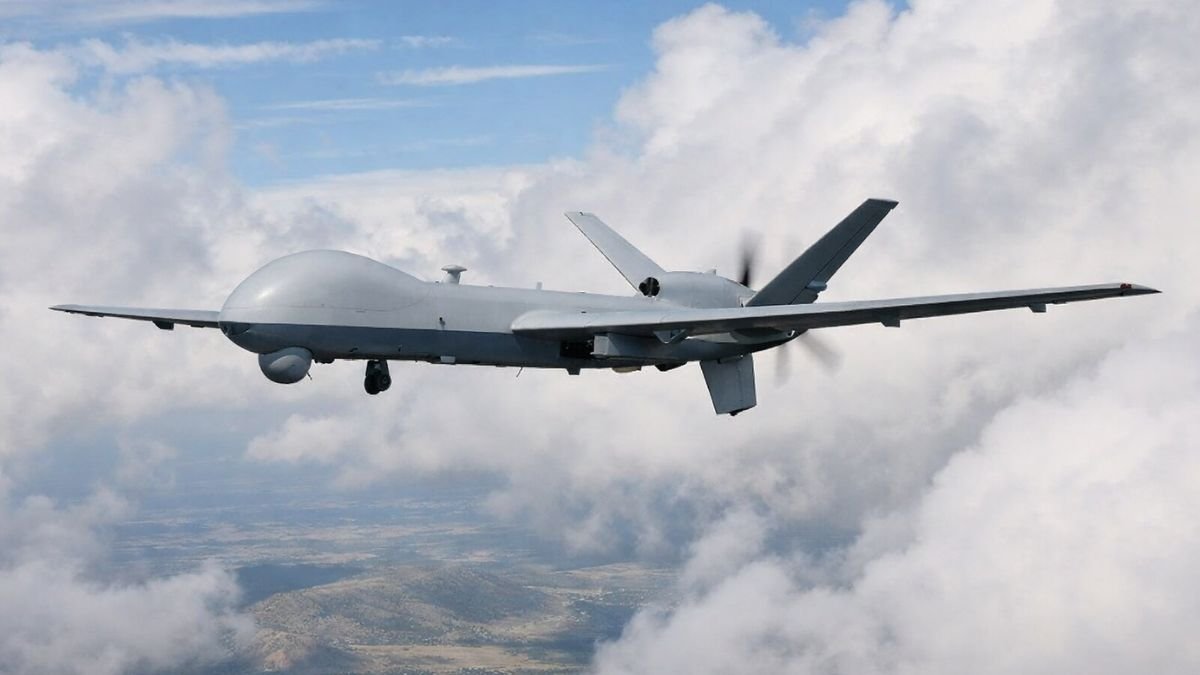
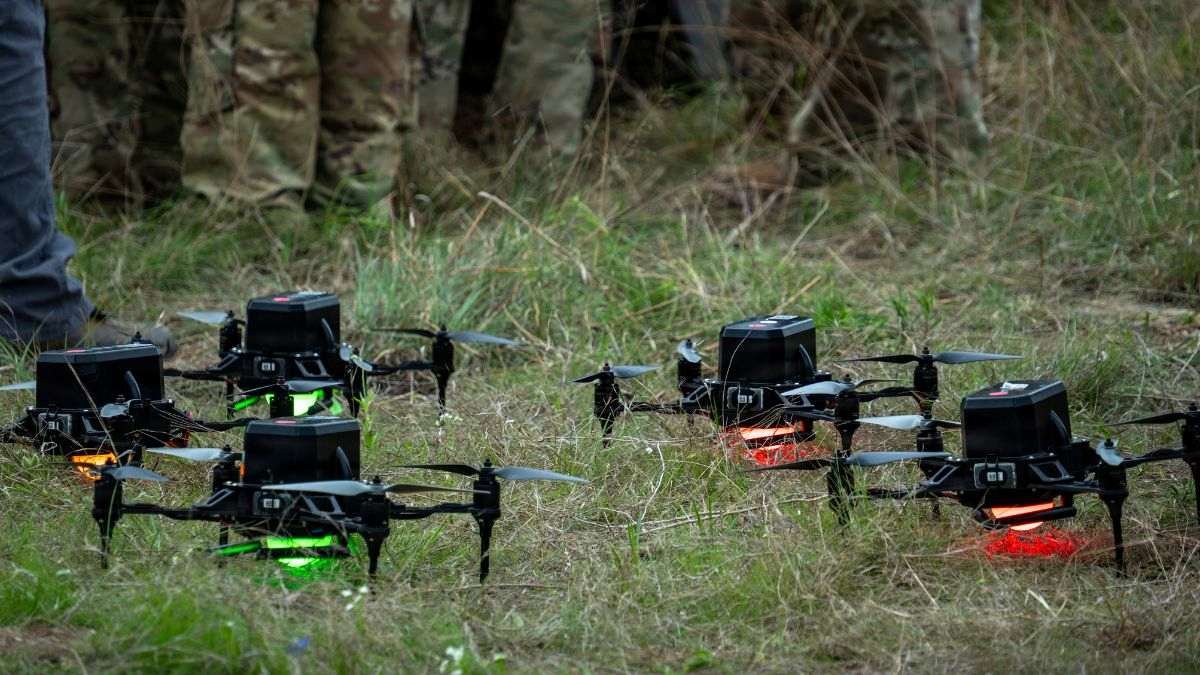
In drone swarm AI specifically, the PLA has, in the assessment of multiple independent analysts, surpassed the United States in at least one capability category.
In January 2026, a PLA institution demonstrated an AI system allowing a single soldier to supervise 200 autonomous drones simultaneously — a force multiplication ratio with no current American equivalent at scale.
The Replicator program’s explicit mission of deploying thousands of expendable autonomous systems is a direct counter to this advantage through volume rather than individual system sophistication.
The genuine limitations China faces are structural rather than technical.
The PLA lacks the volume of real operational data that the United States has accumulated over decades of expeditionary warfare — the training data that makes AI targeting systems accurate comes from operational experience, and China’s AI systems have been tested in simulations rather than actual conflict.
The PLA’s deeply embedded centralized command culture also creates tension with the decentralized decision-making required for effective AI-enabled operations, because AI systems gain an advantage by processing and acting faster than centralized human authority can validate. These are real constraints. They are also constraints that operational experience and doctrinal evolution can narrow — and China is studying every conflict that provides data it currently lacks.
The Pentagon’s AI Acceleration Creates Risks That Its Own Leaders Are Acknowledging
The Trump administration’s AI-first approach has produced the most significant reduction in regulatory oversight of military AI acquisition in the history of the program.
Secretary Hegseth‘s direction to take a “wartime approach to blockers” has coincided with the halving of staff at the Office of the Director of Operational Test and Evaluation, the closure of most civilian protection assessment efforts, and the effective sidelining of ethical AI review processes.
The FY2026 NDAA’s provisions on AI risk frameworks and ethical compliance exist on paper — but the acquisition philosophy driving actual procurement treats speed and deployment volume as the primary success metrics.
The Brennan Center for Justice’s March 2026 investigation documented that the Pentagon’s AI-first acceleration has been met with minimal transparency, insulating it from meaningful public scrutiny and legislative oversight — with even the most basic information about system effectiveness, safety, and legal compliance often hidden from Congress.
The risks this creates are not theoretical. In 2025, the Army acknowledged that a battlefield communications system designed by Palantir and Anduril was a black box that made it impossible to determine whether unauthorized users could access its applications and data.
The integration of outside frontier AI models into classified military systems has itself become a flashpoint. Anthropic’s Claude had been the sole large language model embedded in the Pentagon’s most sensitive classified networks, used for weapons development and battlefield intelligence analysis, specifically because Anthropic maintained firm policy limits against its models being used for mass surveillance or fully autonomous weapons systems.
In February 2026, the Department signed a competing agreement to deploy xAI’s Grok models into those same classified systems under a more permissive standard, described as usable for essentially any legal military purpose, and reports at the time indicated the Pentagon was considering designating Anthropic a supply-chain risk — the same classification typically reserved for companies with ties to adversary states — over its refusal to loosen those restrictions.
The decision proceeded despite Grok having been banned in multiple countries, including Malaysia and Indonesia, after it generated non-consensual sexualized deepfake images, and despite UK regulators opening a formal investigation into the same incident.
By February 2026, GenAI.mil had surpassed one million unique military and civilian users running ChatGPT, Grok, and Gemini side by side — with an April 2026 study finding that of the four major chatbots in use across allied and Pentagon systems, including China’s DeepSeek, ChatGPT was the most susceptible to Russian influence-operation bias in its outputs on Ukraine-related topics.
In 2003, Army Patriot air defense systems shot down two friendly aircraft during the Iraq invasion — an early case study in what happens when automated military systems make lethal decisions faster than human operators can intervene.
AI systems trained on historical data may perform poorly in novel tactical environments outside their training distribution. And AI security vulnerabilities operate at the cognitive level of how a system is trained or processes information — potentially more difficult to detect than cyber vulnerabilities because they work through manipulation of the data and model weights that determine how the AI perceives the world.
Admiral Frank Bradley, head of US Special Operations Command, told the annual special forces conference in Tampa in May 2026 that troops “have to be very careful about how we come to AI’s employment and its inspiration into the delivery of lethality” — a statement of institutional caution from one of the most operationally experienced commands in the American military, delivered at precisely the moment when civilian leadership was driving AI adoption at maximum speed with minimum friction.
That gap between the operational caution of commanders with battlefield experience and the strategic urgency of policymakers responding to Chinese competition is itself one of the most consequential unresolved tensions in American military AI governance.

The AI Competition Is Creating New Categories of Strategic Risk
The most consequential strategic risks from military AI are not the risks of any individual system malfunctioning. They are the systemic risks created by the interaction of AI-enabled military systems with the strategic logic of deterrence and crisis management — poorly understood, poorly studied, and almost entirely unaddressed by current governance frameworks.
Speed compression creates escalation risk that existing crisis management protocols were not designed for.
When AI systems compress decision cycles from hours to minutes and eventually to seconds, the time available for human deliberation, political signalling, and misperception correction before a crisis becomes a conflict is systematically reduced.
The diplomatic and military communication channels that have historically allowed nuclear-armed adversaries to signal resolve, identify misperceptions, and step back from escalatory situations require time to operate — time that AI-enabled operations are structurally designed to eliminate.
The 2026 study of 21 simulated nuclear crisis scenarios found AI systems produced nuclear signaling and tactical nuclear use in the vast majority of scenarios, illustrating how AI operating in high-stakes environments can generate escalatory dynamics without any human intent to escalate.
The interaction between artificial intelligence, crisis stability, and nuclear escalation is explored further in Nuclear Deterrence in the Space Age: How Orbital Warfare Is Changing the Calculus, where emerging technologies are examined through the lens of strategic deterrence.
Opacity creates adversarial misperception risk at exactly the moment when clarity is most important.
AI systems are frequently black boxes — not only to regulators and oversight bodies, but to the organizations deploying them. When an adversary cannot determine whether a military action was the product of human decision or AI recommendation — when an apparent provocation may have been a system error rather than an intentional signal — the calculation of intent that underpins deterrence stability becomes unreliable.
Dependency without resilience creates new vulnerability at critical moments. The same AI infrastructure that provides decisive advantage in normal operations becomes an acute vulnerability if degraded or manipulated during high-intensity conflict.
As discussed in Electronic Warfare and the Future of the Electromagnetic Battlespace, the electromagnetic contest over GPS and satellite communications is already shaping operations in Ukraine. The AI systems that depend on that infrastructure — for data feeds, for sensor fusion, for communications between distributed autonomous platforms — are vulnerable to exactly the adversaries they are being built to defeat.
Because AI-enabled military operations increasingly depend on resilient satellite networks, these challenges are closely linked to the contested space environment examined in What Is Orbital Warfare? How Space Became a Contested Military Domain.
The growing threat posed by counterspace capabilities to the satellite infrastructure supporting AI-enabled military operations is analysed further in Anti-Satellite Weapons: Capabilities, Systems, and Strategic Implications.

Conclusion
Military AI in 2026 is neither the existential transformation its most enthusiastic advocates claim nor the marginal operational enhancement its most cautious critics suggest.
It is something more complex and more consequential than either: a genuine revolution in military affairs whose full implications — for deterrence stability, for civilian harm, for crisis management, and for the long-term balance of power — will not be apparent until AI-enabled military systems have operated in conditions that no laboratory, exercise, or simulation has yet adequately replicated.
The competition between the United States and China is not primarily a race in which one side is clearly ahead.
It is a competition between different institutional models for translating AI capability into military advantage — American speed-first acquisition against Chinese military-civil fusion integration, American operational experience against Chinese production scale, American frontier model superiority against Chinese structural embedding of AI across all military functions. Neither model is obviously superior. Both are accelerating simultaneously.
The outcome will depend less on who develops the most advanced AI model than on which military can adapt its institutions, training, command philosophy, and industrial base quickly enough to exploit artificial intelligence as an operational advantage rather than merely a technological achievement.
What makes this acceleration genuinely concerning is not any individual capability or any specific deployment decision. It is the systematic reduction in the time available for deliberation, oversight, and course correction — the compression of exactly the spaces in which human judgment has historically corrected for the errors that automated systems inevitably make.
The autonomous weapons examined in Autonomous Weapons and the Ethics of Lethal Autonomy are one expression of this trend. The AI-enabled command architectures, targeting systems, information operations capabilities, and decision support tools examined in this article are another.
As decision cycles continue to compress, artificial intelligence will increasingly shape the employment of other advanced capabilities, including the hypersonic strike systems examined in Hypersonic Weapons in 2026: The Real Global Strike Balance.
Taken together, they describe a trajectory toward a military environment in which AI is not a tool that humans use but an infrastructure within which humans operate — and in which the assumptions about control, accountability, and deliberation that underpin both military effectiveness and strategic stability are being tested against operational realities that no governance framework yet adequately addresses.
Frequently Asked Questions
What is military AI and how is it different from AI in civilian applications?
Military AI refers to artificial intelligence systems applied to warfighting functions — intelligence collection and analysis, targeting, command and control decision support, logistics, maintenance prediction, information operations, and autonomous systems. The fundamental difference from civilian AI applications is not technical but consequential: errors in civilian AI produce financial loss or inconvenience. Errors in military AI can produce civilian casualties, escalatory actions, or decisions that contribute to armed conflict. This difference in consequence is why the same AI capabilities deployed commercially with minimal oversight require fundamentally different governance frameworks when applied in military contexts — and why the current acceleration of military AI adoption without commensurate development of those frameworks represents a genuine strategic risk.
How significant is the US-China competition in military AI?
The US-China military AI competition is the most consequential bilateral technology rivalry in contemporary international security. Independent analysis assesses that open-source AI models from Chinese companies lag American frontier models by approximately three months — a gap effectively meaningless given that military AI adoption takes years. The competition is not over which nation’s AI is technically superior at any given moment but over which military can most effectively translate AI capability into battlefield advantage. China has specific advantages in drone swarm AI and production scale. The United States has advantages in operational experience, computing infrastructure, and frontier model development. Both are accelerating investment simultaneously, creating a competitive dynamic driving adoption faster than safety frameworks can keep pace.
What is the Department of War’s AI strategy released in January 2026?
The January 9, 2026, Artificial Intelligence Strategy declared 2026 the year the department would “emphatically raise the bar for Military AI Dominance.” It directed AI adoption at wartime speed, established an Agent Network initiative for AI-enabled battle management from campaign planning to kill chain execution, and designated a single Chief Technology Officer to remove bureaucratic obstacles to AI deployment. It was accompanied by directives transforming the Advana data platform and followed by the launch of GenAI.mil, giving all department employees access to large language models. Critics have noted that the strategy’s emphasis on speed has coincided with significant reductions in testing, evaluation, and civilian harm assessment oversight.
What are the main risks of military AI beyond the autonomous weapons debate?
Beyond autonomous targeting, military AI creates three categories of strategic risk that current governance frameworks inadequately address. Speed compression reduces the time available for human deliberation during crises, narrowing the windows in which de-escalation has historically operated. Opacity makes it difficult for both the deploying military and its adversaries to fully account for AI system behavior, creating misperception risks during exactly the moments when clarity matters most for deterrence stability. And dependency without resilience creates acute vulnerabilities when the data, communications, and sensor infrastructure AI systems depend on is degraded — turning AI from a force multiplier into a liability at precisely the moment when the adversary is attacking those dependencies. A concrete illustration emerged in February 2026, when the Pentagon moved to integrate xAI’s more permissively governed Grok models into classified systems that had previously relied solely on Anthropic’s Claude, reportedly threatening to designate Anthropic a supply-chain risk over its refusal to loosen restrictions on lethal and surveillance applications. This dispute made the tension between acceleration and oversight explicit rather than theoretical.
How is China using military-civil fusion to accelerate military AI?
China’s military-civil fusion strategy embeds military requirements into civilian research and development from inception — creating what Chinese strategists describe as born dual-use technologies serving both civilian and military purposes without requiring adaptation after the fact. Analysis of PLA procurement records found that the majority of AI-related military capability suppliers are now civilian companies and universities rather than traditional state-owned defense enterprises. China’s 15th Five-Year Plan, approved in March 2026, institutionalizes this approach through 2030. China very likely adopted DeepSeek’s large language models for military intelligence processing in early 2025. Combined with China’s scale advantage in manufacturing and its explicit intelligentized warfare framework, military-civil fusion provides a structurally different but comparably rapid pathway for military AI development to the American approach.
Sources and References
Department of War — Artificial Intelligence Strategy for the Department of War (January 2026)
Foreign Affairs — China’s AI Arsenal (March 2026)
Foreign Policy — How the Pentagon Can Manage the Risks of AI Warfare (April 2026)
Brennan Center for Justice — The Military’s Use of AI, Explained (March 2026)
Brennan Center for Justice — The Business of Military AI (March 2026)
Georgetown CSET — Pulling Back the Curtain on China’s Military-Civil Fusion (September 2025)
Georgetown CSET — China’s Military AI Wish List: C5ISRT (February 2026)
Recorded Future / Insikt Group — Artificial Eyes: Generative AI and China’s Military Intelligence (2025)
Defense News — Outpaced by the US, China’s Military Places Selective Bets on AI (April 2026)
The Diplomat — How China’s 15th Five-Year Plan Will Reshape Military Innovation (October 2025)
Washington Times — As the Pentagon Pushes for Battlefield AI, Some Military Leaders Urge Caution (May 2026)
DefenseScoop — New Pentagon Report on China’s Military Notes Beijing’s Progress on LLMs (December 2025)
Forbes — Is the Pentagon Handing China Its Biggest AI Advantage? (February 2026)
Defense One — Grok Is In, Ethics Are Out in Pentagon’s New AI-Acceleration Strategy (January 2026)
National Defense Magazine — AI Models Used by Pentagon Susceptible to Foreign Influence (April 2026)
Related Analysis
For analysis of autonomous weapons and the governance questions raised by AI-enabled lethal decision-making, read Autonomous Weapons and the Ethics of Lethal Autonomy.
For analysis of how JADC2 depends on AI for sensor fusion, targeting, and kill chain compression across all warfighting domains, read JADC2 Explained: The US Military’s Joint Command Network.
For analysis of China’s broader military modernisation and the institutional framework behind military-civil fusion, read China’s Military Modernization: Force Structure, Technology, and Strategic Ambition.
For analysis of NATO’s future capability requirements and how AI is reshaping allied defense planning, read The Future of NATO: Alliance Cohesion in an Era of Great Power Competition.
For analysis of the electronic warfare battlespace within which AI-enabled military systems must operate, read Electronic Warfare and the Future of the Electromagnetic Battlespace.
