


Analysis · StrikeOrbit | 2026
Drone warfare has not just added a new weapon to modern arsenals. It has transformed who can threaten whom, at what cost, and over what distance. A Ukrainian operator using a commercial quadcopter can destroy a Russian armoured vehicle worth millions. Houthi forces have hit Saudi energy infrastructure hundreds of kilometres away with relatively inexpensive drones. Turkish systems have influenced the outcomes of conflicts in Libya and Nagorno-Karabakh. These developments show how unmanned systems are disrupting the traditional link between military power and the ability to impose costs on adversaries.
For most of modern military history, long-range precision strike was the exclusive domain of major powers with advanced air forces and significant defence budgets. That exclusivity has eroded. Drone warfare now requires analysis not only of the technology itself, but also the strategic logic it enables and the countermeasures it demands.
The broader technological context behind these developments is examined in our analysis of military modernization in the 21st century.
From Reconnaissance to Strike — How Unmanned Systems Became Weapons
Early military drones were mainly created for reconnaissance. During the Cold War, the United States and Israel tested unmanned aircraft capable of photographing restricted areas without risking pilots. These systems needed specialised ground infrastructure, satellite links, and trained operators, so only technologically advanced countries could operate them.
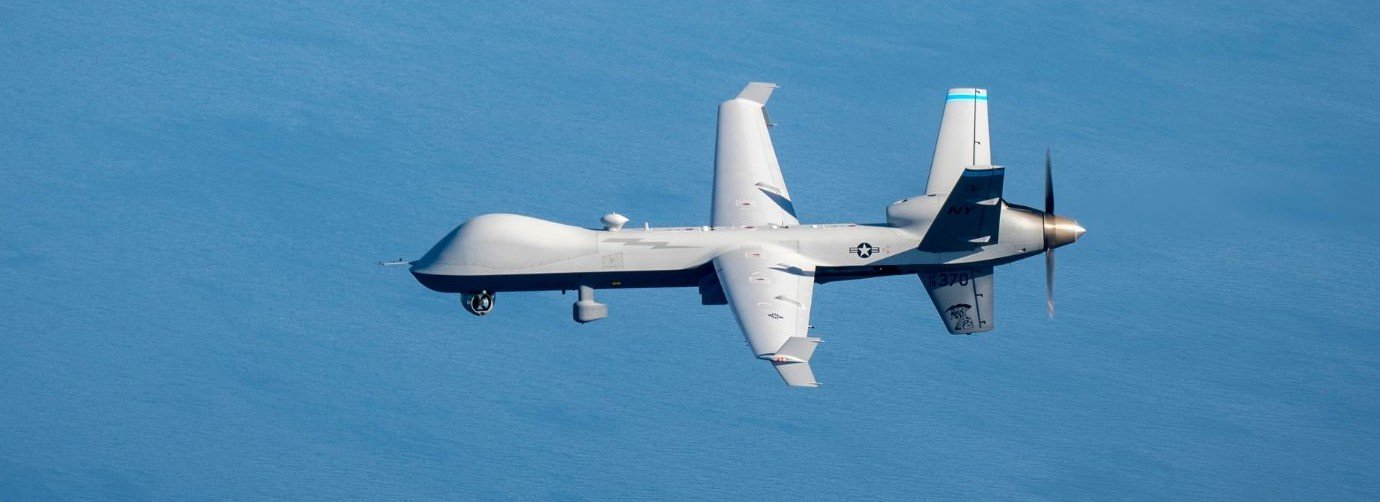
The shift in operations started when surveillance platforms were combined with precision-guided weapons. The MQ-1 Predator acquired the capability to carry Hellfire missiles in the early 2000s, enabling a new approach in which continuous surveillance and strike capabilities were integrated into a single platform. Commanders could identify targets, monitor them over time, and act within minutes.
The later MQ-9 Reaper extended this approach by providing greater endurance, payload capacity, and range. These systems became vital in counterterrorism efforts in Afghanistan, Pakistan, Yemen, and Somalia. If a drone were lost, no pilot would be at risk. This changed political and military decisions about when and where to use force.
The importance of this change lies not only in the technology but also in the operational freedom it provided. Missions once deemed too risky for crewed aircraft became routine. Over time, this model spread far beyond the countries that first started it.
Armed Drone Capability Is No Longer Limited to Major Military Powers
China recognised the strategic and commercial potential of armed drones early. Beijing developed the Wing Loong and CH series, in part, to compete with American systems at lower prices. Chinese manufacturers export these platforms widely across the Middle East, Africa, and Central Asia — enabling countries that cannot purchase American systems to acquire similar capabilities.
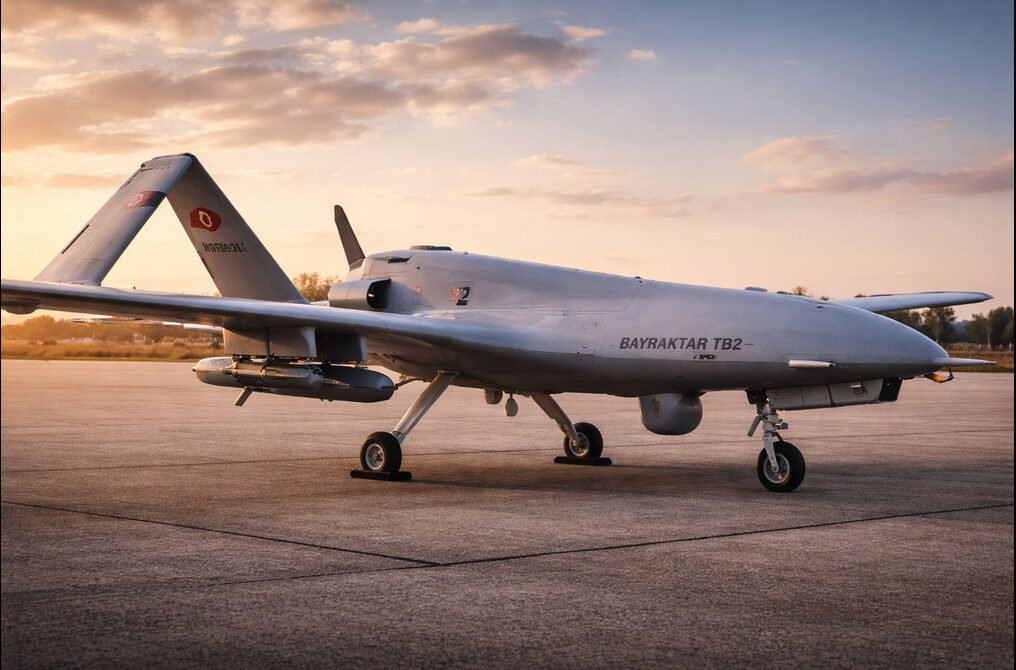
Turkey developed its own drone industry over the past decade. The Bayraktar TB2 gained international attention after its use in Syria, Libya, Nagorno-Karabakh, and Ukraine.
Ankara now exports the system widely, allowing allied states to obtain armed drone capability without building an advanced air force. Iran pursued a different model, emphasising inexpensive systems designed for mass production and transfer to proxy forces. Hezbollah, Hamas, and the Houthis have used Iranian-supplied drones to attack Israeli territory, Saudi infrastructure, and commercial shipping in the Red Sea.
The proliferation map extends further. South Korea, Pakistan, the United Arab Emirates, and India all operate or manufacture military drones. The barriers to entry have therefore collapsed. Actors that could never afford traditional air forces can now field platforms capable of imposing real costs on conventionally stronger opponents. The spread of drone technology means capabilities once limited to advanced air forces now appear in conflicts involving middle powers and non-state actors alike.
Research institutions studying the global spread of unmanned systems have also highlighted how drone technology is becoming accessible to a far wider range of actors than in previous decades.
Ukraine Has Become the Most Intensive Laboratory for Drone Warfare in Modern History
The war in Ukraine has provided more operational drone warfare data than any previous conflict. Both sides deploy thousands of platforms ranging from commercial quadcopters to long-range strike drones.
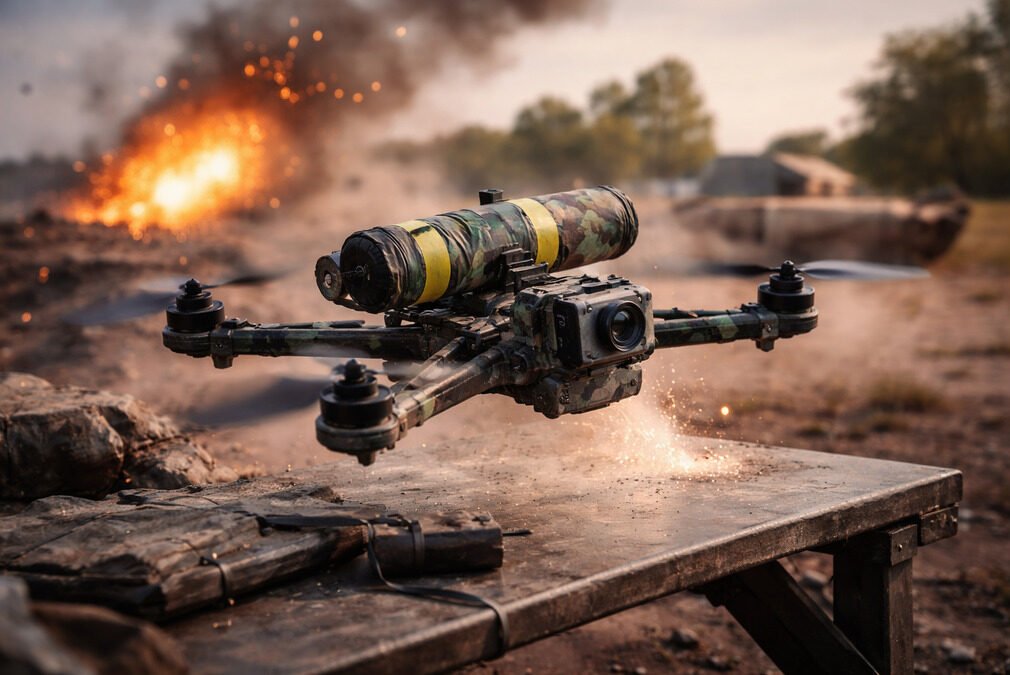
Small commercial drones adapted for battlefield use have proven surprisingly effective. Units modify inexpensive quadcopters to conduct reconnaissance, guide artillery, and drop grenades on opposing positions. These systems may cost only a few hundred dollars yet influence tactical outcomes across the front line.
Ukraine reportedly produced approximately 2.5 million drones in 2025, compared with roughly 800,000 in 2023. This rapid increase illustrates how large numbers of low-cost precision systems can now be produced even under wartime conditions.
Russia has employed Iranian-supplied Shahed drones for long-range strikes against Ukrainian infrastructure. Although many are intercepted, the use of large numbers allows some to penetrate air defences and damage energy facilities.
Ukraine has also deployed maritime drones to attack Russian naval vessels in the Black Sea. These uncrewed surface systems approach targets at high speed before detonating on impact. Several successful attacks forced Russia to relocate parts of its Black Sea Fleet.
Electronic warfare has become equally important. Both sides attempt to jam communications, disrupt navigation signals, and interfere with drone operations. The competition between drone operators and electronic warfare units is now a defining characteristic of the conflict.
Loitering Munitions Represent a Distinct Category With Their Own Strategic Logic
Loitering munitions occupy an intermediate position between drones and guided missiles. They can remain airborne over a target area for extended periods and then dive onto a selected objective.
Israel pioneered this concept with the Harop system, designed to locate and destroy enemy air defence radars. Azerbaijan employed similar systems effectively during the 2020 Nagorno-Karabakh conflict to neutralise Armenian air defence networks before the main offensive began.
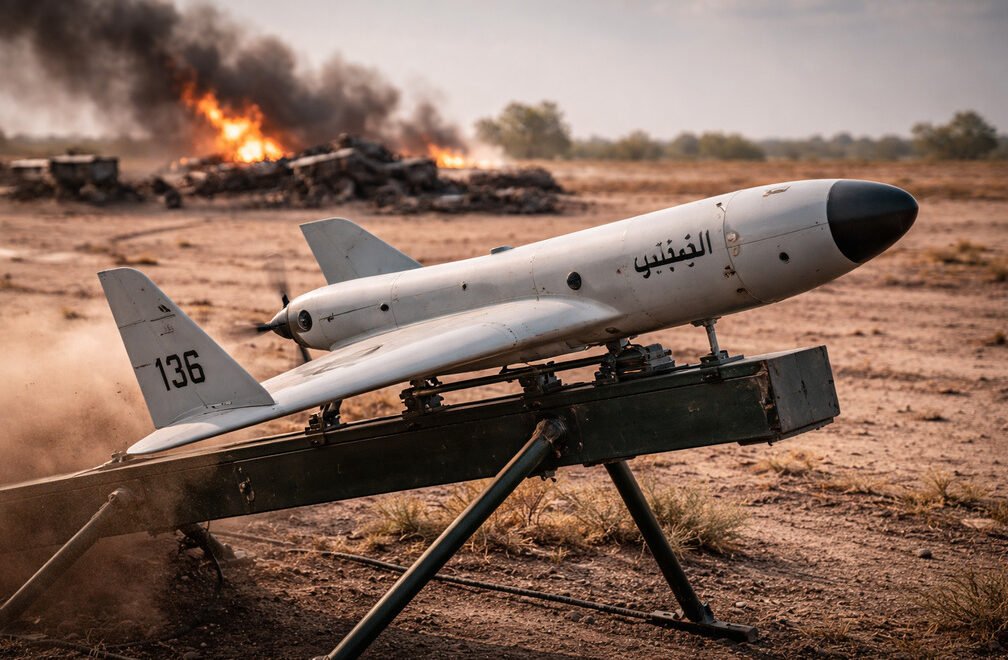
Iran’s Shahed-136 illustrates a different approach. These systems are comparatively simple but inexpensive and capable of being launched in large numbers. Their operational logic is saturation rather than precision.
The defence must succeed every time. The attacker needs to succeed only occasionally.
That asymmetry defines the strategic logic of loitering munitions more precisely than any technical specification.
The emergence of loitering munitions also reflects the broader shift toward precision strike capability examined in our analysis of precision strike weapons and modern warfare.
The Economics of Drone Defence Are Structurally Unfavourable
Drone warfare introduces significant cost asymmetry that extends well beyond individual engagements. A commercial quadcopter may cost a few hundred dollars, while the missile used to intercept it may cost tens of thousands.
Air defence systems designed to counter jets and cruise missiles are poorly suited for detecting and engaging small low-altitude drones. Their radar signatures are minimal, and their flight profiles differ significantly from those of traditional threats.
Defenders therefore face difficult choices. They may ignore the drones and accept damage, expend expensive interceptors and drain stockpiles, or develop entirely new defensive systems tailored for small targets.
Directed-energy weapons such as high-energy lasers could provide potential solutions because the cost per engagement is relatively low. High-power microwave systems may also disable electronic components without kinetic interception. However, both technologies remain under active development.
Electronic warfare provides another defensive method. Jamming communications links or spoofing navigation signals can disrupt many drone systems. However, more advanced platforms increasingly employ encrypted communication and frequency-hopping techniques designed to resist this approach.
Autonomy Exists on a Spectrum
Most military drones still operate with humans in the decision chain. Operators observe targets, approve engagements, and control the platform remotely. However, autonomy exists along a spectrum. Some loitering munitions can already detect radar emissions and automatically engage targets once launched.
Artificial intelligence expands these capabilities by processing sensor data rapidly and enabling coordination between multiple drones operating together. These developments create both opportunity and unresolved risk. Autonomous systems may improve efficiency in certain scenarios, but they also raise questions that existing frameworks have not fully answered.
International research institutes studying autonomous weapons have also examined how increasing levels of automation challenge existing arms-control and legal frameworks.
If an autonomous system causes unintended civilian casualties, international humanitarian law provides limited guidance regarding responsibility. Military planners increasingly examine how emerging technologies such as artificial intelligence and autonomy will influence future operational concepts
Drone Proliferation Has Changed Who Gets to Be Dangerous
Drone proliferation has lowered the threshold for conducting cross-border military operations. States without traditional power-projection capabilities can now threaten targets hundreds of kilometres away.
Non-state actors complicate deterrence calculations even further. Groups supported indirectly by states can conduct attacks while maintaining a degree of plausible deniability.
Urban warfare has also become more complex. Persistent drone surveillance reduces the ability of defending forces to conceal movement or supply lines.
Strategic competition between major powers now includes drone technology as a significant dimension.
The geopolitical implications of these technological developments are examined further in our analysis of strategic and geopolitical intelligence and the new global power balance.
Conclusion
Drone warfare represents more than a technological innovation. It has redistributed military capability across a far wider range of actors and reduced the cost of imposing damage on adversaries.
The war in Ukraine demonstrates how unmanned systems now influence tactical operations, strategic infrastructure protection, and naval operations simultaneously.
As autonomous systems continue to develop, the pressure to accelerate decision-making will increase. Military organisations must balance operational advantage against legal and ethical responsibilities.
The diffusion of drone technology is unlikely to reverse.
Frequently Asked Questions
What is drone warfare?
Drone warfare refers to the use of unmanned aerial systems in military operations, including surveillance, reconnaissance, precision strike, and battlefield observation. Modern military drones range from small commercial quadcopters modified for combat use to large purpose-built platforms capable of carrying precision weapons over long distances. The defining characteristic is the removal of a pilot from the aircraft, though human operators typically remain involved in mission control and targeting decisions. The term also increasingly covers maritime and ground-based unmanned systems as these capabilities expand.
How have drones changed modern warfare?
Drones have lowered the cost of precision strike, extended the operational reach of both state and non-state actors, and created persistent surveillance environments that make traditional concepts of a safe rear area obsolete. They have also democratised certain military capabilities — actors without conventional air forces can now conduct operations that were previously impossible for them. The war in Ukraine demonstrates their tactical significance at scale, from quadcopters guiding artillery fire to long-range strike drones attacking infrastructure hundreds of kilometres behind the front line.
What is a loitering munition?
A loitering munition combines the patrol capability of a drone with the terminal strike function of a guided missile. It can remain airborne over a target area for extended periods, searching for objectives that match pre-programmed criteria, before diving to strike. Unlike conventional drones it is expendable. The Israeli Harop and Iranian Shahed-136 represent opposite ends of the capability and cost spectrum but share the same fundamental operational concept — persistent search followed by terminal engagement.
What are autonomous weapons?
Autonomous weapons are systems capable of selecting and engaging targets with limited or no direct human control at the moment of engagement. Some loitering munitions already operate this way — once launched, they identify and strike targets without further human input. The concerns they raise centre on legal accountability when errors cause civilian casualties and on whether machines can reliably make the contextual judgements that international humanitarian law requires of combatants. No international treaty currently restricts their development or deployment.
Sources & References
U.S. Department of Defense — Unmanned Systems Integrated Roadmap.
RAND Corporation — Drone Proliferation and the Future of Warfare.
Royal United Services Institute — Drone Warfare in Ukraine.
International Institute for Strategic Studies — Military Balance.
Jane’s Defence Weekly — Global Drone Market Assessment.
Breaking Defense — Ukraine Drone Production Analysis.
U.S. Army Field Manual FM 3-0 — Operations.
Human Rights Watch — Autonomous Weapons and International Humanitarian Law.
Related Analysis
For a broader examination of how precision weapons and emerging technologies are reshaping military doctrine, read Precision Strike Weapons and Modern Warfare.
For a wider strategic perspective on global power competition and security dynamics, see Strategic and Geopolitical Intelligence and the New Global Power Balance.
For the foundational analysis of how modern militaries are integrating these capabilities, read Military Modernization in the 21st Century.
