



Analysis · StrikeOrbit | 2026
On the night of June 21, 2025, seven B-2 Spirit bombers released fourteen GBU-57 Massive Ordnance Penetrators on Iran’s Fordow and Natanz nuclear facilities, while a U.S. submarine fired more than two dozen Tomahawk cruise missiles at a separate target complex at Isfahan.
CNN later reported, citing people familiar with a classified briefing Joint Chiefs of Staff Chairman General Dan Caine gave to senators, that the MOP had been judged unlikely to be effective against the relevant underground structures at Isfahan because of their depth.
That distinction illustrates something a single dramatic strike photo cannot: precision strike weapons are not one technology but a family of different tools, each suited to a different targeting problem, and choosing the wrong one for a given target defeats the purpose of precision entirely.
A precision-guided munition is a guided weapon capable of correcting its flight path toward a designated target using navigation updates, external designation, or onboard seeker inputs.
That single capability — trajectory correction in flight — is what separates it from an unguided artillery shell or gravity bomb, which cannot actively correct its course after firing or release, leaving accuracy dependent on initial aim, launch conditions, ballistic performance, and environmental effects.
That distinction is the foundation of this article: how different guidance technologies actually work, what real conflicts have revealed about their limitations under contestation, and why the sensing and targeting architecture behind a precision weapon matters at least as much as the weapon’s own guidance electronics.
Precision Guidance Is a Family of Distinct Technologies, Not One Invention
Public discussion of “smart bombs” often treats precision guidance as a single capability. It is actually several distinct technical approaches, each with different strengths and vulnerabilities, and modern systems increasingly combine more than one.
GPS-aided inertial navigation is the most widely deployed guidance family. It combines satellite positioning with an onboard inertial navigation system to independently estimate the weapon’s motion.
At the same time, GPS updates help correct the accumulated drift that any inertial system develops over time.
This is the approach behind Joint Direct Attack Munition kits, which convert unguided bombs into precision weapons, and behind longer-range systems such as the Army’s Precision Strike Missile, currently being developed through successive increments — the first already delivered, with Increment 2 adding a modified seeker and Increment 3 targeting extended range, according to the Congressional Research Service’s own defense primer on the programme.
Laser guidance works differently. A designator — sometimes aboard the launching aircraft, sometimes operated separately by a forward observer — illuminates the target with a laser, and the munition’s seeker homes in on the reflected energy.
This offers very tight terminal accuracy against a target that can be continuously tracked, and generally requires reliable illumination during the weapon’s terminal guidance phase, which is itself a vulnerability if the designating platform is threatened or the line of sight is broken.

Infrared and electro-optical guidance lets a munition home in on heat signatures or visual imagery without requiring any satellite signal at all.
That independence from GPS is a genuine advantage in an electronically contested environment, though it is not immunity from countermeasures altogether — EO/IR seekers can still be degraded by weather, smoke and obscurants, decoys, or infrared countermeasures designed specifically to confuse a heat-seeking sensor.
Radar homing, in both active and semi-active forms, extends a comparable independence from GPS to weapons that must track fast-moving targets, such as anti-ship and air-to-air missiles.
Several current programmes now combine two or more of these approaches deliberately, so that jamming or defeating one guidance mode does not blind the weapon entirely — a design philosophy increasingly visible among the wider and growing group of states developing indigenous precision munitions, examined later in this article.
For the broader sensing architecture that determines whether a precision weapon can find and track a target across distance in the first place, see Military Modernization in the 21st Century: Precision Strike, Autonomy, and Network-Centric Warfare.
A Precision Weapon Is Only as Useful as the Targeting Architecture Behind It
It is easy to focus on a munition’s guidance electronics and overlook a more fundamental requirement: a weapon cannot be precise against a target it has not been accurately told to find. Before any guidance system activates, a target must be detected, its location confirmed, and that information transmitted to the launching platform in a form precise enough for the weapon to act on — a chain of sensing, intelligence, and command decisions that exists entirely outside the munition itself.
This distinction matters most clearly when comparing a fixed target to a moving one.
Striking a known, unmoving coordinate — a building, a runway, a bridge — is primarily a navigation problem, though it still depends on accurate target identification and coordinate quality established well before the weapon is ever launched.
Engaging a moving target — a warship manoeuvring at sea, a mobile missile launcher relocating between firing positions, an aircraft in flight — is a substantially harder problem, because target-quality data must remain current enough at the moment of impact to still be accurate, which typically requires either continuous sensor tracking, a seeker capable of recognising and closing on the specific target itself, or both.
A GPS/INS-guided weapon with no terminal seeker can be extremely accurate against a fixed coordinate while being effectively useless against a target that has moved since that coordinate was last updated.

This is also why precision, in any serious technical discussion, is never a simple yes-or-no property.
Munitions are typically compared using circular error probable — the radius of a circle within which 50 percent of impacts are expected to fall around the intended aim point — a standard metric for describing accuracy, though one that applies more cleanly to some weapon types and engagement conditions than others.
A smaller CEP means tighter accuracy, but accuracy and battlefield effect are not the same thing: hitting exactly the intended aim point still depends on that aim point having been chosen correctly in the first place, which is a matter of intelligence and target identification rather than of guidance technology at all.
That distinction leads to an important correction of a common assumption. Precision guidance reduces the risk of a weapon missing its intended target — it does not automatically guarantee reduced harm to civilians or a lawful, proportionate strike.
A precision-guided munition that strikes exactly where it was aimed can still cause extensive unintended harm if the underlying intelligence was wrong, if the target identification was flawed, if the chosen warhead was disproportionate to the actual target, or if civilians were present near a legitimately military aim point.
Precision of delivery answers the question of whether a weapon hits where it was sent. It does not answer the separate questions of whether it was sent to the right place, or whether striking that place was the right decision.
Recent Conflicts Have Tested Precision Munitions Against Genuinely Contested Environments
The theoretical accuracy advantages of precision guidance mean little without evidence of how these systems perform when an adversary is actively trying to defeat them, and recent conflicts have provided exactly that evidence.
Ukraine has become the most extensively documented environment for precision munitions operating under sustained contestation.
Ukrainian forces have employed American-supplied Guided Multiple Launch Rocket System munitions and Excalibur precision artillery shells, both of which measurably improved the accuracy achievable by relatively small artillery formations compared to unguided fire. But the conflict has just as clearly exposed the central vulnerability of GPS-dependent guidance.
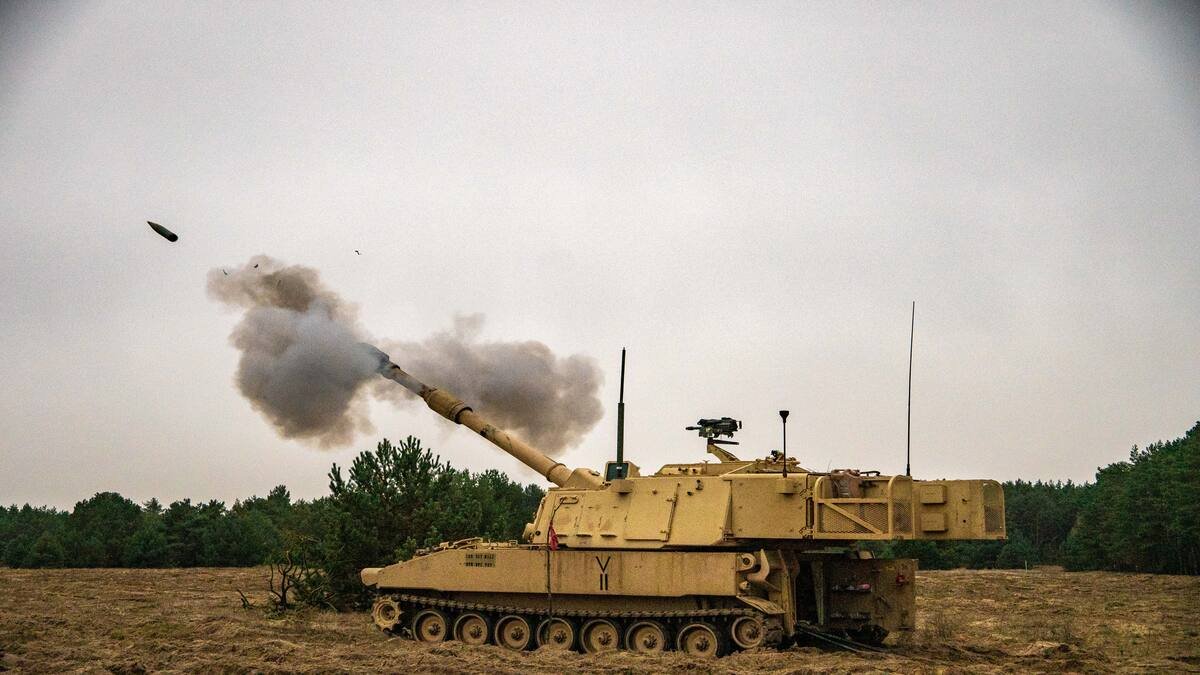
According to a Washington Post investigation based on confidential Ukrainian military assessments and senior Ukrainian officials, sustained Russian jamming degraded the effectiveness of several American-supplied GPS-guided munitions — including Excalibur, JDAM, and GLSDB — to the point that Ukrainian forces altered how and when they employed certain weapons.
The Pentagon responded in part by testing a passive RF homing seeker, developed by SARA Inc. and flight-tested by Air Force Research Labs, specifically to help JDAM-ER munitions supplied to Ukraine counter GPS jammers.
Operation Midnight Hammer, examined at the opening of this article, demonstrated precision munitions operating at the opposite end of the capability spectrum entirely — not the high-volume employment of comparatively low-cost guided rockets, but a small number of extraordinarily expensive, purpose-built weapons striking hardened, deeply buried facilities that most conventional munitions could not reach.
General Caine himself confirmed, at the Pentagon’s June 22, 2025 briefing, that approximately 75 precision-guided weapons were used across the full strike package, of which the 14 GBU-57s represented the small, specialised core — illustrating a doctrine in which precision at the extreme high end is not about efficiency or cost, but about making an otherwise invulnerable class of target reachable at all.
Both cases point toward the same underlying lesson from different directions: precision guidance is not a fixed advantage a state simply possesses once it acquires the technology. It is a capability that must be actively defended against electronic and physical countermeasures, and continuously adapted as adversaries learn to exploit its specific vulnerabilities.
GPS Dependency Has Become a Central Vulnerability of the Precision Strike Era
The guidance technology underpinning the largest share of fielded precision munitions — GPS-aided inertial navigation — is also the guidance technology most exposed to deliberate disruption, and that vulnerability has moved from theoretical concern to documented operational reality across multiple current conflicts.
GPS signals arrive at a receiver extremely weak, by the physics of satellite transmission over such distance, which makes them comparatively straightforward to jam using modest equipment.
Russia’s sustained electronic warfare effort in Ukraine, documented above, has demonstrated the operational consequences of this disruption at scale.
This is precisely why current research priorities across parts of the precision munitions field increasingly centre on navigation that does not depend on GPS at all: image-based terrain-matching systems, inertial platforms accurate enough to operate reliably for extended periods without external correction, and electro-optical and infrared seekers capable of terminal guidance without relying on satellite navigation.
This is not a peripheral engineering challenge. It is one of the central design problems facing modern precision-strike systems today, because a great deal of the advantage precision guidance provides — accuracy at range, reduced munitions expenditure, the ability to strike with confidence from a distance — depends on the guidance system continuing to function in an environment where a capable adversary is specifically working to prevent exactly that.
For a deeper examination of this contest, see Electronic Warfare and the Future of the Electromagnetic Battlespace.
Precision at the Extreme Ends of the Spectrum: Hypersonic Weapons and Deep-Penetration Munitions
Two categories of weapon push precision guidance to its most demanding technical limits, in almost opposite directions.
Hypersonic glide vehicles and hypersonic cruise missiles must maintain functioning guidance and structural integrity while sustaining speeds above Mach 5, where aerodynamic heating and the compression of surrounding air create severe thermal and communications challenges.
In some flight regimes, ionized flow around a vehicle can disrupt radio-frequency propagation, complicating external communications, navigation updates, and some sensor architectures — a challenge examined in full in Hypersonic Weapons and the Emerging Global Strike Balance.
Russia’s Avangard glide vehicle, reportedly operational since 2019, is designed to manoeuvre during its glide phase specifically to complicate interception, while China has conducted extensive testing of its own hypersonic glide vehicle programmes.
The engineering challenge these systems represent centres specifically on maintaining thermal management, sensor performance, and navigational accuracy through sustained extreme heating and high manoeuvre loads.
At the opposite physical extreme, the Massive Ordnance Penetrator represents precision applied to mass and structural design rather than speed — a 30,000-pound guided bomb designed for classes of deeply buried target that are beyond the reach of most conventional munitions.
Its combat debut during Operation Midnight Hammer, and its subsequent absence from the Isfahan strike specifically, together illustrate a design rationale that had existed on paper for two decades: that precision guidance’s value is not limited to reducing the number of munitions required against an ordinary target, but extends to making an entire category of extraordinarily hardened target reachable by conventional forces in the first place — and just as clearly, that even within that category, a given target’s specific characteristics still determine which weapon actually applies.
The Air Force’s subsequent contract with Boeing, worth more than $100 million and explicitly described in acquisition documents as necessary to replenish the GBU-57 inventory expended during the operation, illustrates that sustaining this kind of extreme-end precision capability carries a real and ongoing industrial cost.
The Economics of Precision Are Reshaping Procurement Across Every Military Power
Precision guidance has always carried a substantial cost premium over unguided munitions, and that premium now collides directly with the industrial-scale expenditure of precision munitions that sustained conflicts actually demand — a tension every major military power is currently navigating.
The response has taken two parallel forms. At the high end, continued investment in newer JASSM cruise missile variants and other long-range weapons, alongside successor air-to-air programmes such as the AIM-260, intended to extend beyond the AMRAAM’s current capability in the long-range role, reflects a judgment that certain capability gaps cannot be closed with cheaper alternatives.
At the volume end, guidance kits that convert existing unguided munitions into precision weapons at a fraction of the cost of a purpose-built precision missile, alongside loitering munitions that fuse guidance with persistent surveillance in a single low-cost platform, reflect the opposite judgment: that sustained high-intensity conflict requires precision at a price point and production volume that high-cost systems alone cannot supply.

Both approaches are being pursued simultaneously by the same militaries because they solve different problems. High-end systems provide capability against defended, high-value targets that lower-cost alternatives cannot reliably reach — at a real, ongoing replenishment cost, as the GBU-57 contract above illustrates concretely.
Lower-cost systems provide the volume that a genuine war of attrition — as Ukraine has demonstrated at exhausting scale — actually consumes. The industrial capacity to sustain both simultaneously, examined further in Military Modernization in the 21st Century: Precision Strike, Autonomy, and Network-Centric Warfare, is itself becoming as strategically consequential as the guidance technology inside any individual weapon.
Precision Strike Capability Has Spread Well Beyond the States That Pioneered It
Precision-guided munitions were, for most of the technology’s history, concentrated among a small number of advanced military powers with the domestic industrial base to develop guidance electronics independently. That concentration has eroded substantially, and the erosion is worth examining in more depth than a simple list of countries, because it is happening through several distinct pathways at once.
Some states are building indigenous guidance and seeker technology from the ground up. India’s domestically developed Sudarshan laser-guided bomb kit, produced by DRDO’s Aeronautical Development Establishment for the Indian Air Force, is a well-documented example of this pathway, reflecting a deliberate effort to reduce reliance on imported precision munitions through domestic guidance engineering rather than assembly of foreign components.
Other states are proliferating primarily through guidance-kit conversion technology rather than full domestic seeker development — retrofitting existing unguided stockpiles with GPS or laser guidance kits sourced or licensed from established suppliers, which requires a far lower industrial threshold than developing an original guided munition.
A third pathway runs through commercial and dual-use technology: components originally developed for civilian navigation, imaging, and communications increasingly underpin military guidance systems, lowering the barrier to entry for states that could never have developed comparable guidance electronics as a dedicated military research programme.
This proliferation matters strategically because it changes a baseline assumption that has shaped defence planning for decades: that precision strike capability is a durable, structural advantage held by a small club of advanced militaries.
When guidance kit technology, satellite positioning, and increasingly capable domestically developed seekers are accessible to a much wider range of states through several different pathways simultaneously, precision strike becomes a capability shaping regional conflicts and deterrence calculations far beyond the great power competition that dominates most public discussion of the technology.
Conclusion
Precision-guided munitions have fundamentally changed the relationship between range, accuracy, and the volume of force required to achieve a military effect — visible both in Ukrainian forces using guided artillery against point targets and in a strike package built around weapons designed specifically for deeply buried facilities that most conventional munitions could not reach.
But the technology’s own success has created a central vulnerability: the same GPS dependency that made precision guidance accessible and affordable across an entire generation of munitions is now a major target of modern electronic-warfare investment, forcing continuous and costly redesign toward guidance that does not depend on a signal an enemy can jam.
What connects every development examined in this article is not any single weapon system, but a consistent pattern: precision guidance is not a technology a state acquires once and then simply possesses.
It is a continuously contested capability, requiring sustained investment to defend against active countermeasures, sustained industrial capacity to produce and replenish at the scale genuine conflict demands, and continuous adaptation as guidance approaches that worked reliably in one conflict prove vulnerable in the next — all resting on a targeting architecture of sensing and intelligence that determines whether a weapon’s accuracy is ever put to genuine use in the first place.
Frequently Asked Questions
What is a precision-guided munition and how does it differ from a conventional weapon?
A precision-guided munition is a weapon equipped with a guidance system — typically GPS, laser designation, infrared homing, or radar — that allows it to correct its own flight path toward a specific point target. This differs from unguided munitions, such as conventional artillery shells or gravity bombs, which cannot adjust for targeting errors, a moving target, or degraded conditions after release. The practical consequence is that precision-guided weapons can often achieve an intended effect with fewer munitions than unguided fire required historically, though the exact difference depends heavily on target type and the specific weapons being compared.
Why is GPS jamming such a significant threat to precision-guided munitions?
GPS signals arrive extremely weak after travelling from orbit, making them comparatively easy to jam with modest equipment. Because a large share of fielded precision munitions rely on GPS-aided inertial guidance, sustained electronic warfare — documented by the Washington Post in Ukraine, where jamming degraded the effectiveness of weapons including Excalibur, JDAM, and GLSDB — can measurably reduce an entire category of weapon’s accuracy. This has made GPS-independent navigation, including image-based guidance and infrared or optical terminal seekers that require no satellite reference at all, one of the central research priorities across the precision munitions field.
What is the Massive Ordnance Penetrator and why does it matter?
The Massive Ordnance Penetrator, or GBU-57, is a 30,000-pound guided bomb designed for classes of hardened, deeply buried target that are beyond the reach of most conventional munitions. Carried exclusively by the B-2 Spirit bomber and guided by GPS, it made its first operational use in June 2025 during Operation Midnight Hammer, when fourteen were dropped on Iran’s Fordow and Natanz nuclear facilities. According to CNN, citing people familiar with a classified briefing, the weapon was not used against the operation’s third target at Isfahan because officials judged its underground depth would make the MOP ineffective there — illustrating that even within a single category of extreme-hardened-target weapon, a target’s specific characteristics still determine which precision tool applies.
Does precision-guided targeting mean lower civilian harm?
Not automatically. Precision guidance reduces the likelihood that a weapon misses its intended aim point — it does not by itself guarantee that the aim point was correctly identified, that the intelligence behind the strike was accurate, or that the chosen munition was proportionate to the target. A precision-guided weapon that strikes exactly where it was aimed can still cause extensive unintended harm if any of those upstream judgments were wrong. Precision of delivery and the broader legality or proportionality of a strike are related but genuinely separate questions.
How has precision-guided munition technology proliferated beyond major military powers?
Precision guidance was historically concentrated among a small number of states with advanced domestic defence industry, but that concentration has eroded through several distinct pathways: indigenous guidance and seeker development, such as India’s domestically engineered Sudarshan laser-guided bomb kit; conversion of existing unguided stockpiles using imported or licensed guidance kits, which requires a far lower industrial threshold; and the spread of commercial dual-use navigation and sensing components that lower the barrier to entry further still. Together these pathways mean precision strike capability now shapes regional conflicts and deterrence calculations well beyond the small group of states that originally pioneered the technology.
Sources and References
Congressional Research Service — Defense Primer: US Precision-Guided Munitions, IF11353
Center for Strategic and International Studies — What Operation Midnight Hammer Means for the Future of Iran’s Nuclear Ambitions (August 2025)
CNN — US Did Not Use Bunker-Buster Bombs on One of Iran’s Nuclear Sites, Top General Tells Lawmakers (June 2025)
CBS News — Pentagon Briefing on US Strikes on Iran Nuclear Sites (June 2025)
The Washington Post — Russian Jamming of U.S. Weapons in Ukraine Forces Pentagon to Adjust (May 2024)
European Security & Defence — GPS Under Threat (May 2025)
Related Analysis
For the sensing and kill chain architecture determining whether a precision weapon can find and track its target, read Military Modernization in the 21st Century: Precision Strike, Autonomy, and Network-Centric Warfare.
For the electronic warfare contest directly threatening GPS-guided precision munitions, read Electronic Warfare and the Future of the Electromagnetic Battlespace.
For hypersonic precision systems operating at the most extreme end of the guidance spectrum, read Hypersonic Weapons and the Emerging Global Strike Balance.
